
STREBITO Heat-Resistant Soldering Mat
4.8Editor score
Heat resistance up to 932°F
133 organized storage compartments
Three magnetic work areas
Soldering is fundamental to building, repairing, and modifying radio-controlled vehicles and aircraft. Good solder should melt predictably, wet components evenly, and produce durable electrical connections, while compatible tools and workspace accessories make the process cleaner, safer, and easier to learn.
This guide compares ten products selected for RC electronics work, including 63/37 leaded wire, a lead-free alloy, a temperature-controlled soldering iron, practice kits, and a heat-resistant organizer. The comparison considers alloy composition, wire diameter, melting point, included accessories, learning support, and practical bench organization.
Each pick demonstrates a different approach to soldering, from replenishing wire supplies to building a complete beginner station or practicing surface-mount assembly. Ratings and specifications reflect the supplied product information, and current prices and availability can change, so verify listings before purchasing.
4.8Editor score

4.8Editor score

4.6Editor score
As an Amazon Associate we earn from qualifying purchases.
The table below compares the alloy, format, key specification, and intended role of every product, helping RC hobbyists distinguish consumable solder wire from irons, practice kits, and workspace equipment.

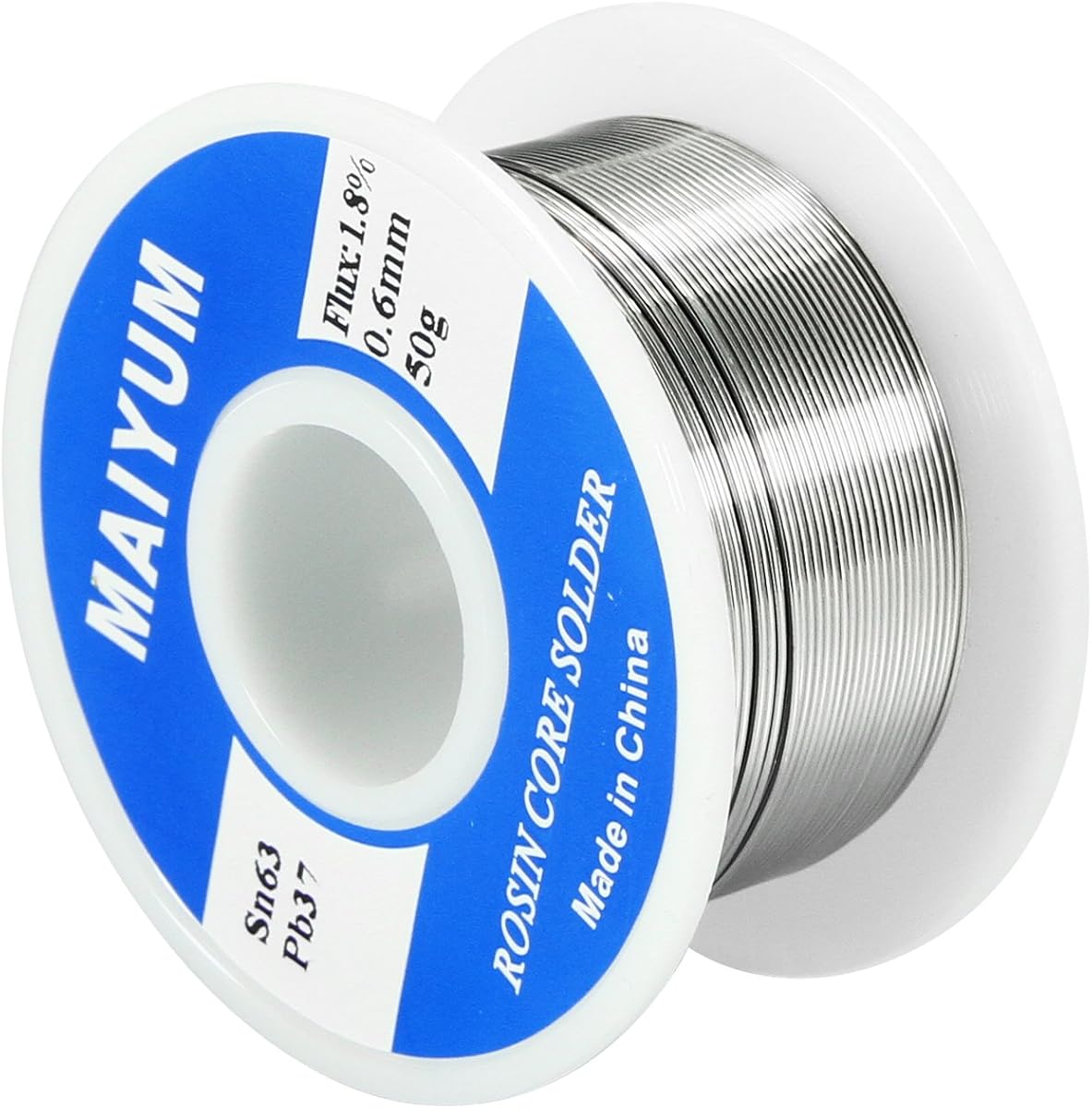


This MAIYUM spool combines the familiar 63/37 tin-lead alloy with a 0.8mm rosin-core wire, giving RC builders a straightforward consumable for wiring motors, receivers, servos, lights, and other electronics. Its 4.6 rating reflects broad user appeal, while the compact 50g format is convenient for a hobby bench or portable repair kit.
We may earn a commission when you buy through this link, at no additional cost to you.
The stated melting point of 361°F, or 183°C, is one of the alloy's practical advantages for general electronics work. A 0.8mm diameter gives the operator enough material for conventional through-hole joints and moderately spaced pads without the fine precision associated with the narrowest wires. The 1.8% flux core assists the soldering process and is intended to promote smooth flow across the listed applications.
Its main compromise is lead content. The product carries a Proposition 65 warning and should be handled with attention to ventilation, hand hygiene, and keeping food or drinks away from the work area. It is also only solder wire, so users without an iron, stand, tips, and basic hand tools will still need to assemble a complete station.
This is an excellent default choice for hobbyists who want one dependable spool for routine RC wiring and repair. Choose it when straightforward flow, a moderate wire diameter, and a compact supply matter more than a lead-free formulation. Pair it with the Plusivo iron kit for a more complete beginner setup.
The 0.8mm diameter offers a practical balance for common RC connections, including hookup wire, header pins, and through-hole components. It is easier to control than very thin wire while still fitting many conventional PCB pads.
The listed 183°C melting point and rosin core make this a familiar option for general electronics soldering. Its stated applications include circuit boards, cables, radios, toys, and other electrical devices.
We may earn a commission when you buy through this link, at no additional cost to you.
This three-pack provides 27g spools of 0.6mm 63/37 rosin-core solder, making it appealing to RC hobbyists who want several small spools available at a workbench. The 4.5 rating indicates generally positive reception, and the narrow wire is especially relevant for compact receiver boards and other fine-pitch work.
We may earn a commission when you buy through this link, at no additional cost to you.
Each spool contains an Sn63Pb37 alloy with a listed 1.8 flux specification. The product description highlights low residue and a 361°F melting point, along with use on circuit boards, consumer electronics, radios, and phone repairs. Multiple spools can be useful for separating projects, sharing a workshop, or maintaining backup stock without opening a large spool.
The 0.6mm diameter requires more control than 0.8mm wire and may demand more frequent feeding during larger joints. This pack is therefore best treated as precision stock rather than the only solder in a workshop. Lead warning requirements and normal solder-fume precautions also apply.
Choose this product if you frequently work on small RC electronics, want multiple spools, and prefer finer solder than the standard 0.8mm options. It is a particularly sensible companion to a temperature-controlled iron, since its thin profile is easier to melt quickly and place accurately on compact pads.
A multi-pack reduces the chance of a workbench running out of a frequently used wire. It also makes it easier to organize different tasks or retain backup supplies when one spool is in use.
The 0.6mm diameter is well suited to detailed RC board work where excess wire can crowd neighboring connections. It supports precision without moving to an extremely thin, difficult-to-feed gauge.
We may earn a commission when you buy through this link, at no additional cost to you.
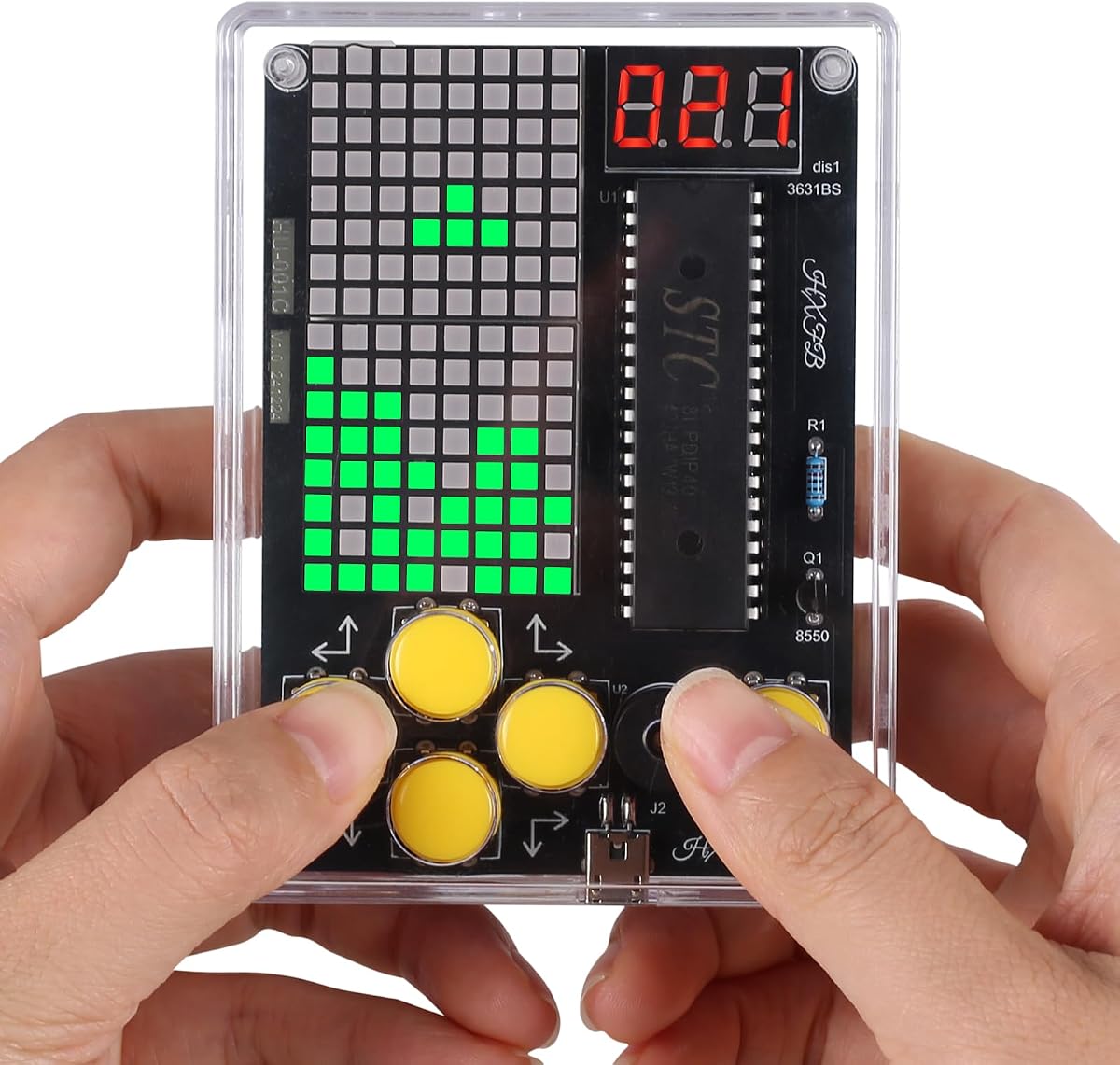
The PEMENOL 7-in-1 kit is designed as a structured electronics project rather than a conventional spool of solder. It gives users a 4.1-rated package with seven interactive functions, three difficulty levels, and real component placement and soldering. That makes it most relevant to RC hobbyists who want guided practice before tackling vehicle electronics.
We may earn a commission when you buy through this link, at no additional cost to you.
The step-by-step color-printed manual and video guidance can make a complex assembly less intimidating. Difficulty options let learners progress at a pace suited to their experience, while the finished project provides an immediate way to test the result. The stated audience is teens 15 and older and adults, including students, individual learners, and supervised workshop groups.
As a project kit, it is not a substitute for a general-purpose solder spool or a complete soldering station. Its value lies in structured education, and those seeking a specific alloy, wire diameter, or large quantity of consumable solder should choose one of the wire products instead. Buyers should also consider whether the included project matches their learning goals.
Choose this kit for beginner education, electronics workshops, or practice before soldering live RC components. It is less suitable for a repair bench that already needs dependable everyday solder. The best role is a confidence-building companion to a proper soldering iron and safety setup.
Assembling actual components teaches placement, soldering, and construction in a connected project. The three difficulty levels help bridge the gap between simple beginner tasks and more involved electronics work.
Seven built-in interactive functions provide a way to test the completed build. This gives learners a result to examine rather than completing a static assembly with no obvious purpose.
We may earn a commission when you buy through this link, at no additional cost to you.
MAIYUM's 0.6mm, 50g spool is a compact option for hobbyists who want finer solder than the standard 0.8mm gauges. Its 4.6 rating and broad listed application range make it a credible everyday choice for RC controllers, receivers, lighting circuits, and other small electrical connections.
We may earn a commission when you buy through this link, at no additional cost to you.
The wire uses a 63/37 tin-lead alloy with a stated 1.8% flux core and a melting point of 361°F, or 183°C. This combination is presented as easy to solder, fast-flowing, and capable of producing strong joints. The smaller diameter allows the user to add solder incrementally, which helps prevent excess material on tightly packed boards.
Fine wire takes extra time to feed and may be less efficient for large connectors or hefty wire joints. The 50g quantity is compact rather than generous, and users with several active projects may need frequent replacements. The product also contains lead and carries a warning, so responsible handling remains essential.
Choose this spool when bench space, portability, and precision are priorities. It works particularly well for small RC electronics, while builders who routinely make thick power connections may prefer to keep 0.8mm wire as well. The matching 100g MAIYUM option is the better choice for higher consumption.
A 0.6mm wire can be more manageable around small RC pads and closely spaced components. Slower feeding gives the operator time to stop before a joint accumulates excess solder.
At 50g, the spool is easy to carry in a small tool bag. It is a sensible option when you need fresh wire for occasional repairs rather than a large workshop inventory.
We may earn a commission when you buy through this link, at no additional cost to you.
The STREBITO mat is the premium workspace choice in this roundup, earning a 4.8 rating for its combination of heat protection and exceptional organization. Its 21.65-by-15.75-inch surface gives an RC builder room for a receiver, ESC, wiring, and scattered micro components while a soldering iron is in use.
We may earn a commission when you buy through this link, at no additional cost to you.
Seventeen accessory zones, ten screwdriver slots, one tool zone, 133 compartments, and three magnetic areas create dedicated locations for parts. The magnetic sections can hold metal screws and components, while nonmagnetic zones provide a place for sensitive parts. Silicone construction is listed as resistant to temperatures up to 932°F and intended to protect surfaces from heat damage.
The mat is not an antistatic mat and does not prevent static discharge. For static-sensitive work, the manufacturer recommends allowing it to dissipate static and pairing it with an antistatic wrist strap. Its silicone composition may also mark delicate finishes, so users should test it beneath expensive components if concerned.
This is the best pick for an RC enthusiast who values a clean, dedicated repair station. It complements rather than replaces solder and an iron, but it can prevent tiny screws from disappearing and reduce heat exposure to the bench. Its organization and protection justify premium consideration for frequent builders.
Small RC fasteners and components are easy to lose during disassembly. The numerous labeled and shaped compartments create a repeatable system for sorting screws, connectors, and tools during reassembly.
The silicone surface is listed for heat resistance up to 932°F, offering useful protection from soldering tools. It should not be treated as an ESD solution, however, and sensitive work still calls for proper static-control measures.
We may earn a commission when you buy through this link, at no additional cost to you.
The Plusivo 60W digital soldering iron is the most complete general-purpose station in the list and earns a 4.8 rating. Instead of supplying only consumable wire, it combines a temperature-adjustable iron with five tips, solder, a stand, a desoldering pump, and more than 15 listed accessories.
We may earn a commission when you buy through this link, at no additional cost to you.
Its LED display allows the user to select temperatures from 200–500°C, an important advantage for RC work involving different connector sizes, wires, and possible heat-sensitive components. The 60W ceramic heating element, ventilation holes, and heat-resistant silicone grip support quick heating and comfortable handling, while the stand keeps the hot tip away from the bench.
The kit is configured with a 120V US plug, so travelers should verify compatibility before use elsewhere. It also includes 0.8mm flux-cored SnPb wire, meaning even users wanting to avoid lead for routine work will need a separate lead-free supply. The digital controls and broad accessory set add bulk compared with a basic iron.
This is the strongest all-in-one choice for a new RC hobbyist, student, or technician who does not already own a soldering station. Experienced users can still value the replaceable tips, stand, desoldering pump, and carry bag, but the 63/37 wire and other bundled accessories should be reviewed against existing equipment.
An adjustable 200–500°C range lets users match heat to the task instead of using one fixed setting. This is useful when moving between heavier RC power connections and smaller signal-board joints.
The included tips, stand, pump, tweezers, wire, sponge, and other tools cover many basic bench tasks. A carry bag also helps keep the collection portable and organized.
We may earn a commission when you buy through this link, at no additional cost to you.
The EGSCST two-pack focuses on surface-mount soldering practice, making it a useful companion for RC hobbyists working with modern miniature electronics. Its 4.1 rating reflects a more specialized training product, while the inclusion of two boards allows a beginner to repeat a build and refine technique.
We may earn a commission when you buy through this link, at no additional cost to you.
Each kit includes SMD parts in 0805, 0603, diode, transistor, and IC-chip categories on a green PCB with clearly labeled footprints. This arrangement closely resembles the assembly challenges found on compact electronic devices and provides a clear reference when positioning parts before soldering.
This is not a general supply of solder or a complete iron package, and its learning value depends on having appropriate tools and taking care with tiny components. Beginners may initially find fine-pitch placements challenging. It is also less directly relevant to hobbyists interested only in through-hole motor or receiver wiring.
Choose this kit if you specifically want to improve surface-mount skills before servicing small RC control boards or flight controllers. The second board makes repetition practical and can reveal whether your technique is consistent. For basic electrical repair practice, the PEMENOL project may offer a more guided introduction.
Working with 0805, 0603, diode, transistor, and IC components develops familiarity with small packages. These are the kinds of parts encountered in compact electronics, even if practice-board placement differs from a finished RC product.
Two boards let a learner compare a first assembly with a second attempt. Repeating the same exercise can expose inconsistent heating, placement, and solder-feeding habits before they appear on an expensive project.
We may earn a commission when you buy through this link, at no additional cost to you.
This 100g MAIYUM spool is the high-volume option among the 0.8mm wire choices, aimed at RC builders who regularly repair or modify electronics. It retains the same 4.6-rated 63/37 alloy, 1.8% flux core, and listed 183°C melting point as the smaller MAIYUM package.
We may earn a commission when you buy through this link, at no additional cost to you.
A 0.8mm diameter is versatile enough for common through-hole joints, leaded hookup wire, heat-shrink connections, and header wiring. The larger 100g weight reduces replacement frequency and makes the spool more practical for multi-vehicle workshops, schools, or hobbyists who dislike keeping several small spools on hand.
Occasional users may find that 50g is more appropriate, and the lead content still requires the listed warning and careful handling. Users with frequent static-sensitive work should remember that solder itself does not replace an antistatic workstation. Cleanliness also matters because residue and contaminants can impair joint quality.
Choose this spool when regular RC maintenance is expected or multiple models share one bench. It is a stronger value-oriented choice for high consumption than the compact 50g version. It does not solve the need for a good iron, tip care, ventilation, or organized storage, so consider the workspace products in this guide as complements.
The 100g format suits builders who use solder regularly across cars, planes, chargers, and accessory circuits. It reduces the inconvenience of discovering a spool has run out during a repair.
At 0.8mm, the wire remains substantial enough for common electrical joints and is not as finicky to feed as thinner solder. It is a sensible general-purpose gauge for mixed RC work.
We may earn a commission when you buy through this link, at no additional cost to you.
The 100g MAIYUM 0.6mm spool combines fine-gauge control with a larger supply, filling a useful middle ground between precision and convenience. Its 4.6 rating and stated applications make it appropriate for electronics hobbyists who work often on small circuit boards but do not want to replace a compact spool frequently.
We may earn a commission when you buy through this link, at no additional cost to you.
Its 63/37 tin-lead construction, 1.8% flux content, and 361°F melting point match the familiar characteristics of the other MAIYUM leaded products. The 0.6mm gauge can be placed more precisely on compact pads than a heavier wire, which is useful for crowded RC receiver, ESC, lighting, or control electronics.
Feeding 0.6mm wire smoothly takes practice, and a 100g spool is more material than an occasional repairer may need. The product contains lead and carries a reproductive-hazard warning, so responsible handling and workspace ventilation remain important. Lead-free alternatives may be preferable for users with specific exposure concerns.
Choose this product for frequent precision work rather than heavy-gauge connection building. It is a particularly good match for experienced hobbyists who already understand temperature control and can keep the tip close to the joint without overheating it. For larger wire joints, keep 0.8mm or a separate leaded spool on hand.
The larger package supports repeated fine-pitch work without the constant interruption of changing small spools. It is useful for builders who regularly work on compact boards.
The specified 63/37 alloy and 183°C melting point align with familiar leaded solder behavior. This makes it easier to build confidence before moving to more demanding RC projects.
We may earn a commission when you buy through this link, at no additional cost to you.
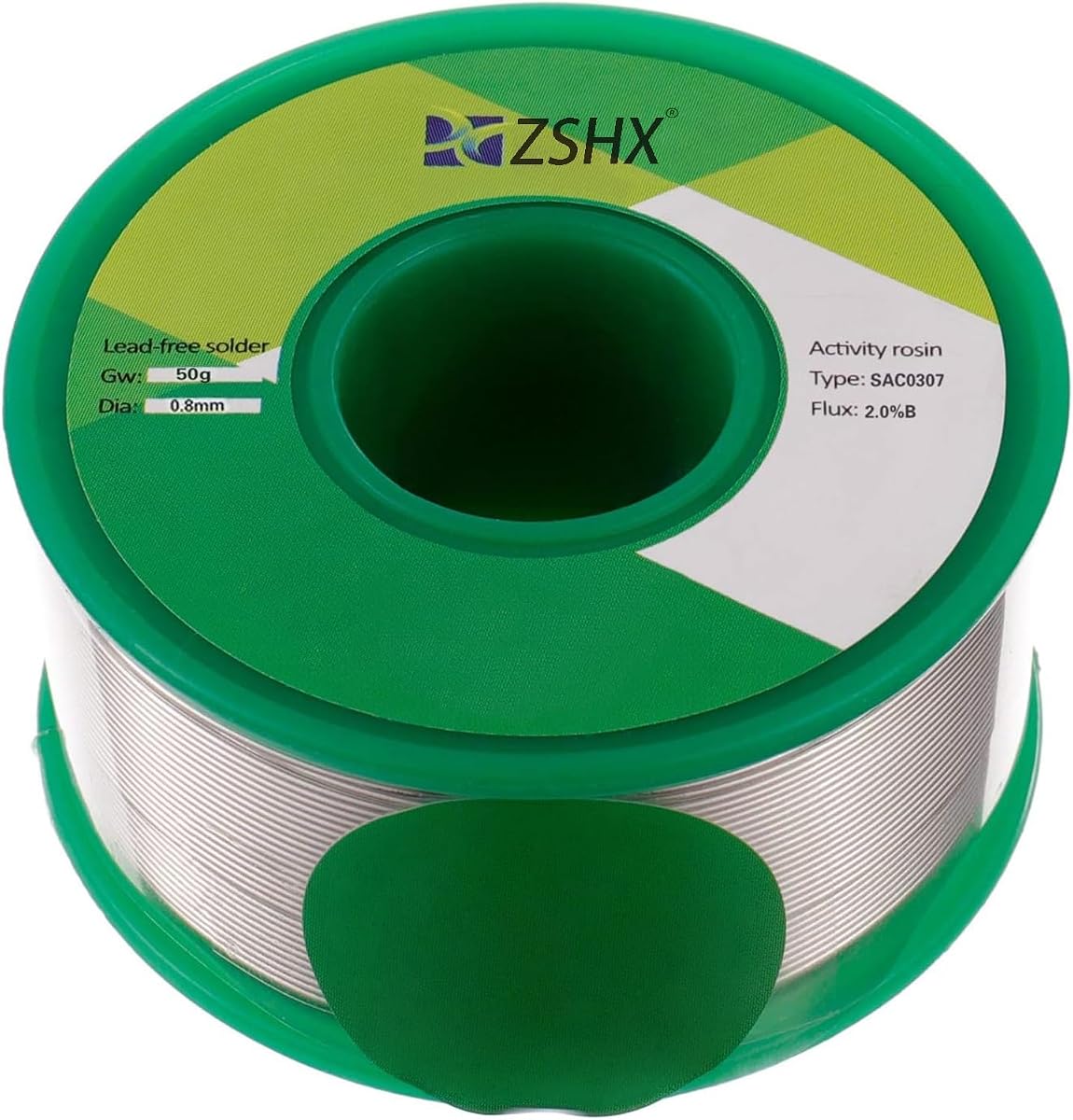
The ZSHX spool is the only lead-free wire in this group, offering an Sn99-Ag0.3-Cu0.7 alloy for RC hobbyists who prefer to avoid lead-containing consumables. Its 4.6 rating suggests broad satisfaction, and the 0.8mm diameter remains a practical size for many conventional connections.
We may earn a commission when you buy through this link, at no additional cost to you.
The listed melting point is 217°C, or 422.6°F, which is higher than the 183°C point stated for the 63/37 products. A temperature-adjustable iron is therefore particularly useful, allowing the user to supply enough heat without unnecessarily overheating a board. The wire includes a 2% flux content and is supplied in a 50g package.
Lead-free solder generally needs a hotter working range and careful temperature control, so a fixed low-temperature iron may be less convenient. It can also be less forgiving on heat-sensitive parts if the operator compensates with excessive heat. The smaller 50g quantity is modest for a high-volume workshop.
Choose this product when avoiding lead is a priority and you have, or plan to buy, a temperature-controlled iron. It is a sensible wire option for general RC electronics work and provides a useful alternative to the leaded spools featured here. Always follow the instructions and safety guidance provided with the specific product.
The Sn99-Ag0.3-Cu0.7 formulation gives users a lead-free alternative to standard 63/37 solder. This may suit hobbyists who wish to minimize exposure to lead-containing wire.
The listed 217°C melting point calls for an iron that can provide sufficient heat and ideally adjustable control. Good tip selection and steady technique help protect heat-sensitive RC components.
We may earn a commission when you buy through this link, at no additional cost to you.
The best solder for RC projects depends on the electronics you service, the precision required, your soldering equipment, and your preference regarding lead-containing alloys. Use the following factors to narrow the field before building a complete bench setup.
Most options in this guide use a 63/37 tin-lead alloy with a stated melting point of 183°C, while the ZSHX product uses a lead-free Sn99-Ag0.3-Cu0.7 alloy melting at 217°C. Leaded 63/37 is familiar for general electrical work and can flow readily at lower temperatures, whereas lead-free solder generally needs more heat and a controlled iron. Confirm that the alloy suits both your project requirements and your local handling preferences.
Wire diameter affects both control and efficiency. The 0.8mm products are easier to feed and suit conventional through-hole joints, hookup wire, and larger pads. The 0.6mm options provide finer control for compact receiver, ESC, lighting, and control boards, although they take more time to feed and are less suitable for bulky connections. Many builders keep both gauges available.
A soldering iron with a broad, adjustable temperature range is especially valuable when comparing alloys and joint sizes. The Plusivo iron offers a listed 200–500°C range and a digital display, which helps users manage the higher heat needed for lead-free solder. A fixed-temperature iron can still serve simple through-hole work, but it offers less flexibility across RC components.
Solder wire is only one part of a useful setup. A secure iron stand, suitable tip, cleaning sponge, desoldering pump, tweezers, wire stripper, and organized storage can make repairs safer and more precise. The Plusivo kit supplies many of these accessories, while the STREBITO mat organizes the bench. Existing owners may not need another full kit and should fill only genuine gaps.
Modern RC receivers, ESCs, lighting controllers, and flight-control electronics may feature closely spaced pads or surface-mount parts. Fine wire, steady heat, and practice can prevent bridges and lifted pads. The EGSCST kit is designed specifically for SMD training, while the PEMENOL project offers guided component assembly and video support for broader beginner education.
Soldering creates heat, flux residue, loose screws, and small components that can roll away. A heat-resistant silicone mat protects the surface and provides dedicated spaces for parts. The STREBITO option includes 133 compartments, magnetic zones, nonmagnetic areas, and measurement guides. Ensure the mat is large enough for the vehicle, receiver, wiring, and tools in use.
Most 63/37 products contain lead and carry warnings. Work in a ventilated area, wash hands after handling, keep food and drinks away from the bench, and avoid contaminating completed vehicles. The lead-free option eliminates lead from the solder itself, but the higher working temperature still calls for good technique, ventilation, and iron temperature control.
A 50g spool is convenient for occasional repairs and portable kits, while 100g options reduce replacement frequency for active hobbyists. The three-pack adds redundancy and multiple spools for sharing or organization. Estimate consumption based on how many vehicles you maintain and how frequently you rework them, then select packaging that will remain fresh and easy to store.
Prepare the work area before heating the iron. Place a heat-resistant mat beneath the project, organize small parts in labeled compartments, and make sure the iron has a stable stand. Clean the PCB pads and component leads, ventilate the room, and position the vehicle or board so it will not move while the connection is made.
Heat both the pad and component lead with the iron, then feed the stated amount of solder into the heated joint rather than melting solder away from it. Allow the connection to cool without movement before placing the wire or checking continuity. For rework, use the desoldering pump and heat the existing joint until the solder flows before removing the old component.
Clean residue with an appropriate method, inspect the joint for bridges or cold connections, and reconnect power only after the work is secure. Unplug the iron when finished, let the tip cool safely, and clean the tip with the supplied sponge or an appropriate method. Store wire in a dry location, keep the mat rolled or folded as intended, and replace worn or damaged tips before they damage joints.
The 63/37 rosin-core wire in this guide is well suited to common RC wiring and through-hole component repairs. The 0.8mm MAIYUM spool is particularly versatile, while 0.6mm provides more control for compact boards. A temperature-controlled iron makes both gauges easier to use consistently.
Neither diameter is universally better. The 0.8mm wire feeds more quickly and is useful for larger connections, whereas 0.6mm is easier to place precisely on small pads. Builders who work across multiple vehicle types often keep both gauges on the bench for different joint sizes.
It is strongly recommended, especially when using the lead-free option or working on heat-sensitive electronics. The Plusivo kit provides an adjustable 200–500°C range, allowing the operator to use more heat for demanding lead-free joints while controlling exposure on smaller components.
Yes. The ZSHX lead-free wire uses a 0.8mm diameter and a Sn99-Ag0.3-Cu0.7 alloy with a listed 217°C melting point. Because it generally requires more heat than 63/37, use a capable iron, select an appropriate tip, and avoid overheating the board.
A solder spool supplies the consumable material needed for actual repairs and construction. A practice kit is primarily educational, helping users learn assembly and improve technique before working on a project. The PEMENOL and EGSCST kits are most valuable for guided or surface-mount skill development.
At minimum, a hobbyist benefits from an iron with a stand, suitable tips, solder, flux-cored wire, a desoldering pump, a cleaning sponge, and tweezers or other small tools. A heat-resistant organizer mat adds protection and makes it easier to track screws, connectors, and small components during reassembly.
The STREBITO mat is heat resistant and useful for organization, but its specifications explicitly state that it is not an antistatic mat. For sensitive electronics, add appropriate static-control measures and follow manufacturer guidance for handling and grounding.
Use lead-containing solder in a well-ventilated workspace, wash your hands afterward, and keep food and drinks away from the bench.
Store the wire so it cannot contaminate unrelated objects, and avoid bringing loose solder or residue into a vehicle.
A lead-free alloy is one option, although it usually demands a higher soldering temperature and careful control.
The Plusivo 60W kit is the strongest all-around starting point because it combines a temperature-controlled iron, five tips, solder, a stand, and repair accessories. The STREBITO mat is the premium workspace upgrade, while the MAIYUM 0.8mm 50g spool is the most practical budget choice for a basic RC repair supply.
Prioritize the alloy, wire diameter, and iron temperature that match the electronics you actually build. Fine wire and practice kits help with small electronics, while larger 63/37 spools suit regular through-hole work. A clean bench, organized parts, ventilation, and careful soldering technique matter as much as the consumable itself.
Ratings, product specifications, prices, and availability can change over time. Check the current listing and all safety instructions before purchasing, and confirm that electrical tools and plug types are appropriate for your location and workshop.