
Dometic CFX2 Series
4.4Editor score
Bluetooth temperature management
AC and DC compatibility
Adjustable freezer range
Our Dometic Electric Cooler guide compares ten models for capacity, portability, power options, cooling range, build quality, and everyday outdoor use in 2026.
A dependable portable cooler can make camping, road trips, tailgates, and long weekends much more comfortable. The right Dometic electric cooler balances usable capacity, efficient cooling, flexible power options, secure closures, and a shape that remains manageable when your vehicle or outdoor space is limited.
This guide compares ten models from Dometic’s portable and installed cooling range, focusing on compressor or thermoelectric performance, storage volume, power configuration, portability, temperature settings, construction, and useful controls. It also distinguishes true electric coolers from hard-sided ice coolers and a rooftop air conditioner included for broader comparison.
The first three selections stand out for different reasons: versatile three-way power, app-assisted temperature control, and a larger dual-voltage capacity. Each review explains where a model is strongest, where compromises appear, and which type of user is most likely to benefit. Product listings and availability can change, so confirm current specifications before purchasing.
4.4Editor score

4.4Editor score

3.6Editor score
The comparison below covers capacity, power, cooling method, portability, and the most relevant practical features across all ten listed Dometic products.




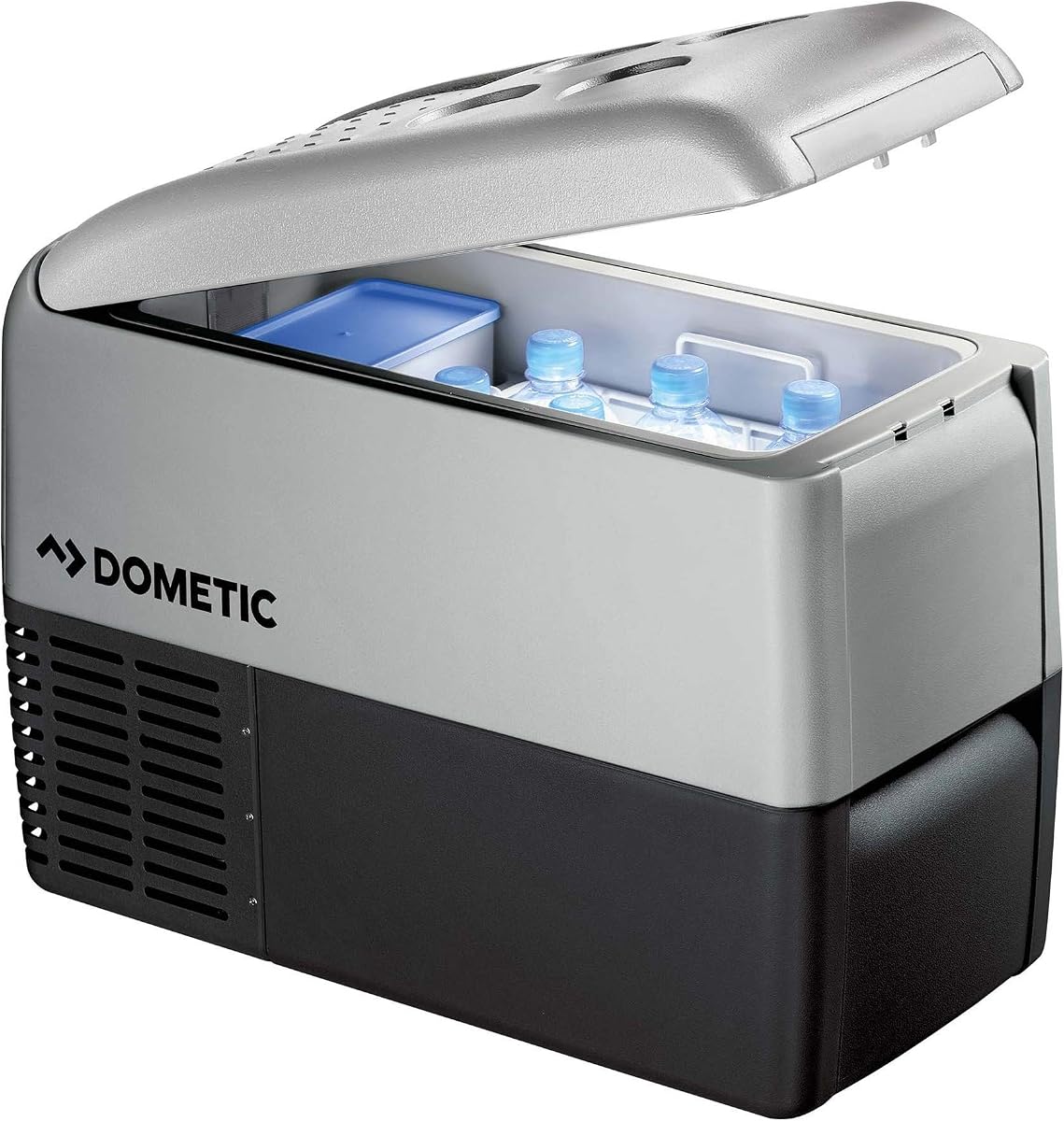


The Dometic CFX5 and CFX3 Series is a portable compressor cooler and freezer with a 25-liter capacity, a listed rating of 3.6, and a remarkably broad set of power options. It can run from household AC, vehicle DC, or compatible Dometic batteries and Obsidian solar equipment, making it especially compelling for trips that move from an RV to a campsite or remote work location.
We may earn a commission when you buy through this link, at no additional cost to you.
Its most valuable feature is the three-stage dynamic battery protection system. Rather than simply monitoring power, the system evaluates inbound power and is designed to protect a vehicle battery while also permitting deeper discharge when a dual-battery arrangement can support it. The temperature range stretches from minus 7F to 68F, so it can serve as a refrigerator for everyday food or a freezer for frozen meals.
The 25-liter compartment can hold as many as 40 twelve-ounce cans, enough for a weekend with up to three people or a long solo trip. The lid is removable and textured for grip, while TPE gaskets help create a tight seal. Self-folding aluminum alloy handles, a nonslip surface, and an integrated bottle opener improve portability and daily convenience. These are practical details that matter more in the field than decorative additions.
There are trade-offs. Its capacity is smaller than several competing portable compressors, and solar operation depends on compatible Dometic components that are not included. A 3.6 rating also indicates less customer consensus than the strongest alternatives. Even so, this model is ideal for buyers who value flexible electricity, rugged details, and true freezing performance more than maximum internal space.
AC, DC, battery, and solar compatibility allow the cooler to follow a mobile lifestyle. It works well for road trips, campsites, tailgates, or backup use around an RV without requiring one fixed power source.
The adjustable range supports both chilled food and frozen goods, while the gasket seal, textured lid, folding handles, and bottle opener improve handling. These details make the unit more practical for regular outdoor use.
We may earn a commission when you buy through this link, at no additional cost to you.
The Dometic CFX2 Series combines a 28-liter compressor cooler with a 4.4 rating, giving it one of the strongest customer-feedback profiles in this list. It can hold approximately 36 cans or three 1.5-liter bottles, a configuration that works well for weekend meals, drinks, and daily provisions for campers, boaters, or families.
We may earn a commission when you buy through this link, at no additional cost to you.
Its standout advantage is the Bluetooth-controlled Mobile Cooling application. Users can monitor and manage the cooler’s temperature remotely, which is useful when the unit is positioned away from the passenger area. The energy-efficient compressor supports an adjustable range of minus 7F to 68F, allowing the same compartment to handle drinks, fresh food, or frozen items.
Power is flexible enough for common use: the cooler connects to 12- and 24-volt vehicle DC systems as well as 100- to 240-volt household AC. A three-stage battery protection system monitors vehicle power draw and helps prevent an unintentional battery drain. It does not include an internal battery, which keeps the design simpler but means it is not a completely self-contained power station.
The CFX2 is the strongest fit for most buyers looking for a Dometic portable electric cooler without stepping up to the most feature-heavy premium model. Its rating, capacity, app control, and dual-voltage operation form an excellent balance. The main compromise is that it cannot reach the minus 18C temperature offered by some alternatives, although its minus 7F range is still suitable for freezing.
Bluetooth app control makes it easier to check and adjust the compartment from a distance. That convenience is especially useful for long drives, campsite setups, and situations where repeatedly opening the lid would warm the interior.
The 28-liter compartment accommodates 36 cans or three 1.5-liter bottles while remaining focused on portable use. It offers more usable room than smaller weekend coolers without taking on the dimensions of a full-size mobile refrigerator.
We may earn a commission when you buy through this link, at no additional cost to you.
The Dometic Recon Hardside Cooler is not a powered compressor or thermoelectric appliance, but it deserves consideration because it solves a different part of the outdoor cooling equation. It receives a 4.4 rating and uses injection-molded construction with two inches of performance insulation to help maintain cold temperatures when packed with ice or chilled drinks.
We may earn a commission when you buy through this link, at no additional cost to you.
Interior organization is a major strength. A divider and drop-in basket make it easier to separate food from beverages and keep frequently accessed items above melting ice. The removable nonskid lid opens from either side, allowing the cooler to be positioned conveniently in a vehicle, at a picnic table, or beside a tent. That flexibility is a meaningful convenience when campsite layout is unpredictable.
Durability details include die-cast metal latch catchers that also function as bottle openers. The lid can be removed entirely, which should make cleaning and packing simpler. The Recon range is designed to work with a broader accessory ecosystem, although those accessories are not included with the cooler and should not be treated as part of the standard package.
Choose the Recon if you want a well-organized hard-sided cooler without relying on vehicle power, a compressor, or batteries. Skip it if you need active refrigeration, precise cooling, or long-term cold storage. For many picnickers, boaters, and casual campers, its simpler passive design is a benefit rather than a limitation.
The included divider and drop-in basket help prevent a common hard-cooler problem: small items disappearing beneath ice and larger food containers. This setup makes the Recon useful for mixed food-and-drink packing.
The removable lid can open from either side and comes away for storage or cleaning. That makes the Recon easier to arrange in confined spaces than a traditional cooler with a fixed hinge orientation.
We may earn a commission when you buy through this link, at no additional cost to you.
The Dometic CFF 35 is a 34-liter portable compressor cooler and freezer with a 4.4 rating. It stands out for providing a large single compartment, dual-side lid access, and a temperature range from plus 10C to minus 18C. That makes it suitable for a broad mix of drinks, fresh ingredients, and frozen food rather than concentrating on a single use.
We may earn a commission when you buy through this link, at no additional cost to you.
Its power options are among its strongest features. The unit works with 12- and 24-volt DC systems and 100- to 240-volt AC, allowing it to move from a car or truck to a motorhome, boat, or household outlet. An energy-efficient design is intended to provide fast cooling and freezing even in high outside temperatures, including operation at minus 18C in ambient conditions up to plus 32C.
The double-sided lid improves usability because users do not have to circle the cooler to access food. A single compartment keeps the design straightforward and allows the full volume to be divided according to the trip. The trade-off is that there are no separate zones for produce, drinks, and frozen items, so users must manage their own organization inside the chamber.
The CFF 35 is our editor’s choice because it combines a strong rating, useful capacity, flexible power, and genuine deep-freezing performance in a portable format. It is a good choice for families, longer camping trips, and road travelers who want more room than a compact weekend cooler. It may be excessive for a short outing with only a few drinks.
The minus 18C setting provides a clear advantage when users need frozen meat, firm ice, or long-duration frozen storage. Operation at that setting is specified even when ambient temperatures reach plus 32C.
A 34-liter space can serve as a refrigerator, freezer, or mixed-storage compartment. The double-sided lid simplifies access and allows the unit to fit into a more flexible arrangement around a vehicle or campsite.
We may earn a commission when you buy through this link, at no additional cost to you.
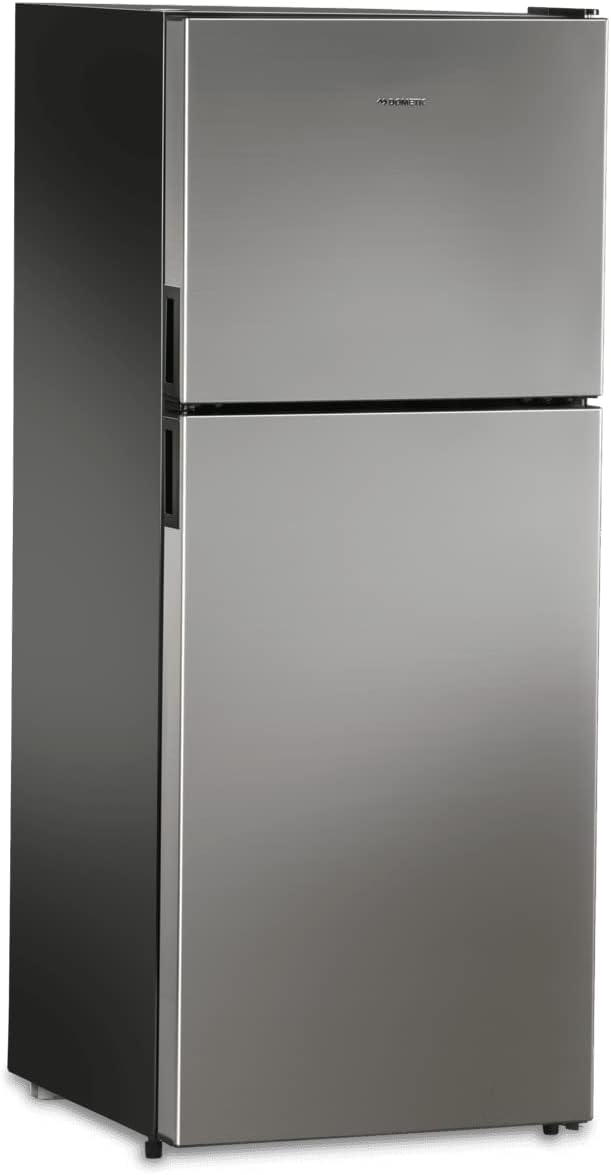
The Dometic DMC4101 is a 10-cubic-foot, 12-volt DC compressor refrigerator designed for installation in mobile living environments. It is a different proposition from a camping cooler: its larger storage volume and RV-style construction make it more appropriate for extended stays, camper conversions, or mobile offices where serious refrigerated space matters.
We may earn a commission when you buy through this link, at no additional cost to you.
Its high-performance compressor is designed to cool quickly in high ambient temperatures while consuming relatively little energy. Automatic temperature control adjusts to the conditions inside the compartment, reducing the need for manual intervention. The listed operating noise is low enough for use while sleeping, an important characteristic in an RV or compact living area.
Construction reflects the demands of mobile use. The metal exterior, strong hinges, and sturdy handles are intended to withstand travel and repeated opening. R134a is the stated refrigerant. Because the unit is 12-volt DC, it integrates naturally with RV electrical systems but does not provide the household AC convenience offered by portable dual-voltage models.
The DMC4101 is best for someone who needs a compact full-size refrigerator rather than a small beverage cooler. Its 3.6 rating indicates mixed customer experiences, so buyers should pay attention to installation requirements, ventilation, and electrical details. It is less appropriate for someone who wants a lightweight unit to carry from a car to a picnic table.
A 10-cubic-foot interior can support more substantial food storage than any portable model in this comparison. It is a better match for RVs, travel trailers, or stationary mobile installations where a full refrigerator is needed.
Automatic temperature control, efficient consumption, and quiet operation address common mobile-living concerns. Durable hinges, handles, and metal construction support repeated use in a vehicle environment.
We may earn a commission when you buy through this link, at no additional cost to you.
The Dometic CD-030DC is a white, low-profile drawer refrigerator with 31-quart, one-cubic-foot capacity. It operates on 12- and 24-volt DC through a compressor refrigeration system. Its drawer format is the defining feature, making it more relevant to compact installations than to conventional tailgate or picnic use.
We may earn a commission when you buy through this link, at no additional cost to you.
A drawer-front refrigerator can make a narrow cabinet or counter easier to organize because contents are reached from above rather than through a wide swinging door. The low-profile body also helps it fit beneath counters, inside console spaces, or within compact camper cabinetry. The compressor provides active cooling rather than relying on ice or passive insulation.
The main limitation is volume. One cubic foot is enough for a focused selection of drinks, snacks, or medication, but it cannot provide the flexible storage of a portable 25- to 34-liter compressor. It also lacks AC compatibility, so the listed power configuration is most appropriate for vehicles, boats, or mobile installations with a suitable DC supply.
The 3.2 rating is the lowest numerical customer rating among the powered portable and mobile products listed. That makes the CD-030DC a more considered purchase. It makes the most sense when a drawer layout, low-profile installation, and 12/24-volt DC operation are the priority rather than maximum capacity or grab-and-go portability.
The pull-out design improves visibility and access in narrow installations. It can sit below a counter or within a compact cabinet without requiring space for a conventional refrigerator door to swing.
Twelve- and 24-volt compatibility broadens its usefulness across vehicles and mobile electrical systems. The compact compressor format delivers active refrigeration where an ice-based cooler would be less convenient.
We may earn a commission when you buy through this link, at no additional cost to you.
The Dometic CoolMatic CD 30 is a low-profile, one-cubic-foot compressor refrigerator finished in black. Like the CD-030DC, it is better understood as an installation product for a vehicle, boat, or compact mobile space than as a traditional portable cooler. The supplied information does not provide a numerical customer rating.
We may earn a commission when you buy through this link, at no additional cost to you.
Its strongest qualities are straightforward. The low-profile format supports under-counter or cabinet installation, the compressor actively cools the interior, and the black finish can blend into utilitarian interiors. It is intended for users who need refrigeration in a restricted footprint rather than a large food-storage volume or a convenient picnic-table cooler.
With one cubic foot of capacity, this model is best reserved for essential beverages, snacks, perishables, or temperature-sensitive items. A single-compartment drawer cannot separate food groups as neatly as a larger refrigerator with multiple shelves or drawers. Its DC-only operation also means the unit is intended for installation near a compatible electrical system rather than regular household outlet use.
There is no listed rating, so customer feedback cannot be used as a meaningful confidence indicator. Buyers should therefore compare physical dimensions, ventilation requirements, and installation details carefully. Choose the CoolMatic CD 30 for a discreet, compact, powered compartment; choose a larger portable model if your primary goal is taking cold food into the outdoors.
The low-profile form can be integrated more cleanly into compact cabinetry than a full-size refrigerator. It is most attractive where usable volume matters more than internal compartment complexity.
The compressor design maintains controlled cooling without the melting-water cleanup associated with ice coolers. The black finish and compact drawer format prioritize function over decorative styling.
We may earn a commission when you buy through this link, at no additional cost to you.
The Dometic CoolFreeze CF 26 is a 21.5-liter portable compressor fridge-freezer with a 4.4 rating. It supports 12-volt DC, 24-volt DC, and 100- to 240-volt AC, offering one of the broadest conventional power combinations in the guide. Its digital temperature display and interior lighting improve everyday usability.
We may earn a commission when you buy through this link, at no additional cost to you.
Cooling and freezing are available between plus 10C and minus 18C. That range covers chilled drinks, fresh food, frozen meals, and harder ice production. The compact compressor is designed to keep the unit relatively lightweight, while the slim body helps it fit into trunks, cargo areas, and other spaces where a full-size portable fridge would be inconvenient.
A digital display reduces guesswork because the user can see the selected temperature without opening the lid. The internal light makes it easier to locate food in dim tents, vehicles, and shaded campsites. Both features are particularly helpful at night, although the light does add another electrical function to monitor.
The main limitation is capacity. At 21.5 liters, this is the smallest powered compressor model listed, so it works best for one or two people or a carefully packed day trip. It has no stated app connectivity, making it more straightforward than the CFX2. It is a strong pick for buyers who value simple controls, broad voltage support, and a deep-freezing range in a compact body.
The digital display lets users monitor the setting without repeatedly opening the lid. This helps preserve cold conditions and makes the compressor easier to manage in dim or inconvenient locations.
The slim design and compact compressor make the CF 26 easier to carry than larger powered coolers. Its 21.5-liter capacity is most effective for compact, well-organized provisions.
We may earn a commission when you buy through this link, at no additional cost to you.
The Dometic Penguin II is a 13,500-BTU, cool-only rooftop air conditioner rather than an electric food cooler. It earns inclusion because it demonstrates a different kind of Dometic cooling solution: cooling an entire RV or mobile living area instead of storing food in a portable compartment. Its listed rating is 4.0.
We may earn a commission when you buy through this link, at no additional cost to you.
The low-profile housing is designed to reduce wind resistance and improve airflow while a vehicle is moving. EPP foam construction helps lower weight and supports cooling efficiency. A rib-reinforced base pan adds structural strength, which is particularly relevant for a unit exposed to road vibration, weather, and repeated installation cycles.
The Penguin II can be used in either ducted or nonducted applications. It is compatible with CCC2 or CT thermostats, including single- and multizone arrangements, but it does not come with preinstalled controls. Additional hardware is required for a complete operational setup, so this is a specialized installation product rather than a ready-to-carry appliance.
R410A refrigerant is used for efficient heat reduction, and the high-performance motor and fan are intended to provide meaningful comfort after a day outdoors. Choose the Penguin II when the objective is cooling an entire mobile interior. It is not a substitute for any portable compressor cooler in this guide, and it would be an unsuitable choice for storing food in a vehicle trunk.
At 13,500 BTU, the Penguin II is designed for a much larger thermal environment than a portable food compartment. It can support whole-room comfort in suitable RV or mobile applications.
Aerodynamic low-profile styling, an EPP housing, and a rib-reinforced base pan address the demands of rooftop installation. Compatible thermostat options give installers some flexibility in system design.
We may earn a commission when you buy through this link, at no additional cost to you.
The Dometic SC26 Coolfun is a 25-liter, 12-volt thermoelectric coolbox with a 2.0 rating. It uses thermoelectric technology to keep drinks and snacks cool, generally up to 18C below the surrounding ambient temperature. That distinction matters: it is a cooler for chilled items, not a compressor freezer capable of producing frozen food.
We may earn a commission when you buy through this link, at no additional cost to you.
Its basic operation is easy to understand. Connect it to a compatible 12-volt supply, place food or beverages inside, and close the lid. The versatile carry handle can support or lock the lid, adding security during travel. A USB port in the lid provides a convenient way to charge small electronic devices while the cooler is in use.
The 25-liter capacity is generous for a thermoelectric unit, although a non-electric hard cooler may hold more volume for the same general footprint. Thermoelectric cooling also becomes less effective as ambient heat rises because the achievable temperature difference is measured against the surrounding environment. It is therefore better suited to moderate conditions than to a hot vehicle in direct sun.
The 2.0 rating is the lowest among all ten listed products, so buyer expectations should be carefully matched to the technology. The SC26 makes sense for a straightforward day-trip cooler, mobile lunch storage, or anyone seeking uncomplicated 12-volt cooling with USB charging. It is not the right option for deep freezing, extended road trips, or demanding high-heat conditions.
Thermoelectric cooling is suited to drinks, snacks, and foods that need to stay cool rather than frozen. Its straightforward design can be attractive for uncomplicated mobile use.
The USB charging port adds utility for small devices, while the versatile handle can support or secure the lid. These small features improve the experience without changing the core cooling method.
We may earn a commission when you buy through this link, at no additional cost to you.
The right choice depends on whether you need portable food storage, compact installed refrigeration, passive ice cooling, or whole-vehicle climate control. Capacity, power availability, temperature performance, and intended environment should guide the decision.
Compressor coolers use refrigerant to remove heat and can provide the coldest performance, making them suitable for frozen food and sustained temperature control. Thermoelectric coolboxes cool relative to ambient temperature and are generally better for drinks and snacks than for freezing. Passive hard coolers use insulation and ice rather than electricity, offering simple operation but requiring ice management. A rooftop air conditioner cools a living space rather than food. Start by matching the technology to what you actually need to preserve.
Choose a compressor for serious cold storage, a thermoelectric unit for simple chilled provisions, and a passive cooler when avoiding power dependence matters most.
Capacity is best evaluated in realistic quantities rather than by a single maximum number of cans. A 21.5-liter compressor suits compact loads, while 25- to 34-liter models offer more flexibility for weekends and families. Installed one-cubic-foot refrigerators focus on essential perishables and beverages in narrow spaces. Ten-cubic-foot units address broader mobile household storage. A hard-sided passive cooler can be useful when volume and organization matter more than powered temperature control.
Estimate what you will store for a typical day, then add modest space for bulky items without allowing unused air to make the unit awkward to carry.
AC power is convenient at home or near an outlet, while 12- and 24-volt DC operation serves vehicles, boats, and campers. Some portable models can also operate with compatible solar components, although those accessories may need to be purchased separately. The CFX5 and CFX3 support Dometic batteries and Obsidian solar panels, while the CFX2 has no internal battery. Installed refrigerator models generally center on DC power. Confirm both the connector and the power source before ordering.
A cooler that fits your power system matters more than one with extra capabilities you cannot use. Build a complete system plan before purchasing solar or battery equipment.
A wide temperature range provides more flexibility for different food categories. The CFX5, CFX3, and CFX2 span minus 7F to 68F, while the CFF 35 and CoolFreeze CF 26 reach minus 18C. That deeper range suits frozen meat, firm ice, and longer frozen storage. The SC26 can cool up to 18C below ambient, but it does not promise true freezing. Accurate range specifications help prevent choosing a unit for a task its technology cannot perform.
Treat the published range as the starting point. Ambient heat, lid opening, ventilation, and packing density can affect real-world temperature performance.
Portable users should consider weight, handles, lid direction, and whether the dimensions fit the intended vehicle or campsite. The CFF 35 and CF 26 feature lids that open from either side, while the Recon includes a removable lid for flexible placement. Compact compressor units are easier to move than the 10-cubic-foot DMC4101 or rooftop Penguin II, which are installation products. A convenient opening is especially valuable when a cooler is positioned where walking around it is difficult.
Prioritize a shape you can comfortably load, unload, and access. A theoretically capable cooler is less useful if it is awkward to move or open.
Controls range from a simple digital temperature display to Bluetooth application management. The CFX2 allows remote monitoring and adjustment, which is helpful in vehicles and campsites. The CF 26 provides at-a-glance temperature feedback, while the CFX5 and CFX3 emphasize three-stage dynamic battery protection. When operating from a vehicle battery, that protection can help prevent an accidental drain. The most sophisticated interface is not automatically the best choice for every user, so compare the required features rather than assuming more controls are always preferable.
Choose app control for convenience and battery protection for vehicle travel. For simple picnics, a clear display and limited controls may be entirely sufficient.
Portable coolers must withstand being lifted, transported, and opened on uneven ground. Look for secure latches, robust handles, stable feet, and a gasket that can maintain a close seal. The Recon uses injection-molded construction, a nonskid lid, and metal latch catchers, while the CFX models include a textured nonslip lid and TPE gaskets. Interior dividers and baskets can also improve organization. A removable divider makes it easier to separate delicate foods from liquids or frequently used items from bulk supplies.
Prioritize a secure closure and manageable handles, then consider dividers and baskets if your typical load contains mixed food and beverages.
A portable cooler should be evaluated as luggage that contains food, whereas an installed refrigerator should be evaluated as part of a vehicle or cabinet system. The DMC4101, CD-030DC, and CoolMatic CD 30 require appropriate space, ventilation, and DC wiring. The Penguin II is designed for rooftop installation and needs compatible controls and additional hardware. These products may deliver excellent cooling, but they are not substitutes for a compact unit carried to a picnic, lake, or tailgate.
If your priority is grab-and-go food storage, focus on the portable compressor, thermoelectric, and hard-sided models rather than installed appliances.
Before first use, inspect the lid, gasket, power cables, and connectors. Confirm that the unit is configured for the correct power source, and allow a compressor model to acclimate before loading it. Pre-chill the compartment for several hours when possible, and place frequently used items near the top. Keep the lid closed as much as possible because each opening lets warm air enter and forces the cooling system to work harder.
For a compressor cooler, select the temperature appropriate for the food being stored and use protection between the set point and the desired food temperature where necessary. Thermoelectric units should be packed with pre-chilled items because their cooling performance is measured relative to ambient temperature. A passive hard-sided cooler performs best with block ice, high-quality frozen packs, and drainage that keeps food above pooled meltwater.
Clean the interior with mild soap and water after use, and dry it completely before closing the lid. Keep condenser openings and ventilation areas clear of dust, debris, and direct obstruction. Inspect gaskets for trapped debris and make sure the lid closes evenly. Store portable units with the lid open or slightly vented when they are clean and dry, and have installed refrigeration systems serviced by a qualified professional when electrical or refrigerant concerns arise.
A compressor cooler uses a refrigerant-based system to remove heat, allowing temperatures well below the surrounding environment and, in some models, true freezing. A thermoelectric cooler cools relative to ambient temperature and works best for drinks, snacks, and other items that only need to be chilled. Compressor models are the stronger choice for frozen food and high-heat travel.
The CFX5 and CFX3 Series and the CFX2 Series are both strong weekend options because they offer AC and DC power with adjustable compressor cooling. The CFX5 and CFX3 support 25 liters and additional solar or battery configurations, while the CFX2 provides 28 liters and Bluetooth app control. Choose based on the importance of off-grid expansion versus remote temperature management.
Several models support 12-volt or 24-volt DC vehicle power, including the CFX5 and CFX3, CFX2, CFF 35, CoolFreeze CF 26, and SC26 Coolfun. Always check the exact lead, plug, voltage, and power requirements in the product information before connection. Running a cooler for extended periods also makes battery protection or a suitable auxiliary power setup important.
The CFX2 specifically connects to vehicle DC and household AC but does not have an internal battery. The CFX5 and CFX3 can work with compatible Dometic batteries and Obsidian solar panels, which are separate accessories. A model that requires no internal battery is often simpler to operate, though it must remain connected to an appropriate power source.
Dometic lists a capacity of up to 36 cans or three 1.5-liter bottles in the 28-liter compartment. The number of cans does not directly indicate meal capacity because food shapes, packaging, dividers, and the temperature setting all affect usable space. For mixed loads, leave enough room to access items without unpacking the entire compartment.
The Recon is a passive hard-sided cooler, not an active electric appliance. Its two inches of performance insulation can help preserve cold temperatures when packed with ice, but it does not provide powered refrigeration or a stated freezer range. Users who need frozen food should choose a compressor model such as the CFF 35 or CoolFreeze CF 26.
No. The Penguin II is a rooftop air conditioner intended to cool an RV or other mobile interior. It does not store or refrigerate food. It appears in this guide only to provide a complete comparison of the listed Dometic cooling products, and it requires compatible controls, hardware, and proper rooftop installation.
Pre-chill the compartment when possible, inspect the gasket and closure, and confirm that all power connections are secure. For a compressor model, run it on its recommended setting before loading; thermoelectric models work best with already-chilled contents. Leave some open space for air circulation and keep the lid closed whenever practical.
The CFX5 and CFX3 Series stands out for power flexibility, battery protection, and a capable portable temperature range. The CFX2 balances a 28-liter compartment with Bluetooth control, while the CFF 35 offers the strongest combination of roomy storage, deep freezing, and dual-side access among the portable compressor selections.
Prioritize the feature that removes the most friction from your trips. Choose app control for remote management, deep-freezing performance for frozen food, a passive design for no-power cooling, or an installed drawer refrigerator for a compact vehicle cabinet. Capacity should follow the number of people and the length of the trip rather than the largest number available.
Finally, confirm dimensions, electrical requirements, included components, and current product details before ordering. Listings can change, and a cooler’s usefulness depends on how closely its capacity and power system match your specific vehicle, campsite, and food-storage needs.

