
Lenovo V15 Business Laptop
4.3Editor score
Modern N100 processor
Energy Star certified
Full HD anti-glare display
Wi-Fi 6 connectivity
Low power consumption laptops are designed to handle browsing, office work, online learning, communication, and media while using less energy than more demanding systems. The best examples balance efficient processors, capable displays, useful battery life, practical ports, and a comfortable balance between portability and productivity.
We compared all ten laptops using their published specifications, including processor efficiency, memory, storage, display quality, connectivity, portability, battery claims, operating system, and intended use. The list covers Chrome OS, Windows models, smaller portable designs, larger screens, and configurations for students, home users, and office workers.
Each pick reveals what it is best suited for, including the strongest battery-oriented option, practical everyday choices, and larger-screen alternatives. Feature support and product availability can change, and current pricing should be checked before buying, but the comparison provides a clear starting point for narrow research.
4.3Editor score

4.8Editor score

4.6Editor score
As an Amazon Associate we earn from qualifying purchases.
The table below compares each laptop's processor class, memory, display, and principal portability or efficiency feature. It provides a fast way to narrow the field before reading the detailed reviews.




The HP Chromebook 14 stands apart through its combination of a low-power Intel Celeron N4120, Chrome OS, and a stated battery life of up to 14 hours. Its 4.3 rating reflects a broadly dependable package for school, home, and travel. The 14-inch anti-glare screen and slim construction make it particularly easy to carry between locations.
We may earn a commission when you buy through this link, at no additional cost to you.
The quad-core processor is designed around efficiency, while Intel UHD Graphics 600 supports smooth 4K content playback and suitable next-generation games. Fast Charge can raise the battery from zero to approximately 50 percent in around 45 minutes, which is useful between classes or meetings. Wi-Fi 5, Bluetooth, stereo speakers, and a multi-touch gesture pad cover the essentials without adding bulk.
The main limitation is 64GB of eMMC storage, which is modest for downloaded applications, offline media, or large document collections. Its 1366-by-768 HD panel is adequate for routine work but less detailed than Full HD alternatives. Chrome OS also places the device within a web-centered ecosystem, so buyers needing specialized desktop software should confirm compatibility first.
This is a strong recommendation for students, travelers, and users whose work revolves around browsing, documents, video calls, and streaming. It may be the most straightforward option in the group for long periods away from an outlet. Buyers who need larger local storage should consider one of the SSD-equipped Windows alternatives.
The stated 14-hour battery target and approximately 45-minute fast charge make this Chromebook particularly practical for long classes, airport waits, and remote work. Actual runtime depends on display brightness, network activity, and workload.
Chrome OS keeps the interface approachable while supporting familiar browser-based workflows, Android applications, and automatic system updates. Its strongest use case is a lightweight, low-maintenance computer connected to cloud services.
We may earn a commission when you buy through this link, at no additional cost to you.
The Lenovo V15 Business Laptop offers a polished, energy-conscious balance for office and school users. Its Intel N100 processor, LPDDR5 memory, UFS 3.1 storage, and ENERGY STAR 9.0 certification form an efficient foundation. The 4.3 rating reflects a capable everyday package rather than a high-performance workstation.
We may earn a commission when you buy through this link, at no additional cost to you.
A 15.6-inch Full HD anti-glare display provides more working space than the smaller 14-inch models, while 250 nits and low-blue-light certification make it practical for extended sessions. Connectivity is unusually useful for this class: Wi-Fi 6, Bluetooth 5.2, two USB-A ports, USB-C with power delivery and DisplayPort, HDMI, an SD reader, and an audio jack reduce the need for adapters.
Its 4GB of memory is the principal limitation, particularly when many browser tabs and applications remain open. Storage is also modest at 128GB, although the SD reader and cloud integration provide options for expansion. Windows 11 Home in S mode improves security and management but restricts some traditional desktop installations.
The Lenovo V15 is best for users who value a large, comfortable display, modern connectivity, and a portable business design. It stands out in this roundup as a well-rounded premium option for productivity without requiring a high-power processor. Those needing more memory for intensive multitasking should compare it with the 8GB Lenovo Essential model.
The combination of USB-C power delivery, DisplayPort, HDMI, USB-A, and an SD card reader makes the V15 especially adaptable to offices, classrooms, and shared workspaces. A single USB-C connection can handle charging and an external display.
The N100, LPDDR5 memory, UFS storage, and ENERGY STAR certification support efficient routine work. A privacy shutter, firmware TPM 2.0, and MIL-STD-810H testing add practical value for organizational buyers.
We may earn a commission when you buy through this link, at no additional cost to you.
The HP Everyday Slim N150 pairs an efficient Intel N150 processor with a stated battery life of up to 11.5 hours. Its 5.0 rating makes it one of the strongest-rated options in the list, although ratings should be considered alongside memory and display limitations. It targets everyday Windows use in a compact 14-inch form.
We may earn a commission when you buy through this link, at no additional cost to you.
DDR5 memory, a 128GB SSD, and Windows 11 provide a responsive foundation for documents, browsing, classes, and communication. The 220-nit HD display uses micro-edge styling and BrightView technology, while the 720p camera benefits from temporal noise reduction. USB-C, HDMI, USB-A, a card reader, and an audio connection provide more flexibility than many basic laptops.
Four gigabytes of RAM may become restrictive as applications and browser tabs accumulate. The 1366-by-768 resolution is suitable for documents and streaming but lacks the sharpness of the Full HD panels elsewhere in the lineup. The included one-year Microsoft 365 subscription and 1TB OneDrive allocation improve the value of the package for students already invested in that ecosystem.
This laptop is well suited to commuters, students, and families seeking a conventional Windows device with efficient hardware and solid-state storage. Its light weight and long battery target make it a sensible travel companion. Users who need a sharper display should move up to a Full HD Lenovo or ASUS option.
The N150 is designed for browsing, office applications, video calls, and media rather than demanding games or professional design workloads. DDR5 memory and SSD storage help keep routine interactions responsive.
Despite its 0.71-inch profile, the laptop includes USB-C, two USB-A connections, HDMI, a media reader, and an audio jack. This makes it convenient to connect peripherals without carrying a large adapter.
We may earn a commission when you buy through this link, at no additional cost to you.
The HP 2026 Everyday Slim is a low-power 14-inch laptop oriented toward streaming, learning, browsing, and office tasks. Its Intel N150 processor and Windows 11 Home provide a modern platform, while the listed 3.24-pound weight keeps it easy to carry. No customer rating is provided in the source data, so the specification sheet is more informative than its rating history.
We may earn a commission when you buy through this link, at no additional cost to you.
The anti-glare panel is rated at 250 nits and includes a 79 percent screen-to-body ratio, which helps create a relatively open visual design without increasing the footprint. A dedicated Microsoft Copilot key, multi-touch Imagepad, 720p camera, and temporal noise reduction improve everyday interaction. The battery target reaches up to 11.5 hours for video playback or 7.5 hours for wireless streaming.
The 1366-by-768 resolution is the clearest compromise, as it remains less detailed than Full HD alternatives and may appear soft on a larger desk or during detailed editing. The supplied information does not specify the amount of onboard RAM, so buyers should check current listing details before comparing it with models offering 4GB or 8GB. Cloud storage is useful, but it is not a replacement for local capacity when files must remain offline.
The 2026 Edition appeals to buyers who value a comfortable anti-glare screen, modern AI-oriented controls, and a portable footprint. It is a sensible choice for students and home users who primarily work online. For more confidence in performance capacity, a model with clearly stated memory may be easier to evaluate.
The 250-nit anti-glare display is designed to remain readable in varied indoor settings. Its 14-inch size balances a useful viewing area with a chassis light enough for regular travel.
A 0.71-inch profile, 3.24-pound weight, and stated 11.5-hour video battery target support mobile use. The Copilot key adds a direct route to an on-device assistant without changing the standard keyboard layout.
We may earn a commission when you buy through this link, at no additional cost to you.
The Lenovo Essential 15.6-inch is an efficient Windows laptop that prioritizes memory over maximum storage. Its Intel N150, 8GB of LPDDR5 memory, and 128GB of UFS 3.1 storage make it a strong candidate for users who keep many applications or browser tabs open. The supplied 4.1 rating is the lowest among the rated picks, so individual priorities matter.
We may earn a commission when you buy through this link, at no additional cost to you.
The Full HD anti-glare panel has 250 nits of brightness, an 88 percent screen-to-body ratio, and a 720p camera with a privacy shutter. Wi-Fi 6, Bluetooth 5.2, USB-C with power delivery and DisplayPort, dual USB-A ports, HDMI, an SD reader, and a headphone jack cover common productivity needs. A dedicated AI Copilot hotkey is also included.
Storage remains the most obvious constraint. At 128GB, the laptop may require regular housekeeping or reliance on cloud services and the SD reader for larger files. Windows 11 Home in S mode supports security and streamlined performance, but users must check whether their required applications can be installed in that mode.
This model is a strong fit for students and office users who need more working memory than a basic 4GB laptop provides. Its 3.42-pound weight and 0.70-inch profile preserve portability despite the larger screen. It also stands out with ENERGY STAR 9.0 certification and MIL-STD-810H durability testing.
Eight gigabytes of LPDDR5 memory is the key advantage over most 4GB competitors. It provides more room for browser sessions, communication apps, and office work running simultaneously.
The 15.6-inch Full HD display is suitable for document work, classes, and streaming. At the same time, the 0.70-inch profile and 3.42-pound weight remain manageable for commuting.
We may earn a commission when you buy through this link, at no additional cost to you.
The Amzboy 15.6-inch N4020 stands out for its silent fanless construction and efficient daily performance. The 4.6 rating is among the strongest in the group. Its N4020 processor is suited to browsing, documents, online classes, video calls, and entertainment rather than demanding software or advanced games.
We may earn a commission when you buy through this link, at no additional cost to you.
A 1920-by-1080 anti-glare display offers more resolution than many similarly positioned laptops, while the 3.3-pound weight keeps the larger screen practical to carry. The fanless solid-state design eliminates fan noise and helps prevent internal dust accumulation. A 45-watt USB-C power delivery adapter simplifies travel by allowing one compact charging setup to serve multiple compatible devices.
The 4GB of memory and 128GB of eMMC storage are basic, and the expandable TF card slot cannot replace the internal drive's speed. Buyers needing large local libraries or intensive multitasking should choose a laptop with more memory and SSD storage. Connectivity includes dual USB-C connections and USB 3.2, although the supplied information lists fewer legacy ports than several competitors.
This is a convincing low-power choice for students, home users, and travelers who value silence, a large clear screen, and simple charging. The preinstalled Windows 11 environment also provides broader software familiarity than Chrome OS. It is most appropriate for general computing where power efficiency takes priority over intensive performance.
The fanless design is particularly useful in libraries, bedrooms, offices, and online meeting environments. It provides a quiet mechanical profile without requiring a powerful cooling system.
The included 45-watt USB-C adapter reduces the amount of equipment needed on the road. It is a convenient match for users who already carry USB-C devices and prefer a compact power supply.
We may earn a commission when you buy through this link, at no additional cost to you.
The ASUS Vivobook Go 15.6-inch is a student-oriented laptop built around an efficient Intel Celeron N4500, a Full HD display, and a 42Wh battery. Its 3.9 rating is the lowest among the rated products, so buyers should confirm that its performance level meets their needs. It remains well suited to education, browsing, and document-based work.
We may earn a commission when you buy through this link, at no additional cost to you.
The 1920-by-1080 60Hz panel has 220 nits of peak brightness and provides a useful level of detail for classes and study. An ErgoSense backlit chiclet keyboard is valuable in dim rooms, while the 720p camera includes a physical privacy shutter. SonicMaster speakers, a Smart Amplifier, and ASUS Audio Booster support louder, clearer multimedia.
Its two-core N4500 and 4GB of DDR4 memory are modest compared with newer quad-core N-series alternatives. The 128GB eMMC drive also has limited capacity and can feel slower under sustained storage demand. Fast Charge is claimed to reach 60 percent in 49 minutes through the versatile USB-C port, which helps compensate for the moderate battery capacity.
The Vivobook Go is best for students who value a backlit keyboard, sharp 15.6-inch screen, and quiet, portable Windows experience. Its feature set is attractive for evening study and ordinary multimedia use. Buyers who need more memory, larger storage, or a higher-rated option should compare the newer N100 and N150 models.
The backlit keyboard, privacy-shutter camera, and Full HD panel create a practical study environment. These details are more relevant to daily schoolwork than maximum processing power.
SonicMaster speakers and a Smart Amplifier enhance video lessons and entertainment. The USB-C fast-charging function offers a useful way to regain battery time between classes.
We may earn a commission when you buy through this link, at no additional cost to you.
The HP 14-inch 2027 Edition combines an efficient Intel N150 processor, DDR5 memory, and solid-state storage in a compact Windows laptop. Its 4.5 rating is strong for the group. The design is aimed at users who need a conventional office and study computer without a large chassis or high-power hardware.
We may earn a commission when you buy through this link, at no additional cost to you.
The non-touch 14-inch display offers 250 nits and anti-glare treatment, making it practical for reading documents and working near windows. The laptop weighs 3.24 pounds and measures 0.71 inches thick, so it is straightforward to carry. USB-C, USB-A, HDMI, a headphone and microphone jack, Wi-Fi, and Bluetooth cover core connection needs.
Four gigabytes of memory is the main constraint for users who maintain many applications at once. The 128GB SSD provides a fast and dependable platform for essentials, but the 1TB cloud allocation will be more useful for online files than for offline media libraries. The HD resolution is also less detailed than the Full HD options in this comparison.
This HP model is best for students, commuters, and office workers seeking a small, conventional Windows machine with modern storage. It works especially well for email, documents, browser-based applications, and video communication. Users who spend much of the day viewing detailed content may prefer a higher-resolution panel.
The quad-core N150 is built for routine productivity rather than demanding creative workloads. DDR5 memory and a 128GB SSD create a modern foundation for web and office applications.
A 3.24-pound chassis and 0.71-inch profile minimize bulk without removing essential ports. The anti-glare screen also helps with comfort during ordinary office or classroom use.
We may earn a commission when you buy through this link, at no additional cost to you.
The jumper 15.6-inch FHD earns the top overall position because it combines the highest listed rating, 4.8, with an unusually generous 12GB of memory. Its Intel Celeron 5205U is built around low power consumption and 14nm manufacturing. The result is a balanced configuration for browsing, office tasks, streaming, and light multitasking.
We may earn a commission when you buy through this link, at no additional cost to you.
Its 256GB solid-state drive supports quick boot and application loading, while expandable storage can reach 512GB. The 15.6-inch Full HD IPS panel uses slim bezels, anti-glare coating, and blue-light filtering for long study or work sessions. Windows 11 is preinstalled, and the broad port selection includes USB-C, HDMI, dual USB 3.0 connections, a Micro TF slot, and an audio jack.
The processor is an older dual-core design with a fixed 1.9GHz base frequency, so it is not the strongest choice for intensive computing or modern games. The 38Wh battery is smaller than many batteries in the group, and Bluetooth 4.2 plus dual-band Wi-Fi 5 are less advanced than Wi-Fi 6 configurations elsewhere. None of these details changes the model’s appeal for routine productivity.
This laptop is our strongest all-around recommendation for buyers who prioritize memory, storage, screen quality, and value within an efficient daily computer. It suits students, families, and office workers who need more multitasking room than a typical 4GB model. Heavy software users should choose a more recent processor, but most everyday tasks are well within this configuration.
Twelve gigabytes of RAM is the standout specification and provides useful headroom for many browser tabs, office applications, and communication tools. It is the main reason this laptop leads the comparison.
The IPS panel, narrow bezels, anti-glare finish, and blue-light filtering make the large screen suitable for extended study and office work. Native 1920-by-1080 resolution also provides more detail than the basic HD alternatives.
We may earn a commission when you buy through this link, at no additional cost to you.
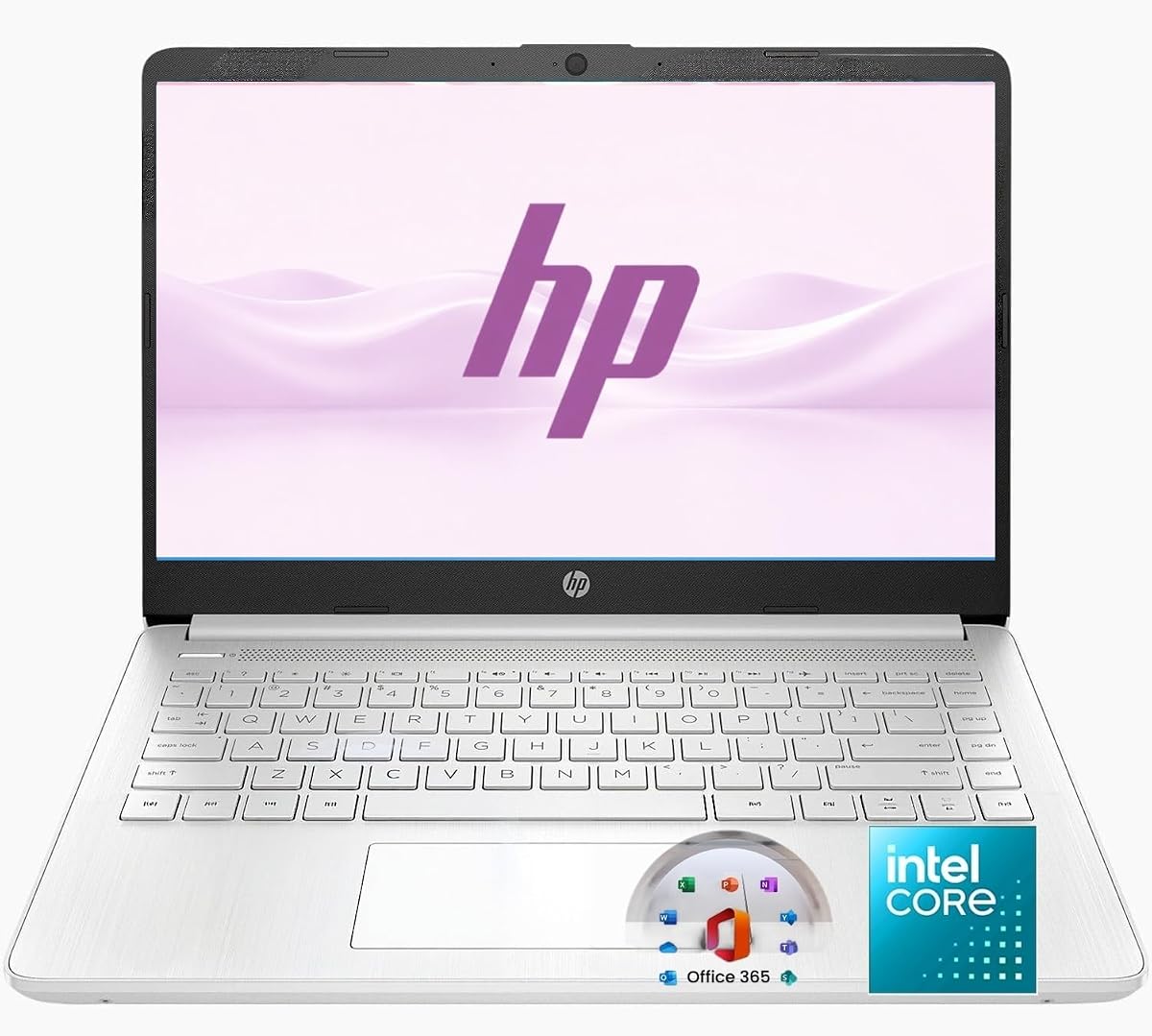
The HP 14-inch Ultra Light is a productivity-focused package built around an Intel N150 processor and 8GB of memory. Its 4.3 rating aligns with the stronger entries in the group. The configuration is designed for students, home offices, and daily business users who value a ready-to-use bundle.
We may earn a commission when you buy through this link, at no additional cost to you.
Eight gigabytes of RAM provides more breathing room for browser tabs, email, online classes, documents, and video meetings. Wi-Fi 6, Bluetooth 5.4, a 720p webcam, dual microphones, and a 14-inch HD display support communication and online learning. A one-year Office 365 subscription provides Word, Excel, and PowerPoint, while 128GB of UFS storage handles the operating system and essential files.
The removable 256GB SD card, external optical drive, and wireless silent mouse make this more than a basic laptop bundle. However, the internal storage remains modest, and the external accessories do not replace the value of a larger SSD. The HD display and N150 processor also make it less suitable for professional design, intensive editing, or high-end gaming.
This HP laptop is a good choice for students and home workers seeking a low-power system with enough memory for ordinary multitasking. The included software and accessories can reduce setup time, while the portable 14-inch design remains easy to carry. Buyers who want a sharper display should investigate Full HD alternatives in the same roundup.
Office 365, an SD card, an external optical drive, and a wireless mouse provide several useful additions. The package is particularly convenient for students assembling a functional workspace.
Eight gigabytes of memory is valuable for browser-heavy sessions, while Wi-Fi 6 and Bluetooth 5.4 provide modern wireless connectivity. Together, they support the communication and online learning this laptop targets.
We may earn a commission when you buy through this link, at no additional cost to you.
A low power consumption laptop should be judged by more than its processor label. Battery claims, memory, display characteristics, cooling design, connectivity, and intended workload all influence whether a model will feel efficient in everyday use.
Begin with the work the computer must perform. Intel N100, N150, Celeron N4020, Celeron N4500, and Celeron 5205U processors all target lightweight workloads, but they are not interchangeable. The N100 and N150 quad-core designs generally provide more responsive headroom for multiple applications, while the Celeron N4020 and N4500 options emphasize basic browsing and education. The older 5205U chip appears in the highly rated jumper model, where 12GB of memory compensates for some general multitasking needs. Look for a processor designed for your actual applications rather than assuming every entry-level chip delivers the same experience.
Published battery figures usually describe a particular test scenario, so they should be treated as comparative guidance rather than a guaranteed runtime. The HP Chromebook advertises up to 14 hours, while several HP Windows models list up to 11.5 hours of video playback. The jumper offers a 38Wh battery, and the ASUS Vivobook Go uses a 42Wh unit. Battery size alone does not determine runtime because processor load, screen brightness, wireless activity, and sleep behavior also matter. Fast charging can be equally valuable when a computer spends long periods away from an outlet.
Memory determines how comfortably a low-power laptop can hold several programs and browser tabs. Models with 4GB are adequate for basic online work, but 8GB provides a better balance and the jumper's 12GB configuration gives it a notable advantage in this comparison. Low-power processors benefit from sufficient memory because they may otherwise spend more time waiting on applications. For students, remote workers, and anyone who keeps messaging, browser, and document tools open simultaneously, 8GB or more is the more practical target.
A solid-state drive improves startup time, file access, and application responsiveness compared with eMMC in many situations. SSD models in this list include the HP N150 laptops, the Lenovo V15, the ASUS Vivobook Go, and the jumper. Capacity also matters: 64GB is restrictive, while 128GB suits essential files and applications, and 256GB provides more comfortable room for a larger document or media library. Cloud storage helps with online documents but does not provide the same offline access or performance as local storage. SD or TF expansion can add capacity, although card storage is not always as fast as the internal drive.
Screen size and chassis weight should be balanced according to where you work. Fourteen-inch models are easier to carry and often offer better battery results, while 15.6-inch screens offer more room for documents, classes, and split-screen work. Full HD panels are sharper than the 1366-by-768 HD displays found on several HP models and the Amzboy. Anti-glare finishes improve comfort around bright windows, and 250-nit panels generally provide a more useful baseline than dimmer 220-nit screens. Weight remains near three to four pounds across much of the list, so display quality may be the decisive portability tradeoff.
Wireless standards and physical ports determine how easily a laptop connects to the surrounding environment. Wi-Fi 6 and Bluetooth 5.2 or 5.4 appear on the Lenovo and select HP configurations, while Wi-Fi 5 remains sufficient for many ordinary networks. USB-C power delivery is useful for compact charging, and DisplayPort support can simplify external-monitor setups. Look for a good mix of USB-A, USB-C, HDMI, an audio jack, and a card reader so routine peripherals do not require a large adapter collection. Chrome OS laptops are especially dependent on cloud connectivity and should have stable Wi-Fi.
Chrome OS and Windows 11 serve different needs. Chrome OS is streamlined for browser-based work, Android applications, and low-maintenance use, while Windows 11 supports a broader range of traditional desktop software. Several Lenovo and ASUS models use Windows 11 Home in S mode, which emphasizes security but can limit application installation. Verify that every program you need is supported before choosing a restricted edition. Microsoft 365 subscriptions can make a new laptop immediately useful for documents, spreadsheets, presentations, and cloud storage, although the features and availability of these bundles can change.
Low-power systems do not all cool in the same way. The Amzboy's fanless solid-state design promises silent operation and helps reduce dust exposure, while other models may use conventional active cooling. ENERGY STAR certification on the HP Chromebook and both Lenovos, along with EPEAT Silver registration, indicates attention to environmental criteria. Build-related features such as MIL-STD-810H testing, a privacy shutter, fingerprint-resistant TPM hardware, and a sturdy keyboard can influence suitability for school or work. These attributes do not determine performance alone, but they may matter more than minor specification differences for daily longevity and peace of mind.
Begin by configuring battery conservation in the operating system, reducing screen brightness when the room allows, and disabling unnecessary background applications. Low-power processors benefit from having fewer simultaneous tasks, so close unused browser tabs and avoid leaving demanding applications running while the laptop is unplugged. For a Chrome OS device, review installed apps and sync settings; for Windows, check startup programs and power mode controls. Using these settings can make everyday operation feel more responsive while helping preserve battery life.
Charge with the supplied or manufacturer-approved adapter, especially when using USB-C power delivery. Fast charging is useful for travel, but it is not necessary for every task. Keep the laptop's vents unobstructed and avoid placing it on soft surfaces that can trap heat. A padded case protects the chassis during transport, while a dry microfiber cloth handles fingerprints and dust. Users with removable storage should eject cards and discs safely before moving or servicing the device.
Maintain a sensible software routine by installing operating system updates, updating applications, and periodically checking free storage. Back up important documents to more than one location, particularly when much of the workspace relies on cloud storage. Avoid placing heavy objects on the keyboard or touching the screen with sharp objects. When the device is not in use for extended periods, save work, shut it down or use the appropriate sleep mode, and store it in a dry, temperature-stable location.
For general use, the Intel N100 or N150 quad-core processors offer a strong balance of efficiency and responsiveness. They handle browsing, office work, classes, video calls, and media well without requiring a high-power laptop processor. More basic Celeron chips can work for light online tasks, but they provide less headroom when several applications are open. The correct choice ultimately depends on the software and workload you expect.
Four gigabytes can be sufficient for basic browsing, document editing, and a small number of applications. It becomes restrictive when many browser tabs, video calls, and productivity tools run together. Users who regularly multitask should look for 8GB or more, while the jumper's 12GB configuration offers even more comfortable headroom.
A larger display can consume additional power, especially when brightness is raised. The effect depends on panel technology, screen size, workload, and power-management settings. Many 15.6-inch models in this guide still use efficient processors and offer extended battery claims, but a smaller display generally provides more room for battery capacity and cooling in the same portable form factor.
4K-ready capability means the laptop can display high-resolution content, although streaming services may still limit resolution based on the application, network connection, and account. The HP Chromebook's Intel UHD Graphics 600 supports smooth 4K content according to its published features. For most users, a reliable Full HD display and stable wireless connection are more important than maximum streaming resolution.
Chrome OS can feel lighter because it is centered on browser-based workflows and automatically manages many background tasks. Windows offers much broader traditional software compatibility and remains the safer choice for specialized applications. If your work is entirely online, Chrome OS may provide a simpler experience; if you need conventional software, choose a compatible Windows configuration.
An SSD generally provides faster file access and more consistent application performance than eMMC. Capacity also tends to be easier to find in SSD configurations, with 128GB and 256GB options appearing frequently in this roundup. eMMC can still serve basic users, especially when files remain small or are stored in the cloud. Consider an SD or TF expansion option when more local capacity is needed.
Wi-Fi 5 or Wi-Fi 6, Bluetooth, USB-C charging, and an audio jack cover most travel needs. DisplayPort-compatible USB-C can also be useful when connecting to a hotel or workplace monitor. Carrying a compact adapter or docking setup helps when a location offers limited ports, and a sufficiently large battery reduces the need to charge during the day.
Lower screen brightness, enable the operating system's battery saver, disable unused startup applications, and close background browser tabs. Sleeping or shutting down the computer when it is not being used also prevents unnecessary activity. Fast charging can help between long periods of travel, but maintaining healthy charging habits and avoiding consistently high heat will protect long-term battery condition.
The jumper 15.6-inch FHD stands out as the strongest overall option because it combines a 4.8 rating with 12GB of memory, a 256GB solid-state drive, and a Full HD eye-care display. The Lenovo V15 is a polished business alternative with modern ports, Wi-Fi 6, and environmental certifications, while the Amzboy N4020 is the budget-friendly fanless choice for users who value silence and simple USB-C charging.
Prioritize the processor and memory combination first, because low-power hardware works best when it is not overloaded. Choose 8GB or more for regular multitasking, an SSD for local files, and Full HD if screen detail matters. Smaller 14-inch models suit frequent travel, whereas 15.6-inch screens provide a better workspace for classes, documents, and media. Certified, durable, and secure models may offer added value for institutional buyers.
Before making a final choice, verify the current specification details, supported applications, warranty terms, accessory contents, and current pricing. Product configurations and seller listings can change over time. Once those details are confirmed, use the comparison and reviews to select the laptop that best matches your workload rather than relying on battery claims alone.