
SUUNTO Tandem 360PC/360R
4.7Editor score
Precision compass and clinometer
Degree and percent scales
Tripod-mountable alloy housing
Our Suunto Compass guide compares ten models for hiking, diving, surveying, mapping, and outdoor navigation, with ratings, features, and buying advice.
A dependable compass is more than a directional pointer: it is a backup navigation tool, a map-reading aid, and sometimes an essential measuring instrument. Suunto compasses cover hiking, orienteering, diving, marine use, professional surveying, and general outdoor navigation, so the right model depends heavily on where and how it will be used.
This guide compares ten compasses using their supplied ratings, construction, navigation features, mounting options, and intended activities. It covers liquid-filled baseplate models, sighting compasses, a combined compass and clinometer, two underwater SK-8 variants, a digital dive computer with a compass, and a professional alternative from Sun Company.
The rankings reveal different strengths: the Tandem offers the broadest professional toolset, the MC-2 emphasizes precision and sighting, the A-30 is suited to low-light hiking, and the SK-8 models serve divers. Every pick shows what makes it distinctive, while availability, configuration options, and pricing can change over time.
4.7Editor score

4.8Editor score

4.6Editor score
The table below compares all ten selections by role, navigation method, construction, and practical features, making it easier to distinguish a recreational baseplate compass from a professional sighting instrument or underwater compass.
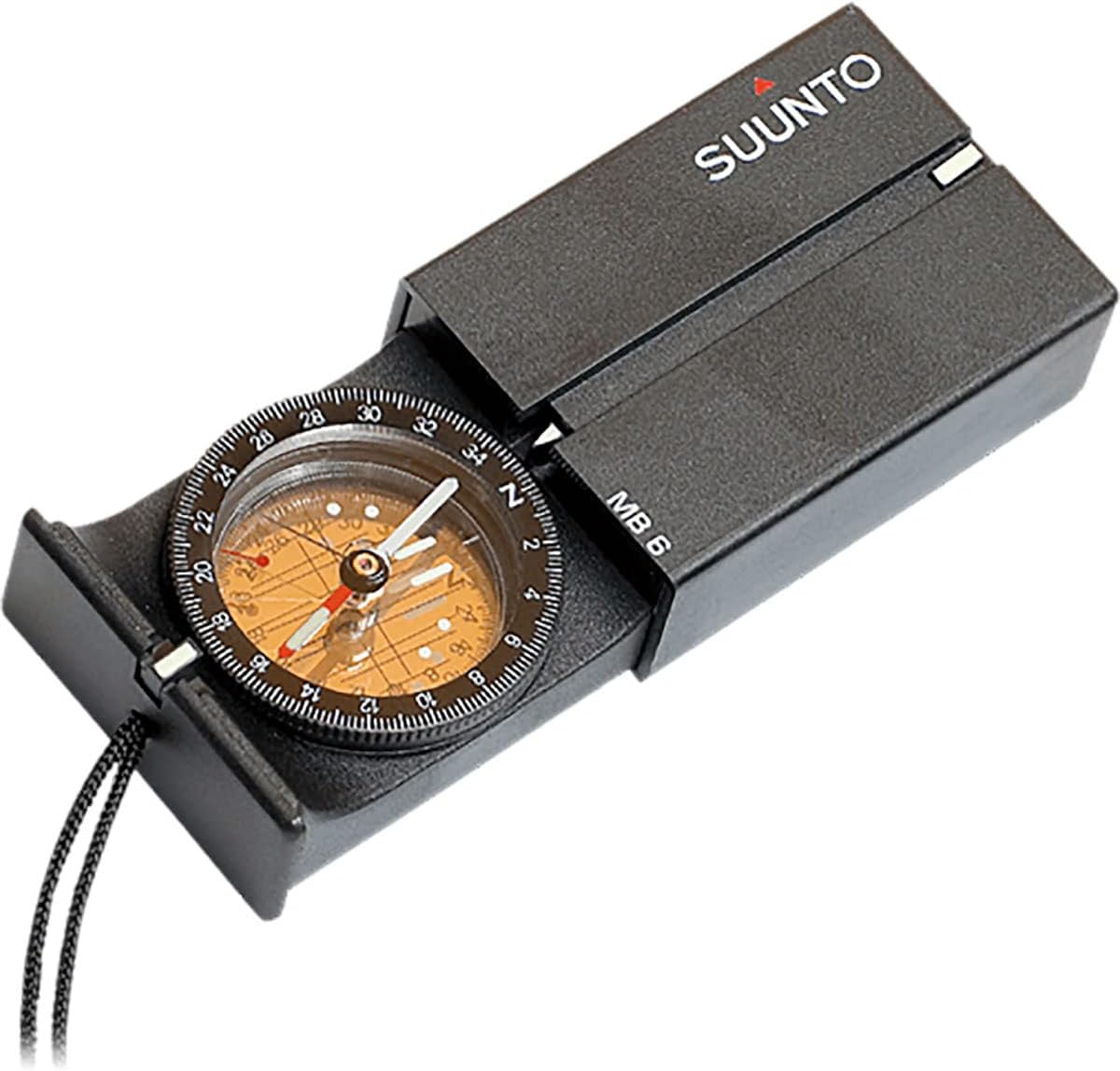
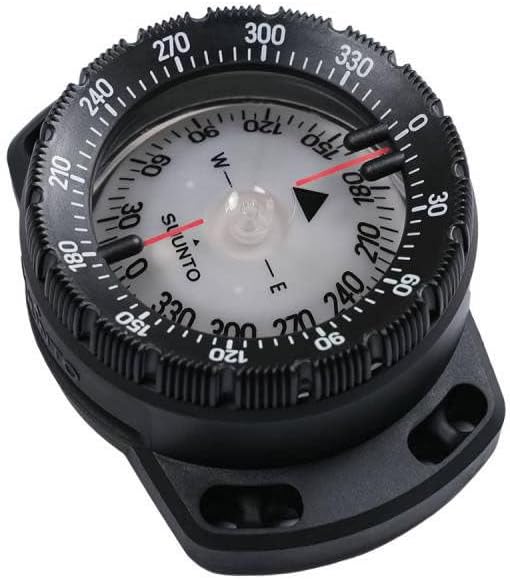

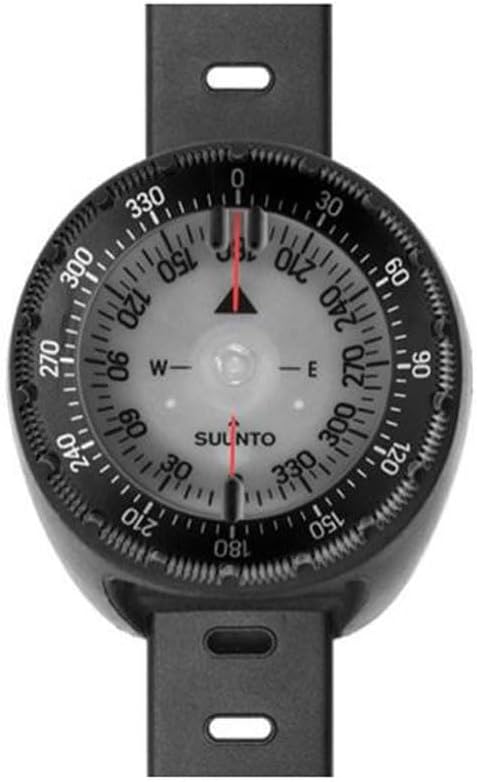


The SUUNTO Tandem 360PC/360R is a precision compass and clinometer built for professionals who need more than a basic direction pointer. Its 4.7 rating reflects a strong balance of useful construction and specialized capability. The liquid-filled instrument, sturdy alloy housing, and two measuring functions give it a clear purpose: taking bearings while also determining inclination.
We may earn a commission when you buy through this link, at no additional cost to you.
Its most valuable feature is the combination of direction and slope measurement. The clinometer provides inclination scales in both degrees and percent, allowing users to assess vertical angles as well as horizontal bearings. This makes the Tandem useful for antenna installation, surveying, engineering, mining, architecture, and other work where orientation and elevation are connected tasks.
The ability to mount the instrument on a tripod is especially useful for repeatable measurements. A stable platform can make it easier to establish and maintain a bearing while consulting a map, recording an angle, or completing a task that requires both hands. The mechanical design also removes any concern about batteries failing during remote work, and the liquid-filled capsule supports stable needle operation.
The trade-off is that this is not the simplest choice for a hiker who only wants a compact baseplate compass. Its professional feature set and tripod-oriented construction add complexity that casual users may never need. Even so, for surveyors, engineers, installers, architects, miners, and serious outdoor navigators, the Tandem offers the most versatile package in this group.
Choose the Tandem 360PC/360R when your activities regularly require accurate bearings, slope readings, and a stable professional instrument. It is the strongest choice in the list for combined navigation and clinometer work, while hikers and orienteering beginners are better served by a smaller dedicated baseplate model.
The compass and clinometer functions eliminate the need to carry separate tools for direction and inclination. The percent and degree scales make it especially useful for technical tasks that involve gradients, elevation, or vertical alignment.
Tripod compatibility gives the instrument a stable foundation when a bearing or angle must be held steadily. This is a meaningful advantage over a hand-held compass for survey, installation, and engineering workflows.
We may earn a commission when you buy through this link, at no additional cost to you.
The SUUNTO A-10 is a compact recreational compass designed for hikers and orienteering participants who value simplicity. Its 4.6 rating indicates a well-regarded, approachable tool without the specialized complexity of the Tandem or MC-2. The streamlined design is centered on quick, reliable map navigation rather than detailed site work.
We may earn a commission when you buy through this link, at no additional cost to you.
A high-grade steel needle and jewel bearing support dependable directional performance, while the liquid-filled capsule helps the needle settle consistently. Inch and centimeter scales provide useful measurement references directly on the baseplate. These details make the A-10 a natural companion to a paper map, especially for trekking, alpine skiing, mountain biking, and trail running.
Fixed declination is the main limitation for travelers crossing areas with significant magnetic variation. Unlike adjustable-declination compasses, the A-10 cannot be configured for multiple locations during a single trip. It also does not advertise luminous markings for low-light use, so nighttime navigation may require an external light source and a careful map-reading process.
Those trade-offs are acceptable for most recreational users, particularly those learning the fundamentals of navigation. The A-10 avoids digital complexity, requires no batteries, and offers a focused set of features that can be understood quickly. It is also easier to carry than a larger sighting or professional instrument.
Pick the A-10 when you want a dependable, uncomplicated compass for ordinary hiking, trekking, and orienteering. It is a strong budget-oriented selection for beginners and regular map users, though travelers needing declination adjustment, a sighting mirror, or low-light markings should consider one of the more specialized options.
The A-10 prioritizes the features required for practical map work: a stable needle, a clear bearing scale, and familiar inch and centimeter references. Its uncomplicated layout also makes it approachable for users building confidence with manual navigation.
Because the compass relies on a mechanical needle rather than electronics, there is no battery to charge or replace. That reliability is valuable on long hikes, cold-weather trips, and remote routes where unexpected electronic failure would be inconvenient.
We may earn a commission when you buy through this link, at no additional cost to you.
The SUUNTO A-30 combines a compact hiking design with features that improve usability after darkness falls. Its 4.8 rating is the highest among the listed products, making it a particularly well-regarded choice for hikers and orienteering participants. The luminous markings distinguish it from simpler recreational baseplate compasses.
We may earn a commission when you buy through this link, at no additional cost to you.
The transparent baseplate includes a magnifying lens, allowing map details to be viewed more closely without a separate magnifier. That makes the A-30 a more capable everyday navigation instrument, especially when route lines, contour details, symbols, or small print need to be identified. The steel needle and jewel bearing support dependable operation, while the liquid-filled capsule helps stabilize the needle.
Fixed declination and a lack of a sighting mirror mean it is not as flexible as the MC-2, ProSight, or protective sighting compass in the group. Fixed declination is most appropriate when navigation takes place in a familiar region with a consistent magnetic variation. Those who travel across multiple zones may need to set declination separately for each area.
The decisive advantage is low-light usability. Luminous markings make the A-30 better suited to dawn, dusk, wooded trails, and other situations where ordinary printed details are difficult to see. It retains the direct simplicity of a baseplate compass while adding visibility and magnification that improve practical map work.
The A-30 is an excellent choice for hikers who want a compact Suunto compass, especially one that can be read in dim conditions. It is also well suited to trekking, alpine skiing, mountain biking, and trail running. Users who prioritize adjustable declination or precise target sighting should instead examine the professional sighting models.
Luminous markings improve visibility in low-light conditions without changing the instrument into a complex electronic device. This is especially useful during predawn starts, late descents, and navigation beneath dense tree cover.
The integrated magnifying lens helps users examine small map details. Keeping the magnifier in the baseplate reduces the number of separate tools required for a basic navigational kit.
We may earn a commission when you buy through this link, at no additional cost to you.
The SUNNTO Compass is a high-performance sighting compass housed in a rugged protective case resembling a matchbox. Its 4.5 rating reflects a specialized design aimed particularly at wilderness skiing, ski orienteering, and navigation at high elevation. It favors rugged protection and directional sighting over the low-profile simplicity of a standard hiking compass.
We may earn a commission when you buy through this link, at no additional cost to you.
Adjustable declination correction allows users to account for the local difference between true north and magnetic north. A high-grade steel needle with jewel bearing, a mirror, and notches support more accurate direction taking. These features are valuable when identifying distant terrain features, navigating around ridgelines, or maintaining a repeatable bearing.
The protective housing is the defining characteristic. A sighting compass with a mirror and external sighting aids needs protection from impacts, and the matchbox-style enclosure helps guard the instrument during transport. The included lanyard adds another practical carrying option, while the Northern Hemisphere configuration should be checked against the user's region.
The main drawback is that the form factor may take more pocket space than a conventional baseplate compass. Its specialized features also make it less attractive for buyers who need nothing more than straightforward map navigation. For users who do need a sighting system, however, the protective construction adds meaningful value.
This is a compelling option for ski orienteering, wilderness skiing, and high-elevation travel where both rugged protection and accurate sighting are priorities. It is less compelling for casual hikers, but it offers a more specialized alternative to transparent baseplate compasses.
The protective enclosure helps shield a sighting instrument during active use and transport. That design is particularly relevant for ski travel and other situations where equipment is exposed to knocks, cold, and rough handling.
The mirror and sighting notches work together to help users align with distant features. Adjustable declination adds another layer of navigational control for routes where local magnetic variation must be applied.
We may earn a commission when you buy through this link, at no additional cost to you.
The SUUNTO SK-8 Black Bungee Mount/NH is a dedicated dive compass designed to remain readable and stable underwater. Its 4.6 rating reflects strong performance within its specialized category. The supplied data identifies it as a Northern Hemisphere model, so divers in the Southern Hemisphere would need a version balanced for that region instead.
We may earn a commission when you buy through this link, at no additional cost to you.
Fast stabilization is particularly valuable below the surface, where a wandering needle can make headings difficult to interpret. High tilt compensation helps maintain directional accuracy as the diver changes body position, while the phosphorescent compass card improves readability in underwater conditions. A firm-grip bezel with a ratchet at every fifth degree supports deliberate bearing setting.
This bungee version is intended to be worn on the wrist. That mounting arrangement keeps the compass close and reduces the chance of leaving it behind on a dive platform or boat. The alternative strap-mounted SK-8 listed elsewhere in this guide offers a different attachment method for users who prefer that style.
It is important to recognize that this is a dive compass rather than a general hiking compass. Its balance, card, and mounting are optimized for underwater use, and it lacks the map baseplate and terrestrial scales associated with outdoor navigation models. Land-only users should consider the A-10, A-30, MC-2, or Tandem instead.
The bungee-mounted SK-8 is a strong choice for Northern Hemisphere divers who prioritize quick stabilization, tilt compensation, and legible underwater headings. It suits divers who want a compact wrist-mounted compass and value the ratcheted bezel for repeatable bearing selection.
The SK-8's fast stabilization helps the needle settle quickly after movement. In an environment where visibility, time, and body position can all change, a rapidly settling compass is easier to interpret.
High tilt compensation supports directional reading as a diver leans, turns, or changes orientation. Combined with the luminous card, it improves the instrument's usefulness during active underwater navigation.
We may earn a commission when you buy through this link, at no additional cost to you.
The SUUNTO D5 is a digital dive computer with an integrated compass, offering a broader electronic approach to underwater monitoring and navigation. Its 4.1 rating is the lowest in this group, which is understandable because it is a multifunction dive computer rather than a dedicated mechanical compass. Its appeal lies in combining several dive-related functions in one wrist device.
We may earn a commission when you buy through this link, at no additional cost to you.
A color display provides room for readable information and a clear interface, while the digital compass handles directional orientation underwater. Vibration alarms offer a discreet way to receive attention from the device. The D5 also supports wireless tank pressure and wireless mobile connection, making it more relevant to divers whose equipment and planning workflow include connected technology.
The stated 100-meter water resistance makes it suitable for diving environments, but divers should still follow the manufacturer's guidance for actual use. A digital instrument also introduces considerations that do not apply to mechanical compasses: it requires power for its electronic functions, and users must understand how the display behaves underwater.
The D5 is not a replacement for a conventional baseplate compass on land. It has no physical map baseplate, ruler, or map scales, and its primary use case is diving. Someone wanting a mechanical backup for hiking should choose one of the A-series, MC-2, or Tandem models instead.
The D5 is most appropriate for divers who want a digital compass integrated into a capable dive computer rather than a separate mechanical dive compass. Its wireless tank-pressure capability, vibration alarms, color display, and mobile connection form the central case, while its rating and specialized design make it less compelling as a general-purpose Suunto Compass.
The integrated digital compass removes the need to carry a separate directional instrument for some dive plans. This consolidation is convenient for divers who already prefer a wrist computer for monitoring their dive.
Wireless tank pressure support and mobile connection add electronic integration to the dive experience. These features are most valuable to users who want their computer connected to supported tank and mobile systems.
We may earn a commission when you buy through this link, at no additional cost to you.
The SUUNTO SK-8 Black Strap Mount/NH delivers the same core dive-compass platform as the bungee variant, but uses a wrist strap rather than an elastic bungee cord. Its 4.7 rating gives it a slight advantage in the supplied ratings. For divers who prefer a conventional strap, this version may integrate more comfortably with an existing wrist setup.
We may earn a commission when you buy through this link, at no additional cost to you.
The compass card uses easy-to-read phosphorescent markings, an important feature for underwater readability. High tilt compensation helps preserve directional accuracy as the diver moves, and fast stabilization allows the needle to settle promptly. The firm-grip bezel includes a ratchet at every fifth degree, making it straightforward to select and retain a bearing.
The mounting method is the principal difference from the SK-8 bungee model. A strap can feel more familiar to someone who regularly wears a watch or traditional wrist instrument, while the bungee version is designed for a quick elastic attachment. Neither option changes the supplied Northern Hemisphere balance, so buyers outside that region must choose a properly balanced version.
As a dive compass, it does not offer the map-reading convenience of a terrestrial baseplate model. There is no transparent plate for aligning a paper chart, no standard map scales, and no stated land-oriented sighting features. Its strongest application is underwater orientation in a Northern Hemisphere dive environment.
The strap-mounted SK-8 is a strong recommendation for divers who prefer wrist-strap security and want a fast-stabilizing, tilt-compensated compass with a luminous card. It is particularly attractive for users who want a ratcheted bezel and might otherwise be tempted to use a general dive computer's compass as a stand-alone instrument.
The phosphorescent card improves directional readability below the surface. Easy-to-read numerals and luminous features make the compass easier to interpret when underwater visibility is limited.
The wrist strap keeps the instrument in a familiar position and allows it to be secured before entering the water. The ratcheted bezel adds a tactile way to establish a chosen bearing.
We may earn a commission when you buy through this link, at no additional cost to you.
The Suunto Compass MC-2 is a professional sighting compass with a 4.8 rating, tying for the highest rating among the listed products. It combines a high-precision needle, a sighting mirror, a rear sight, and a clinometer in a tool clearly designed for field navigation. Its features extend well beyond a simple direction compass.
We may earn a commission when you buy through this link, at no additional cost to you.
The liquid-filled capsule, stainless steel needle, and jewel bearing provide a stable mechanical foundation. Adjustable declination correction allows the user to set the instrument for local magnetic variation, while USGS UTM scales and a bearing hole support detailed map work. The baseplate magnifier helps users read smaller map features and coordinates.
A rear sight and mirror allow a user to align precisely with a distant landmark. This makes the MC-2 useful for triangulation and route confirmation when a simple baseplate compass is not enough. The clinometer adds another measurement function, while luminous markings improve legibility in poor lighting.
The trade-off is size and complexity. Its dimensions of 65 by 101 by 18 millimeters and 74-gram weight make it larger than the A-10 and A-30, and users must take more care to keep the sighting system and baseplate functional. Beginners who only need a basic hiking compass may find the professional controls unnecessary.
The MC-2 is an excellent choice for surveyors, serious navigators, hikers who often travel by triangulation, and anyone who values sighting precision. Its 4.8 rating reflects a well-rounded instrument that balances traditional mechanical reliability with the features needed for professional field work.
The sighting mirror and rear sight allow a landmark to be aligned carefully before a bearing is recorded. This improves the accuracy of visual navigation and supports repeatable map-to-terrain matching.
USGS UTM scales, a bearing hole, a magnifier, and an integrated clinometer give the compass more utility for technical mapping. Adjustable declination keeps the instrument relevant across different magnetic-variation settings.
We may earn a commission when you buy through this link, at no additional cost to you.
The SUUNTO MCB is presented as a simple sighting mirror compass that floats, making it a distinctive choice for marine, professional, and general outdoor use. Its 4.6 rating reflects a well-liked balance of portability and practical direction taking. The supplied description also identifies the related floating KB-20 design, including its globally balanced needle and sighting tools.
We may earn a commission when you buy through this link, at no additional cost to you.
Floating construction is the main attraction. A compass that floats can remain accessible after being dropped into water, reducing the likelihood of losing a critical navigation tool near a shoreline, boat, or wet work environment. The lightweight body also makes it easy to carry in a pocket, pack, or hand while taking a quick bearing.
A globally balanced needle is advantageous for users who move between geographic regions because it is not restricted to the same hemisphere balance as the Northern Hemisphere models. The degree direction scale and sighting tools support more deliberate bearing work than a basic loose compass, while the included lanyard helps secure it during active use.
The simple feature set has limits. No detailed map scales or adjustable declination are specified, and it does not include the extensive professional toolkit of the MC-2. Buyers who need coordinate scales, a magnifier, or precise alignment aids should look to a full baseplate or sighting compass.
The MCB is a good fit for marine users, paddlers, boaters, field professionals, and hikers who want a lightweight floating hand-bearing compass. Its globally balanced needle and floating design are especially useful for users whose activities cross water or who navigate in different parts of the world.
Buoyancy reduces the risk of losing the instrument if it enters the water. That makes the MCB particularly suitable for marine activities and outdoor work near shorelines or open water.
The globally balanced needle supports use across hemispheres, while the sub-two-ounce listed weight keeps the compass easy to carry. The result is a portable hand-bearing instrument with useful sighting capability.
We may earn a commission when you buy through this link, at no additional cost to you.
The Sun Company ProSight is not a Suunto compass, but it is a relevant comparison for readers seeking a feature-rich navigational instrument. Its 4.4 rating is slightly lower than the leading Suunto models, yet the product combines adjustable declination, a sighting mirror, luminous bezel, clinometer, and multiple map scales in one lightweight baseplate design.
We may earn a commission when you buy through this link, at no additional cost to you.
The adjustable declination dial allows users to align magnetic north with true north for the current location. A 360-degree rotating bezel and an ultra-luminous dial support bearing selection and low-light readability. The folding protective cover reveals a full-size sighting mirror, which is a useful feature for taking more precise bearings to distant landmarks.
The integrated clinometer can estimate the height of a landmark. Additional features include a jewel bearing, three-times magnifier, four map scales, inch and millimeter rulers, a breakaway safety lanyard, and silicone anti-slip foot pads. Full instructions are included for declination setup, taking bearings, and measuring target heights.
The number of functions could be excessive for someone seeking a minimal hiking compass, and the 4.4 rating suggests it has not achieved the same level of reception as the highest-rated Suunto choices. The protective cover also adds bulk compared with an open baseplate design. Nevertheless, the feature set is unusually complete for a portable orienteering compass.
The ProSight is worth considering for camping, backpacking, scouting, bushcraft, mapping, and family outdoor education. It is especially attractive to users who want a sighting mirror and clinometer but do not need a Suunto-branded instrument. For a simpler route, choose the A-10; for more advanced sighting navigation, the MC-2 is the stronger dedicated selection.
Four map scales, inch and millimeter rulers, a magnifier, and an anti-slip baseplate make the ProSight a practical learning and navigation platform. The included instructions also help users understand the less familiar functions.
The luminous rotating bezel supports low-light bearings, while the adjustable declination dial allows the compass to be configured for local magnetic variation. These features are useful across more varied routes than a fixed-declination model.
We may earn a commission when you buy through this link, at no additional cost to you.
Choose a Suunto compass by matching its navigation system, adjustment range, measuring functions, and mounting method to your intended environment. A recreational trail compass, a professional field instrument, and an underwater compass solve different problems even when they share the same core purpose.
Start with where the compass will be used. The A-10 and A-30 are designed around hiking, trekking, orienteering, alpine skiing, mountain biking, and trail running. The Tandem 360PC/360R targets professional work such as antenna installation, surveying, engineering, mining, and architecture, while the SK-8 models are made for diving. A protective sighting compass is more relevant to ski orienteering and high-elevation travel, and the MCB is positioned for marine, professional, and outdoor use.
Match the instrument to the activity rather than choosing only by feature count. A baseplate model is convenient for map work, a sighting compass helps identify distant targets, and a dive compass is balanced for underwater use.
A baseplate compass places a transparent plate over a map, allowing users to align the map with the compass and the surrounding landscape. A sighting compass adds a mirror, sights, or notches for more deliberate direction taking. A hand-bearing compass is held directly to identify a direction, while a clinometer measures inclination. The digital D5 combines a compass with dive-computer functions rather than serving as a paper-map baseplate.
Select the type that matches your navigation workflow. Use a baseplate for route following, a sighting model for triangulation, and a clinometer-equipped instrument when vertical angles matter.
Hemisphere balance matters because Earth's magnetic field varies by location. The Tandem, A-10, A-30, protective sighting compass, and both SK-8 models are described as Northern Hemisphere products. The MCB has a globally balanced needle. Adjustable declination, found in the MC-2, protective sighting compass, and ProSight, allows the compass to compensate for the difference between magnetic and true north.
If you travel across regions, prioritize globally balanced or adjustable-declination equipment. For local trips, confirm the compass balance and establish the correct local magnetic variation before relying on it.
Low-light readability can be important for predawn hikes, descents after sunset, night orienteering, and technical work in poor visibility. The A-30 uses luminous markings, the MC-2 has luminous markings for poor lighting, and the ProSight has an ultra-luminous rotating bezel. The SK-8 models use a phosphorescent compass card for underwater reading. A compass without stated luminous features may need an external light source for nighttime use.
Choose luminescence for frequent low-light navigation, but confirm that a separate light is still carried. Markings make a compass easier to read but do not eliminate the need for adequate illumination.
Map scales, rulers, magnifiers, and bearing holes make a baseplate compass more useful for detailed navigation. The A-30 includes a magnifying lens, the MC-2 has a baseplate magnifier, USGS UTM scales, and a bearing hole, while the ProSight provides four map scales, a three-times magnifier, and inch and millimeter rulers. The Tandem and MC-2 also include clinometers, with the Tandem offering degree and percentage inclination scales.
Extra functions are useful when they match a real need. Hikers can benefit from a magnifier and map scales, while surveyors and installers may value clinometer and bearing features more than a luminous dial.
A compact baseplate compass is easy to carry and works directly on a folded map. A sighting compass is larger because it includes a mirror and sighting aids. Dive compasses have their own mounting systems: the SK-8 bungee version uses an elastic wrist cord, the strap version uses a wrist strap, and the MCB includes a lanyard. The Tandem can be mounted on a tripod for stable professional measurements.
Prioritize the mounting method that fits your activity. Bungees are quick to attach, straps feel familiar, lanyards suit hand use, and a tripod is valuable when stability matters more than compactness.
The A-10, A-30, Tandem, sighting compass, MC-2, MCB, and SK-8 models use mechanical compasses and require no batteries. This makes them dependable as primary navigation aids or backups in remote locations. Their liquid-filled capsules, jewel bearings, and high-grade steel needles are designed to provide stable operation without electronic power.
Mechanical operation is a major advantage for wilderness travel. The D5 offers digital features but depends on electronics for its compass, display, alarms, and connectivity.
A high rating is useful, but the feature set should determine the fit. Professional users may need a clinometer, adjustable declination, tripod support, or USGS scales. Divers need fast stabilization, tilt compensation, phosphorescent markings, and a secure wrist attachment. Casual hikers may value compact size, a simple needle, luminous markings, and a magnifier more than advanced controls.
Read the full specification and choose the model that solves the most important navigation problem for your activity. More features are not automatically better if they make the instrument harder to understand.
Before relying on a compass, learn the basic relationship between the magnetic needle, magnetic north, and true north. For models with adjustable declination, set the dial or adjustment mechanism to the local magnetic variation for the area where you are navigating. Check that the compass is balanced for the correct hemisphere, then use the sighting aid or baseplate according to the instructions supplied with the model.
To navigate with a baseplate compass, place it on the map and rotate the housing until the north end of the needle aligns with the map's north indicator. Then rotate the map and compass together until the needle again aligns with the north line. The direction from the center of the compass to your position is the bearing to the destination. With a sighting compass, hold the mirror so the target and its reflected image line up with the sighting aid, then read the corresponding bearing.
Keep the instrument away from strong magnets, phones, watches, metal tools, and other objects that may create magnetic interference. Protect the lens and baseplate from scratches, avoid impact or immersion beyond the manufacturer's guidance, and rinse a salt-exposed dive compass with fresh water after use. Store the compass dry, away from temperature extremes and magnetic sources, and periodically inspect the needle, pivot, adjustment, hinge, cord, and mounting hardware for wear.
The A-10 is the simplest option and is designed specifically for recreational hiking, orienteering, trekking, and related activities. The A-30 is also compact and hiking-focused but adds luminous markings and a magnifying lens for better low-light and map-reading performance. Choose based on whether simplicity or low-light visibility matters more to you.
Both are compact baseplate compasses with jewel bearings, liquid-filled capsules, metric scales, and fixed declination. The A-30 adds luminescent markings for low-light conditions and a magnifying lens in its transparent baseplate. The A-10 remains the more minimalist option, while the A-30 is better suited to hikers who frequently navigate in dim conditions or inspect detailed maps.
Adjustable declination is useful when local magnetic variation differs from the setting currently stored in the compass or when a trip crosses regions with different variation. It corrects the relationship between magnetic north and true north. For repeated navigation close to home, a fixed-declination model may be sufficient, but setting the correct value remains important.
Mechanical compasses are often appealing for wilderness travel because they require no batteries and can remain usable if electronic devices fail. Models such as the A-30, MC-2, Tandem, and SK-8 use mechanical directional systems with liquid-filled capsules. They still require correct declination, sensible handling, and practice interpreting the needle.
The SK-8 models are purpose-built for diving and provide fast stabilization, high tilt compensation, and a phosphorescent compass card. One version uses a bungee wrist mount, while the other uses a wrist strap. The D5 also includes a digital compass, but it functions as a broader dive computer rather than a dedicated mechanical dive compass.
A baseplate compass is placed directly over a map, while a sighting compass uses a mirror and sighting aids to identify distant landmarks. Baseplate models are convenient for route following, and sighting models are more useful for precise bearings and triangulation. Some professional models, such as the MC-2, combine both approaches with a clinometer and detailed map scales.
A Northern Hemisphere compass can be difficult to use in the Southern Hemisphere because the needle's magnetic behavior is not balanced for that region. The listed A-10, A-30, Tandem, sighting compass, and SK-8 variants are Northern Hemisphere models. The MCB is described as having a globally balanced needle, making it a more appropriate choice for international use.
Keep the compass away from magnets, electronics, metal objects, and other sources of interference, and do not treat it as a general-purpose tool. Protect the housing, lens, needle pivot, and adjustment mechanism from impacts and moisture. For dive models, rinse away salt after use, and check the cord, strap, or bungee mount regularly for damage.
The SUUNTO Tandem 360PC/360R stands out for professional users because it combines a precision compass, clinometer, degree and percentage scales, and tripod support. The A-30 is the most attractive compact hiking choice for low-light navigation, while the A-10 delivers the simplest experience for beginners and recreational map users. Among underwater options, the SK-8 bungee and strap variants serve different wrist-mounting preferences.
Prioritize the feature that directly affects your navigation. Choose a baseplate for paper-map work, a sighting compass for distant targets, a clinometer for slope and elevation tasks, or a dive compass for underwater headings. Also verify hemisphere balance, declination capability, low-light visibility, dimensions, and mounting method before making a final selection.
Ratings and configurations provide a useful starting point, but product listings and market conditions can change. Check the current product details, included accessories, warranty information, and available configuration at the time of purchase so the model you select still matches your intended activity.