
External Phone Ringer with Flashing Light
4.6Editor score
120 dB adjustable ringer
Four-LED visual alert
Automatic sound detection
Our Phone Flashing Light for Deaf guide compares ten ringers, alert devices, and Bluetooth systems by sound level, connectivity, features, and ease of use.
A phone flashing light for deaf users adds a visible alert to calls, messages, and other important notifications, often alongside a much louder ringtone. The most useful models combine bright LEDs, adjustable sound, simple controls, and reliable connection methods, making them easier to notice in quiet rooms, noisy spaces, or while asleep.
We compared all ten products by alert type, sound level, connectivity, installation method, available controls, and compatibility. The list includes Bluetooth mobile systems, line-powered landline devices, sound-detection alerts, and units that monitor phone vibration, giving readers several practical ways to improve awareness.
Each review identifies the strongest feature, important limitations, and the users most likely to benefit. Rankings reflect the supplied ratings and product information, while detailed features show why each model differs. Availability, deals, and prices can change, so confirm the current listing before purchasing.
4.6Editor score

4.4Editor score

3.0Editor score
This side-by-side comparison covers every product in the guide, highlighting connection methods, maximum sound output, visual alerts, and the environments each device is best suited to.


The RENNY Loud Cell Phone Ringer Amplifier & LED Flasher is the most complete all-around option in this guide, combining a 117 dB amplified ringer with a bright white LED. Its 4.4 rating reflects a well-regarded balance of loudness, visual signaling, and straightforward Bluetooth operation. Rather than requiring a complicated assistive system, it turns an ordinary incoming call into a much more noticeable event.
We may earn a commission when you buy through this link, at no additional cost to you.
Five selectable ringtones and adjustable volume make the unit useful for people with different hearing-loss patterns. The two operating modes are particularly practical: Ring mode keeps other phone sounds on the original device while producing an amplified call alert, whereas Music mode routes calls, texts, music, and video audio through RENNY. Talking Caller ID can announce an incoming number on cellphones, providing another way to identify the caller without seeing the handset.
The device automatically reconnects to a paired Bluetooth phone, with a stated range of up to 150 feet and no requirement for Wi-Fi, internet service, or an app. Two RENNY units can serve the same phone for coverage in different rooms, although each unit pairs with only one phone. The trade-offs are that it has no internal battery, must stay connected to a wall outlet, and is not a speakerphone because it lacks a built-in microphone.
This is the strongest recommendation for someone who wants a dedicated cellphone flashing light and loud ringer without a complicated installation. It is especially suitable for an older adult, a home with multiple rooms, or anyone who wants calls announced in both sound and light. Confirm that the phone supports the relevant Bluetooth profile and read the current compatibility guidance before purchase.
A bright LED is valuable at night or when household noise makes a sound alert difficult to hear, while the amplified ringer helps when the user is across the room. Using both sensory channels reduces the chance that a caller will be overlooked.
Automatic Bluetooth pairing and reconnection reduce daily setup work. Adding a second RENNY in another room can extend awareness without changing the user's existing phone habits or requiring a separate service subscription.
We may earn a commission when you buy through this link, at no additional cost to you.
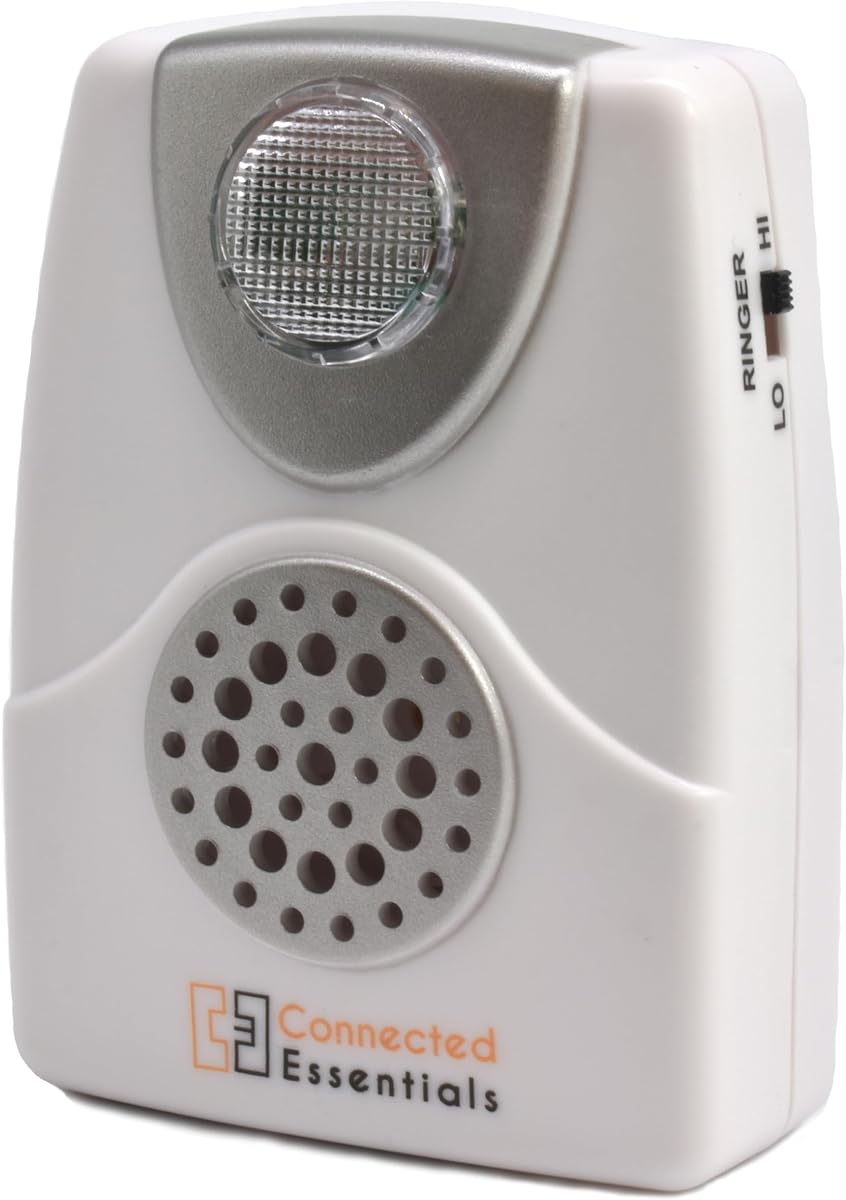
The Connected Essentials CEA-40 is a straightforward telephone ringer amplifier for people who still rely on a traditional landline or BT digital voice service. It receives a 4.1 rating and centers on the essentials: a louder ring, a bright flashing light, and installation without batteries or a separate mains adapter. The stated product title mentions up to 105 dB, while the supplied description specifies amplification up to 95 dB.
We may earn a commission when you buy through this link, at no additional cost to you.
The unit plugs directly into a standard BT telephone wall socket, and all necessary connections and wires are included. Its compact 80 by 60 by 25 millimeter body is small enough for many side tables and wall spaces. The flashing light provides a valuable alternative when the amplified sound still competes with television, appliances, or conversation in the home.
Its principal limitation is its narrow telephone focus. It does not use Bluetooth, so it is not intended to turn a modern cellphone into a networked whole-home alert system. Compatibility depends on the user's BT socket and landline equipment, and the discrepancy between the title's stated maximum and the description's amplified output is worth considering when evaluating loudness.
The CEA-40 is best for a user who wants a dependable visual and amplified ringer attached to a landline without maintaining another powered accessory. It is a particularly practical option for a bedroom, hallway, or home office where the phone may sit beyond comfortable hearing distance. Check that the telephone socket and service type are supported before ordering.
A flashing indicator can be easier to notice than a ringer when the household is quiet but the user is occupied elsewhere. Its wall-mountable design also allows the alert to be positioned at eye level or near a frequently used room.
Because the device is line-powered and requires no battery charging, it can remain ready without routine upkeep. The included wiring and direct socket design simplify installation for users who are comfortable with basic telephone equipment.
We may earn a commission when you buy through this link, at no additional cost to you.
The TA002 is a line-powered external ringer designed for people who need a louder and more visible incoming-call signal. Its 4.3 rating places it among the stronger-reviewed products in the guide. It offers adjustable ringer volume, a high-low switch, and a white LED flash in a wall-mountable format that should fit neatly near a landline.
We may earn a commission when you buy through this link, at no additional cost to you.
The listed maximum output is 110 dB at 25 centimeters, making the TA002 a compelling option for a room where a standard telephone ring is difficult to hear. Installation is described as plug and play, with power supplied by the telephone line. That removes the need to recharge a battery or find a separate power adapter, although the device must remain connected to the relevant line.
Compatibility is broad for conventional and analog systems. The product information lists regular telephone lines, VoIP landlines that are not IP phones, analog PABX or KSU extension lines, and fixed wireless terminals. It also supports regular corded sets and cordless phones. The exclusion of IP phones is important because many modern business calling systems use equipment that a simple line-powered ringer may not detect.
The TA002 is a good fit for a household with a conventional landline, especially if the user wants more control than a fixed-volume ringer provides. It is less suitable for a cellphone-only household or a business using an IP-based phone system. Confirm the connection type and the device's placement before installation to ensure the sound and light can be noticed.
The high and low settings let the household adapt the alert to different levels of background noise. This is useful when the same ringer must work in both a busy kitchen and a quiet sleeping area.
Line power keeps the device ready without a separate charging routine. It also means installation remains conventional: connect the unit to the supported telephone line and place it where its sound and flashing light can be seen and heard.
We may earn a commission when you buy through this link, at no additional cost to you.
The 120 dB Bluetooth Ringer is designed for users who want more than an alert: it can also be used to answer a call. Its 3.5 rating is lower than those of the leading models, but the supplied feature set is unusually broad. Incoming calls activate five possible tones and four bright LEDs, while missed calls can continue as a silent visual reminder.
We may earn a commission when you buy through this link, at no additional cost to you.
A built-in speaker and microphone allow hands-free answering, and the user can alternatively answer on the cellphone. This flexibility distinguishes the device from external ringers that only emit sound. It also supports SMS, text, and notifications from apps such as WhatsApp and Messenger when the appropriate phone settings and notification sound are enabled.
Bluetooth connection is automatic after the initial pairing, with a stated open-air range of up to 150 feet through walls and floors. The unit plugs into a wall outlet and contains no battery. It can also serve as an alarm-clock speaker for an iPhone or iPad, although the product information recommends using a downloaded song rather than the system ringtone for Bluetooth playback.
The trade-offs are its lower customer rating and the fact that music is designed for voice clarity rather than high-fidelity listening. It is best for a person who wants to answer calls remotely, track missed calls silently, and receive visual notices for both calls and messages. Prospective buyers should verify their preferred messaging apps and confirm that their phone supports the required Bluetooth functions.
The answer control and built-in speaker-microphone allow the user to respond when the handset is in another room. That convenience makes the unit more useful than a basic alarm-only ringer for people with limited mobility.
Keeping the LEDs flashing after a missed call provides a discreet way to notice the missed connection later. The feature is particularly helpful in quiet environments where repeated ringing would be unwelcome or exhausting.
We may earn a commission when you buy through this link, at no additional cost to you.
Serene Innovations Cell Phone Ring Amplifier & Flasher uses a different detection method from most Bluetooth products: the cellphone is placed on the unit, which responds to its vibration. Its 4.0 rating reflects a solid middle-ground option for users who prefer a simple placement-based setup. It also supports a wired landline connection at the rear of the unit.
We may earn a commission when you buy through this link, at no additional cost to you.
The amplification level can be set to high, low, or off, allowing the user to rely on the LED panel alone in a quiet room. The large visual panel flashes for incoming or missed calls, and a sensitivity knob can be adjusted to recognize calls and text messages on phones with weak vibration intensity.
Its most distinctive optional feature is support for a wired bed shaker, which is sold separately. That gives users an additional tactile alert without requiring the main unit to be beside the bed. The tradeoff is that this accessory adds to the setup, and the cellphone itself must be placed where its vibration can reach the amplifier.
This product is best for someone who wants to monitor a cellphone without Bluetooth pairing and also needs a visual missed-call indicator. It may be especially useful in a household with both a landline and mobile device. Users should test their phone's vibration strength and adjust the sensitivity accordingly, keeping the phone properly seated when an alert is required.
The placement-and-vibration method avoids app setup and wireless pairing. It can also be a more intuitive workflow for users who already keep their phone in a consistent location during the day.
The optional wired bed shaker can provide a tactile notification through the night. This adds a useful sensory route for users who may not immediately perceive either the ringtone or the light.
We may earn a commission when you buy through this link, at no additional cost to you.
The Telephone Ringer Amplifier Strobe Light Flasher Bell is a basic assistive ringer intended to make a telephone call easier to notice. Its 3.8 rating reflects a straightforward product with fewer advanced features than several Bluetooth models. High and low switches control the ringer sound, while a flashing lamp gives users a visual alternative.
We may earn a commission when you buy through this link, at no additional cost to you.
The product is designed to help hearing-impaired users recognize an incoming ring and can increase the sound in noisy places. Its light is particularly relevant for a quiet bedroom or living room, where a loud alarm may be intrusive but still insufficient for someone with limited vision or hearing.
The back-side hole offers a convenient hanging option, allowing the user to place the indicator near the telephone and away from surfaces where it might be knocked over. The supplied information does not describe Bluetooth connectivity, app support, missed-call tracking, or a detailed range, so it should be evaluated as a basic landline accessory rather than a whole-home mobile system.
Choose this model when simplicity and a visible strobe are the primary requirements, especially for a conventional home telephone. It is less appropriate for someone who wants automatic cellphone notifications, remote answering, or broad Bluetooth coverage. Confirm that its telephone connection method suits the existing handset and line before purchasing.
The flasher can make an incoming call noticeable in a quiet setting without relying on a sustained amplified ring. This offers a gentler alternative for users who are sensitive to loud noises.
The rear hanging hole makes it easy to position the light near a doorway, wall, or telephone table. Better placement can improve visibility without requiring any complicated setup.
We may earn a commission when you buy through this link, at no additional cost to you.
PebblePulse Cell Phone Ringer Amplifier is a Bluetooth alert system designed with seniors and users who may have difficulty operating small controls. Its 3.7 rating is moderate, while its list of features emphasizes 120 dB sound, red and blue flashing lights, large high-contrast buttons, and a stated Bluetooth range of up to 200 feet.
We may earn a commission when you buy through this link, at no additional cost to you.
The device automatically connects to a paired smartphone while the phone remains within range. It provides answer and hang-up functions, allowing a user to respond without walking to the handset. Three modes—Ring Only, Message Only, and All—help determine which events produce an alert and reduce the chance of unnecessary disturbances.
The large buttons are designed for people with arthritis or Parkinson's disease, according to the supplied information, and the high-contrast printing supports easier identification. The unit is intended for indoor plug-in use, so its Bluetooth reach does not imply a mobile or outdoor deployment. That makes it best suited to users who want extended range within a home.
PebblePulse is a good candidate when physical controls and long in-home reach are more important than sophisticated audio or wide compatibility claims. The lower rating suggests buyers should examine recent customer feedback carefully. Prospective users should confirm smartphone compatibility, pairing procedures, and whether the answer and hang-up functions meet their preferred call workflow.
Oversized buttons and high-contrast labels reduce the visual and dexterity demands of answering a call. These details are more meaningful than decorative styling because they directly affect independent daily use.
The stated range of up to 200 feet offers flexibility for larger homes. Positioning the plugged-in unit in a central area may keep alerts noticeable across several rooms, although walls and household layout can affect actual performance.
We may earn a commission when you buy through this link, at no additional cost to you.
The 2-Pack Bluetooth Phone Ringer Amplifier is the most elaborate coverage system in the guide, providing two external ringer units for placement in separate areas. Its 3.0 rating is the lowest supplied among these ten products, so the system requires careful consideration, but it addresses a clear need: extending call alerts across a large home.
We may earn a commission when you buy through this link, at no additional cost to you.
Each unit delivers adjustable sound up to 120 dB and bright LED strobe lights. One can be placed in a living area and another in a bedroom or office, creating coverage for a home described as being up to 3,000 square feet. Each unit has a stated 150-foot Bluetooth range, and both reconnect automatically after initial pairing.
The system supports common smartphone platforms, including iPhone, Samsung Galaxy, Android, and Bluetooth flip phones, without requiring an app. It uses plug-in power and includes two adapters, two cords, and setup guides. Unlike some products that also function as speakers, the listed focus is on receiving and visually presenting phone alerts.
The main disadvantage is the 3.0 rating, which is notably lower than those of the other products. Users should also consider the need to find two suitable outlets and position both units effectively. This is a premium whole-home solution rather than a simple single-room ringer, making it best for large households, couples, or users who need alerts in widely separated spaces.
Two independently positioned units can make a call noticeable whether someone is upstairs, downstairs, or in an office. This is more useful than a single remote ringer in homes with substantial separation between common spaces.
Automatic reconnection keeps the daily workflow simple. After pairing, the units are designed to maintain their connection without repeated menu navigation, which may appeal to users who prefer minimal technology maintenance.
We may earn a commission when you buy through this link, at no additional cost to you.
The External Phone Ringer with Flashing Light is the simplest cross-device option in this guide. It receives a 4.6 rating, the highest supplied product rating here, and uses sound detection rather than Bluetooth pairing. When a nearby phone rings, the unit activates its own 120 dB ringer and four-LED visual alert.
We may earn a commission when you buy through this link, at no additional cost to you.
Automatic sound detection means there is no app, wireless pairing, or account to configure. The product description states that it works with any smartphone, landline, or desk phone placed nearby, giving it broad practical flexibility. Multiple tone options and adjustable volume allow the user to select an alert that is recognizable without being unnecessarily harsh.
Because the system listens for the original ringtone, the source phone must be close enough for that sound to be detected. This differs from a Bluetooth ringer that receives a direct wireless event signal. A user whose phone is silenced, placed in another room, or configured to vibrate may not trigger the unit consistently.
This is an excellent choice for a home or office where the phone can stay in a fixed position and the ringer can sit within earshot. Its high rating, simple setup, and combination of sound and light make it a practical choice for users who want to avoid pairing complexity. Place the ringer in the room where the alert is most needed and test it with the intended phone.
Sound detection removes several common setup barriers. As long as the source phone can ring audibly near the unit, the external ringer can begin working without software or a Bluetooth connection.
The four LEDs and 120 dB maximum output offer two distinct ways to notice a call. The user can tailor the sound level while relying on the light in a quiet or shared environment.
We may earn a commission when you buy through this link, at no additional cost to you.
The AKOAK Loud Sound Telephone Ring Ringer Amplifier is a portable inline device that sits between a home telephone and the wall line. Its 3.8 rating reflects a basic but useful approach: boost the incoming ring, add a light, and make the telephone easier to notice. It is intended primarily for conventional home phones.
We may earn a commission when you buy through this link, at no additional cost to you.
Installation follows a straightforward telephone-line arrangement. Once connected, the device increases the ring volume in noisy places, and a switch allows selection between high and low frequency sounds. The light flasher supplies a second alert method, helping users recognize an incoming call without relying entirely on audible volume.
Its portable form makes it easier to move between a bedside table, home office, or other location. However, the supplied information does not mention Bluetooth, app support, missed-call tracking, or broad modern phone compatibility. It should therefore be considered a simple landline accessory rather than a connected whole-home alert platform.
The AKOAK is best for someone with a simple home telephone setup who wants a louder ring and visual cue without a wireless system. It is also useful for heavy sleepers or people who often move away from the phone. Verify the connector and line compatibility, and test the chosen sound level in the room where the device will operate.
Because the unit is lightweight and connected inline, it can be repositioned when the telephone is moved. This makes it a flexible choice for renters or users who do not want to install permanent wall-mounted equipment.
A light flasher makes the unit helpful in noisy or quiet settings. Choosing the appropriate tone frequency can also improve recognition for users who find some ringing sounds easier to distinguish than others.
We may earn a commission when you buy through this link, at no additional cost to you.
The right flashing telephone alert depends on the phone system, room layout, sensory preferences, and the degree of daily setup the user can manage. Sound output, light visibility, connection method, and compatibility should be evaluated together rather than relying on maximum loudness alone.
Start by identifying how the phone sends its alert to the accessory. Bluetooth systems are appropriate for most modern smartphones and may offer remote answering, automatic reconnection, or whole-home reach. Line-powered models are intended for landlines, VoIP services that use a standard analog connection, and some office extensions. Sound-detection devices offer broad compatibility with nearby phones but require the original ringtone to be audible. Vibration-detection units require the cellphone to be placed directly on the amplifier.
Maximum decibel figures offer a rough comparison, but the published measurement conditions are not always consistent. A stated figure may reflect output at a particular distance, while another product may describe amplification differently. The 95, 105, 110, 117, and 120 dB figures in this guide should therefore be treated as product claims rather than perfectly standardized laboratory results. Look for adjustable volume, high and low settings, and several tone choices so the device can be made comfortable rather than simply as loud as possible.
A useful flasher should be bright enough to stand out in daylight or from another room, with a flash pattern that draws attention. Some models use one large panel, while others use multiple LEDs around the housing. Color is less important than contrast and placement, although red and blue can be easier to distinguish in some environments. Users with limited vision should consider where the unit can be mounted and whether its light remains noticeable when seen indirectly.
A powerful ringer does little good if it is too far away to hear or blocked from view. Bluetooth range is helpful across a home, but walls, floors, appliances, and layout can affect real-world reception. Multi-unit systems can place alerts in a living area, bedroom, and office. A single-unit ringer is usually sufficient for one room or an apartment. For a landline product, plan a short telephone cord or choose a unit specifically designed for wall mounting.
Users with arthritis, limited vision, or reduced dexterity may benefit from large buttons and high-contrast labels. A device that can answer or end calls directly may be more useful than a basic alert-only unit. Mode switches can distinguish calls from messages or let the user silence the ring while retaining the flasher. Physical controls are often easier to manage than menus buried in an app, particularly for a product intended to solve an accessibility problem.
A phone flashing light may only need to announce incoming calls, but some users also want texts, messaging apps, alarms, or missed-call reminders. Bluetooth models often distinguish calls, messages, and general app notifications. Landline units are naturally focused on calls, while sound-detection devices react to any detectable source ringtone. Confirm whether the product can remain visible after a missed event and whether app notifications work exactly as described.
Most external ringers use a wall outlet, and line-powered landline models draw power from the telephone connection. These approaches avoid routine battery charging but require suitable placement near an outlet or phone line. Vibration and sound-detection methods have no charging cycle, yet they depend on the source phone remaining nearby. A user who values minimal setup may prefer a plug-in unit with automatic reconnection rather than a rechargeable portable device.
A long warranty can provide useful confidence, especially for an accessibility product purchased for a parent or care recipient. RENNY is backed by a five-year warranty and U.S.-based support, while the two newer Bluetooth systems list an 18-month warranty and 60-day trial. Warranty terms can change, so check the current listing before making a decision. Support should also be understandable by the person who will set up and maintain the device.
Begin by placing the ringer where both its sound and light can reach the user. For a Bluetooth model, pair it with the intended phone according to the manual, complete any required test call, and confirm that the phone is set to ring or vibrate when an alert should occur. For a sound-detection model, place the source phone close enough for its ringtone to trigger the unit. Landline units should be connected according to the supplied wiring and positioned near a clear line of sight.
Next, test every relevant alert type. Call the phone, send a text, and trigger a missed call while standing in the rooms where the user spends time. Adjust tone selection, sound level, visual brightness, and operating mode until the alert is noticeable without being excessive. Establish a routine that makes use of the product's strongest feature: a flasher can serve as the primary signal in a quiet bedroom, while louder sound can cover a noisy workshop or kitchen.
For care, keep the unit dry, dust-free, and away from heat. Do not block the speaker or LEDs, and avoid placing a cord where it can be pinched or tripped over. Check that the phone remains within the stated connection range, particularly after moving furniture or changing networks. Clean the housing with a soft, slightly damp cloth rather than harsh chemicals, and never open a line-powered unit while it is connected.
It depends on how the ringer connects. Bluetooth models are designed for compatible Bluetooth smartphones, while sound-detection units may work with any nearby phone that produces an audible ring. Vibration-detection models require a phone that can vibrate and must be placed on the amplifier. Check the product's compatibility notes and test the intended phone before relying on it for important calls.
No. A flashing ringer is an alert accessory intended to make calls or messages more noticeable, not a device that delivers amplified speech directly into the ear. Users who need clearer conversation audio may still need hearing aids, a phone's built-in accessibility features, or another suitable communication aid.
A high maximum output does not mean the device must always run at maximum volume. Most of the reviewed products offer adjustable settings, and choosing a moderate level for routine use can reduce fatigue. For people who are sensitive to loud sounds, test levels carefully and consider using the LED or vibration option as the primary alert.
The source phone may be too far away, silenced, set only to vibrate, or playing a ringtone the detector cannot recognize. Bring the phone closer, confirm that it rings audibly, and test again. Some devices are designed specifically for landlines, while others expect a cellphone to be placed on a vibration-sensing amplifier.
The Bluetooth models reviewed do not require an app, and the supplied information does not mention a monthly service. They do require initial pairing and a compatible phone, after which they are designed to reconnect automatically. Line-powered, sound-detection, and vibration-detection models use different setup methods that may not involve Bluetooth at all.
That depends on the model. The 120 dB Bluetooth Ringer supports calls, texts, and notifications from apps such as WhatsApp and Messenger when the phone's sound settings are configured correctly. PebblePulse provides call-only, message-only, and combined modes. Many landline amplifiers announce calls only, so verify the required alert types before buying.
A multi-unit Bluetooth system generally offers the most consistent coverage because each unit can be placed in a different area. The reviewed two-pack can cover spaces such as a living area and bedroom or office, while individual Bluetooth ringers with long stated ranges may be adequate for smaller homes. Actual performance depends on walls, floors, and the phone's Bluetooth connection.
Most reviewed units are designed for continuous wall-outlet power, so their operation may stop during an outage unless the outlet is backed by a generator or other power source. The line-powered landline models can receive operating power from the telephone line, which may provide a different result depending on the service and backup arrangements. Users with critical alerting needs should consider a suitable backup power plan.
The RENNY Loud Cell Phone Ringer is the most well-rounded selection for a modern cellphone because it combines 117 dB amplification, a bright white LED, automatic Bluetooth reconnection, and multiple operating modes. The External Phone Ringer with Flashing Light stands out for simple sound detection, no pairing, and the highest supplied rating, while the 2-Pack Bluetooth system provides the most complete multi-room arrangement.
The right choice ultimately depends on the existing phone service and the user's daily environment. A Bluetooth system suits a smartphone household that needs alerts across rooms; a line-powered ringer fits a conventional landline; and sound or vibration detection may be preferable for someone who values minimal setup. Always test the actual phone, room acoustics, lighting, and controls before treating the device as a dependable alert system.
Availability, promotions, and prices change over time, so review the current listing and compatibility information before ordering. Checking the product page also allows buyers to confirm the supplied warranty, included accessories, connection requirements, and any updates to the stated features. With those checks in place, a phone flashing light can provide a practical additional way to notice important calls and messages.