
Parabolic Microphone Monocular 8X
Parabolic sound amplification
Built-in 8x monocular
Headphone listening jack
Quiet observation design
Bird Call Recorders guide compares field listening devices, directional monoculars, voice recorders, and bird-call tools for better outdoor sound capture.
Bird call recorders can help birdwatchers identify distant species, document songs, compare habitats, and study wildlife without relying on memory alone. The most useful tools balance sensitive microphones, directional listening, reliable storage, and enough battery life for long walks. Because the category includes specialized field devices, general recorders, and sound-effect tools, choosing carefully matters.
This guide compares all ten supplied products by examining audio capture, listening distance, recording capacity, portability, playback options, and usefulness in the field. It distinguishes purpose-built bird-listening equipment from general voice recorders and non-recording bird-call makers. Ratings and specifications reflect the supplied product information, while missing ratings and details are clearly identified rather than inferred.
The picks reveal three different paths: a compact device for recording short clips, an optical-and-audio instrument for observing and listening, and conventional voice recorders for flexible field documentation. Some entries are specialized listening tools, while others require an external smartphone or computer for file management. Product listings and availability can change, so readers should verify the latest specifications before purchasing.

3.0Editor score

4.2Editor score
The table below compares the ten products by purpose, recording capability, audio tools, and portability, separating purpose-built field equipment from general-purpose recorders and sound-effect accessories.


The TR600 is fundamentally a telephone call recorder rather than a dedicated bird-call recorder, with a supplied rating of 3.8. Its most transferable strength is its recording workflow: automatic and manual modes, 16GB of included memory, chronological file organization, loop recording, and an SD card that can be played on a Mac or Windows computer without additional software.
We may earn a commission when you buy through this link, at no additional cost to you.
The device supports analog, IP, and digital phone lines, which is unusual for a call recorder in its segment. It can also operate as a conventional voice or meeting recorder, making it more useful for interviews, lectures, and environmental documentation than the telephone-focused title initially suggests. A screen displays the time and date, while each stored file is stamped and organized chronologically.
Its limitations are obvious for outdoor birding. There is no stated weather resistance, directional microphone, wildlife listening range, or optical viewing function. Loop recording protects against storage limits but may overwrite a memorable bird song, and file transfer depends on removing the SD card. The supplied rating also suggests that the overall experience may vary depending on line compatibility and setup.
This recorder makes sense for a user who wants a dependable general-purpose audio capture system and already records phone conversations, meetings, or indoor wildlife sounds. It is not the most natural choice for locating birds outdoors, but its expandable storage, time stamps, speaker playback, and computer transfer capabilities can still support a mixed audio-recording workflow.
Automatic recording removes the need to remember to begin a session, while manual mode offers control when only selected calls or sounds matter. Time and date stamps help organize long recordings, and loop recording keeps capture active when memory becomes full.
The voice and meeting recorder mode broadens the device's value for lectures, conversations, and ambient recordings. The removable SD card also makes it convenient to transfer files to a computer for editing, identification, or archiving.
We may earn a commission when you buy through this link, at no additional cost to you.
The supplied listing for ASIN B08862QQ22 contains no product name, description, image, or rating. For that reason, this review cannot responsibly characterize the item as a bird call recorder or assign it a meaningful performance assessment. Its 3.8 rating belongs to a different product in the supplied dataset and must not be transferred here.
We may earn a commission when you buy through this link, at no additional cost to you.
A direct Amazon listing can still be useful to a prospective buyer because it may reveal the product name, technical details, customer feedback, and current availability. Buyers should look for microphone type, recording format, storage method, playback controls, battery performance, and any stated directional listening capability before deciding whether it belongs in a birding kit.
There are no verified trade-offs to evaluate because the source information is blank. It would be misleading to infer recording capacity, weather resistance, sound range, or portability. The only defensible limitation of this entry is the lack of documentation supplied, and the only defensible recommendation is to inspect the live listing carefully.
Readers seeking a dependable recommendation should favor one of the documented bird-listening models or established general recorders in this list. This listing is most appropriate for a buyer willing to perform additional research and unwilling to rely on the supplied data alone. It should not displace a product with clear audio and recording specifications unless the live page proves substantially more capable.
Confirm the actual model name and manufacturer before purchasing. Review the product photographs and description for inputs, recording controls, storage, and battery information that were unavailable in the supplied data.
A suitable bird recorder should state something concrete about microphone sensitivity, directional capture, recording duration, or file storage. Do not infer field performance from a category label or product photograph alone.
We may earn a commission when you buy through this link, at no additional cost to you.
This compact digital voice recorder has a supplied rating of 4.2 and provides a practical, economical way to capture bird calls, lectures, interviews, and meetings. Its one-button recording control, sensitive microphone, noise-reduction processing, 16GB storage, and voice activation make it approachable for beginners who want a recorder rather than an optical bird-watching device.
We may earn a commission when you buy through this link, at no additional cost to you.
Audio is recorded at a stated 1536kbps, and the device can record continuously for more than 30 hours. Voice activation begins capture when sound is detected, reducing unnecessary silence and power use. Playback is handled through the built-in speaker or a supported external speaker, while an A-B function lets users select a section for repeated listening, which is particularly helpful when learning a difficult bird song.
The recorder can also operate as a music player and removable drive. Drag-and-drop file transfer over USB means it appears as a removable device in Windows, simplifying organization on a computer. The trade-offs are that no directional microphone, outdoor listening range, or weather resistance is stated, and the 16GB capacity will eventually require file management. A general recorder may also capture more ambient noise than a purpose-built wildlife device.
This is a strong budget-oriented choice for short walks, backyard observation, classroom projects, and users who already know where birds tend to sing. It is less suitable for spotting and listening simultaneously across a broad landscape. Those wanting maximum convenience should consider the 8X listening monocular, while those who prioritize easy computer transfers may favor its straightforward removable-storage design.
Automatic sound detection is useful when the observer cannot comfortably operate the recorder while watching a bird. It can also reduce long stretches of silence, making the most of available storage and battery life.
The built-in speaker and A-B repeat function make it possible to review a selected section immediately. Repeating a short passage is useful for comparing field notes with recorded descriptions or a bird identification guide.
We may earn a commission when you buy through this link, at no additional cost to you.
The 16-Sound Bird Call Maker is not a recorder; it is an electronic sound board that plays 16 prerecorded bird calls. It carries a supplied rating of 4.2, but its main value is education and practice rather than wildlife documentation. Birdwatchers can use the sounds to learn familiar vocalizations or demonstrate what selected species sound like.
We may earn a commission when you buy through this link, at no additional cost to you.
The included calls represent Blue Jay, House Wren, Tufted Titmouse, Baltimore Oriole, Mourning Dove, White-breasted Nuthatch, House Finch, Black-capped Chickadee, Northern Cardinal, White-throated Sparrow, American Robin, Northern Mockingbird, Bald Eagle, American Goldfinch, Pleated Woodpecker, and Common Loon. The variety makes it suitable for casual nature activities, classroom demonstrations, gifts, and Audubon-themed collections.
The main drawback is fundamental: it cannot capture a live bird, preserve the location and time of a sighting, or document variations in a real song. It also has no listed microphone, recording storage, file transfer, or playback of field recordings. Battery operation is convenient, and three LR44 or AG13 batteries are included, but the device is not a substitute for a recorder in a serious observation kit.
A user who wants to practice recognition or entertain children will find this device more useful than a conventional recorder. A serious birder should treat it as a training accessory and pair it with an actual audio recorder or listening device. It is also better suited to controlled use where playing bird sounds will not disturb wild birds.
Practicing with recognizable calls can make it easier to connect a visual sighting with a species name. The broad set of familiar North American birds provides enough variety for introductory lessons and informal sound recognition practice.
Because the device produces artificial bird sounds, it is best used in educational or leisure settings rather than near nesting areas. Responsible birding emphasizes avoiding behaviors that could stress or alter the behavior of wild birds.
We may earn a commission when you buy through this link, at no additional cost to you.
The Parabolic Microphone Monocular combines an 8x optical monocular with a directional sound amplifier, making it one of the most purpose-oriented products in this guide. No customer rating is supplied, so it cannot be assigned a conventional score without inventing information. Its differentiator is the pairing of visual observation and quiet sound amplification in one handheld device.
We may earn a commission when you buy through this link, at no additional cost to you.
The built-in monocular helps users spot animals and smaller birds at a distance, while the parabolic microphone focuses on sound from the direction the instrument is aimed. A 3.5mm headphone jack allows the user to listen without using the built-in speaker, reducing disturbance to nearby wildlife. The package includes a pair of headphones, making the listening setup more complete from the outset.
The primary limitation is that the supplied information does not confirm a recording function, internal storage, file format, battery life, or weather sealing. It may therefore function as a listening amplifier rather than a true recorder, despite its relevance to the bird-call category. The absence of an official rating also makes long-term reliability and user satisfaction harder to assess from the provided data.
This is the top premium pick for a birdwatcher who wants to scan the landscape and amplify directionally without broadcasting bird sounds through a loud speaker. Choose it for quiet observation sessions where listening and looking happen together. Buyers who need permanent audio files should instead consider the dedicated 12-second listening recorder or a conventional digital voice recorder.
The combination of 8x viewing and directional amplification reduces the need to carry separate optical and listening tools. That convenience can help users find a bird first and then focus on its call with the same instrument.
Private headphone listening is valuable around wildlife because it avoids projecting calls into the environment. It can support closer observation and reduce the chance that noise from the device alters a bird's behavior.
We may earn a commission when you buy through this link, at no additional cost to you.
The 8X Directional Bird Sound listening device is the most directly relevant bird-call recorder in the list, with a supplied rating of 3.0. It combines 8×21 viewing, a directional microphone, adjustable audio, and short sound-clip capture in a single outdoor device. The result is a practical tool for locating a bird, listening to it, and preserving a brief recording of its call.
We may earn a commission when you buy through this link, at no additional cost to you.
The stated directional listening range reaches up to 200 meters in a quiet outdoor environment, while the microphone covers 20 to 20,000Hz with adjustable sensitivity and volume. The built-in 8×21 optical glass monocular supports observation from close to long range. Most importantly for this category, the device records clips up to 12 seconds without requiring a SIM card or SD card.
Its short clip length is the clearest constraint. It is designed to capture a concise call rather than an extended dawn chorus, lecture, or long soundscape. The supplied 3.0 rating also warrants realistic expectations, especially because real-world range depends heavily on wind, vegetation, background noise, and the bird's behavior. Despite these limitations, the combination of no-card recording and private playback is unusually convenient.
This is the strongest all-around choice for a birdwatcher who wants actual recordings without carrying a separate camera, conventional recorder, and memory card. It is especially well suited to quick identification sessions where a short, repeatable call snippet is all that is needed. Users seeking lengthy ambience should choose a conventional voice recorder instead.
A narrow listening direction can help separate a bird's call from a noisy environment. The 200-meter maximum is a best-case figure, so clear conditions and careful aiming remain important.
Recording short clips without a SIM or SD card simplifies the setup considerably. It also reduces the chance of arriving in the field with a full card or an incompatible storage format.
We may earn a commission when you buy through this link, at no additional cost to you.
The 760H is a compact 64GB voice recorder with a supplied rating of 4.0. It is aimed at people who need substantial recording capacity in a small device, including students, professionals, interviewers, and outdoor observers who want to capture bird calls without carrying a larger field unit.
We may earn a commission when you buy through this link, at no additional cost to you.
Its 64GB memory can hold up to 760 hours of high-quality audio files according to the supplied information. Voice activation can be tuned across seven sensitivity levels, allowing users to ignore irrelevant sound or capture quieter calls. A 200mAh rechargeable battery provides up to 28 hours of continuous recording, charges in about two hours, and can continue recording while connected to power.
The noise-cancellation system is designed to filter unwanted background noise, while computer connection allows adjustment of bit value, recording volume, time settings, and audio segmentation. Its small 0.08-pound body fits easily in a pocket, wallet, school bag, or backpack. The trade-off is that the product is a general-purpose recorder with no directional microphone, wildlife amplification, optical viewing, or stated weather resistance.
It is best for users who value storage, long sessions, and automatic triggering more than optical bird watching. The ability to record while charging makes it convenient for stationary observation sessions, while the compact size supports quiet placement near a singing bird. A dedicated bird-listening monocular remains the better choice when locating and recording must happen at the same time.
A capacity of up to 760 hours of high-quality audio provides ample room for dawn choruses, long recordings, and interviews. It also reduces the urgency to transfer files after every outing.
Seven sensitivity levels help balance quiet bird sounds against wind, traffic, and rustling vegetation. Adjusting the trigger threshold can produce cleaner clips without continuously recording every environmental sound.
We may earn a commission when you buy through this link, at no additional cost to you.
The ZDH nine-piece wooden bird-call set has a supplied rating of 4.5 and combines traditional manual bird calls with modern presentation. Made from beechwood and zinc alloy, the nine individually polished pieces are designed to mimic the calls of various birds and are stored in a wooden box with an acrylic viewing window.
We may earn a commission when you buy through this link, at no additional cost to you.
The set is positioned as an educational and recreational tool for children, students, adults, photographers, teachers, and musicians. It can support learning about species and songs, classroom activities, outdoor adventures, rhythmic practice, and sound-effect work. Its compact box also makes it convenient to carry in a pocket or backpack, while the window allows the pieces to remain visible for display.
These products do not record actual bird sounds, so they cannot document a live sighting or preserve environmental audio. The quality and realism of each imitation also depend on the original design, the user's technique, and the acoustics of the environment. Consequently, the 4.5 rating should be understood in the context of a decorative and educational bird-call accessory rather than a professional wildlife recorder.
This set is a good fit for a nature lover who values attractive, hands-on bird-call tools more than field recording. It also makes a more substantial educational gift than a single electronic sound board. For actual documentation, pair it with the 8X listening device or another audio recorder and use the manual calls only where they will not disturb sensitive birds.
Producing a call by hand can make birdwatching more interactive. The range of nine pieces supports informal comparison exercises and helps beginners become more comfortable with bird vocalizations.
The polished wood, zinc alloy, and windowed box give the set an attractive presentation. That makes it particularly suitable for collectors, educators, and anyone who wants bird-themed equipment that is both functional and decorative.
We may earn a commission when you buy through this link, at no additional cost to you.
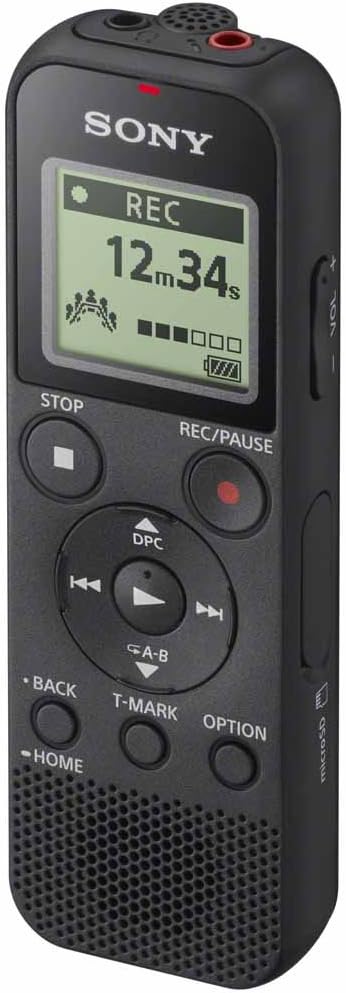
The Sony ICD-PX370 is a mono digital voice recorder with a supplied rating of 4.5. Although it is not marketed as a bird-specific device, its straightforward MP3 capture, long battery life, and direct USB connection make it a dependable option for recording birdsong, lectures, interviews, and field notes.
We may earn a commission when you buy through this link, at no additional cost to you.
The key specification is the stated battery life of up to 57 hours when recording MP3 at 128kbps in stereo mode. That endurance supports extended observation sessions without requiring frequent recharging. MP3 files are broadly compatible with computers, phones, and audio software, making the recordings easy to organize, share, and analyze after a trip.
The direct built-in USB connection removes the need to carry a separate cable for transfers, and the mono recording format keeps the device focused on straightforward voice capture. The trade-offs are that there is no supplied information about directional listening, parabolic amplification, optical observation, waterproofing, or short dedicated wildlife clips. Mono audio also does not create the spatial effect of a multi-microphone stereo recording.
This recorder is best for birdwatchers who already know where to listen and want dependable, long-running audio capture. It is a good alternative to more specialized devices when simplicity, file compatibility, and battery endurance matter most. A user who needs to locate animals by sight and sound should choose the 8X monocular device instead.
A maximum stated battery life of 57 hours supports all-day observation and multi-day recordings. It is particularly useful in locations where charging access is limited or where a spare battery would be inconvenient to carry.
MP3 recording and direct USB transfer simplify the path from field audio to computer editing. This makes it convenient to create a catalog, compare calls, or share recordings with an identification group.
We may earn a commission when you buy through this link, at no additional cost to you.
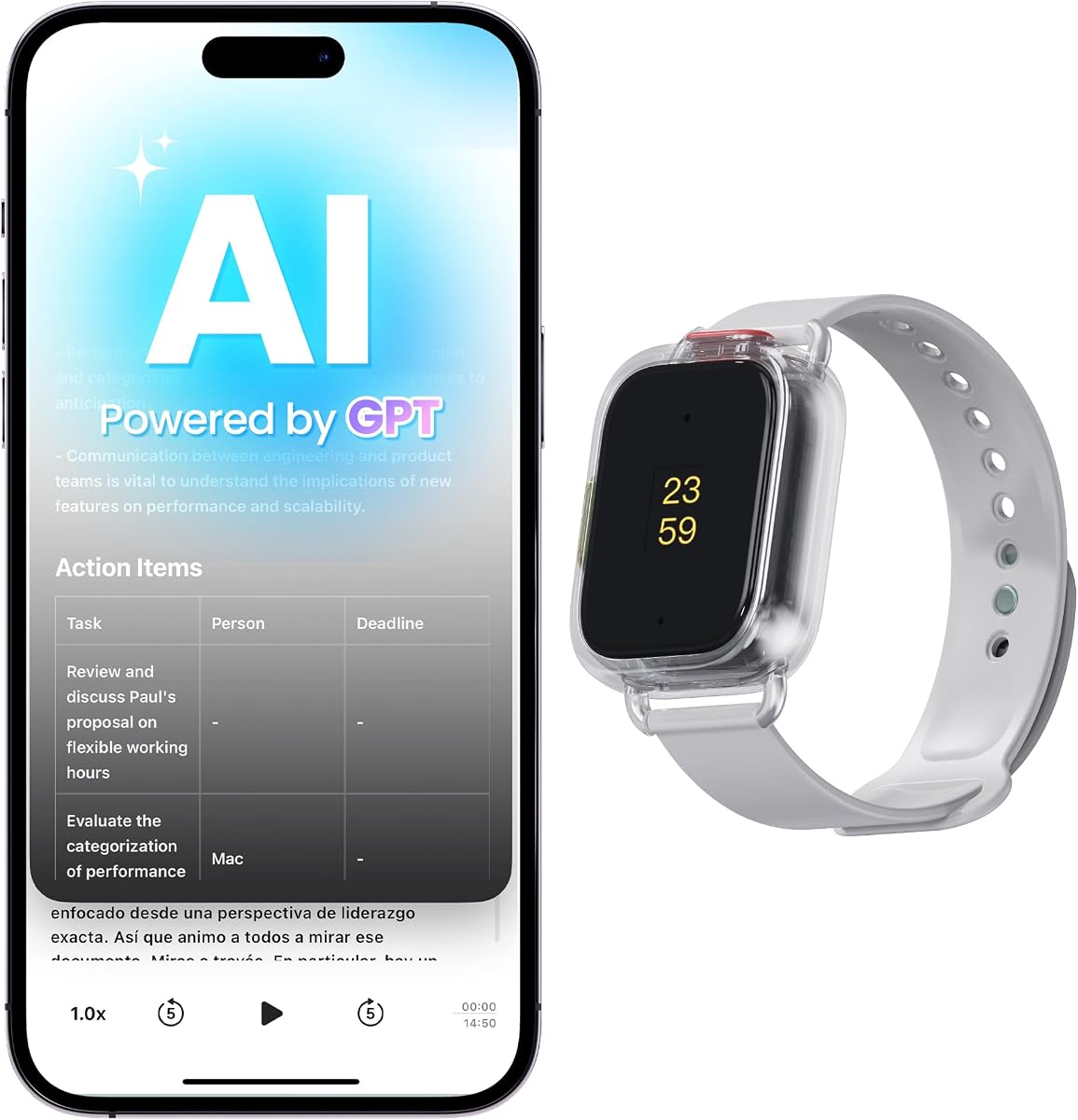
The iFLYTEK P1 is an AI-enabled wearable recorder designed for transcription, summaries, translation, and voice capture. No customer rating is supplied, so its performance is best evaluated from the detailed feature list rather than a numerical score. For birders, its strongest potential lies in recording field notes, interviews, and nearby calls that can later be turned into searchable text.
We may earn a commission when you buy through this link, at no additional cost to you.
The supplied information states that the device can transcribe one hour of audio in roughly five minutes with accuracy claimed at up to 98%. It supports real-time transcription and translation across 11 languages, speaker differentiation, intelligent summaries, and cross-device synchronization. The listed app benefits include monthly transcription minutes, cloud storage, real-time speech-to-text, automatic summaries, and conversation history, so buyers should review which features require an active subscription.
Audio capture uses dual microphones with a 360-degree omnidirectional mode and a focused directional mode. The stated maximum pickup distance is five meters, which is more useful for interviews, group observation, or a perched bird than for a faint distant song. Other features include 25 hours of continuous recording, more than 700 hours of storage, pass-through charging, and a maximum recording session of five hours.
At 22.5 grams, the P1 is easy to wear as a watch, clip, or lanyard, which supports hands-free documentation. Its main weakness for bird identification is that transcription features do not automatically identify bird species, and no optical or long-range listening function is listed. It is best for users who want intelligent field notes alongside audio, while dedicated bird-listening hardware remains better for finding and recording distant calls.
Rapid transcription can convert spoken observations, guide dialogue, and recorded context into organized text. Speaker differentiation may also help separate people in interviews or group learning sessions.
Watch, clip, and lanyard configurations make the recorder easy to keep available without occupying a pocket. Hands-free operation is useful when the user is watching a bird, operating a camera, or navigating uneven terrain.
We may earn a commission when you buy through this link, at no additional cost to you.
The right bird call recorder depends on whether you want to find birds, preserve short calls, record lengthy soundscapes, or create educational bird sounds. Audio quality alone is not enough; storage, power, controls, weather resistance, and responsible field use all affect the experience.
A bird recorder is most useful when it helps separate a desired call from wind, traffic, footsteps, and other wildlife. Directional microphones or parabolic amplifiers can focus on sound arriving from the direction the device is pointed, while ordinary voice recorders usually capture a wider and less controlled sound field. The supplied 8X listening device claims a directional range of up to 200 meters in quiet conditions, while the parabolic monocular uses a focused sound-amplifying design.
Look for a stated listening range, microphone directionality, and noise-reduction method. Treat maximum range as a best-case figure: foliage, wind, water, terrain, and the bird's distance can reduce clarity dramatically. A nominal range is less valuable than a device that lets the user adjust volume and sensitivity.
Short clips are ideal for recording a single call, while long sessions require considerably more storage. The 8X device captures up to 12-second clips, the Sony supports extended MP3 recording, and the 760H provides 64GB with a claimed capacity for hundreds of hours. The TR600 also offers loop recording and 16GB of included memory, which can keep recording active by replacing older files.
Match storage to the intended session. Consider whether recordings must be transferred after every outing, whether looping is acceptable, and whether removable media is easier to manage than internal storage. Also check supported file formats so recordings can open on the computer or phone used for identification and archiving.
Bird songs can be quiet, high-pitched, and mixed with environmental noise. A sensitive microphone with noise reduction is especially useful for close-range recordings, while a directional microphone helps with more distant subjects. Several products in this list advertise DSP noise reduction, noise cancellation, or adjustable volume, but these features differ from true directional isolation.
Check the microphone specification, frequency response, and recording format. Also consider whether the device supports monitoring through headphones, since immediate private playback can help identify a repeated call. A built-in speaker is convenient, but it is not a substitute for good microphone performance.
Field power can be limited, especially in remote habitats and during winter birding. Battery endurance varies sharply across the list: the Sony lists up to 57 hours, the 760H up to 28 hours, the 16GB digital recorder more than 30 hours, and the iFLYTEK P1 25 hours. The bird-listening monocular also needs power, although no runtime is supplied.
Compare total battery life, charging time, and whether the device can record while charging. Weight and dimensions matter as well: a tiny recorder can be carried comfortably, but a larger device may be more stable when aimed at a distant bird. Choose a balance that suits the length and remoteness of typical outings.
Controls should remain manageable while wearing gloves, holding binoculars, or keeping attention on wildlife. One-button recording, voice activation, and simple playback are useful, but automatic triggering may miss a short call if sensitivity is set too low. The 760H offers seven sensitivity levels, while the budget digital recorder provides straightforward record, stop, play, and A-B repeat controls.
Look for private headphone playback, visible recording status, and easy access to saved files. The 8X device and parabolic monocular both support listening through headphones, helping the user hear faint calls without broadcasting sound through the environment.
A monocular can make a listening recorder much more effective because the user can locate the bird before recording. The 8X listening device combines 8×21 viewing with audio capture, and the parabolic microphone monocular combines 8x observation with sound amplification. Conventional voice recorders record audio well but offer no way to find a distant singer visually.
Decide whether identification depends mostly on sound or on seeing the bird. Integrated viewing is valuable for confirming a visual match with a call, especially for species that look alike. A general recorder may still be enough when the observer already knows the location of active birds.
Recordings are only useful if they can be organized and reviewed. Some products use removable cards or drive-style USB transfer, while others rely on a connected phone or computer. The budget 16GB recorder appears as a removable Windows drive, the Sony has a direct USB connection, the TR600 uses an SD card, and the iFLYTEK P1 centers its workflow around app-based synchronization and transcription.
Check platform compatibility, transfer speed, storage organization, and any subscription requirements. AI features can be convenient for generating notes and summaries, but users who only need raw field audio may prefer a simpler device with fewer account and app dependencies.
Outdoor equipment should be handled as if it may encounter moisture, dust, and temperature changes, even when no formal weather rating is provided. Protect a device with a suitable case and avoid exposing it to rain unless its documentation permits it. Weight and grip are also relevant because stable handling improves directional aiming.
Always observe local rules concerning recording, protected areas, and the welfare of wildlife. Do not use playback to lure birds during sensitive periods such as nesting. A recorder should support observation and learning without altering the natural behavior the user hopes to study.
Before heading into the field, charge the recorder fully, install or confirm the required storage, and test recording at a familiar location. Create a short test file, play it through headphones or the built-in speaker, and verify that the microphone captures a bird at the distance you expect. Review any required app setup and transcription settings before relying on them away from reliable connectivity.
Begin each session by listening before recording. Stay still, aim directional equipment toward the suspected source, and use a small recording window rather than capturing everything indiscriminately. With voice activation, adjust the sensitivity so nearby wind or footsteps do not dominate the file. If recording a short call, capture enough lead-in for context and enough tail to avoid clipping the final note.
Afterward, label recordings with the date, time, location, and any visual notes. Transfer files promptly to at least two organized locations and check that the audio plays before deleting originals. Clean the microphone openings gently, keep moisture away from ports, and store the device in a dry protective case. Review local wildlife rules, remove batteries from long-stored devices if appropriate, and recharge the unit before the next outing.
A directional bird-listening device is often the most practical option when birds may be distant or hard to locate. The 8X Monocular Listening Device combines viewing, directional audio, and 12-second clip recording, while conventional voice recorders are better for extended sessions at a known location. Choose based on whether finding the bird or recording longer audio is your priority.
Not necessarily. The 8X Monocular Listening Device records short clips without a SIM card or SD card. Other options use internal storage, removable drives, or computer connections. The most convenient choice is the one you can operate confidently without interrupting your observation.
A few gigabytes can hold many short call clips, but extended soundscapes can consume storage quickly. The 760H's 64GB capacity and the TR600's 16GB included memory are suited to longer sessions, while short-clip devices need much less. Organize and back up recordings after each outing rather than relying entirely on available space.
Yes. A general recorder can capture nearby birds, lectures, and ambient sounds effectively, particularly when it includes a sensitive microphone, noise reduction, and voice activation. Its main limitation is directionality, so it may capture more surrounding noise and will not help locate a distant bird by itself.
No. A bird-call noisemaker produces prerecorded or artificial sounds, while a recorder captures live audio. The 16-Sound Bird Call Maker and ZDH nine-piece set can help with education and recognition practice, but they cannot document real bird songs, locations, or behavior.
Headphone monitoring is especially useful because it lets the user hear faint calls without projecting them through a speaker. Directional listening can also reduce the need to move closer. Avoid using artificial bird-call sounds near nesting or sensitive areas, and follow local rules governing wildlife disturbance and audio capture.
Mono is sufficient for many close bird recordings and often makes files smaller and easier to manage. Stereo can help preserve the sense of direction in a natural soundscape, but it does not automatically make a distant call clearer. The microphone's directionality, noise handling, and placement usually matter more for identification than the channel format alone.
Check whether the recorder uses a removable card, a USB drive connection, internal storage, or a companion app. Recordings should be labeled with the date, time, location, and observed species when possible. Keeping a catalog makes it easier to compare repeated calls and revisit a recording when a field identification is uncertain.
The 8X Monocular Listening Device is the strongest all-around choice because it combines visual location, directional listening, and no-card clip recording. The parabolic 8X monocular is the premium pick for quiet, hands-on observation, while the 16GB digital voice recorder provides a budget-friendly way to capture songs, lectures, and field notes with simple playback controls.
Prioritize the task you actually need to perform. Choose integrated viewing and amplification when finding distant birds is difficult, a high-capacity voice recorder for long sessions, and a compact clip recorder when only brief identification clips matter. Bird-call makers are educational accessories rather than substitutes for live recording, so they work best alongside a genuine audio device.
Before purchasing, verify the live listing for the latest specifications, included accessories, compatibility, and availability. Product details and ratings can change, and features such as subscription access, storage, and app support may evolve. Checking the current product page helps ensure that the chosen recorder still matches the way you plan to observe, record, and identify birds.

