
BACtrack Eclipse
4.7Editor score
Platinum-based Xtend fuel cell
Bright customizable LCD display
Five international measurement units
Durable portable construction
Up to 1,000 tests
Our Hand Held Breathalyzer guide compares accuracy, sensor technology, portability, app support, and ease of use to help you choose the right model safely and
A hand held breathalyzer provides a convenient way to estimate blood alcohol concentration at home, before driving, or during social occasions. A useful model should balance dependable sensor performance, clear readings, portable construction, and simple operation. The right choice depends on who will use it, how often it will travel, and whether regulatory status or smartphone integration matters.
We compared the ten featured models using their stated sensor technology, measurement capabilities, portability, display functions, app support, compliance claims, included accessories, and customer ratings. The list covers fuel-cell devices from BACtrack, compact personal testers, multi-user models with replaceable mouthpieces, and premium options designed for serious screening applications.
Each review identifies the strongest feature, practical limitations, and the type of user most likely to benefit from that model. Ratings reflect the supplied customer feedback, while technical descriptions come from product information rather than personal testing. Product pricing and availability can change, so confirm current listings and features before purchasing.
4.7Editor score

4.4Editor score

4.8Editor score
The table below compares all ten models by sensor approach, portability, connectivity, intended use, and the most important practical features, making it easier to identify the right hand held breathalyzer for your needs.



The BACtrack S80 combines a platinum-based Xtend fuel-cell sensor with a straightforward handheld design, making it the strongest all-around choice in this guide. Its customer rating is 4.4, but its most persuasive features are the stated FDA 510(k) clearance and approval by the US DOT and NHTSA as an alcohol-screening device. Those credentials set it apart from compact models marketed only for occasional personal reference.
We may earn a commission when you buy through this link, at no additional cost to you.
The sensor technology is designed for professional-grade performance and is described as the same type of technology trusted by hospitals, clinics, and law enforcement. Operation is refreshingly direct: install the two included AA batteries, power on the unit, and begin testing. Users can change measurement units and set their own BAC thresholds, which adds useful flexibility without turning the device into a complicated professional instrument.
The main trade-off is that the product information does not advertise smartphone connectivity, historical result storage, or a mouth-alcohol estimate. Some buyers may prefer an app-based model for digital tracking, while others will see those omissions as advantages because the S80 does not depend on a phone. The one-year warranty provides standard coverage, and the regulatory claims make the model particularly suitable for safety-conscious individuals and organizations.
Overall, the S80 is the recommendation for readers who want more authority and specification than a basic semiconductor tester without moving to a complex professional setup. It balances proven sensor positioning, recognized compliance, portability, and minimal training. For a primary personal device, safety screening program, or portable gift, it provides the most convincing combination of features in the roundup.
The stated DOT and NHTSA approval, together with FDA 510(k) clearance for personal use, gives the S80 a level of documented legitimacy that many personal breathalyzers cannot match. These claims are particularly relevant to buyers comparing it with basic party-oriented devices.
The platinum-based Xtend fuel cell and configurable thresholds provide a strong technical foundation, while one-button operation keeps the device approachable. It offers useful sophistication without requiring app setup or a complex menu.
We may earn a commission when you buy through this link, at no additional cost to you.
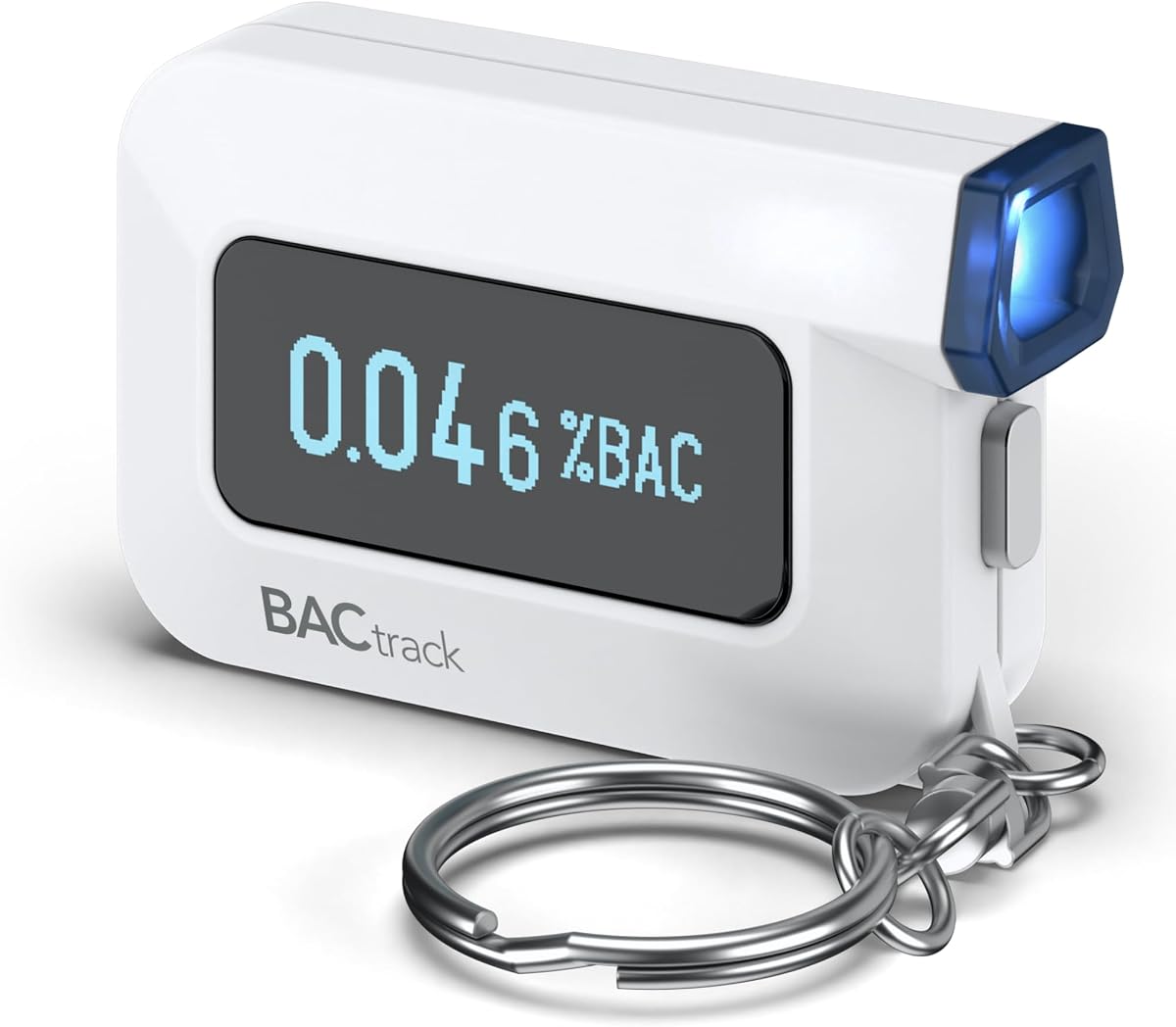
The BACtrack C6 is designed for people who want professional-style sensor technology in a device small enough for a keychain, purse, or pocket. It carries a 4.2 customer rating and stands out for flexible operation: results appear directly on the device in standalone mode, while app mode can wirelessly send them to the BACtrack app on a compatible smartphone.
We may earn a commission when you buy through this link, at no additional cost to you.
Its patented BluFire fuel-cell sensor is described as the kind of technology used by hospitals, clinics, and law enforcement. The device also includes ZeroLine technology, which estimates when blood alcohol content may return to 0.00%. That estimate is useful for planning, although it should be treated as guidance rather than a guarantee that a person is legally or physically safe to drive.
The principal trade-off is that app connectivity is optional, not essential. Buyers who dislike phones or want no digital tracking can still use the C6 independently. On the other hand, the feature adds useful recordkeeping and a more connected experience for users who prefer it. The rating is slightly lower than those of several alternatives, but the combination of size, sensor specification, and app flexibility is distinctive.
This is a compelling pick for commuters, travelers, and anyone who wants a discreet breathalyzer capable of functioning in two modes. It may be less suitable for an organization that needs standardized regulatory screening or for a buyer who prioritizes the highest stated customer rating. For everyday personal use, however, the C6 balances portability and functionality particularly well.
Standalone mode makes the C6 convenient in locations where phone use is impractical, while app mode provides wireless result delivery for users who want a digital record. This flexibility is one of the model’s clearest advantages.
The keychain-friendly design does not prevent the C6 from using a fuel-cell sensor, estimating time until BAC returns to zero, or connecting wirelessly. It is a practical middle ground between a basic personal tester and a larger screening device.
We may earn a commission when you buy through this link, at no additional cost to you.
The BACtrack Element offers a fuel-cell sensor, DOT and NHTSA compliance, and straightforward one-button operation in a compact package. Its 4.3 customer rating is solid, and the regulatory positioning makes it more compelling for screening-minded users than models intended only as casual party references.
We may earn a commission when you buy through this link, at no additional cost to you.
The platinum-based Xtend fuel cell is described as professional-grade technology trusted by hospitals, clinics, and law enforcement. The Element is also stated to meet US DOT and NHTSA regulations for alcohol-screening devices. Setup is uncomplicated: the two included AAA batteries go into the device, it is powered on, and testing begins without a complicated setup sequence.
Those strengths come with a deliberately restrained feature set. The supplied information does not mention smartphone connectivity, custom thresholds, historical records, or international unit selection. That can be a positive for buyers who want a device that simply measures, but it may disappoint anyone looking for a connected or highly configurable experience.
The Element is best suited to a safety-conscious individual, a small business, or a professional who values compliance and consistent operation more than app-based convenience. It is also a logical alternative to the S80 for buyers who want compactness without giving up a professional-style fuel-cell sensor. For straightforward regulatory screening, it is one of the most focused choices available.
The Element translates a fuel-cell sensor and DOT and NHTSA compliance into a handheld format suitable for a purse, pocket, or car. That makes formal screening features easier to carry between locations.
One-button operation reduces the chance of user confusion during a quick check. With two AAA batteries included, the device is ready for routine use without complicated accessory requirements.
We may earn a commission when you buy through this link, at no additional cost to you.
The BACtrack C8 resembles the C6 in its central proposition: a compact fuel-cell breathalyzer that can work independently or send readings to a smartphone. It has a 4.3 customer rating, uses BACtrack’s BluFire fuel-cell sensor, and includes ZeroLine technology for estimating when blood alcohol content may return to 0.00%.
We may earn a commission when you buy through this link, at no additional cost to you.
Users can select standalone mode when immediate on-device results are enough or app mode when wireless delivery and phone-based visibility are more convenient. Its small handheld body is designed to fit into a pocket, purse, or car, making it a flexible personal companion for travel, social gatherings, or everyday awareness.
Compared with the S80, Element, and Trace, the C8 does not list DOT, NHTSA, or FDA regulatory status. That distinction matters for formal screening. Its app functionality also depends on having a compatible phone, although the device remains useful without one. The one-year warranty and dual-mode design help offset those limitations for individual buyers.
The C8 is a strong recommendation for anyone who values the combination of a fuel-cell sensor, optional app connectivity, and portability. It is especially useful for users who want a record of readings without surrendering the convenience of standalone testing. Buyers seeking official screening compliance should choose one of the explicitly compliant BACtrack models instead.
App mode allows readings to be delivered wirelessly to a smartphone, making the C8 useful for users who want results outside the device display. Standalone mode preserves full functionality when a phone is not wanted.
The estimated time until BAC returns to 0.00% provides context beyond a single number. It can support planning, but it should never be used to decide whether driving is safe.
We may earn a commission when you buy through this link, at no additional cost to you.
This personal breathalyzer differentiates itself through a 4.7 customer rating, a ten-record storage function, and a stated 0.00–0.19% BAC detection range. Unlike many similarly compact devices, it can retain recent detection records, allowing users to review how readings changed over different periods.
We may earn a commission when you buy through this link, at no additional cost to you.
Its semiconductor oxide sensor is stated to provide readings with an accuracy of ±0.01%. The operating sequence is clear: hold the power button for three seconds, enter test mode, allow approximately ten seconds of preheating, and blow steadily when the visual and audio prompt appears. Emojis and prompt sounds make the process approachable for first-time users.
The central limitation is its stated detection range. A range topping out at 0.19% may be useful for general personal awareness, but it does not offer the same displayed range as professional screening devices. The product information also does not mention regulatory approval, app support, or international measurement units. The eight included mouthpieces help with personal hygiene but are fewer than the twenty supplied with several competitors.
This model is a good fit for someone who values result history and guided operation in a lightweight device. It is less suitable for professional screening or for users who need fuel-cell technology and broader measurement range. As a personal tracking tool, however, the stored readings and simple prompts create a compelling package.
The ability to browse the ten most recent detection records adds a longitudinal element missing from many basic breathalyzers. Users can compare readings across a period instead of relying only on the latest number.
Automatic preheating, a blow prompt, emoji indicators, and audio cues make the testing sequence easy to follow. These details are helpful when the device is used by different people in a household or at a gathering.
We may earn a commission when you buy through this link, at no additional cost to you.
The BACtrack Go prioritizes simplicity and portability, offering a keychain-friendly body, one-button operation, and quick BAC estimates. It has a 3.8 customer rating, the lowest among the featured products, but its core design remains appealing for users who want a small device that is always at hand.
We may earn a commission when you buy through this link, at no additional cost to you.
Its Advanced MicroCheck sensor technology is designed to deliver results in seconds. A fold-out mouthpiece helps capture the user’s breath while keeping outside airborne pollutants away from the sensing path. The operating flow is extremely direct: power on the unit and begin testing without navigating through menus or pairing with an app.
The trade-offs are substantial for buyers seeking more advanced information. The supplied product details do not mention smartphone connectivity, historical records, adjustable thresholds, international units, or regulatory compliance. Its 3.8 rating may also suggest that some customers found aspects of the device less satisfactory, although individual experiences can vary.
The Go is best for a traveler, commuter, or anyone who wants a basic personal awareness tool with minimal bulk. It is not the strongest selection for an organization requiring documented screening standards or a user interested in long-term data tracking. Within its simpler mission, it succeeds through ease of use and portability.
The keychain format makes the Go easier to carry than a full-size device. Keeping a tester available can encourage regular, responsible checks without requiring separate storage in a drawer or travel case.
Advanced MicroCheck technology and one-button operation keep the testing process brief. The fold-out mouthpiece adds a practical hygiene and breath-capture feature without making the device complicated.
We may earn a commission when you buy through this link, at no additional cost to you.
The Breathalyzer Alcohol Tester with 20 Mouthpieces offers one of the most approachable ways to add personal breath testing to a household, vehicle, or gathering. Its 4.8 customer rating is the highest in the roundup, and the large LCD with color indicators makes results easy to interpret at a glance.
We may earn a commission when you buy through this link, at no additional cost to you.
Operation is intentionally uncomplicated. After turning the tester on and waiting for the warm-up process, the user blows steadily into the mouthpiece and reads the estimated result. Twenty detachable, replaceable mouthpieces are included, which is particularly useful for families, friends, or group events where sharing one device is anticipated.
The product information does not identify the sensor technology, state a specific measurement range, or list regulatory compliance. Those omissions make it less appropriate for formal screening than a DOT, NHTSA, or FDA-recognized model. The recommendation to wait at least fifteen minutes after drinking, eating, smoking, mouthwash, or breath spray reflects the importance of reducing interference before testing.
This is the budget-focused choice for people who mainly want an accessible personal reference tool, particularly in shared settings. It is not the pick for regulated professional use, but the generous mouthpiece supply, large display, simple controls, and strong customer feedback make it a persuasive everyday option.
Twenty included mouthpieces reduce the need to share a single mouthpiece during a family gathering, dinner, or party. The detachable design also supports cleaner storage between uses.
A large digital display and color indicators help users understand the result without studying a complicated interface. This makes the model approachable for occasional and first-time users.
We may earn a commission when you buy through this link, at no additional cost to you.
The BACtrack Eclipse is the premium selection in this guide, pairing a platinum-based Xtend fuel-cell sensor with a bright, customizable LCD. Its 4.7 customer rating is among the strongest, while the stated ability to support up to 1,000 tests suggests a device intended for regular rather than occasional use.
We may earn a commission when you buy through this link, at no additional cost to you.
The sensor is described as professional-grade technology trusted by law enforcement and medical professionals. Custom features include five international measurement units, and the bright display is designed to remain easy to read in home, workplace, or mobile settings. A compact handheld body and durable construction make the Eclipse portable without making it look like a disposable consumer gadget.
The main uncertainty is that the supplied details do not list DOT, NHTSA, or FDA status, nor do they mention app connectivity or stored history. Those omissions distinguish it from the S80, which states explicit regulatory clearances. Buyers who require a documented compliance claim should verify the current product information and intended use before selecting the Eclipse.
For a serious user who wants a premium fuel-cell device, international measurement options, and a long stated testing life, the Eclipse is a strong recommendation. It is particularly appealing for regular professional-looking checks, demanding personal routines, and users who value a bright customizable display. It is the most feature-oriented premium choice in this comparison.
The bright LCD can be customized, and five international measurement units make the Eclipse adaptable to different user preferences. These features give it a more professional and versatile feel than a basic party device.
A stated testing life of up to 1,000 tests, combined with durable portable construction, makes the Eclipse suitable for repeated use. Buyers should still follow the manufacturer’s care and recalibration guidance.
We may earn a commission when you buy through this link, at no additional cost to you.
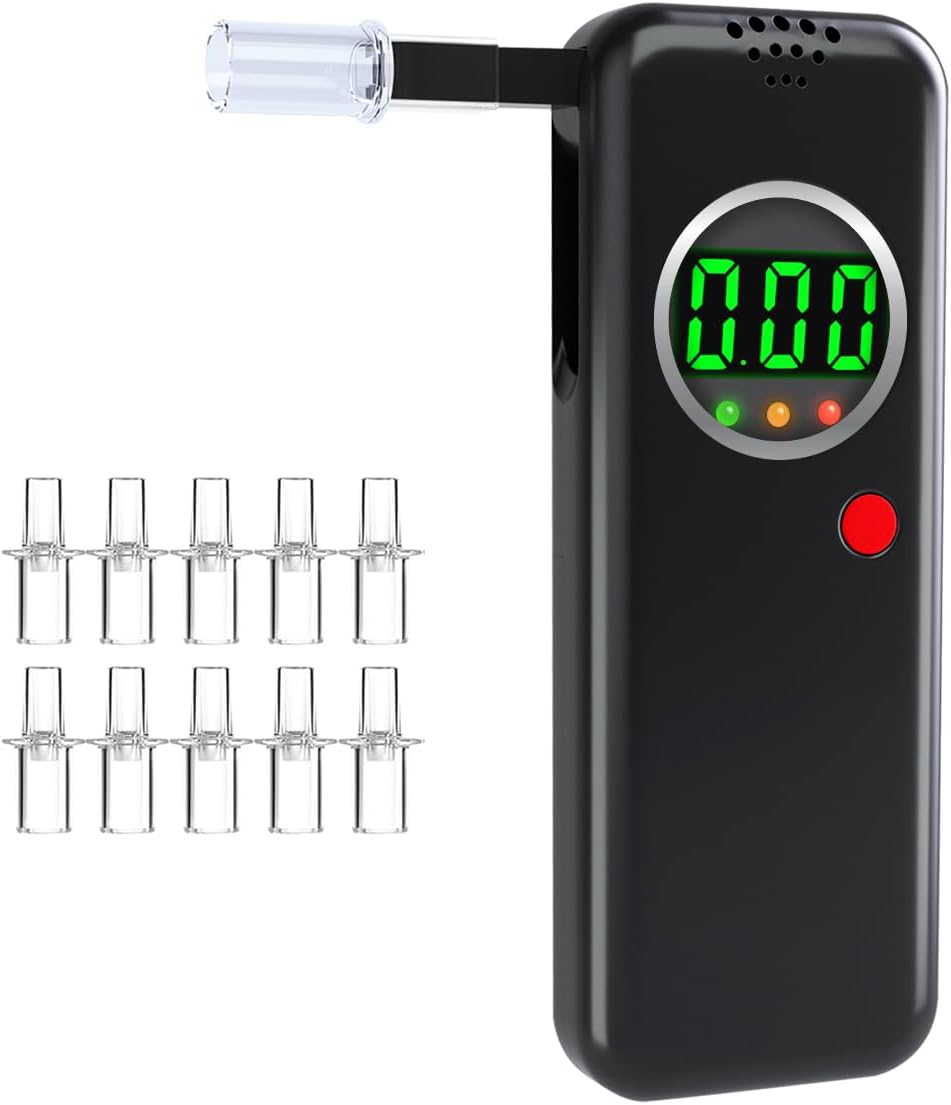
The LCD Digital Breathalyzer stands out for immediately understandable visual and audio alerts, a lightweight body, and 24-month warranty coverage. Its 4.4 customer rating gives it a strong customer-feedback profile, while the simple operating sequence makes it accessible to first-time users.
We may earn a commission when you buy through this link, at no additional cost to you.
The stated workflow is brief: insert two AA batteries, press the power button, wait fifteen seconds for warm-up, blow into the mouthpiece for three to five seconds, and read the LCD result within approximately five seconds. The color-coded feedback is unusually clear. A green light and three short beeps indicate a result below 0.08% BAC, while a red flashing light and three long beeps indicate a result above that threshold.
The trade-off is that the device does not provide a fuel-cell specification, formal regulatory claims, smartphone connectivity, or a detailed measurement range in the supplied information. The ten included mouthpieces are adequate for household use but fewer than those supplied with the best shared-use model. The semiconductor sensor is intended more for personal reference than formal professional screening.
This breathalyzer is a compelling option for users who want a lightweight, straightforward device with unmistakable alerts and an extended warranty. It fits home parties, social gatherings, and personal awareness routines where a clear warning is more important than advanced data tracking. Those needing professional screening should consider a compliant fuel-cell model instead.
Distinct light patterns and beep lengths communicate the broad BAC category quickly. This is especially useful in a noisy setting or when the user does not want to study a small number on the display.
The stated 24-month warranty adds reassurance, while the 110-gram body is light enough for a wallet or pocket. Both attributes make the model convenient for regular personal checks.
We may earn a commission when you buy through this link, at no additional cost to you.
The BACtrack Trace is a straightforward professional-style device with a 4.4 customer rating, a platinum-based Xtend fuel-cell sensor, and stated DOT and NHTSA compliance. Like the Element, it emphasizes measured performance and uncomplicated operation rather than app connectivity or digital customization.
We may earn a commission when you buy through this link, at no additional cost to you.
The Trace uses the same stated class of professional-grade sensor technology trusted by hospitals and law enforcement. Two included AAA batteries power the unit, after which the user can power it on and begin testing. Its small handheld body fits easily into a purse, pocket, or car, making it easier to carry than a fixed screening station.
Its limitations are largely about features rather than core operation. The supplied information lists no app connection, historical results, custom measurement units, or adjustable thresholds. The one-year warranty is standard among the BACtrack models featured here. As with any screening device, users should also understand that a reading is one input to a safety decision rather than a substitute for professional judgment.
The Trace is well suited to organizations and individuals that prioritize DOT and NHTSA compliance, a fuel-cell sensor, and fast one-button testing. It is a particularly good choice for mobile use because the device is compact and uncomplicated. Buyers wanting a bright customizable screen should look toward the Eclipse, while those prioritizing personal FDA clearance can examine the S80.
The Trace keeps its feature set focused around a platinum fuel-cell sensor and a compliance-minded operation. That restraint makes it useful for routine screening environments where dependable, repeatable procedures matter.
Its small body can move readily from a workplace to a vehicle or fit inside a handbag. The included batteries and one-button workflow simplify setup when the device is used away from a desk.
We may earn a commission when you buy through this link, at no additional cost to you.
The best hand held breathalyzer depends on sensor technology, required authority, portability, and whether you value app connectivity or simple disposable-style operation. Review the following factors before making a decision.
Fuel-cell sensors and semiconductor oxide sensors occupy different roles in this category. The BACtrack S80, C6, Element, C8, Eclipse, and Trace use stated fuel-cell technology, often described as professional-grade or trusted by hospitals, clinics, and law enforcement. Models such as the Personal Breathalyzer with 8 Mouthpieces and the LCD Digital Breathalyzer use semiconductor technology, which is better understood here as a convenient personal reference device.
Choose a fuel-cell model when professional-looking performance, regulatory screening relevance, or consistent operation matters most. Choose a semiconductor model when straightforward personal checks, lower-cost access, guided displays, and shared household use are the priority.
Regulatory statements provide essential context for professional or safety-focused use. The BACtrack S80 is stated to be DOT and NHTSA approved and FDA 510(k) cleared for personal use. The Element and Trace are stated to comply with US DOT and NHTSA regulations for alcohol-screening devices. These claims are more relevant to organized screening than the general-purpose positioning of compact party testers.
Do not assume every device with a professional sensor description has the same official standing. Check the current product documentation and applicable rules, and consider local requirements before using a breathalyzer for workplace or official decision-making.
A hand held breathalyzer is most useful when it is easy to carry and retrieve. The C6 and Go use especially compact keychain formats, while the Element and Trace are designed to fit in a pocket, purse, or car. The LCD Digital Breathalyzer weighs a stated 110 grams, and several other models emphasize lightweight ABS construction and minimal footprint.
For frequent travel, select a model that fits comfortably in a pocket without being easily forgotten. For home-only use, display size and included mouthpieces may matter more than the smallest possible body.
The BACtrack C6 and C8 support optional wireless app mode, delivering results to a smartphone while retaining standalone operation. This is convenient for users who want digital visibility without being dependent on a phone. Other models are better suited to display-only use, while the Personal Breathalyzer with 8 Mouthpieces stores its ten most recent detection records.
Choose connectivity if you want a digital log or app-based experience. Choose local storage if you want recent readings without a phone. Opt for a purely display-based device if simplicity and fewer dependencies matter more.
A large LCD, color indicators, emojis, and distinct beeps can make a substantial difference for occasional users. The Breathalyzer with 20 Mouthpieces provides a large display with color indicators, the Personal Breathalyzer with 8 Mouthpieces uses emojis and audio prompts, and the LCD Digital Breathalyzer uses green and red lights with different beep patterns.
Look for a result you can understand at a glance, especially if several people will use the device. Clear prompts can reduce incorrect blowing technique and make it easier to identify broad safe, caution, or warning categories.
Replaceable mouthpieces improve hygiene and make a device more practical for households or gatherings. The Breathalyzer with 20 Mouthpieces includes twenty, the Personal Breathalyzer with 8 Mouthpieces includes eight, and the LCD Digital Breathalyzer includes ten. Models with integrated or fold-out mouthpieces are convenient for an individual who primarily tests their own breath.
If several people will use one device, prioritize a larger mouthpiece supply. If the device is kept on a keychain for one owner, a fold-out or integrated design may be more convenient than managing multiple detachable pieces.
A useful comparison includes detection range, stated accuracy, measurement units, custom thresholds, and time-to-zero estimates. The Personal Breathalyzer with 8 Mouthpieces states a 0.00–0.19% range and ±0.01% accuracy. The C6 and C8 provide ZeroLine estimates, the S80 supports custom BAC thresholds, and the Eclipse supports five international measurement units.
More features are not automatically better, but they can make readings easier to interpret or compare. Ensure the range suits your intended use and understand that estimates and threshold settings are aids, not guarantees about legal driving status or personal safety.
Warranty length can provide reassurance, particularly for a device that depends on a sensitive sensor. Most BACtrack products in the roundup include a one-year warranty, while the LCD Digital Breathalyzer states 24-month coverage. The Personal Breathalyzer with 8 Mouthpieces also states 24/7 customer support and a 24-month warranty.
Check what the warranty covers, how replacement or repair is handled, and whether disposable accessories are included. Responsible care, proper storage, and regular testing remain important regardless of the coverage period.
Read the device’s instructions before the first test, install the specified batteries correctly, and confirm that the screen and indicators respond during startup. Allow the full warm-up period stated by the manufacturer. Fuel-cell models may include specific activation or breath-capture procedures, while semiconductor models may ask users to wait longer before testing.
Take a normal breath and blow steadily into the mouthpiece for the duration requested by the device. Avoid short, incomplete puffs, which can produce an unsatisfactory result. Wait at least fifteen minutes after drinking, eating, smoking, using mouthwash, or applying breath spray when the manufacturer recommends it, since those activities can affect breath measurements.
After use, switch the unit off and clean the mouthpiece or replace it according to the instructions. Store the device in a dry area away from extreme heat, moisture, dust, and direct sunlight. Fuel-cell and semiconductor sensors can be affected by contamination or improper storage, so follow the specified cleaning, replacement, and recalibration guidance. Finally, never use a reading as the sole basis for driving or other safety-critical decisions.
The featured BACtrack models with fuel-cell sensors are positioned as professional-grade products, while the S80, Element, and Trace add stated regulatory compliance to that technical foundation. Accuracy still depends on correct operation, sensor condition, calibration, and the testing environment. No consumer device should be treated as infallible.
A breathalyzer can provide an estimated BAC reading, but it cannot guarantee that someone is safe or legally able to drive. Time-to-zero estimates are guidance only, and alcohol absorption and elimination vary among individuals. When there is any doubt, do not drive and arrange a sober driver or other safe transportation.
The BACtrack C6 and C8 can operate in standalone mode, although their app modes add wireless result delivery. The other featured devices are primarily designed for on-device readings, while the Personal Breathalyzer with 8 Mouthpieces includes local record storage. Choose connectivity if digital tracking is important to you.
Fuel-cell models in this roundup use a platinum-based or BluFire fuel-cell sensor and are often associated with professional screening or established BACtrack products. Semiconductor models use a compact oxide sensor and are generally positioned for convenient personal reference. Regulatory status and intended use matter more than sensor terminology alone.
Food, drinks, smoking, mouthwash, and breath spray can temporarily affect the alcohol content of breath and may produce misleading results. Waiting at least fifteen minutes is recommended by one featured product, but the instructions for the specific model should take priority. Testing in a clean, well-ventilated location also helps reduce interference.
They are not absolutely necessary for one person, but they can improve hygiene and make sharing more comfortable. Models with eight, ten, or twenty included mouthpieces are useful for families and gatherings. Users should follow the cleaning guidance for the mouthpiece supplied with their chosen device.
Only when the device, its documentation, and the relevant workplace rules support that use. The S80 is stated to be DOT and NHTSA approved and FDA 510(k) cleared, while the Element and Trace state DOT and NHTSA compliance. Organizations should verify current requirements and follow an appropriate screening procedure.
Keep it powered off, clean, and dry in a protected location away from excessive heat, moisture, dust, and direct sunlight. Do not leave a used mouthpiece exposed if the instructions recommend removing or replacing it. Periodic sensor checks or recalibration may also be necessary according to the manufacturer’s maintenance schedule.
The BACtrack S80 is the strongest overall recommendation because it combines a platinum-based Xtend fuel-cell sensor with stated DOT and NHTSA approval, FDA 510(k) clearance, customizable thresholds, and simple operation. The BACtrack Eclipse is the premium pick for users who prioritize a bright customizable display, five measurement units, and a stated testing life of up to 1,000 tests. For budget-conscious shared use, the Breathalyzer with 20 Mouthpieces offers a large display, simple controls, and the highest customer rating.
Your priorities should guide the choice. Select a compliant fuel-cell model for screening-oriented use, a connected C6 or C8 for phone integration, a tiny keychain model for everyday portability, or a semiconductor tester for straightforward household and party reference. No breathalyzer replaces responsible behavior, and a numerical result should never be the only consideration when deciding whether to drive.
Before purchasing, confirm the current product specifications, regulatory claims, accessories, warranty, and customer feedback. Product pricing and availability can change over time, so check the current listing for the model that best matches your accuracy, portability, connectivity, and budget priorities.