
Universal Vehicle Sensor for Gates
4.3Editor score
Universal 12/24V AC/DC power
Adjustable sensitivity with auto-boost
Audible and visual setup feedback
This Gate Loop Detector guide compares compatibility, power options, detection features, diagnostics, and installation support for top choices.
A gate loop detector is the control device that recognizes a vehicle over an embedded or surface-mounted induction loop and sends a command to an automatic gate operator. The best unit combines dependable detection, correct electrical compatibility, useful diagnostics, and fail-safe behavior suited to the installation.
This guide compares ten gate loop detectors by examining supported gate systems, power requirements, detection modes, sensitivity controls, operating frequencies, status indicators, safety functions, and configuration options. It includes purpose-built LiftMaster models, universal commercial detectors, and a low-power unit designed for solar-powered gate applications.
Each review identifies the product's strongest benefits, practical limitations, and likely buyer. The three top selections highlight budget, overall, and premium choices, while the full list covers specialized installations. Product specifications and ratings reflect the supplied listings, while prices and availability can change.
4.3Editor score

5.0Editor score

4.8Editor score
The comparison below highlights each detector's installation model, electrical compatibility, detection controls, and diagnostic capabilities. It is designed to help installers and property owners narrow the field before checking operator-specific requirements.



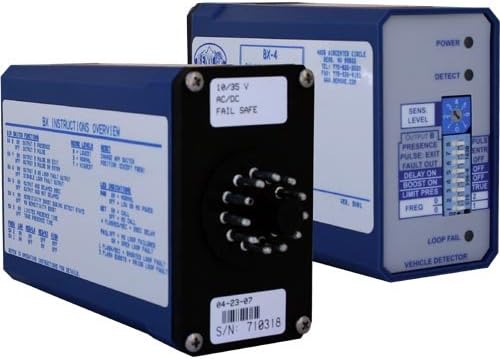

This universal loop detector combines vehicle sensing, broad electrical compatibility, and installation feedback in one practical package. Its supplied rating is 4.3, and its strongest qualities are adaptability across 12/24V AC/DC systems, support for LiftMaster and universal gate operators, and an auto-boost feature designed to account for changing vehicle profiles.
We may earn a commission when you buy through this link, at no additional cost to you.
The detector uses electromagnetic loop sensing to identify cars, trucks, and motorcycles without relying on cameras, photo beams, or pressure mats. Dip-switch sensitivity controls and automatic boost reduce the need for repeated manual recalibration when traffic changes. The stated 12/24V AC/DC compatibility also makes it easier to consider across gate, traffic-signal, and garage-door control systems without adding a separate converter.
Its most unusual convenience is the combination of on-unit visual indication and audible feedback. Those indicators can help an installer confirm that detection is occurring during setup and testing, while the ability to mount the detector into the operator control box keeps the core sensing equipment close to the gate electronics. It is also usable for driveways and traffic-control applications where vehicle presence is required.
The trade-off is that its listed features do not present the same depth of diagnostic information as specialized commercial detectors with loop fault counters, multiple operating frequencies, or configurable output timing. A buyer should still verify the gate operator's voltage, wiring scheme, and approved detector interface before purchase. For a straightforward residential or light-commercial installation that needs dependable vehicle detection, this is a cost-conscious and versatile choice.
Automatic boost is valuable when cars, trucks, motorcycles, and occasional larger vehicles pass over the same loop. The adjustable sensitivity settings give an installer room to tune detection while the automatic behavior reduces routine adjustment as vehicle profiles change.
Audible and visual confirmation makes initial setup more observable. Those status cues can help verify detection at each stage of commissioning without relying entirely on the gate's external behavior.
We may earn a commission when you buy through this link, at no additional cost to you.
The LiftMaster LOOPDETLM is a genuine replacement plug-in loop detector designed for a specifically enumerated group of LiftMaster slide and swing gate operators. It carries a supplied rating of 5.0 and is especially attractive to owners who want a model-matched component rather than a general-purpose detector adapted to a proprietary control system.
We may earn a commission when you buy through this link, at no additional cost to you.
Its major advantage is the clarity of the listed compatibility. The product information names compatible LA400PKGU, LA412PKGU, LA500PKGU, CSL, CSW, RSL, RSW, SL, HCTDCU, and other designated operator models. That level of detail allows a buyer to compare the operator's model identifier with the supported list before making a selection, reducing uncertainty around electrical and control-board compatibility.
The detector can be configured as a shadow loop, interrupt loop, or exit loop. That flexibility makes it relevant to different traffic patterns: a shadow loop may be positioned so the gate remains open while a vehicle occupies the detection area, an interrupt loop can assist with safe vehicle passage, and an exit loop can support release behavior after departure. Its fail-safe mode allows the gate to stay open when a vehicle obstructs the gate path.
This is not a universal option, and that is the central limitation. A buyer with an unlisted operator, an unusual control board, or a different brand should not assume the plug-in unit will work. The concise listing also provides fewer details about sensitivity controls and operating frequencies than some competing models. Within its documented LiftMaster range, however, it offers a focused and potentially straightforward factory-matched solution.
Shadow, interrupt, and exit loop modes allow the same hardware to serve several positions around a gate. This flexibility can simplify planning when one site needs coordinated vehicle detection for safety and traffic control.
The long list of supported operator models is a major practical benefit. It gives LiftMaster owners a concrete way to confirm suitability instead of relying on a vague promise of universal compatibility.
We may earn a commission when you buy through this link, at no additional cost to you.
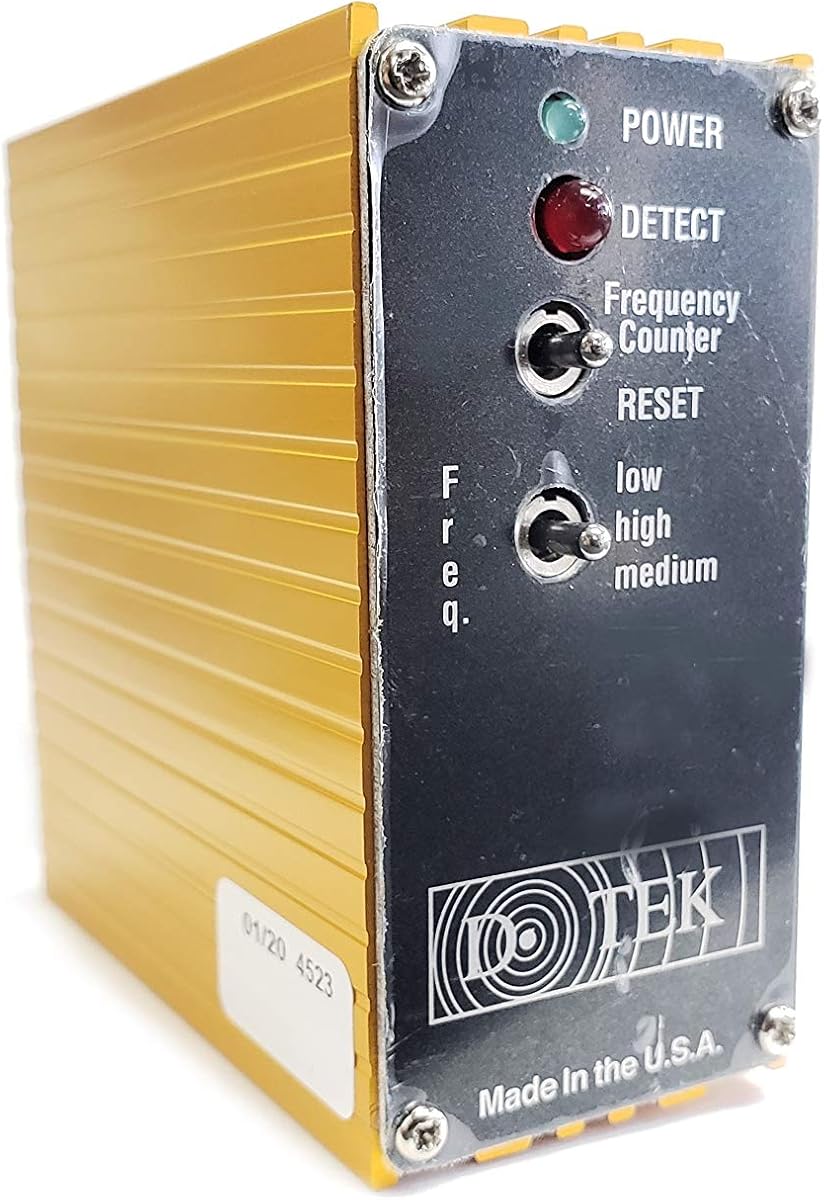
The EMX Ultra II DTEK is a universal loop detector aimed at gate and traffic-control installations where setup precision and diagnostic visibility matter. Its supplied rating of 4.8 reflects a strong overall profile, particularly its frequency counter, loop diagnostics, fail-safe operation, and extensive sensitivity controls.
We may earn a commission when you buy through this link, at no additional cost to you.
Ten sensitivity settings give installers more granular control than a simple on/off or two-position system. Four operating frequencies can also help manage interactions between nearby loops, and the built-in frequency counter and reset switch support that process. For a busy property or traffic-control application, those controls offer a more systematic setup than a basic sensor with limited adjustment.
The detector includes loop diagnostics, lightning protection, and surge protection. Those protections are particularly relevant to equipment installed outdoors or connected to gate systems exposed to variable weather and electrical transients. Fail-safe operation adds another layer of control philosophy, allowing the system to respond predictably when a fault condition occurs rather than treating every electrical state as normal.
Its principal drawback is that the supplied product information does not clearly identify the input voltage range, so installers should confirm electrical requirements with the seller or documentation before purchase. The extensive control set may also be unnecessary for a simple residential gate. Even so, the combination of diagnostics, frequency management, surge protection, and fine sensitivity makes this an excellent general-purpose choice for demanding gate and traffic-control work.
A frequency counter, reset switch, and dedicated loop diagnostics give the installer more visibility during setup. These tools are useful when troubleshooting detection behavior or coordinating multiple loops in a larger traffic system.
Lightning and surge protection are valuable features for outdoor installations. They add resilience to the detector electronics and support more dependable operation in electrically variable environments.
We may earn a commission when you buy through this link, at no additional cost to you.
The EMX D-TEK MVP is a multi-voltage universal loop detector for gate and access applications. Its supplied rating is 4.3, and the product's defining proposition is straightforward: accommodating different power environments without committing to a detector tied to only one operator family or electrical arrangement.
We may earn a commission when you buy through this link, at no additional cost to you.
Multi-voltage support is particularly useful where a property has older equipment, a replacement project with mixed gate hardware, or an operator that presents an unusual supply requirement. A universal format can also simplify standardization when several loops must be serviced, although the installer should still verify each control board's actual requirements before installation.
The supplied listing is notably concise and identifies the unit as the EMX MVP-D-TEK. It does not provide the same level of detail about sensitivity settings, frequency selection, output relays, or timing as the richer EMX listings in this roundup. That means the buyer may need to consult the manufacturer's documentation for exact configuration and wiring information.
Those limitations make this model harder to evaluate from the listing alone, but its multi-voltage architecture remains a meaningful advantage for installers working across mixed systems. It is a sensible candidate for a professional buyer who already knows the MVP series, has encountered its configuration, or needs a replacement matching an existing EMX installation. For a first-time buyer who wants every operating feature listed in the product summary, one of the more fully documented alternatives may be easier to assess.
Multi-voltage capability can streamline installation planning across gate operators with different supply arrangements. It is especially helpful for technicians maintaining several properties or replacing a detector within an established control system.
The brief listing favors buyers who already understand the MVP series. Anyone needing exact output specifications or timing details should obtain the relevant documentation before purchase.
We may earn a commission when you buy through this link, at no additional cost to you.
The EMX ULT-PLG is a feature-rich plug-in vehicle loop detector designed for automatic gates, overhead doors, and access-control systems. It has no supplied customer rating, but its specification sheet presents one of the most complete feature sets in this guide, including ten sensitivity levels, four frequency settings, dual outputs, and multiple operating modes.
We may earn a commission when you buy through this link, at no additional cost to you.
Its ULTRAMETER display is intended to show the optimum sensitivity setting, making the initial tuning process more guided. Detect-on-stop mode can be valuable in tight spaces where cross traffic should not automatically trigger a gate opening. The detector also supports ASB, fail-safe, and fail-secure modes, allowing the installer to select behavior that fits the site's safety and access-control strategy.
Two solid-state open-collector outputs provide substantial flexibility. One provides presence output, while the configurable second output can handle presence, loop fault, entry pulse, or exit pulse requirements. Its stated operating current of 15 mA is modest, and the 20–2000 µH loop-inductance range accommodates a broad selection of loop designs.
The main constraint is that it operates on 12–24 VDC rather than universal AC/DC input. Sites with a 24V AC source or an unusual operator supply may need a different model or a properly engineered power arrangement. The broad 4 to 180 degrees Fahrenheit operating range is a strong asset, but buyers should still confirm all wiring and control-board requirements. For DC systems needing extensive output and mode choices, this is a highly capable detector.
Detect-on-stop is a notable advantage where unwanted cross traffic passes close to a gate. It reduces unnecessary activations by requiring the vehicle to stop on the loop before the selected action occurs.
The configurable second output can indicate presence, report a loop fault, or provide entry and exit pulses. This allows the detector to support more than one control function without adding a separate sensing module.
We may earn a commission when you buy through this link, at no additional cost to you.
The Sentex/Chamberlain Brands O2-LOOPDETLM is a plug-in loop detector positioned as an LM-compatible replacement. Its supplied rating is 5.0, making it one of the strongest-rated products in the roundup, although the listing provides limited technical detail beyond the product identity, plug-in format, and country of manufacture.
We may earn a commission when you buy through this link, at no additional cost to you.
The appeal of this model lies in its OEM-style relationship to the LiftMaster ecosystem. Owners replacing a failed loop detector often prefer a part designed around the expected control-board interface rather than a universal unit that must be adapted through additional wiring or programming. Its plug-in format also suggests a more direct replacement workflow for a technician familiar with the supported operator generation.
Compared with the other LiftMaster listing that names a long series of compatible models, this product's description does not identify particular operator model numbers. That makes it essential for a buyer to compare the original detector, operator model, connector, and control-board requirements before ordering. The 5.0 rating is encouraging, but a high aggregate score cannot replace compatibility verification.
Its uncomplicated design may be ideal for a straightforward replacement where the existing installation already uses this component. For a new build or a mixed-brand property, the EMX options offer more visible configuration details. Overall, this is a strong candidate for a same-model replacement, with the main caveat that the supplied listing calls for extra compatibility diligence.
An OEM-style plug-in module can simplify repairs because its form and role are already established within the intended gate ecosystem. The reduced need for improvised interfaces is the main practical benefit.
The listing does not enumerate supported operators or describe its outputs. Checking the existing operator and detector markings is essential before treating this as a direct substitute.
We may earn a commission when you buy through this link, at no additional cost to you.
The LiftMaster AELD is a plug-in loop detector with a compact feature set focused on ease of installation and useful status feedback. Its supplied rating is 4.3. It is explicitly compatible with LiftMaster CSW200 and SL3000 gate operators equipped with the Omni Control Board, making the operator model and control-board version the critical purchasing checks.
We may earn a commission when you buy through this link, at no additional cost to you.
Its diagnostic LED provides separate information for detection, an open loop, a loop failure, and power status. That range of feedback is more helpful than a single operating light because it can distinguish a normal vehicle detection from wiring or coil problems. Two sensitivity settings, combined with boost, offer basic adaptation for different vehicle sizes without overwhelming the installer with a large menu of options.
Four frequency settings help avoid interference when multiple loops operate in the same area. The detector's plug-in design also reduces the amount of external setup associated with a conventional box-mounted unit, provided the operator has the correct control-board arrangement and wiring interface.
The trade-off is its narrower compatibility and relatively simple adjustment system. It does not offer the long operator list or the three distinct loop-position modes associated with the LiftMaster LOOPDETLM, nor does it match the broader diagnostic specification of the EMX Ultra II. For a CSW200 or SL3000 installation with the correct Omni Control Board, though, the AELD offers an easy-to-diagnose and familiar solution.
The LED can report detection, open-loop status, loop failure, and power condition. Those indications help an installer narrow down a problem before replacing hardware or repeatedly adjusting sensitivity.
Two sensitivity positions, boost, and four frequencies cover many ordinary installations. The limited adjustment range is worthwhile for straightforward sites but may be less flexible for complex traffic layouts.
We may earn a commission when you buy through this link, at no additional cost to you.
The Reno A&E BX3 is a 110VDC vehicle detection device designed for installations that need more than a single basic switching output. Its supplied rating is 4.2, and the strongest differentiators are dual relay outputs, two-second delay outputs, sensitivity boost, four loop frequencies, and the availability of fail-safe or fail-secure versions.
We may earn a commission when you buy through this link, at no additional cost to you.
Dual relay outputs offer more control than a one-output detector. They can serve separate parts of a gate or access-control system, such as vehicle presence and an auxiliary indication, provided the operator's interface accepts the relevant contacts. The two-second delays on outputs A and B add another layer of behavior that can be useful in traffic and access applications.
The selection of four loop frequencies helps reduce interference between nearby detectors. Sensitivity boost assists recognition of different vehicle profiles, while the choice between fail-safe and fail-secure versions lets an installer match the required response to a fault condition. That flexibility is especially useful in commercial access systems where safety and operational priorities may differ.
The important limitation is the specified 110VDC supply. A buyer should confirm that the operator or control cabinet provides the correct power and can accept the detector's relay outputs. The model's BX3 designation may also require familiarity with the Reno A&E product range. For a suitable 110VDC commercial installation, however, the output flexibility and timing functions make it a capable multi-output choice.
Dual relay outputs allow the detector to coordinate more than one control function. This is useful when a site needs separate presence, direction, or auxiliary signaling connections.
The availability of both versions makes system behavior a deliberate design choice. Installers should align the selected response with the gate's safety requirements rather than assuming one mode is universally preferable.
We may earn a commission when you buy through this link, at no additional cost to you.
The Diablo DSP-6LP is a micro-sized vehicle detector created specifically for solar-powered gate applications. It has a supplied rating of 5.0 and stands apart from conventional control-box detectors through its extremely low standby consumption, broad 10–30V AC/DC input, automatic frequency tuning, and self-adjusting sensitivity.
We may earn a commission when you buy through this link, at no additional cost to you.
Power efficiency is the defining advantage. The detector draws approximately 1 milliamp while waiting and less than 25 milliamps with a vehicle on the loop. That low demand makes it a logical choice where a gate operator runs from a battery charged by solar power and every standby milliamp affects available operating reserves. A power LED blinks once per second to confirm low-power operation.
The DSP-6LP also adapts to different loop sizes and compensates for changing environmental conditions through its automatic tuning approach. It is preset to a normal sensitivity for parking and access-control use and selects a suitable operating frequency automatically. The stated design goal of virtually eliminating crosstalk in most applications is particularly useful where multiple loops are close together.
Unlike the LiftMaster plug-in choices, the supplied listing does not identify a proprietary control-board connection, so installers should confirm the wiring and output interface before purchase. Current consumption also rises while a car is present, although that is expected for an active detection state. For solar, battery-powered, and other low-consumption access installations, this detector's purpose-built efficiency makes it one of the most compelling choices in the guide.
An approximately 1 mA standby draw reduces the burden on batteries and solar charging systems. That efficiency is the central reason to choose this detector for a remote or off-grid gate.
Automatic frequency selection and sensitivity adjustment reduce the need for constant manual retuning. The detector also compensates for environmental changes, supporting steadier behavior across varying conditions.
We may earn a commission when you buy through this link, at no additional cost to you.
The Northstar NP2 is a general-purpose vehicle loop detector with a supplied rating of 5.0 and a well-rounded feature set. It accepts 12–24V AC/DC, provides ten sensitivity levels and four frequencies, includes automatic boost, and offers separate power, detection, and fault indicators.
We may earn a commission when you buy through this link, at no additional cost to you.
Its balanced configuration makes it a practical candidate for a broad range of gate-operator installations. Ten sensitivity settings allow fine tuning, while automatic boost improves performance as vehicle size changes. Four frequency options help manage nearby loops, while wrong-voltage protection adds a useful safeguard against incorrect power connections.
Output timing is another strength. The detector supports extend and delay functions, selectable presence times, and selectable pulse lengths. Those settings let an installer coordinate how long a detection signal remains active and how the gate responds to a vehicle, which is important when a simple immediate-release behavior is not appropriate.
The main unresolved detail is the absence of a specific operator compatibility list or a clear description of the physical output interface. Buyers should verify wiring requirements with the seller and operator documentation. The NP2 may not be as specialized as the solar-focused DSP-6LP or as clearly documented as the EMX Ultra II, but its voltage flexibility, timing controls, diagnostics, and 5.0 supplied rating create an attractive overall package.
Extend, delay, presence-time, and pulse-length settings give the installer meaningful control over gate response. These options help the detector fit site traffic patterns rather than forcing one fixed behavior.
Separate power, detect, and fault indicators make system states easier to distinguish. Wrong-voltage protection adds an additional layer of protection during setup and maintenance.
We may earn a commission when you buy through this link, at no additional cost to you.
A suitable gate loop detector must match the operator's electrical system, loop arrangement, safety behavior, and traffic pattern. The following factors help narrow the options before installation begins.
Begin with the exact gate operator model, control-board version, connector arrangement, and required detector interface. A product can support a broad voltage range and still be electrically or logically incompatible with a particular operator. Genuine plug-in replacements are often the simplest option when replacing a failed component in the same equipment family, while a commercial universal detector may be better for a new installation with mixed requirements. Confirm whether the manufacturer permits third-party detectors and whether the listed models include the board revision found at the site.
Check the detector's voltage and whether it accepts AC, DC, or both. Universal 12/24V AC/DC models offer flexibility across more control cabinets, but the gate operator's actual output still needs verification. Some systems provide 24V DC, while others use 24V AC or a different arrangement. Low-power solar gates require especially careful attention to standby draw, and a detector that operates only on DC may need a suitable power supply when the operator offers AC only. Never rely on the nominal voltage alone; inspect the transformer, rectifier, power terminals, and control-board documentation.
Choose a detector that supports the role required by the loop position. Presence detection keeps a gate open while a vehicle occupies the zone. Exit loops support release behavior, interrupt loops can assist with safe passage, and shadow loops can prevent a gate from closing on an occupied area. Detect-on-stop is useful where cross traffic should not open the gate, while configurable output modes can support entry pulses, exit pulses, fault reporting, and other control functions. Map each loop to its intended task before selecting the detector.
The right sensitivity setting detects smaller vehicles without creating unwanted activations. More adjustment levels provide finer control, while automatic boost or self-tuning can compensate for changes in vehicle size, loop dimensions, weather, and surrounding conditions. A detector that is too insensitive may miss motorcycles or compact cars, while excessive sensitivity can produce false activations. Look for automatic adjustment when the site handles varied traffic, and retain manual controls for commissioning and unusual vehicles.
Nearby loops can interfere if they operate on the same frequency, particularly on sites with multiple entrances, exits, or parking lanes. A detector with four selectable frequencies gives the installer a way to separate adjacent systems. A frequency counter and reset control can further simplify setup. Interference is not always obvious: one loop may retain or release a vehicle unexpectedly, or a cross-traffic loop may activate the wrong gate. Planning loop locations and frequencies before wiring makes troubleshooting much easier.
A loop fault is an abnormal electrical state, and the detector must define what the gate should do when it occurs. Fail-safe behavior generally prioritizes keeping the gate open, while fail-secure behavior prioritizes maintaining a closed state according to the system's safety design. The correct choice depends on the installation, traffic exposure, and operator requirements. Some detectors support both modes or offer fail-safe and fail-secure product versions. A professional installer should align that behavior with the site's documented safety plan rather than choosing based on convenience alone.
Useful diagnostics can shorten commissioning and make future repairs easier. A basic operating LED tells the installer that power is present, but a multi-function display can distinguish vehicle detection, an open loop, a shorted or failed loop, and other fault conditions. Audible feedback can be useful during initial setup, while a numerical sensitivity display may make tuning easier to record and repeat. For professional or high-traffic installations, diagnostic depth is often more valuable than a small number of extra convenience features.
The output interface determines how the detector communicates with the gate operator. Single-output models may be adequate for a simple presence-controlled gate, while dual relays or open-collector outputs can support separate presence, direction, exit, and fault signals. Timing controls—including extension, delay, presence duration, and pulse length—determine how long a gate remains open or how an exit event is communicated. Check the operator's input voltage, relay rating, and required timing before selecting a model with elaborate output features.
Before installation, identify the gate operator, its supply voltage, the control-board location, and every loop that the detector will serve. Confirm compatibility and then disconnect power before connecting any wiring. Follow the operator and detector instructions for terminal assignments, loop size, grounding, and conductor routing rather than relying on wire color alone. Proper loop construction and clean connections are as important as the detector's internal performance.
Commission the detector with the gate in a safe test state. Use the diagnostic indicators or display to confirm power, loop health, and vehicle detection. Establish the sensitivity, frequency, output mode, presence timing, and delay settings one at a time, recording each value. Test with several vehicle sizes, including the smallest type that regularly uses the gate, and check both opening and closing behavior. Also test cross traffic and obstruction scenarios without allowing a person or vehicle to enter a hazardous gate path.
For ongoing care, inspect the visible loop area for pavement cracks, standing water, debris, and construction damage. Keep the control enclosure closed and dry, check terminals for corrosion or loose connections, and compare the detector's diagnostic indications with normal operation. Firmware or hardware changes are uncommon, but settings may need adjustment after substantial changes to traffic, loop dimensions, or gate speed. Consult the relevant manual before making electrical modifications.
A gate loop detector is an electronic control module that senses a vehicle over an inductive loop embedded in a driveway or roadway. It communicates with the gate operator to create a presence, open, close, or other configured response. The detector does not itself sense weight through a pressure mat; it evaluates the electrical change produced when a vehicle enters the loop.
No. Compatibility depends on the operator's input voltage, control-board interface, wiring arrangement, and supported detector functions. Some products are universal across many AC/DC systems, while others are plug-in replacements for specified LiftMaster models. Confirm the exact operator model and review the manufacturer's compatibility requirements before installation.
The DSP-6LP is specifically designed for solar-powered gate applications and is the strongest match in this list. It accepts 10–30V AC/DC and consumes approximately 1 mA while waiting, making it especially suitable where battery capacity is limited. Other detectors may also work if their power and standby requirements fit the charging system.
Multiple frequency settings help prevent adjacent loops from interfering with each other. If two nearby loops operate at the same frequency, a vehicle on one may be detected by the other and cause unintended gate movement. Assigning different frequencies during setup separates the loops and makes traffic behavior more predictable.
Fail-safe operation generally leaves the gate open when a loop fault is detected, prioritizing access and preventing a gate from closing on an occupied vehicle or blocked area. Fail-secure operation generally holds the gate closed during a fault. The proper choice depends on the site's safety plan, traffic conditions, and operator requirements.
Auto-boost increases detection sensitivity when needed so smaller vehicles or vehicles with different amounts of conductive material can still be recognized. It reduces the need to manually reset sensitivity when traffic changes. The feature should still be balanced against false activations, particularly where pedestrians or nearby equipment could affect the loop.
Start by checking the detector's power, detect, open-loop, and loop-fail indicators, if available. Inspect the loop cable, connections, and control-box terminals for breaks, corrosion, or loose wiring. Then verify the configured sensitivity, frequency, output mode, and timing settings, and test with a known vehicle over the loop. If the fault remains, follow the operator manufacturer's diagnostic procedure or consult a qualified gate technician.
That depends on the detector's channels and output design. A standard single-channel detector generally handles one inductive loop, while multi-channel or multi-output devices can coordinate multiple detection zones. The DSP-6LP and other listed models primarily discuss a single loop, so buyers should not assume extra loop capability without confirming it in the documentation.
The strongest all-around choice in this guide is the EMX Ultra II DTEK because it combines ten sensitivity levels, four frequencies, loop diagnostics, fail-safe operation, and surge protection. The DSP-6LP stands out for solar-powered or low-consumption installations, while the universal vehicle sensor offers a versatile and economical starting point for common gate systems.
The LiftMaster LOOPDETLM and AELD are compelling when the operator is explicitly supported and a factory-oriented plug-in design is preferred. The EMX ULT-PLG is suited to DC systems requiring dual outputs and detect-on-stop behavior, while the Northstar NP2 provides a balanced mix of voltage compatibility, timing controls, and diagnostic indicators. Ultimately, operator compatibility and installation safety should outweigh any extra feature.
Before purchasing, verify the operator model, supply voltage, output interface, loop configuration, and required fault behavior. Check the current product listing for the latest specifications, customer feedback, availability, and pricing, since marketplace details and prices can change over time. A careful compatibility check is the fastest route to a detector that works reliably after installation.