Vastfire 17 LED Bike Lights
4.4Editor score
5000-lumen listed output
Front and rear light set
Up to 16-hour runtime
Digital power display
IPX7-rated housing
Ebike LED light bar buying guide comparing brightness, battery life, modes, waterproofing, mounting, and suitability for ten popular models.
An ebike LED light bar should do more than brighten the handlebars. It should create a useful view of the road, make the rider visible to others, survive rain and rough trails, and remain securely mounted throughout the ride. The right model depends on your route, battery needs, handlebar diameter, and preference between a compact bicycle light and a wider auxiliary lighting bar.
This guide compares ten products listed for ebike LED light bars, examining stated brightness, LED configuration, lighting modes, battery capacity, claimed runtime, charging options, water resistance, mounting systems, and intended applications. The selection includes dedicated handlebar headlights, complete front-and-rear sets, and vehicle-style work bars, making it important to distinguish between direct ebike accessories and broader off-road lighting products.
Each review explains who the product is likely to suit, where it offers an advantage, and where its specifications or compatibility may limit it. Ratings reflect the supplied customer feedback rather than a hands-on test. Features, availability, and prices can change, so readers should verify the current listing, handlebar measurements, charging requirements, and local lighting rules before buying.
4.4Editor score

4.8Editor score
4.4Editor score
The comparison below places brightness, battery configuration, weather resistance, and mounting details side by side. Because the category includes both purpose-built bicycle lights and wired auxiliary bars, handlebar compatibility and power requirements deserve as much attention as headline lumen figures.


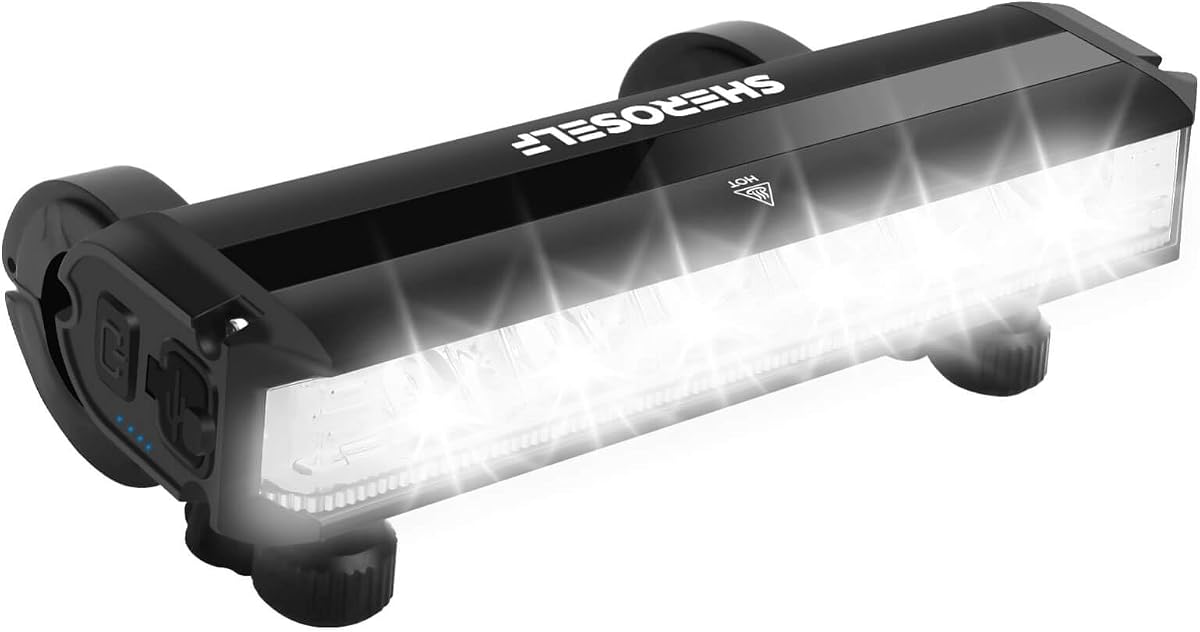
This compact bicycle headlight combines six TG3 LED beads, a maximum claimed output of 1400 lumens, and a 4000mAh rechargeable battery. Its 4.4 rating reflects generally favorable customer feedback, while its useful combination of low beam, high beam, combined beam, flash, and daytime running modes makes it more versatile than a single-purpose commuter lamp.
We may earn a commission when you buy through this link, at no additional cost to you.
The strongest feature is the balance between illumination and everyday usability. The light offers a 50-percent wider stated lighting range, a battery indicator, and USB-C charging with an output function for compatible devices. Its alloy housing and reinforced acrylic interior should also appeal to riders who want more durability than a basic plastic light.
Runtime is the most important qualification. The manufacturer states that a full charge provides approximately 1.5 to 3 hours depending on the mode, so maximum output is unlikely to last through a long trail ride. IPX5 protection helps in rain and snow, but it does not make the light suitable for immersion. The listed handlebar range of 15 to 33 millimeters should be checked before ordering.
This is a strong choice for commuters, recreational cyclists, and riders who want a compact rechargeable headlight without a complicated installation. It may not satisfy someone expecting a front-and-rear set or all-night high-output operation, but its broad mode selection, charging convenience, and clear compatibility information make it a well-rounded budget-oriented recommendation.
USB-C charging removes the need to carry a proprietary cable, while the battery indicator gives riders a quick indication of remaining charge. The output function is also convenient for emergencies, although it should not be treated as a substitute for a properly charged phone battery.
Low and high beams cover routine riding, the combined setting provides a brighter forward view, and flash and daytime modes improve conspicuity. That range is particularly useful for commuters moving between dark streets, unlit paths, and daylight traffic.
We may earn a commission when you buy through this link, at no additional cost to you.
This 2800-lumen light bar is among the strongest dedicated ebike options in the group, combining five high-intensity LEDs with a large 6400mAh rechargeable battery. Its 4.3 rating is slightly below the leaders, but the specification set is unusually well suited to long commutes, mountain-bike trails, and riders who want broad road coverage from a handlebar-mounted unit.
We may earn a commission when you buy through this link, at no additional cost to you.
The beam pattern is designed to illuminate a wide portion of the route rather than producing only a narrow hotspot. Five modes—high, medium, low, strobe, and yellow fog light—give the rider useful options for city roads, technical trails, and poor visibility. Most importantly for extended outings, the manufacturer claims up to 18 hours in low mode, which is far more practical than a headline runtime achieved only at reduced brightness.
The IPX5 rating offers protection against rain, fog, and splashing, while the tool-free mounting system is designed to fit most handlebars securely. As with any light of this type, actual stability depends on correct bracket placement and tightening. Maximum-output runtime will be much shorter than the advertised low-mode figure, and the wide housing may feel less compact than a standard bicycle headlight.
This is the pick for riders who prioritize output, battery capacity, and useful mode variety over a bundled rear light or exceptionally small housing. It should appeal to commuters, e-bike users, mountain bikers, and riders traveling farther from reliable lighting. For anyone needing front-and-rear visibility, a complete light set would be the more practical purchase.
The 6400mAh battery and stated 18-hour low-mode runtime reduce the likelihood of a mid-ride power shortage. Higher modes consume more energy, so riders should still charge before long journeys and use lower settings when extended runtime matters more than maximum brightness.
The combination of medium, low, and high settings makes it easier to adapt the light as speed, ambient light, and trail complexity change. The yellow fog mode is intended for dusty or wet conditions, while the strobe provides an additional conspicuous option.
We may earn a commission when you buy through this link, at no additional cost to you.
This rechargeable light bar delivers a stated 1400 lumens through six LED beads and has a 4.4 rating. It combines low and high beams, a combined setting, flash, and daytime running light, making it a versatile option for e-bikes, conventional bicycles, scooters, dirt bikes, and other handlebar applications.
We may earn a commission when you buy through this link, at no additional cost to you.
Its 4000mAh battery is claimed to deliver up to 10 hours in low mode, which gives it a useful balance for extended evening rides. Universal USB-C charging simplifies recharging, and the IPX5 rating is appropriate for rain, mud, and splashes encountered during commuting or mountain biking. The 25-to-35-millimeter handlebar range is clearly specified, helping reduce compatibility guesswork.
The primary limitation is its fit. Riders with narrow or unusually shaped handlebars should measure before purchasing, and the product may not suit a setup using a very short stem or oversized bar diameter. The 1400-lumen output is also less dramatic than the 2800-, 3400-, or 5000-lumen alternatives, though real visibility depends on beam design rather than lumen numbers alone.
This light is a sound recommendation for riders who want a straightforward rechargeable bar with multiple modes and solid low-mode endurance. It works especially well for commuters and trail riders who need a durable forward light but do not require the maximum possible brightness or a bundled rear accessory.
The universal USB-C port means the light can use the same charging cable as many other modern devices. Its claimed ten-hour low-mode endurance is useful for riders who regularly travel after sunset, provided the battery is fully charged before departure.
The flash and daytime running modes help make the cyclist easier to notice, which is valuable in traffic and around other trail users. They support visibility but do not replace a rear light, reflective equipment, or safe riding practices.
We may earn a commission when you buy through this link, at no additional cost to you.
This quick-release bicycle light bar combines a USB-rechargeable 4000mAh battery with a bright LED design intended for mountain, road, commuting, and night riding. It has a 4.2 rating and is particularly interesting for buyers who prioritize a high-output title claim, multiple beam patterns, and straightforward mounting.
We may earn a commission when you buy through this link, at no additional cost to you.
The light provides low beam, high beam, an all-beam setting, a flash mode, and a daytime running light. The aluminum alloy bar and base are described as impact resistant and effective at heat dissipation. A no-tool installation process makes it convenient to remove the unit when the bike is stored, while the quick-release arrangement supports frequent adjustments.
There is an important specification ambiguity: the product title states 3400 lumens, while the detailed bullet points describe six LEDs with a maximum output of 1400 lumens. Buyers should treat the listing's detailed specifications and images as the more reliable basis for comparison. The stated runtime of roughly 1.5 to 3 hours also means the highest setting is intended for shorter, targeted use.
This is a good option for riders who want a bright, rechargeable bar with a daytime visibility mode and a higher water-resistance rating than many conventional bicycle lights. It is less compelling for buyers who need long runtime, a rear light, or perfectly consistent technical specifications, but its alloy construction and flexible beam controls remain worthwhile advantages.
Low beam can reduce glare for nearby road users, while high beam and the all-beam setting provide stronger forward visibility on open or unlit routes. The daytime mode is intended to increase conspicuity rather than replace a reflector.
The aluminum alloy construction adds weight compared with a small plastic commuter lamp, but it also supports durability and heat dissipation. That makes the bar better suited to riders willing to accept a larger unit for a more robust structure.
We may earn a commission when you buy through this link, at no additional cost to you.
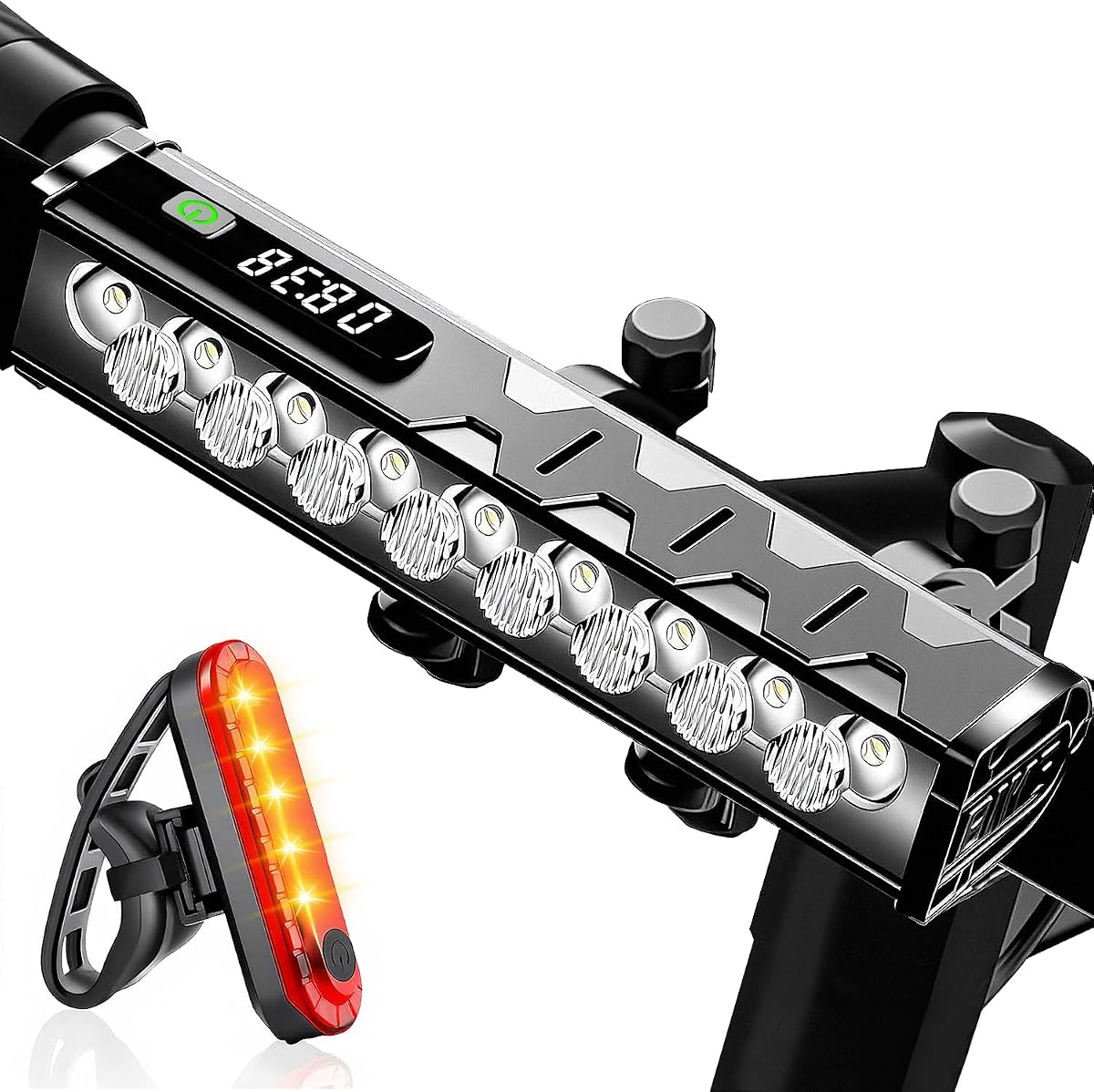
The Vastfire package is the most extensive lighting set in this guide, pairing a 17-LED front light with a rear warning light, mounting hardware, seals, a cable, and charging accessories. Its 4.4 rating and listed 5000-lumen output place it among the most capable options, particularly for trail riders who need powerful forward illumination and rear conspicuity.
We may earn a commission when you buy through this link, at no additional cost to you.
A high-capacity rechargeable battery is claimed to provide up to 16 hours of operation, and the digital display allows the rider to monitor charge and charging progress. Four front modes—floodlight, spotlight, high beam, and strobe—cover several lighting needs. USB-C charging includes a fast-charging chip, while USB-C output allows the light to charge compatible devices during an emergency.
The mounting system uses metal locking, an aluminum bracket, and silicone buffer pads to reduce wobble and vibration. The acrylic lens and aluminum housing are paired with an IPX7 rating, which is stronger weather protection than the IPX4 or IPX5 ratings common in the category. These advantages come with a larger, more complex package that may feel excessive for a short urban commute.
This is the premium pick for riders who value brightness, a complete front-and-rear package, battery monitoring, and serious weather resistance. It may be excessive for someone seeking a tiny everyday commuter lamp, but it is well suited to mountain biking, off-road cycling, camping, and extended rides where a wide beam and dependable mounting system matter.
Bundling a rear light removes one common gap in a bicycle lighting setup. The front beam illuminates the route, while the rear unit helps drivers, cyclists, and pedestrians identify the rider from behind, especially on dark or poorly marked roads.
The digital display provides a more precise indication of remaining power than a simple row of LEDs. This is particularly useful during long rides, where an unexpected power loss could leave a rider far from home with limited visibility.
We may earn a commission when you buy through this link, at no additional cost to you.
This complete rechargeable lighting set includes a front headlight and a rear taillight, offering a more balanced visibility package than a front-only product. Its 4.4 rating is supported by a specification list centered on even illumination, a 50-percent wider horizontal beam, multiple modes, and an aluminum alloy headlight housing.
We may earn a commission when you buy through this link, at no additional cost to you.
The front unit uses three TG3 LED beads and provides high and low beams plus additional selectable modes. The design is intended to reduce glare for both the rider and people approaching from the opposite direction. A dual-nut bracket and aluminum support with integrated silicone cushioning help keep the headlight stable and limit the need for repeated height adjustments.
Compatibility requires attention. The stated stem range is 20 to 30 millimeters, and the product information specifically says it will not work with the 79Pro Falcon e-bike. The headlight is also advertised for helmets, scooters, strollers, mountain bikes, dirt bikes, and wheelchairs, but those broad uses do not change the importance of checking the actual mounting point.
This set is a practical choice for riders who want both forward illumination and rear visibility in one package. Its stated 1.5-to-2.5-hour runtime in full light mode is less impressive for long tours, but the included hardware, broad compatibility, and USB-C charging make it a strong everyday set for correctly sized handlebars or stems.
A front light alone cannot address the risk of a vehicle approaching from behind. Adding the rechargeable taillight gives the setup more complete all-around visibility, making it especially suitable for commuting, neighborhood riding, and group outings after dark.
The intelligent charging chip uses a flashing indicator while charging and a constant light when charged. Protection against overcharging and high temperature adds useful safeguards, though riders should still use a suitable charging source and follow the manufacturer's instructions.
We may earn a commission when you buy through this link, at no additional cost to you.
This seven-inch slim LED bar is designed for a very different use than most handlebar bicycle lights. Its 12-to-60-volt operating range, 60-watt rating, and listed 6000-lumen output target ATVs, UTVs, golf carts, tractors, motorcycles, dirt bikes, and modified ebikes. It holds a 4.6 rating, making it one of the higher-rated products listed here.
We may earn a commission when you buy through this link, at no additional cost to you.
Twenty convex LED beads are arranged to create a bright 6000K beam, while the housing, PC lens, and sealing technology support an IPX67 waterproof rating. The listing describes a stated working life of 50,000 hours. Long and short angle-adjustable brackets make it easier to position the bar in a grille, on a frame, or in another compact location.
Crucially, this is a wired vehicle-style work light rather than a self-contained USB-rechargeable handlebar accessory. Installation requires an appropriate 12-to-60-volt electrical connection, and the product warning states that one seven-inch bar is not sufficient for off-road 4×4 use in wild fields or on highways. Riders should also follow local rules governing auxiliary vehicle lighting.
This bar is best for an ebike or off-road vehicle that already has an appropriate electrical system and room for a seven-inch housing. It offers exceptional claimed brightness and rugged sealing, but it is not the convenient choice for a standard commuter who wants a compact rechargeable light mounted directly on the handlebars.
The broad operating voltage range allows one lighting design to be used across many machines, provided the wiring, switch, and mounting location are appropriate. For an ebike, the builder should confirm that the electrical system can safely support the lamp and that the setup does not interfere with safe operation.
Long adjustable brackets suit open frame or bumper positions, while the shorter brackets are intended for tighter spaces such as a grille. This flexibility is valuable for custom builds where a conventional handlebar clamp would be too small or vulnerable to impacts.
We may earn a commission when you buy through this link, at no additional cost to you.
The Suruid headlight combines a multi-lamp arrangement, 1800 lumens of stated brightness, and a five-mode control system for cycling, running, camping, fishing, and general night work. Its 4.4 rating reflects a generally favorable response, and the anodized aviation-aluminum body gives it a more substantial appearance than a basic plastic bicycle lamp.
We may earn a commission when you buy through this link, at no additional cost to you.
Low and high beam sources work together to balance beam width and throw. The high mode is described as reaching hundreds of meters, while the broader illumination is intended to reveal roadside hazards and trail obstacles. USB Type-C charging is convenient, and the quick-release knob allows the headlight to be removed in seconds while leaving its bracket in place.
The IPX4 rating handles wind, rain, and splashes but is less robust than the IPX5, IPX6, and IPX7 options in this comparison. The product data does not state battery capacity or a precise runtime, so riders who routinely ride for many hours should treat endurance as unknown. The included tail light adds rear visibility, although its exact mounting method is less clearly described.
This headlight is a good match for riders who want one light for several outdoor activities or value fast removal and a durable housing. It is less convincing for a rider whose priority is overnight runtime, because no capacity figure is provided, but its 1800-lumen output and broad mode selection make it a capable choice for trail, commuting, and work applications.
The ability to use the headlight for running, camping, fishing, and night work broadens its value beyond cycling. That flexibility makes it easier for a household or outdoor enthusiast to justify sharing one compact light across several activities.
A bottom quick-release knob makes it convenient to take the light off for storage or charging without fully dismantling the bracket. The knob-fixed aluminum bracket is intended to remain firm during riding, although users should check it periodically on rough roads.
We may earn a commission when you buy through this link, at no additional cost to you.
This 17-LED bicycle light is presented as a high-output option with a 10000mAh rechargeable battery, digital power display, wide horizontal beam, and four lighting modes. Its 4.5 rating is among the strongest in the group, and the large battery makes it particularly interesting for riders undertaking extended rides away from charging points.
We may earn a commission when you buy through this link, at no additional cost to you.
The power display helps riders monitor remaining capacity and avoid being surprised by a depleted light. Low beam, high beam, a high-bright setting, and flash cover the major riding needs. The horizontal design emphasizes broad road coverage, which can help reveal surface hazards across the intended path. Two aluminum alloy brackets and an Allen wrench support flexible installation on compatible bicycles.
As with the 3400-lumen model, the listing contains conflicting output information: the title states 4800 lumens, while the detailed description refers to five LEDs and a maximum of 2600 lumens. The listed battery capacity also differs between the title's 10000mAh wording and the detailed description's 8000mAh figure. Buyers should check the current product page and packaging for authoritative specifications.
Despite those discrepancies, this remains a strong option for high-output trail riding and long-distance night cycling. The IPX5 rating supports rainy conditions, and the claimed 4.5-to-9-hour runtime adds practical value. It is best for a rider who values endurance and wide illumination over the smallest possible housing or a bundled rear light.
The large stated battery capacity is the defining feature for riders who spend long periods away from mains power. Even with the more conservative capacity and runtime figures, the product is presented as suitable for extended night travel, though maximum output will naturally shorten operating time.
The light can be removed for hiking, camping, walking, or emergency use, which adds flexibility beyond cycling. Keeping the charging cable accessible and confirming the battery condition before a trip remains important when relying on the product away from the bicycle.
We may earn a commission when you buy through this link, at no additional cost to you.
This five-LED light bar has the highest supplied rating in the group at 4.8. Its detailed description specifies three high-performance LED beads producing up to 2500 lumens, while the product title also references a five-LED configuration and a 2800-lumen version. That naming suggests multiple output configurations within the product family rather than a single, uniform specification.
We may earn a commission when you buy through this link, at no additional cost to you.
A 3200mAh rechargeable battery, USB Type-C charging, and a three-level power indicator create a convenient everyday package. The five modes are more deliberately differentiated than those of many competitors: a focused main light, two wide auxiliary lights, all lights at maximum, a yellow fog mode, and a combined white-flash and yellow daytime mode. One-button operation keeps mode changes simple.
The aluminum alloy body provides strength and heat dissipation, while the mounting system is designed to resist vibration and avoid repeated adjustment on rough trails. IPX4 protection handles rain and splashes, although it provides less protection than the IPX5-through-IPX7 products in this list. No battery runtime is stated, so endurance should be checked under real riding conditions.
This is the top-rated and most versatile dedicated headlight in the group, making it an excellent general recommendation for e-bikes, mountain bikes, and scooters. It is particularly attractive to riders who want focused and wide illumination, fog lighting, and daytime conspicuity from one control. Buyers who need stronger weather sealing or a rear light should consider one of the complete sets instead.
Separate focused, wide, and combined outputs give the rider more control than a simple low-high switch. The focused setting can help with distance, the auxiliary lamps widen the near view, and the combined mode provides maximum visibility when conditions demand it.
The three-level indicator is simple to interpret and helps prevent an unexpected loss of illumination. The listed 30, 60, and 100-percent levels are easy reference points before heading out, even though real-world output can vary with mode and battery age.
We may earn a commission when you buy through this link, at no additional cost to you.
The right ebike LED light bar is a balance of illumination, endurance, durability, mounting security, and practical compatibility. Rather than comparing lumen figures alone, riders should consider the route, battery demands, charging method, and whether they need forward lighting, rear visibility, or both.
Choose a wide, adjustable beam for mixed terrain and a focused beam for longer sightlines. Compare low, high, and combined settings rather than relying on maximum lumens alone.
Prioritize usable low-mode runtime for long rides, but charge before every journey if you expect to use high or combined output. A visible battery indicator adds confidence.
For year-round commuting, choose at least IPX5. For exposed trails or off-road builds, IPX6 or IPX7 and a rigid metal housing offer additional resilience.
Measure before ordering and check the complete mount geometry, not just diameter. Tighten every fastener and inspect the light after the first rough ride.
USB-C models are simplest for daily bicycles, while wired bars suit purpose-built vehicle electrical systems. Confirm voltage, wiring, and fuse requirements before installation.
Look for low, high, flash, and daytime modes at minimum. Add fog or wide-beam settings only if they match the routes and weather you regularly encounter.
For commuting, a front-and-rear set is the safer and more complete choice. Pair any headlight with reflectors, visible clothing, and a separate rear light when needed.
Balance brightness and capacity against handlebar space. Choose a compact rechargeable light for commuting and a larger, rigid bar for rugged off-road riding.
Before the first ride, fully charge the light with the specified cable and confirm that the battery indicator shows the expected status. Mount the bracket on a level portion of the handlebar, tighten the fastener securely, and aim the beam slightly downward so it illuminates the road without shining directly into the eyes of people ahead. Confirm that the mount does not interfere with brake levers, cables, a display, or the suspension, and take a short ride to check for movement.
Select a lighting mode that suits the environment rather than using maximum output continuously. Low beam is generally more appropriate for well-lit urban streets, high beam for unlit roads, flash for added conspicuity, and yellow or wide-beam settings for fog and trails. Clean the lens regularly, because road grime and mud can sharply reduce usable output. Check the bracket and fasteners periodically, particularly after rough trails, and make sure the USB port cover is closed if the model has one.
Store the light in a dry place at a moderate temperature and avoid leaving it in direct sunlight inside a hot vehicle. Recharge it before long rides, remove it from the bicycle when possible, and do not use a damaged cable or charger. If the beam weakens, the indicator behaves erratically, or the housing becomes unusually hot, stop using it until the battery or charging system can be inspected. Proper mounting, charging, and cleaning will help preserve useful performance and extend the life of the light.
For typical urban commuting, a light with a good low and high beam, several hundred lumens in ordinary use, and a wide beam is often sufficient. Trail riders and unroad commuters may prefer a 1400-lumen or higher model. Brightness is only one factor, so beam pattern, mounting stability, battery runtime, and weather resistance should also guide the choice.
A light bar generally offers a wider array of LEDs, a broader beam, and a larger housing that can be easier to position. A compact headlight is usually lighter, less noticeable, and better suited to short commutes. The right format depends on handlebar space, route conditions, and whether you want maximum coverage or portability.
Only if the ebike's electrical system can safely power the bar and the wiring, switch, and fuse are correctly installed. Do not connect a high-output vehicle light directly to an unspecified battery. The manufacturer also warns that one seven-inch bar may not be adequate for some off-road vehicle applications, so suitability should be checked carefully.
Measure the diameter of the handlebar or stem at the intended mounting point, then compare it with the product's stated range. A stated diameter is only the first check, because brake cables, displays, folded stems, and unusual handlebar shapes can affect clearance. The included clamp and the rider's manual should also be checked before purchase.
Most front light bars do not illuminate the road behind you, so a rear light is still advisable for regular night riding. A complete front-and-rear set offers a more convenient solution, but any front-only model can be paired with a properly fitted rear light. Reflective gear and bright clothing remain useful additions.
An IPX5 rating indicates protection against water jets and heavier rain exposure, while IPX7 indicates protection against temporary immersion according to the relevant test conditions. Neither rating means the light should be deliberately submerged. The bracket, controls, and charging port still need reasonable care, especially during pressure washing.
Yes, especially if the ride may include high-beam, combined-beam, or maximum-output use. Maximum brightness consumes more energy than low mode, so published maximum-output runtimes are usually much shorter. A full charge and a quick battery-level check reduce the chance of being left without illumination.
No. A light with poor beam control can produce glare and still leave important areas poorly illuminated. Useful low and high modes, a wide near-field pattern, a focused distance beam, a stable mount, and sufficient runtime can matter more than the largest headline lumen figure. Riders should consider their route rather than choosing on brightness alone.
The 2800LM Five-LED Headlight is the strongest all-around pick because it combines the highest supplied rating with useful focused, wide, combined, fog, and daytime modes. The Vastfire 17 LED Bike Lights earn the premium position through a 5000-lumen title claim, front-and-rear package, digital display, USB-C input and output, and IPX7 protection, while the 6 LED USB-C Headlight provides a balanced and economical rechargeable option.
Before choosing, prioritize the light that matches your actual route. Commuters should examine low-beam usability, charging convenience, compact mounting, and rear visibility. Trail riders should look for a wide beam, strong mount, weather resistance, and usable runtime, while off-road vehicle builders may prefer a wired, high-output bar with a confirmed compatible electrical system. Measure the handlebar and verify every stated specification before ordering.
Finally, remember that product details, ratings, availability, and prices can change. Recheck the current listing, included accessories, charging instructions, handlebar limits, and local road regulations at the time of purchase. Those details can materially affect compatibility, especially for wired bars, high-output models, and products whose listing contains more than one output configuration.