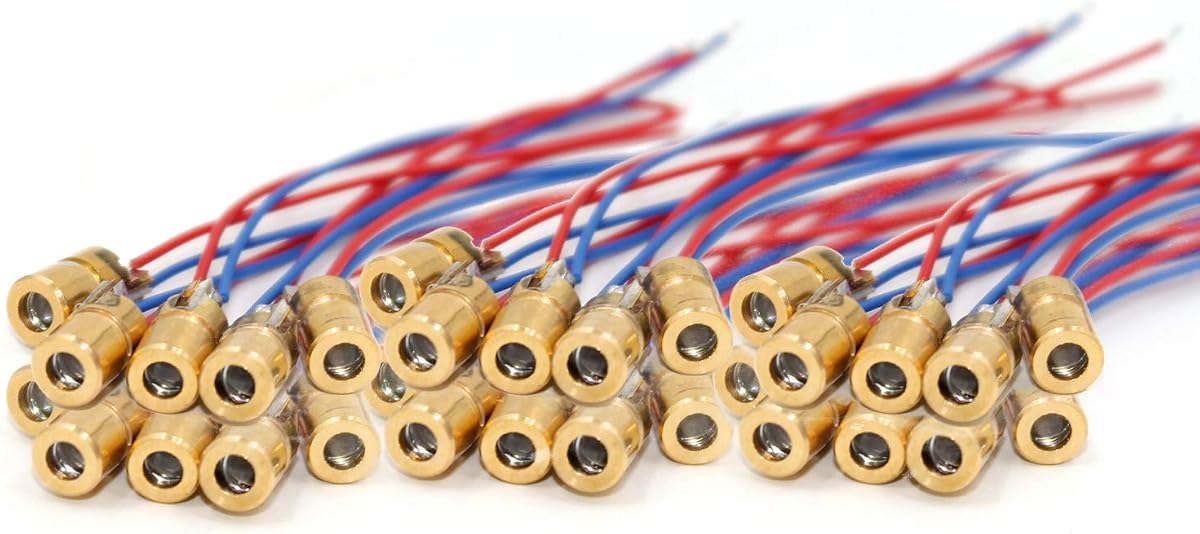
HiLetgo 10pcs Red Diode Head
4.3Editor score
Ten 5mW diode heads
650nm visible red beam
Works on 5V supply
Explore the best diode laser module options, comparing output power, wavelength, focus, installation needs, and intended DIY projects for safe selection.
Diode laser modules serve very different purposes, from visible alignment and pointer projects to engraving wood, marking metals, and cutting thin plywood. A useful module must match the task, machine, power supply, and required beam characteristics rather than simply offer the highest stated output.
The products in this guide are compared using their published wavelengths, optical output, beam style, focusing features, electrical requirements, installation details, intended applications, and customer ratings. The list covers compact low-power diode heads as well as higher-output modules designed for CNC, laser engraver, and laser cutter systems.
Each review explains the module's strongest attributes, limitations, and ideal buyer, while the comparison table provides a quick technical overview. Product details and ratings can change over time, so readers should verify current specifications, machine compatibility, safety requirements, and current market pricing before purchasing.
4.3Editor score
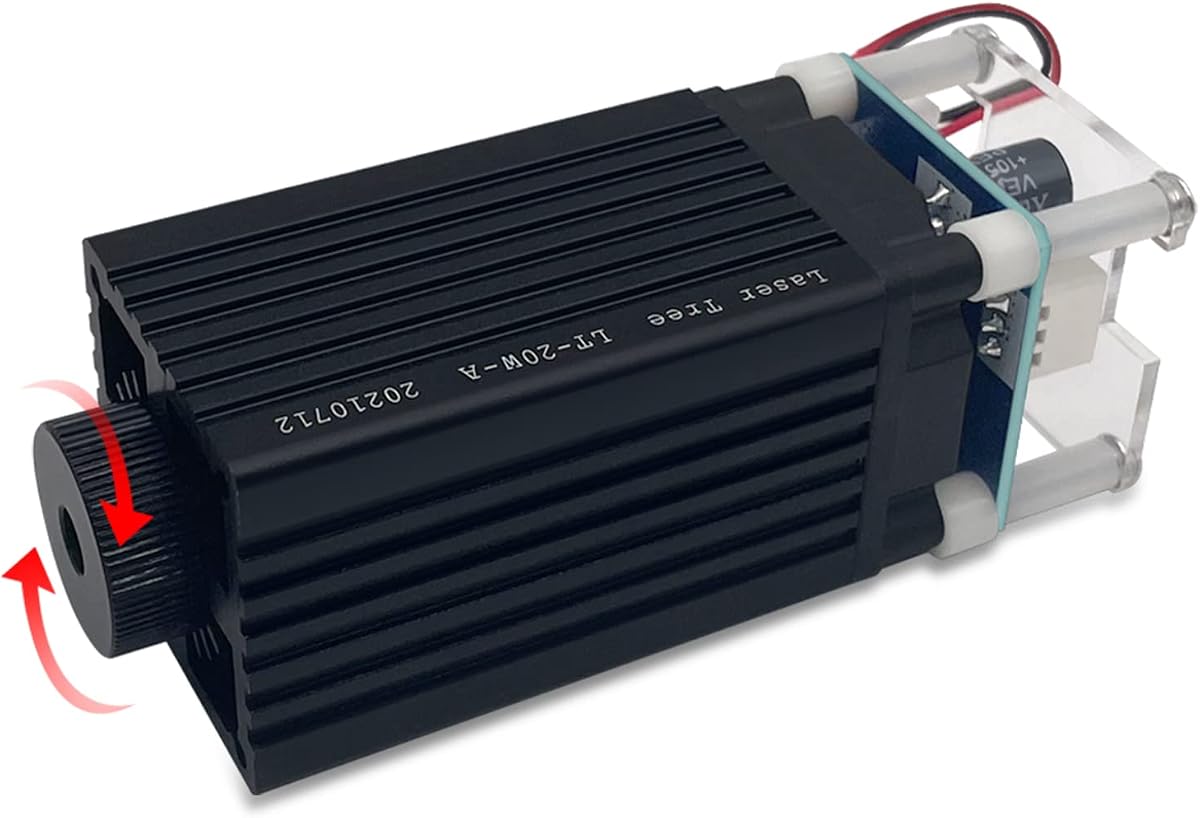
4.3Editor score

4.4Editor score
The comparison below organizes all ten modules by their most decision-relevant characteristics, including wavelength, output, beam pattern, focusing, and power input. The list spans inexpensive pointer-scale components and high-output engraving systems rather than treating every diode module as a direct substitute.




The LASER TREE 4W Laser Engraver Module combines a stated 4W optical output with a compact frame and adjustable focus, making it a practical middle ground for hobby engraving and light cutting projects. Its customer rating of 4.3 reflects a generally favorable reception, although the product is not intended to compete with the largest industrial-style modules in the list.
We may earn a commission when you buy through this link, at no additional cost to you.
A major strength is the adjustable-focus laser head, which offers a stated 20–50mm working range. This helps users set the beam for different projects and improves flexibility across materials. The supplied information also lists PWM support, a compact 35 by 35 by 99.6mm size, a 3-pin XH2.54 connection, and a 12V input rated around 1.6A, all of which matter when matching a module to an existing machine.
The module is described as suitable for MDF, wood, paper, leather, bamboo, plastic, rubber, alumina, and stainless steel, although it cannot effectively engrave blue, purple, white, or transparent materials, nor bare aluminum without an oxide layer. Compatibility is another caveat because the seller notes that differing machine brands and models may require additional work rather than simple plug-and-play installation.
This is a strong choice for a builder assembling a three-axis engraver, CNC machine, or 3D printer who needs more power and practical focusing than a pointer diode provides. It is less appropriate for someone who expects universal machine compatibility, operates on transparent material, or needs to cut thick stock. For those priorities, the adjustable focus, compact form, and broad material list make it the most balanced pick here.
The advertised 20–50mm adjustment range gives users a practical way to tune the spot for different working distances. That flexibility is especially useful for a modular engraver used on wood, paper, leather, and other materials with different surface heights.
A 12V input, PWM support, compact dimensions, and pluggable control connection suit builders assembling a laser engraver, CNC system, or 3D printer. Existing machine wiring and mounting arrangements still need to be checked before installation.
We may earn a commission when you buy through this link, at no additional cost to you.
The HiLetgo 10-piece set supplies compact 650nm red diode heads rated at 5mW, giving hobby builders several units for separate projects without buying one at a time. Its 4.3 rating indicates solid user reception for a straightforward component whose main appeal is its quantity and simplicity.
We may earn a commission when you buy through this link, at no additional cost to you.
Each head has a 6mm outer diameter and is designed for 5V operation. The listed working-temperature range is -10°C to +40°C, which covers normal indoor use and many basic electronic projects. Supplied leads make the modules easier to incorporate into level instruments, ground instruments, remote-light controls, and long-distance laser communication experiments.
These are not engraving modules despite their laser output. At 5mW, they are intended as visible red pointers and alignment devices rather than tools for cutting or marking materials. Buyers must also treat the beam and reflections as hazards, especially if the head will be mounted in an enclosure or used around people.
The ten-pack is ideal for students, electronics experimenters, and builders needing several inexpensive pointer heads. It is less suitable for an engraver owner, machinist, or anyone expecting material removal. Its value comes from variety, straightforward integration, and the practicality of having spare components available for separate builds.
A multi-pack is useful when a maker has several concepts, needs replacements, or wants to compare assembly approaches across separate circuits. It also reduces the need to source identical individual components for classroom or prototype work.
The visible 650nm dot is suited to alignment, leveling, testing, and remote-light experiments. The 5mW rating keeps it in a visibly useful class without adding the machinery and cooling requirements of an engraving module.
We may earn a commission when you buy through this link, at no additional cost to you.
The Diode Module 650nm 5mw Red Diodes 2Pack is a compact option for projects that need a red line rather than a conventional point. It carries a 4.1 rating and includes two 5mW modules, giving builders a matched pair for parallel alignment, line-generation, or repeated installations.
We may earn a commission when you buy through this link, at no additional cost to you.
Its key technical distinction is the line-shaped output. That makes it useful when a project depends on a straight projected reference, although the supplied listing provides little detail about beam width, operating voltage, housing dimensions, or exact connection details. Buyers should therefore treat the available wavelength and output information as the starting point for compatibility planning.
The package is small and focused, with no claim of cutting or engraving performance. Like other visible red diode components, it requires sensible handling and should not be directed toward eyes or reflective surfaces. The limited specification list also makes it less attractive for complex builds than modules with fuller electrical and mechanical documentation.
This two-pack suits a maker who specifically needs a 650nm line module and values a simple matched set. It is less appropriate for a first large project because the sparse listing information makes power-supply and mounting decisions less certain. A line diode can be effective for a narrow visual task, but it should not be mistaken for a general-purpose laser engraver.
The line output can serve alignment and projection tasks where a point beam would be inconvenient. A pair offers flexibility for experimenting with parallel references or installing the same component in two places.
This compact option is most appropriate for a maker with a specific line-beam use case. Confirm the electrical requirements with the seller before wiring because the product data provides fewer details than the larger engraving modules.
We may earn a commission when you buy through this link, at no additional cost to you.
The GM532-50 two-pack provides 532nm green diode modules with solder wires, offering a bright and highly visible alternative to red pointers. Its 4.2 rating reflects a generally positive response, and the pair is useful for users developing more than one green-light project.
We may earn a commission when you buy through this link, at no additional cost to you.
The supplied information specifically notes that 532nm is brighter than 520nm. That visibility can be valuable in alignment, testing, and demonstration projects where the human eye is more sensitive to green. The modules are intended for users who can work with solder-wire leads and integrate the components into a custom circuit or housing.
One operational detail is important in cold environments: below 15 degrees Celsius, the modules may require two to ten seconds of preheating. That delay should be included in a test procedure, particularly for applications that expect an immediate stable beam. The listing does not provide a full voltage, current, or dimensional specification, so careful electrical verification remains necessary.
The two-pack is best for green laser-pointer experiments, educational builds, or alignment tools where visibility matters. It is not a substitute for an engraving module and may not suit beginners who prefer prewired components. For a maker comfortable with soldering and comfortable allowing for cold-weather warmup, it delivers a distinctive green beam in a convenient two-unit package.
Green light is often easier for the human eye to detect than red, particularly in many indoor demonstrations. The 532nm specification gives users a recognizable color and a strong visual cue for alignment or pointing work.
Solder wires make the modules adaptable to custom circuits, but they also require careful connections and suitable current control. Users who are not comfortable with soldering may prefer a prewired pointer or module with more explicit connection guidance.
We may earn a commission when you buy through this link, at no additional cost to you.
The LASER TREE 10W engraving module is the most ambitious high-output product in the guide, combining a stated 10W optical output, air assist, and an integrated focusing lens assembly. Its 4.4 rating indicates favorable feedback from users, while the extensive accessory package distinguishes it from basic diode heads.
We may earn a commission when you buy through this link, at no additional cost to you.
The published performance claims include engraving smooth stainless steel without black paint, engraving 304 stainless steel at speeds up to 300mm/s with a 45mm focus length, and cutting 8mm plywood in one pass at a stated 1.5mm/s. These figures depend on operating conditions and should be treated as manufacturer-provided examples rather than guaranteed results for every setup.
The 6mm metal air nozzle, removable filtered eye cover, top protection, air-tube holder, spare protective window, driver adapter, three-pin cable, wrench, and focus-fixing plates create a more complete installation package. The included FAC is intended to tighten the focus spot, while the 12V version must be selected to match the user's driver board. The machine also needs to support the optical and electrical load safely.
This module is aimed at serious DIY engraver builders who want metal marking and meaningful plywood cutting rather than a simple pointer. It is less appropriate for a compact desktop frame with limited cooling, power delivery, or motion rigidity. For a properly engineered 12V system, it offers the most feature-rich engraving package among the ten choices.
The stated ability to engrave mirror stainless steel directly makes the module useful for product identification, fabrication marks, and decorative work on reflective metal. A clean, controlled focus and effective heat management are essential for consistent results.
The built-in nozzle and air-assist system are intended to reduce airborne debris, cool the cut, and support cleaner edges. The removable eye cover adds blue-light filtering, but suitable personal eye protection and a controlled work area remain necessary.
We may earn a commission when you buy through this link, at no additional cost to you.
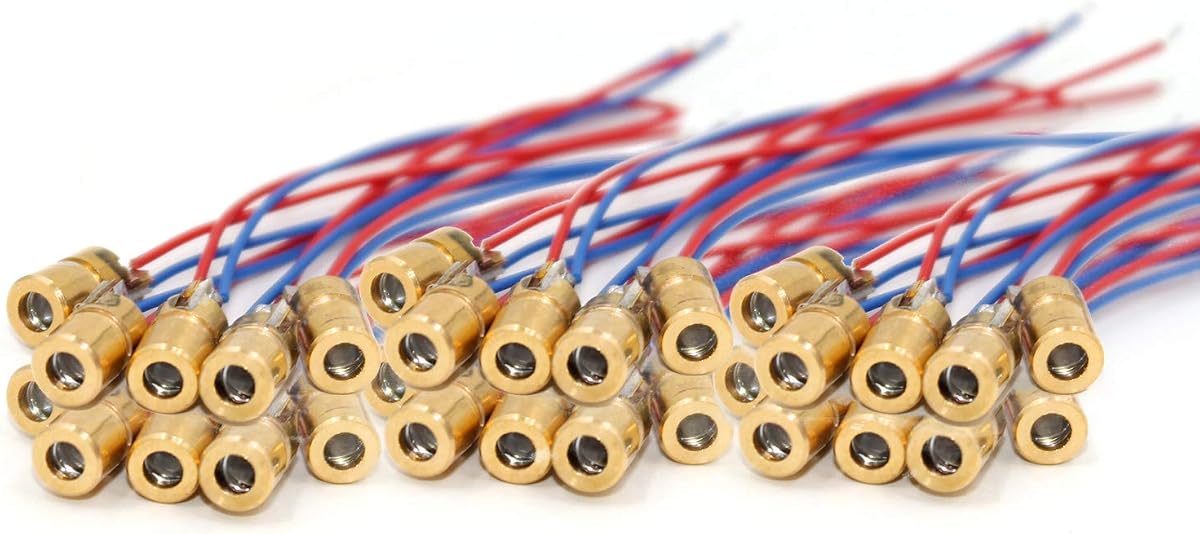
The 30-piece mini diode set is one of the strongest choices for bulk electronics experimentation, offering 30 compact 650nm red laser heads at 5mW each. Its 4.6 rating is the highest among the listed products, and the broad pack count makes it especially appealing to educators and prolific hobby builders.
We may earn a commission when you buy through this link, at no additional cost to you.
Each module uses a 5V operating voltage, has a 6mm outer diameter, and measures about 9cm in total length. The listing explicitly states that operating current must remain below 20mA, making correct driver design essential. The package is described as compatible with Arduino, Raspberry Pi, and other microcontrollers, which broadens its usefulness for embedded projects.
Potential applications include homemade pointers, water-level meters, ground meters, remote-light controls, and long-range laser communication experiments. The copper-and-plastic construction and dot beam format are suitable for indicators and demonstrations, but the 5mW output is not intended for engraving or material removal.
This set is ideal for a classroom, workshop, or maker who wants spare units and consistent components for multiple builds. It is less suitable for someone building only one simple project because the quantity may be more than needed, or for a user who cannot regulate current correctly. For microcontroller-based work at scale, however, the 30 units and detailed electrical limits are major advantages.
Thirty matching units make it easy to distribute components among several learners or keep spares for repeated experiments. The consistent format also simplifies designing shared driver boards and teaching materials.
Compatibility with Arduino, Raspberry Pi, and other microcontrollers supports a wide range of electronic experiments. The 5V input is approachable, but the stated 20mA maximum must be respected to protect the diodes.
We may earn a commission when you buy through this link, at no additional cost to you.
The 405nm Violet Purple Diode Module offers a distinctive violet-blue source at 5mW for testing, alignment, and custom electronic projects. Its rating of 3.8 is the lowest in this guide, reflecting some buyer dissatisfaction or the limited amount of published information available for the product.
We may earn a commission when you buy through this link, at no additional cost to you.
The module operates from DC 3–5V and produces a dot that can be adjusted by turning the front cap. That focus adjustment matters because the listing notes that the spot may not initially appear as a dot at every distance. The 405nm wavelength is the module's main distinguishing feature, offering a different visible color from the common red and green options.
Its information is concise, with no detailed dimensions, current rating, connector type, or housing material supplied. Users should confirm the electrical requirements and included connections before committing to a larger circuit. As with all visible diode sources, the beam and reflections should never be directed toward eyes.
This module suits a maker specifically seeking a 405nm violet source or experimenting with different visible wavelengths. It is less attractive for a first build because the lower rating and sparse documentation make support less predictable. For a specialized project with verified electrical requirements, the adjustable dot and low-voltage operation are useful qualities.
The 405nm output provides a violet-blue appearance that is easier to distinguish from standard red pointers. It can be useful in visual tests, alignment markers, and experiments comparing beam colors.
Turning the front cap lets the user tune the apparent dot at different distances. This hands-on adjustment is convenient, though a stable housing is important so the setting does not shift during use.
We may earn a commission when you buy through this link, at no additional cost to you.
The AENBUSLM 5.5W module combines strong customer feedback with a feature set aimed at high-speed CNC engraving. Its 4.6 rating ties for the highest in the guide, and its stated optical output, integrated air assist, cooling fan, and focusing assembly position it as a serious engraving upgrade.
We may earn a commission when you buy through this link, at no additional cost to you.
The published claims are impressive: engraving 304 stainless steel at up to 800mm/s with a 45mm focus length and cutting 5mm plywood in one pass at 60–100mm/s. These are stated performance examples that depend on the full machine, focus, material, motion system, and operating conditions. The integrated FAC is intended to produce a smaller focused beam and increase power density.
The air assist is designed to clear debris and improve edge quality, while the 12,000-rpm fan provides heat dissipation. The product data also mentions a 300–400mW reduction at full output, which should be considered when planning settings and power expectations. Compatibility with both 12V and 24V DIY systems is a major installation advantage, although electrical safeguards still matter.
This module is a good fit for builders with a rigid, well-cooled CNC or laser engraver who want high throughput and can manage the safety demands of a high-power beam. It is less suitable for a basic wooden enclosure or a machine with weak power delivery. With proper cooling, focus, and containment, it offers a compelling blend of rating, output, and flexibility.
The stated engraving and cutting speeds make this module appealing to users running repeated jobs rather than occasional labels. Actual results depend on matching the power, focus length, feed rate, and material to the machine's capabilities.
A built-in fan and air-assist system help manage heat and debris during demanding cuts. They improve workflow conditions, but the surrounding enclosure, filtration, and electrical system must be designed to handle the module safely.
We may earn a commission when you buy through this link, at no additional cost to you.
The 650nm DOT Diode Generator two-pack provides low-power, adjustable red dot modules for test tools, positioning, equipment alignment, and DIY electronics. Its 3.8 rating is tied for the lowest in the guide, so buyers should evaluate the available specification carefully before committing.
We may earn a commission when you buy through this link, at no additional cost to you.
Both modules produce a 650nm beam rated at 5mW, operate from 3–5V, and have an adjustable front section for setting the desired dot. The stated applications include laser testing, concentric locating, medical-equipment locating, signal-equipment construction, and general DIY projects, although the wording should not be interpreted as a professional medical recommendation.
The low-voltage range gives the modules flexibility across simple circuits, and the pair allows installation in two locations or use as a spare. The product data does not provide a detailed current specification or full physical dimensions, so electrical limits and mounting requirements should be confirmed with the seller. Safe beam handling is still required.
This two-pack is most appropriate for a maker seeking a simple 650nm dot with front-end focus adjustment and a broad input range. It is less convincing for a commercial alignment system or a first professional electronics build because the rating and documentation are limited. It remains a straightforward option for low-power experimentation and repeated installations.
A visible dot is useful for locating, setup, and circuit testing. The adjustable front lets a user tune the apparent spot, which can make alignment work easier in temporary or changing setups.
The matched pair can serve separate devices, parallel test points, or one working module and one replacement. This makes the pack practical for workshop inventory as well as immediate project assembly.
We may earn a commission when you buy through this link, at no additional cost to you.
The GM532-50 single green diode module provides a bright 532nm dot for DIY pointer, alignment, and demonstration circuits. Its 3.9 rating places it near the lower end of the guide, but the module can still be a sensible choice for a maker who specifically needs one green source with solder-wire leads.
We may earn a commission when you buy through this link, at no additional cost to you.
The seller notes that 532nm is brighter than 520nm, making the green output particularly noticeable to the eye. The module is intended for users assembling custom green laser products, with its leads allowing integration into a purpose-built circuit or enclosure. As with other 5mW visible modules, the source should be used as an indicator rather than an engraving or cutting tool.
A significant operating detail is the warmup requirement: in temperatures below 15 degrees Celsius, the module may need two to ten seconds to preheat. Testers should account for that delay before judging output stability. The listing gives no comprehensive current, voltage, or dimensional specification, making seller verification important before a wiring project.
This single module is best for a targeted custom build, especially when one green dot source is sufficient and solder integration is desired. It is less suitable for a workshop that needs several replacements or a buyer who wants extensive online guidance. Its primary advantages remain the bright 532nm color and straightforward custom-build potential.
The 532nm green beam is visually prominent and useful where a red source would be harder to follow. It works well for demonstrations, alignment, and compact custom projects that do not require material processing.
In chilly conditions, the stated two-to-ten-second preheat period can affect test results. Users should let the module stabilize before judging brightness or using it in a timing-sensitive application.
We may earn a commission when you buy through this link, at no additional cost to you.
Choosing a diode laser module starts with the job. Pointer duties, line projection, engraving, marking, and cutting have different power, beam, cooling, safety, and integration requirements, so the most capable module is not automatically the most suitable one.
Start by naming the actual job rather than choosing by output alone. A 5mW red or green diode is appropriate for visible pointing, alignment, and electronics experiments, while a line module is useful for projecting a straight reference. Engraving and cutting require substantially more power, a focused spot, controlled motion, suitable cooling, and protection against laser reflections.
Wavelength determines the visible color and can affect how readily a beam is detected. Red 650nm modules are conventional and familiar, green 532nm modules appear brighter to many observers, and blue or violet 405–450nm sources create a more intense-looking visible result. Color also matters when selecting protective eyewear and assessing visibility against different work surfaces.
Published optical output is only one part of performance. A higher output can improve cutting depth and engraving speed, but beam quality, focus, lens quality, cooling, and material response determine practical results. Compare output with the listed operating conditions, recognizing that speed and cutting claims are not directly transferable between different machines.
Dot, line, and focusable modules serve different purposes. Dot beams suit pointing and engraving, while line beams help with alignment or projection. A focusable head is valuable when working distance changes, but it must remain stable once adjusted. Verify the advertised focus range, spot shape, and any instructions about adjusting the front cap.
The module must receive the correct voltage, current, and control signal without exceeding diode limits. Low-power heads often operate around 3–5V, while engraving modules may require 12V or 24V systems with substantial current capacity. PWM compatibility and connector type matter when connecting to an existing controller, and current limiting is essential for small diode heads.
A module may fit mechanically while still failing electrically or operationally. Check mounting holes, module weight, cooling clearance, focus travel, frame rigidity, and the controller's signal and power specifications. Sellers often note that not every brand of engraver, CNC router, or 3D printer is plug-and-play, so complete a compatibility check rather than relying on the connector alone.
Air assist directs a stream of air toward the work area, helping move debris and improve cut cleanliness. Cooling fans or heat sinks protect the diode and optics during extended operation. These features are particularly important for high-output engraving modules. They are not substitutes for a sound power supply, ventilation, filtration, and an enclosure designed to contain the beam.
A visible beam can still damage eyes before a person consciously reacts, and reflective surfaces can redirect it. Use an enclosure or beam-limiting design, mark the work area, avoid reflective materials, use suitable eyewear, and keep the module powered only when the task requires it. A magnetic eye cover and protective window can add protection, but they should complement rather than replace a complete safety plan.
Begin by confirming the module's voltage, current, connector, beam type, and compatibility with the intended circuit or machine. For a small diode head, use a regulated supply and current limiting appropriate to the manufacturer's specification. For an engraving module, verify the full electrical and cooling requirements before mounting. Install the unit securely, maintain focus clearance, and test the controls with the beam path blocked or directed into a safe target.
Test at the lowest practical setting first, then increase power gradually while observing the spot, machine motion, cooling airflow, and material response. Adjust focus for the specified working distance and confirm the material is suitable before beginning a long job. Use air assist and extraction where appropriate, keep the work area clear, and never leave a high-power module energized while the beam path is unsecured.
For maintenance, switch off and disconnect power before changing optics, wiring, or mounting hardware. Keep the lens and protective window free of smoke residue and debris, using gentle cleaning methods recommended for the optical surface. Inspect cooling openings, fasteners, and air tubes, and replace a damaged protective window rather than continuing to operate with a compromised barrier. Store modules dry, disconnected, and protected from impact.
A 5mW diode is a low-power visible source commonly used for pointers, alignment, and electronics demonstrations. A 5.5W engraving module is designed for material processing and requires a robust frame, stronger power supply, effective cooling, and appropriate laser safety controls. The two categories should not be treated as interchangeable.
Some higher-output modules are advertised for engraving stainless steel and other reflective materials, particularly when a focused spot and air assist are available. Actual results depend on the exact module, focus, power settings, surface finish, and machine motion. Lower-power 5mW pointer modules are not suitable for metal engraving.
Blue and violet light can be less conspicuous than green or red in some environments because the human eye is generally more sensitive to longer visible wavelengths. A blue module may still produce a bright-looking spot, particularly against a suitable surface. Visibility should never be used as a substitute for controlled beam access and eye protection.
FAC refers to a focusing assembly used to reduce the beam size at the working plane. A smaller focused spot can concentrate more energy into a given area, improving engraving precision and cutting penetration. It does not eliminate the need for proper focus, adequate power, cooling, material selection, and safe operating practices.
Not automatically. The machine must provide compatible voltage and current, accept the module's control signal, support its physical weight and dimensions, and offer enough rigidity and clearance for safe operation. A connection that fits physically may still be electrically or logically incompatible, so verify the full system before installing a module.
Air assist directs air at the work surface to help remove debris, reduce local heat effects, and support cleaner edges during cutting. It can also help protect the optics from residue. It is especially useful for high-output modules, although it should be paired with suitable extraction and enclosure design.
The GM532-50 listings state that below 15 degrees Celsius, the modules may require two to ten seconds of preheating. This allows the internal components to stabilize before the beam is evaluated or used in a timing-sensitive project. Users should include the warmup period in testing rather than assuming an immediate response.
All laser sources deserve careful handling, but high-power engraving modules demand more extensive containment, filtration, interlocks, and protective measures. A visible 5mW pointer can still injure an eye and reflect from nearby surfaces. Never point it at people, aircraft, vehicles, or reflective objects, and use suitable protective eyewear where exposure cannot otherwise be controlled.
The LASER TREE 4W module is the most balanced overall option for DIY engraving because it combines a useful optical output, adjustable focus, PWM support, and a compact body. The HiLetgo ten-pack is the budget choice for visible red pointer projects, while the LASER TREE 10W module is the premium selection for serious engraving and cutting systems.
Before purchasing, prioritize the task over the headline rating. Low-power buyers should focus on wavelength, beam shape, current requirements, and quantity. Engraver builders should scrutinize focus, air assist, cooling, electrical demands, mounting, and machine rigidity. A more capable module cannot compensate for an underpowered supply, unstable frame, poor focus, or inadequate safety controls.
Specifications, ratings, availability, and market pricing can change, so check the current listing and seller documentation before ordering. Confirm the exact module variant, electrical requirements, included accessories, warranty or support terms, and compatibility with the intended machine. This final verification helps ensure that the selected diode laser module fits both the project and the available equipment.