
GEAR AID Seam Grip WP
4.5Editor score
Waterproof flexible seal
Brush applicator included
Bonds canvas and vinyl
This Canvas Repair Glue guide compares ten options for fabric, outdoor gear, clothing, and heavy-duty repairs, including application method and flexibility.
Canvas repair glue should create a flexible, durable bond without making canvas stiff, brittle, or difficult to fold. The right adhesive depends on the job: a clothing mend, a tent seam, a marine cover, or a small DIY project may require different formulas, applicators, curing times, and material compatibility.
The products in this guide are compared using their stated bonding capabilities, material compatibility, ease of application, drying and curing times, flexibility, waterproofing, included accessories, and suitability for canvas repair. The list includes general-purpose fabric glues, outdoor-focused kits, contact adhesives, and a specialized vinyl cement for coated surfaces.
Each review explains where a product stands out, where its design has limits, and which repair it is best suited for. The top picks cover a versatile fabric adhesive, a professional outdoor sealant, and a complete canvas patch system. Product availability and pricing can change, so check the current listing before buying.
4.5Editor score

4.5Editor score

4.4Editor score
This side-by-side comparison highlights each adhesive's principal use, material compatibility, application method, and practical limitations, helping readers select the right repair system without overlooking curing requirements or coated-material cautions.


FITTDYHE Fabric Glue is the most versatile general-purpose product in this guide, combining a permanent, washable clear adhesive with a precision needle-tip applicator. It carries a 4.5 rating, and its strongest selling point is the control it gives the user over where adhesive is placed. That makes it useful for a narrow canvas tear, a fabric patch, a doll repair, or a decorative craft.
We may earn a commission when you buy through this link, at no additional cost to you.
The kit includes glue spreaders and clips, so a repair can be assembled without a sewing machine. The open-ended needle tip helps direct glue into a seam or around a small damaged area, while the spreaders can distribute adhesive more evenly. The corresponding cap design is intended to reduce drying inside the bottle, a practical feature for a precision applicator that must remain ready for use.
The main limitation is time. The instructions call for 24 to 48 hours before the repair is complete, and the clips should remain in place rather than being lifted for an early progress check. Although the product is called washable, that label should not be confused with immediate washability. Its broad material list also does not mean it is the best choice for every coated outdoor surface.
This is the strongest recommendation for readers who want one adhesive for clothing, canvas, denim, leather, polyester, patches, and craft embellishments. Choose it when careful application matters more than an instant bond. For conventional canvas, fabric, and DIY repairs, the included accessories and precise nozzle create a more controlled process than a simple squeeze bottle.
The needle-style nozzle can place a narrow line of glue along a seam or into a small tear, reducing the need to spread adhesive over a broad area. The included spreaders add control when a wider repair needs more even coverage.
Bundling clips and spreaders with the adhesive removes the need to improvise basic holding and application tools. That makes this option practical for clothing alterations, patch placement, and canvas projects requiring a held seam.
We may earn a commission when you buy through this link, at no additional cost to you.
GEAR AID Seam Grip WP is a premium outdoor-focused sealant and adhesive with a 4.5 rating. It is intended to repair rips and seal seams in jackets, tents, sleeping pads, tarps, awnings, and related gear. Its strongest advantage is a cured rubber seal designed to remain flexible while bonding nylon, polyester, canvas, leather, and vinyl.
We may earn a commission when you buy through this link, at no additional cost to you.
The brush applicator supports controlled placement along a seam or over a torn area. According to the product information, one 1-ounce tube can treat up to 12 feet of seams or patch torn fabric. The formulation is marketed to withstand heavy use and weather without peeling or cracking, which makes it more purpose-built for outdoor equipment than a basic craft adhesive.
Its specialization is also the main drawback. Seam Grip is not presented as an all-purpose glue for beads, fabric trims, paper craft, or every household material. The coverage figure is useful for planning, but extensive canvas restoration may require more than one tube. As with any wet sealant, careful surface preparation and adequate curing remain important.
Choose this product when the repair will be exposed to rain, movement, and outdoor conditions. It is a compelling premium option for sealing canvas tents, repairing outdoor covers, and restoring flexible seams. It is less relevant for delicate costume work or a quick clothing embellishment, where a clear fabric glue is easier to control.
The waterproof, flexible seal addresses the way outdoor fabric repeatedly bends, folds, and encounters moisture. Its material compatibility makes it useful for mixed gear collections containing canvas, nylon, polyester, leather, or vinyl.
The included applicator brush helps spread the sealant evenly and makes it easier to follow a seam. A stated coverage of up to 12 feet also gives buyers a practical way to estimate how many tubes a larger project requires.
We may earn a commission when you buy through this link, at no additional cost to you.
TrailMax Outdoor Canvas Patch Kit is a bundled repair solution rather than a bottle of glue alone. It has a 4.4 rating and includes a 6-ounce bottle of Tear Mender fabric and leather adhesive, a 5-by-60-inch repair strip, and a 10-by-10-inch patch made from water-resistant Sunforger canvas. That combination is especially convenient for campers and boaters.
We may earn a commission when you buy through this link, at no additional cost to you.
The adhesive is described as creating a strong, flexible bond on canvas, leather, and other porous materials without sewing, heat, or special tools. The included patch dimensions cover everything from narrow seam damage to a larger torn section, reducing the need to source a separate backing material.
A patch repair can be conspicuous if the original canvas has a different color or finish, although the included material is intended for outdoor use. The repair also depends on proper positioning and bonding, so a small test area is sensible before covering a valuable item. This is a system for restoring functional gear rather than restoring an item to an invisible original condition.
This kit is an excellent choice for people keeping canvas tents, pop-up campers, tarps, boat covers, panniers, or mantles in a repair kit. It reduces the number of separate supplies needed because the adhesive and compatible patches arrive together. It is also a more approachable option for beginners because no sewing skills or additional tools are required.
The adhesive and two differently sized canvas strips cover a broad range of damage. This is convenient for field repairs because users do not need to find a separate patch that matches the repair material.
The lack of sewing, heat, and special tools makes the kit suitable for camping, marine, and household maintenance. The patch backing helps support torn areas while the Tear Mender adhesive creates the bond.
We may earn a commission when you buy through this link, at no additional cost to you.
Krazy Fix Clear Waterproof Fabric Glue is a contact adhesive with a 4.5 rating. It is formulated for a permanent bond between two non-porous surfaces, with particular emphasis on tightly woven fabrics. Typical applications include boat fabrics, automotive headliners, iron-on patches, and awning repair, so it is more specialized than a craft glue intended for loose fibers.
We may earn a commission when you buy through this link, at no additional cost to you.
The solvents evaporate quickly, creating an immediate bond with relatively low odor. The cured adhesive remains flexible and waterproof, which helps it tolerate movement in outdoor and marine settings. Its clear finish is useful when the repaired area should not have a conspicuous colored coating.
Contact adhesive leaves little opportunity to correct alignment after the surfaces make contact. Users should position and test the pieces before committing. The product data also points to fabrics that do not require frequent machine washing and drying, so a garment needing repeated laundering may not be the best application.
Krazy Fix is a strong choice for boat fabric, awnings, tightly woven canvas, iron-on patches, and other permanent projects. It suits someone who values an immediate, flexible, waterproof bond more than a long adjustment window. For a beginner or a loose, porous textile, a slower fabric adhesive may be easier to control.
The quick-drying solvents make this adhesive useful when an immediate hold is valuable. The tradeoff is limited repositioning, so alignment should be confirmed before the bonded surfaces are pressed together.
A flexible clear bond is well suited to outdoor and marine applications where a rigid repair might crack. Its stated washability adds practicality, though frequent machine washing is not its primary use case.
We may earn a commission when you buy through this link, at no additional cost to you.
Tear Mender Instant Fabric and Leather Adhesive is a household-oriented repair adhesive with a 4.1 rating. It forms a flexible, permanent bond intended for fabric and leather, and the product information says the repair can be worn within three minutes and washed after fifteen minutes without heat, ironing, or additional solvents.
We may earn a commission when you buy through this link, at no additional cost to you.
Its natural-latex formulation is acid-free and non-toxic, which can be reassuring for a product used on wearable items. The waterproof, flexible, and UV-resistant characteristics make it more versatile than a simple temporary adhesive, particularly for seams, costume pieces, bags, and other frequently handled repairs.
Storage is a meaningful limitation. The product's lifespan can deteriorate in extreme cold, and opened containers should be kept at room temperature or warmer. The fast usable time may be less forgiving during a complex alignment than a product with a longer working window.
This adhesive is best for someone needing a quick repair to fabric or leather and valuing natural latex, flexibility, and short drying times. It can also function as the adhesive in a canvas patch system when a compatible backing is available. Buyers in cold climates should plan storage carefully rather than leaving it in a vehicle or unheated shed.
A stated three-minute usable time and fifteen-minute wash time are unusually convenient for emergency clothing and household maintenance. The short window calls for accurate preparation before the adhesive is applied.
Natural latex, flexibility, and a waterproof result make this suitable for wearable fabric and leather. Room-temperature storage is essential to preserve product life, especially after opening.
We may earn a commission when you buy through this link, at no additional cost to you.
Tear Mender Carded TM-1 is the carded white version of a 2-ounce Tear Mender adhesive. Its 4 rating reflects a straightforward product with many of the same core benefits as the other Tear Mender option: quick bonding to fabric and leather, a flexible waterproof result, and curing without heat, ironing, or solvents.
We may earn a commission when you buy through this link, at no additional cost to you.
The adhesive is described as natural latex, acid-free, and non-toxic. It can form a long-lasting permanent bond and can be washed after fifteen minutes, while the repair may be worn after approximately three minutes. These characteristics suit urgent mending, costume work, and household objects that cannot wait for sewing.
The white presentation may show more readily on dark or transparent canvas than a crystal-clear adhesive. Like its counterpart, it should be stored at room temperature or warmer, and its lifespan can deteriorate in extreme cold. Rapid curing also means the user has limited time to reposition the material.
This product is a practical addition to a household repair kit where fabric and leather mending are the priority. It may be particularly useful for canvas items that will be handled but not exposed to demanding outdoor conditions. For a discreet repair on dark fabric, a clear adhesive may be a better visual match.
The uncomplicated 2-ounce bottle and solvent-free curing process make this approachable for routine repairs. It does not require a sewing machine, heat source, or separate curing equipment.
White adhesive can be practical on light-colored or patterned materials but may stand out on dark canvas. Consider visibility and placement before using it for a prominent finished project.
We may earn a commission when you buy through this link, at no additional cost to you.
PHIXBEAR Mighty Fabric Glue is a polyurethane-based fabric adhesive with a 4.4 rating. It is packaged in a glass bottle styled like nail polish, with a built-in brush in the cap. This format prioritizes controlled application and convenient storage rather than the extreme precision of a needle-style nozzle.
We may earn a commission when you buy through this link, at no additional cost to you.
The listed compatibility includes cotton, spandex, polyester, acrylic, linen, nylon, corduroy, and more. It is advertised as waterproof, washable, transparent, and flexible, making it suitable for clothing repairs, leather, patches, and decorative projects. The brush allows a thin, even layer without requiring a separate applicator.
The instructions recommend pressing the materials together for five minutes and then allowing the repair to sit for 24 hours. That distinction between initial set and full cure is important. Although the bottle is designed to resist drying, a brush left exposed between uses can still benefit from being closed promptly.
This is a good option for people who want a neat, brush-controlled adhesive for garments, costume pieces, and mixed craft materials. It is especially appealing when storing a partially used bottle over a longer period. For a one-time emergency tear, its full-day cure requirement may be less convenient than a faster bonding adhesive.
The attached brush makes it easy to apply a thin, even layer and keeps the applicator with the bottle. This is useful for clothing seams, patches, and controlled decorative work where a wide squeeze nozzle could be awkward.
The glass, nail-polish-style container is intended to preserve the liquid between uses. The integrated cap reduces loose-tool clutter, although the brush should still be protected from air when the product is not being used.
We may earn a commission when you buy through this link, at no additional cost to you.
BEACON Fabri-Tac has a 4.6 rating, the highest listed rating among the fabric-focused products in this comparison. It is a quick-drying, crystal-clear, permanent adhesive used by fashion designers for garments, wedding projects, costumes, and competitive dance wear. It also has clear relevance to canvas because canvas is explicitly included in its material list.
We may earn a commission when you buy through this link, at no additional cost to you.
The adhesive can dry in as little as ten minutes and fully cures within 24 hours. It is said not to soak into or stain fabrics, leaving a clear and flexible finish. Its compatibility is unusually broad, including lace, ribbons, wood, sequins, paper, glass, drapery, leather, suede, plastic, pearls, jewels, and rhinestones when bonded to fabric.
The distinction between drying and full curing matters. A ten-minute dry time allows the pieces to hold, but the stated 24-hour cure provides the longer-term result. Also, despite the word waterproof appearing in some fabric-glue marketing contexts, this product is not primarily described as an outdoor waterproof seam sealant like the specialized options in this guide.
Choose Fabri-Tac for costume design, fashion embellishment, canvas craft, and decorative work where a clear appearance is important. The two-bottle pack is useful for people with multiple projects or for keeping one bottle available in a separate workspace. It is less compelling for sealing a heavily weathered outdoor seam than a product explicitly engineered for that application.
The crystal-clear, flexible finish is valuable when rhinestones, lace, trims, or other decorative elements should remain the focus. Its non-staining behavior also helps keep finished fabric visually clean.
A maximum ten-minute drying time supports efficient project workflow, while the 24-hour cure indicates the longer bond-development period. Users should avoid treating the early dry stage as proof that the adhesive has fully matured.
We may earn a commission when you buy through this link, at no additional cost to you.
Canvas Patch Kit for Outdoor Gear carries a 5 rating, making it the highest-rated listing in the supplied data. It is built for repairs to canvas tents, boat covers, tarps, and pop-up campers. The system combines two 100-milliliter bottles of fabric glue with greige canvas strips measuring 10.2 by 10.2 inches and 5.1 by 59 inches.
We may earn a commission when you buy through this link, at no additional cost to you.
The adhesive is described as water-based, non-toxic, strong, flexible, and transparent after drying. Instructions call for applying the glue, firmly pressing a canvas patch, holding for 30 seconds, and allowing it to bond. This is a straightforward repair method that does not require sewing or specialized tools.
The product explicitly is not recommended for vinyl or heavily coated materials. It also advises testing a small area first. A transparent glue line is less visually prominent than a patch, but the greige patch itself can still differ from the original item's color, texture, or finish. The repair kit prioritizes functional restoration over an invisible cosmetic result.
This is an excellent high-capacity system for households that maintain several outdoor canvas items. Two glue bottles and two patch sizes are useful for both small punctures and long tears. It is a strong choice for tents, tarps, campers, and compatible boat covers, but vinyl owners should select a specialized vinyl adhesive instead.
Two 100-milliliter bottles provide more adhesive than a typical small fabric-glue container. Combined with two patch dimensions, the kit supports repeated maintenance across household or outdoor gear.
The water-based glue and press-and-hold process keep the repair approachable. A test area and material check are important because the system is not intended for vinyl or heavily coated fabric.
We may earn a commission when you buy through this link, at no additional cost to you.
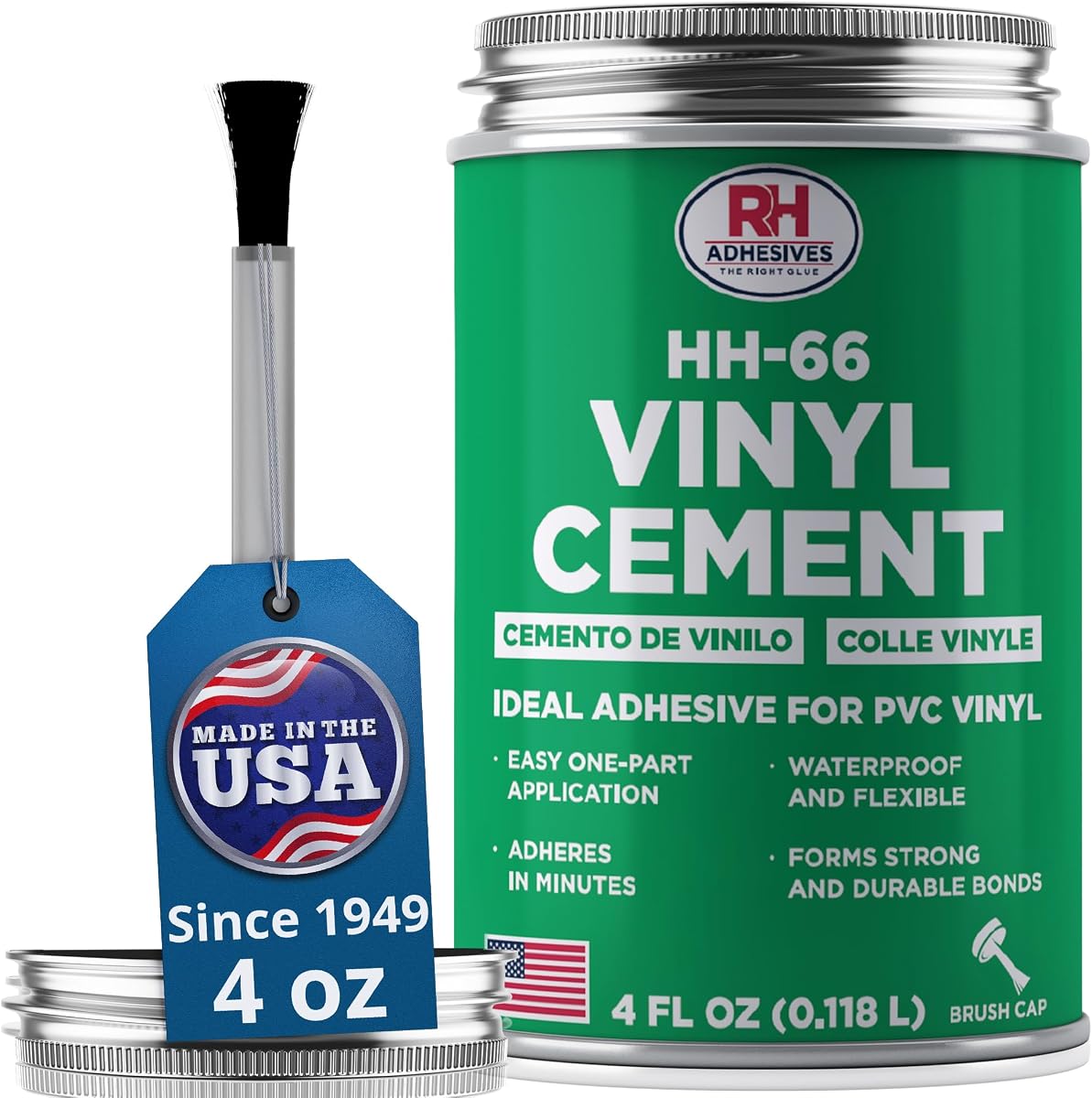
HH-66 Vinyl Cement is a professional-grade contact adhesive with a 4.5 rating. It is not a conventional fabric glue, but it is relevant to canvas repair because vinyl-coated fabrics, tarpaulins, awnings, pool liners, inflatable boats, and marine covers often need an adhesive formulated for PVC and vinyl rather than loose textile fibers.
We may earn a commission when you buy through this link, at no additional cost to you.
Its specialized cement penetrates PVC and vinyl surfaces to create a strong, flexible, waterproof bond. It can be applied at temperatures from 35 to 95 degrees Fahrenheit and even applied underwater. Once cured, the bond is intended to remain serviceable across a much wider temperature range, helping reduce cracking and brittleness.
The material exclusions are important. It is not for polyethylene or polypropylene, which includes many common blue tarps, and it is not for ASTM- or NSF-listed PVC plumbing pipe. Like other contact cements, it generally needs accurate alignment because repositioning after contact can be difficult or impossible.
HH-66 is the right recommendation for a vinyl-coated tarp, marine cover, pool liner, awning, or inflatable item. It may also bond canvas and several other materials listed in its instructions, but vinyl should remain the central reason to choose it. Pure canvas repair is better served by a dedicated fabric adhesive or canvas patch system.
PVC and vinyl require different bonding behavior from porous canvas. This cement is designed to penetrate those surfaces, creating a flexible hold suited to marine, pool, awning, and inflatable applications.
Application and cured-service temperature ranges show an emphasis on real-world conditions. Even underwater application is possible, although users should always verify that the substrate and project fall within the product instructions.
We may earn a commission when you buy through this link, at no additional cost to you.
The best canvas repair glue depends on the canvas construction, the location of the damage, the need for waterproofing, and how quickly the repair must be usable. Consider material compatibility and curing limitations before choosing an adhesive.
Uncoated, tightly woven canvas behaves differently from vinyl-coated or heavily treated fabric. General fabric adhesives are designed to interact with fibers, while PVC and vinyl adhesives penetrate or dissolve plastic surfaces to form a cohesive bond. Confirm both the canvas type and any waterproof coating before applying an adhesive, because a product that works on cotton may be unsuitable for coated tarp material.
Choose based on the actual substrate, not merely the word canvas. For porous natural or synthetic canvas, consider a fabric adhesive or canvas patch system. For vinyl-coated surfaces, select a product explicitly approved for PVC and vinyl.
A repaired area must move with the original item. A rigid adhesive may crack when canvas is folded, rolled, worn, or repeatedly exposed to changing temperatures. Flexible products are especially important for tents, garments, bags, covers, and other frequently handled items. Waterproofing matters most when the repair is outdoors or may be washed.
Prioritize a clear, flexible, waterproof bond for exposed outdoor gear. For a dry indoor craft, flexibility may matter more than water resistance. Do not assume a fabric glue will equal a professional seam sealant.
Fast drying does not always mean the final bond has reached full strength. Several products can be held within minutes, while others need 24 hours or longer before use. Contact adhesives offer little opportunity to reposition after contact, whereas slower glues can provide a more forgiving working window. Read the complete instructions rather than relying on a quick-dry label.
Choose rapid results for an urgent wearable repair. Choose a longer cure when alignment is difficult, the bond will bear weight, or maximum long-term strength matters more than immediate use.
Needle tips are ideal for narrow seams and small tears, brushes offer even coverage along a larger line, and patch systems provide useful backing for larger tears. A squeeze bottle can be effective for simple spreads, but precise dispensing is important because excess glue may squeeze beyond the repair or create a rigid buildup. Accessories such as clips and spreaders can improve consistency.
Match the applicator to the repair. Use a fine tip for intricate work, a brush for seams, and a patch system when a hole needs structural support. Test the flow on scrap material first.
A single adhesive rarely excels everywhere. Fabri-Tac is oriented toward fashion and decorative craft, GEAR AID toward waterproof outdoor seams, TrailMax and another canvas kit toward patch-based repairs, and HH-66 toward PVC and vinyl. Garments, costumes, marine equipment, and outdoor covers all place different demands on appearance, flexibility, and cure time.
Write down what is being repaired, whether it will be washed, whether it bends, and whether decorations will be attached. Select the product whose stated use most closely matches those conditions.
Adhesive alone may handle a small split or clean seam, but a patch can bridge a hole and distribute stress across damaged fibers. Patch kits are convenient because the backing and adhesive are supplied together. They are particularly useful for tents, tarps, boat covers, and pop-up campers, although a differently colored patch will remain visible.
Use an adhesive-only product for minor damage or when appearance is critical. Choose a patch system for larger tears, worn areas, or reinforcement where the original canvas no longer has intact fibers.
Some solvent-based and latex-based adhesives can deteriorate when exposed to extreme cold, and precision nozzles can clog if they are not closed properly. Bottles with precision tips or integrated brushes should be tightly closed after use. A glass bottle can help protect liquid, but it should still be stored according to the manufacturer's directions. Extreme temperature can affect both the adhesive and the container.
Store adhesives at a stable, moderate temperature and replace containers that show unusual thickening, separation, or a hardened applicator. For occasional use, keeping a smaller bottle sealed can reduce waste.
Some contact cements use solvents that produce fumes and should be used with ventilation, away from sparks or open flames. Other products are described as water-based, non-toxic, or natural latex, but safe use still depends on the label. Work on a protected surface, avoid eye contact, and keep uncured adhesive away from children and pets. Follow the specific safety instructions supplied with the chosen product.
Natural or non-toxic does not mean every product is suitable for skin contact before it cures. Keep repaired wearables off the skin until the adhesive has fully set, and wash hands after handling.
Begin by inspecting the damage and choosing a repair method appropriate to the material. Clean and dry both surfaces, removing dirt, oil, loose fibers, and old adhesive. For a patch repair, cut or position the patch so that it extends beyond the damaged area on all sides. Test the adhesive on a hidden section of the same or similar material before treating a valuable item.
Apply a thin, controlled amount of glue using the product's intended applicator. A needle tip works well for narrow seams, while a brush is useful for distributing a thin coat over a wider area. Position the fabric or patch immediately if the product is a contact adhesive, and press the pieces together as directed. Use clips where included, but do not remove them before the stated drying period when checking progress could disturb the bond.
Allow the repair to cure in a clean, dry, well-ventilated area for the time specified by the manufacturer. Keep the joint flat or gently supported during early curing, and avoid washing, stretching, folding, or exposing it to water until the required time has passed. After the bond matures, inspect it gently and avoid abrupt loads that exceed the condition of the original canvas.
A clear, flexible fabric adhesive is usually the most practical choice for uncoated canvas. It should be compatible with the canvas fibers and any finish already present. For exposed outdoor gear, choose a waterproof flexible adhesive or a complete canvas patch system rather than relying on a basic craft glue.
Only if the product explicitly states compatibility with the particular vinyl or PVC material. A general fabric glue may not bond reliably to a coated surface, while a vinyl cement is designed for that substrate. The HH-66 option in this guide is intended for PVC and vinyl, and the canvas patch kits include explicit vinyl limitations.
Water resistance does not automatically mean a product is suitable for skin contact or repeated laundering. Check whether the manufacturer describes the adhesive as clothing-safe and follow the stated cure time before wearing the repair. PHIXBEAR and Fabri-Tac are described as suitable for clothing or fabric projects, while each product's instructions remain controlling.
The wait depends on the adhesive and the bonding conditions. Tear Mender states that its repair is washable after 15 minutes, while other products specify a full cure of 24 hours or 24 to 48 hours. Follow the product's own instructions because an early wash can weaken an incompletely cured bond.
A small split or clean seam tear may be handled with adhesive alone if the fabric still has enough intact fibers to support the joint. A patch is safer for a hole, worn section, or tear with frayed edges because it bridges and reinforces the area. Patch kits are especially useful when the repair must withstand movement or outdoor use.
Some products are explicitly approved for decorative attachment. FITTDYHE lists rhinestones and flat pearls, while Fabri-Tac is compatible with lace, sequins, rhinestones, pearls, jewels, ribbons, and numerous other materials. Check the surface compatibility and curing instructions before attaching embellishments to a finished garment.
Flexible adhesives are formulated to move with the repaired fabric instead of forming a hard, rigid bridge. This is especially important for seams, folds, bags, clothing, tents, and covers. A bond that feels slightly soft while curing may still become stronger after the full specified cure period.
Keep the container tightly closed, clean, and at a moderate temperature. Tear Mender specifically advises room temperature or warmer storage because cold temperatures can shorten product life. Precision-tip and brush-cap products should also be closed promptly to reduce drying around the applicator.
FITTDYHE is the most flexible all-around recommendation for clothing, ordinary fabric, and controlled canvas repairs, especially because its kit includes spreaders and clips. GEAR AID Seam Grip WP stands out for waterproof outdoor sealing, while TrailMax offers the most convenient complete patch system for portable canvas maintenance.
Prioritize the substrate first: use fabric glue for porous or woven canvas, a specialized vinyl cement for PVC and coated materials, and a flexible outdoor sealant when weather resistance is essential. Also account for application control, patch support, waterproofing, and the time available for curing before making a final choice.
Ratings and product details can change, and current pricing and availability should be checked on each listing before purchase. Read the included instructions, test a small area, and allow the complete cure time so the repair has the best chance of remaining strong and flexible.