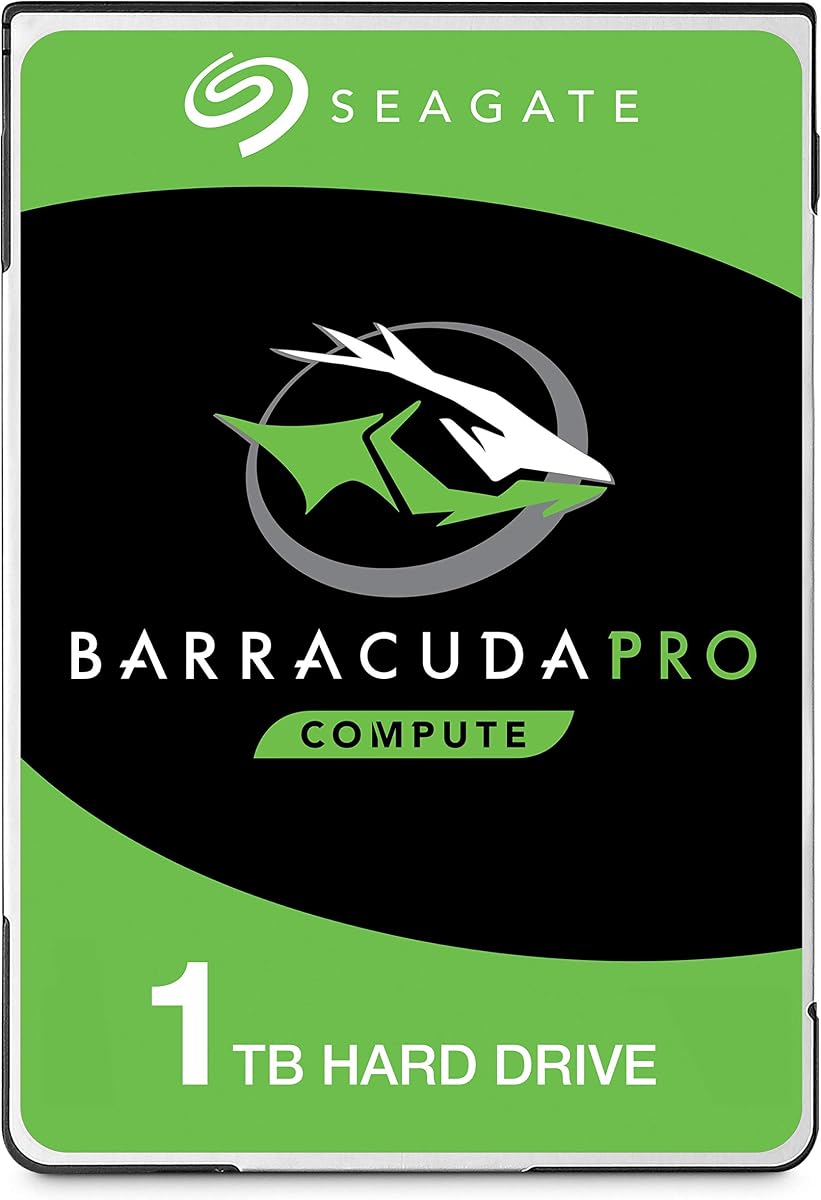
Seagate BarraCuda Pro 1TB
4.6Editor score
128MB optimized cache
Five-year limited warranty
Two-year Rescue services
Compact 2.5-inch design
A 7200 Rpm HDD Hard Drive remains a compelling choice for desktop builders, gamers, and creative professionals who need substantial storage with fast spindle-driven performance. These 3.5-inch SATA drives are designed to reduce access delays while providing room for games, media libraries, project files, backups, and other space-intensive data.
This guide compares ten Seagate, Western Digital, and renewed enterprise options using the specifications and feature information available for each listing. It examines spindle speed, interface, cache, capacity, form factor, workload positioning, warranty coverage, and special technologies such as data recovery services or vibration-control systems.
Each entry shows which use case the drive best supports and where its trade-offs may matter. The list covers capacities from 500GB to 6TB, including mainstream, performance, enterprise, and specialized models. Product availability, bundle contents, and pricing can change, so confirm the current listing and system compatibility before purchasing.
4.6Editor score

4.9Editor score

4.4Editor score
As an Amazon Associate we earn from qualifying purchases.
The comparison below places all ten drives side by side, emphasizing capacity, physical design, cache, interface, and intended workload so readers can narrow the field before checking current listings.


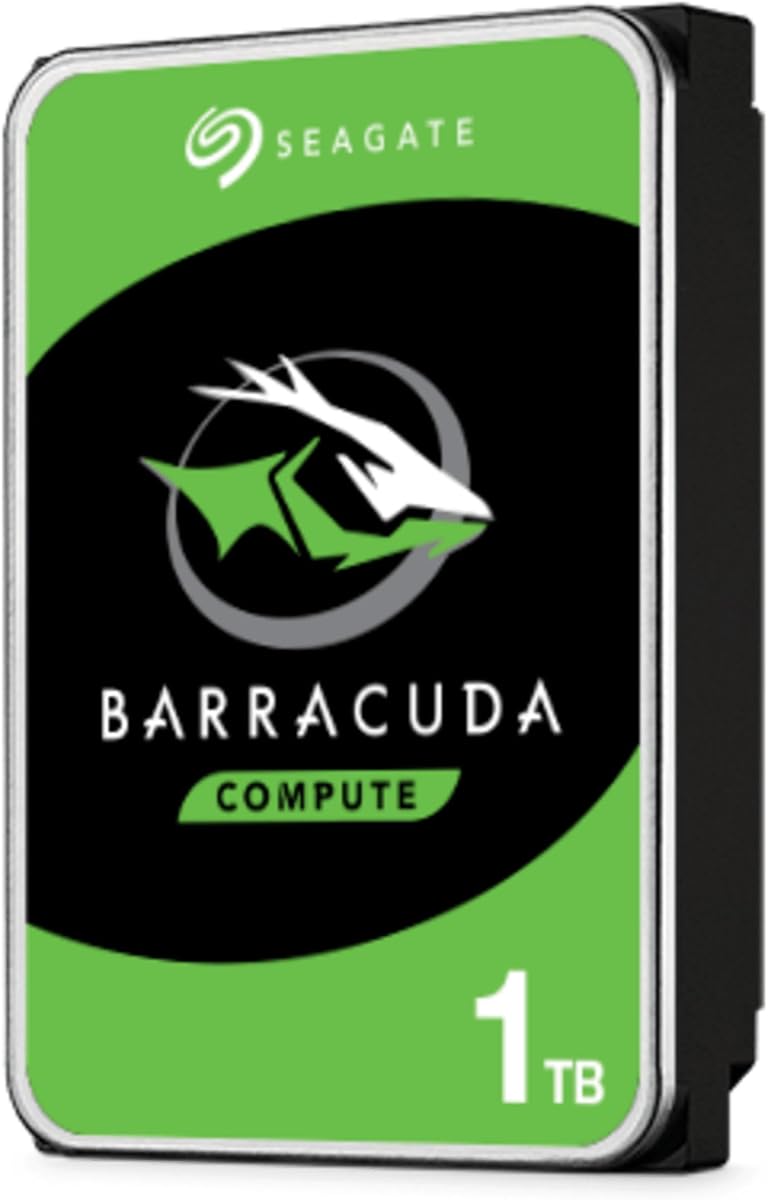
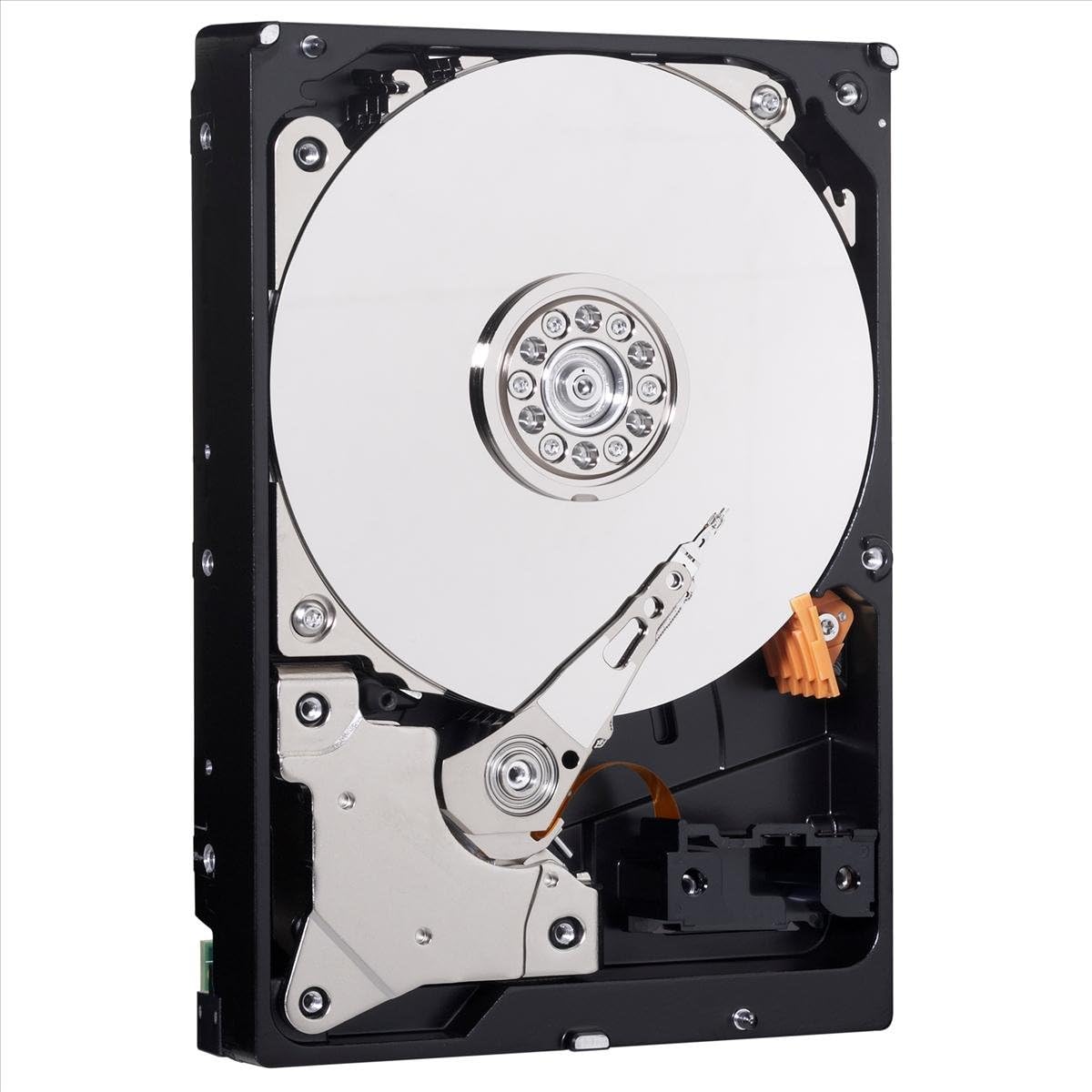


The Seagate Bare Drives BarraCuda 1TB is a conventional 3.5-inch desktop hard drive combining 7200 RPM performance with a 64MB cache. Its 4.6 rating reflects a generally favorable reception, while the listed applications cover PC gaming, music, video, and photo editing. It is a practical starting point when a builder wants a fast internal SATA drive without moving into enterprise hardware.
We may earn a commission when you buy through this link, at no additional cost to you.
The main appeal is its straightforward balance of capacity and performance. A 7200 RPM spindle can handle the sequential transfers associated with installing games, opening large media files, and maintaining a sizable local library better than many lower-speed general-purpose drives. Its 64MB cache also helps smooth burst activity, although cache size alone does not determine real-world responsiveness.
The trade-off is capacity. One terabyte can fill quickly with modern games, high-resolution media, and active project libraries, so users may eventually need a larger drive or a supplemental storage strategy. The listing also emphasizes the storage capacity may vary, which makes checking the actual usable capacity and condition important. Frustration-free packaging does not mean every necessary mounting accessory is included.
This is a sensible recommendation for a desktop builder assembling a gaming or productivity machine on a controlled budget. Choose it when one fast internal drive is enough and a larger model would exceed your storage needs. For extensive libraries, the 2TB BarraCuda option provides more breathing room, while the BarraCuda Pro adds cache and after-sales services.
The 7200 RPM platform is well suited to games that must load quickly and assets that move across the disk in large blocks. It also gives a desktop a responsiveness advantage over slower hard drives when the operating system and active applications compete for data access.
The BarraCuda name and stated support for common PC applications make this drive easy to position within a general-purpose build. It works particularly well for users who want a single internal drive rather than a complex multi-drive storage arrangement.
We may earn a commission when you buy through this link, at no additional cost to you.
The Seagate BarraCuda Pro 1TB stands apart from most entries because it combines 7200 RPM performance with a 2.5-inch form factor. It carries a 4.6 rating and a generous 128MB cache, making it an interesting fit for compact desktops and compatible laptops that need a high-speed internal SATA drive. The included five-year limited warranty and two-year Rescue Data Recovery Services also add visible support benefits.
We may earn a commission when you buy through this link, at no additional cost to you.
Its performance characteristics are aimed at demanding desktop use. The stated optimized read/write caching is relevant when moving large files, editing media, launching games, or working with applications that repeatedly request data from storage. The 2.5-inch format can make installation easier in compact enclosures where a 3.5-inch drive will not fit.
The critical limitation is capacity. A 1TB drive may be insufficient for expansive game collections, RAW photo archives, or video projects, and the compact platform can restrict future growth without replacing the entire device. Laptop compatibility also depends on bay dimensions, connector placement, mounting hardware, thermal conditions, and the manufacturer's supported drive list.
Buy this drive if you value fast access, compact construction, a large cache, and stronger after-sales coverage over maximum capacity. It is a premium-oriented choice for a carefully specified compact system or a 1TB desktop build. Users with larger libraries should consider a 3.5-inch 2TB or 6TB option instead.
The 2.5-inch design is the defining advantage for space-conscious builders. It retains the fast 7200 RPM spindle class while offering a smaller physical footprint than conventional desktop hard drives.
A five-year limited warranty and two-year Rescue Data Recovery Services make this package more reassuring than a bare mainstream listing. Recovery coverage does not prevent failure, but it can provide a useful starting point when data becomes inaccessible.
We may earn a commission when you buy through this link, at no additional cost to you.
The Western Digital 2TB WD Black Performance internal hard drive is a 3.5-inch drive designed for gamers, system builders, and creative professionals. Its 4.4 rating reflects a strong consumer history, and the combination of 2TB capacity with 7200 RPM performance gives it more room for games and media than most 1TB choices in this guide.
We may earn a commission when you buy through this link, at no additional cost to you.
StableTrac and Dynamic Cache Technology are the main technical distinctions highlighted in the listing. StableTrac focuses on consistent performance and read tracking, while Dynamic Cache is intended to optimize data movement according to demand. Together with the 64MB cache and high spindle speed, they position the drive as a performance model rather than a basic archive.
Its main drawback is that it does not distinguish itself with a larger cache or explicitly listed recovery service. The 3.5-inch form factor also requires appropriate chassis space, power, and cooling. As with any mechanical drive, sustained heavy workloads will generate more heat and noise than a solid-state drive, and no hard drive should be treated as immune to failure.
This WD Black is a compelling choice for a gaming desktop that needs both speed and useful capacity in one drive. It is also appropriate for creative work involving substantial local assets. If your priority is the same 2TB capacity with enterprise vibration controls, examine the WD SE. If cache size matters more, compare the 256MB BarraCuda 2TB.
The 2TB capacity gives games, photos, videos, and applications room to grow without immediately filling the disk. That makes the drive a better single-drive choice for active users than a 1TB model.
StableTrac supports consistent reading, and Dynamic Cache adapts cache use to workload demands. These features support the drive's performance positioning without replacing the importance of adequate system memory and sensible file organization.
We may earn a commission when you buy through this link, at no additional cost to you.
The Seagate ST2000DM001 combines a 2TB capacity with a 7.2K RPM spindle and a 4.9 rating, the highest numerical rating in this group. Its core specifications are concise: SATA 6 Gb/s, 3.5-inch format, and model ST2000DM001. It is especially attractive for buyers who want a high-rated desktop drive with enough capacity for a serious games or media library.
We may earn a commission when you buy through this link, at no additional cost to you.
The model's 7.2K RPM classification places it firmly in the category of faster mechanical storage. This can be beneficial when an operating system, game, or media application needs to retrieve scattered data from disk. The 2TB capacity reduces the likelihood that the drive's useful space will be exhausted quickly by large installations and personal files.
The sparse listing is the principal trade-off. It does not state a cache size, warranty duration, acoustics, workload rating, or included accessories. It also identifies a Dell part number, which may be useful for a matching system but could make buyers question whether the drive is new, certified, or intended for OEM deployment. Buyers should confirm condition and warranty terms directly.
Despite those uncertainties, the combination of the highest rating, strong capacity, and clear 7.2K RPM specification makes this our editor's choice for a balanced performance purchase. It suits desktop users who want a recognized 2TB configuration without paying for enterprise-specific features. Review the listing carefully before installation.
A 4.9 rating is the strongest customer feedback signal among the listed products. While ratings do not guarantee compatibility or longevity, they make this a compelling default when other specifications closely match your needs.
Listing the exact ST2000DM001 model and Dell NYR3N part number gives system builders useful identifiers. Those details make it easier to verify fit, firmware expectations, and replacement compatibility before ordering.
We may earn a commission when you buy through this link, at no additional cost to you.
The WD SE 2TB datacenter hard drive is designed for users who value reliability under sustained or vibration-heavy workloads more than a quiet desktop footprint. It combines 7200 RPM performance, SATA 6 Gb/s, and a 64MB cache, earning a 4.4 rating. Its WD2000F9YZ model is positioned as cost-effective datacenter storage.
We may earn a commission when you buy through this link, at no additional cost to you.
StableTrac and RAFF provide the most important benefits. RAFF is intended to improve performance and reliability in high-vibration environments, while StableTrac supports consistent read tracking. The listing also states that drives undergo functional testing and additional testing under real server and storage workloads, reinforcing the drive's continuous-operation positioning.
A 2TB capacity is modest for many modern server tasks, but it can hold a meaningful collection of files when paired with other storage tiers. The package includes only the hard drive, so screws, cables, and manuals must be obtained separately. Server-oriented acoustics and vibration may also be less suitable for a quiet office, and this is not a model for a compact laptop.
This drive is a smart choice for a NAS-like or workstation environment where storage reliability, vibration resistance, and warranty coverage matter. For a typical gaming desktop, WD Black may provide a more appropriate experience with fewer assumptions. Choose the WD SE when your installation environment and workload resemble continuous server use.
RAFF and the enhanced Rotary Acceleration Feed Forward technology target systems where movement and vibration can affect conventional desktop drives. That focus makes the WD SE more relevant to densely packed servers and storage arrays.
The stated testing program and five-year manufacturer warranty support a reliability-oriented use case. They do not eliminate failure risk, so backups remain necessary for any data that cannot be replaced.
We may earn a commission when you buy through this link, at no additional cost to you.
The Seagate Barracuda XT 2TB is a classic 7200 RPM desktop drive with a 4.4 rating. Its 3.5-inch form factor, SATA 6 Gb/s interface, and 64MB cache place it firmly in the high-performance mechanical storage category. The listing emphasizes a combination of substantial capacity and top-end desktop performance.
We may earn a commission when you buy through this link, at no additional cost to you.
Its 2TB capacity can accommodate many space-hungry games and movies, making it useful for a media-heavy desktop. The 64MB cache is designed to optimize burst performance and reduce data throughput bottlenecks, while the SATA interface offers backward compatibility with suitable older controllers and systems.
The main concern is its age relative to newer entries. Older drive generations may have less attractive acoustic characteristics, power efficiency, or interface flexibility than newer models, and a 64MB cache is modest by current HDD standards. Availability of updated firmware, support terms, and exact system compatibility should be checked before purchase.
Choose the Barracuda XT when you want an established 2TB performance platform for a desktop and can verify the current condition and support details. It remains a logical option for large local libraries, while the newer BarraCuda 2TB offers 256MB of cache and migration software. Newer buyers should favor the more detailed listing when their needs are similar.
Two terabytes gives users a generous local collection without requiring immediate management of a multi-drive system. It remains a practical size for legacy game libraries, movies, and archived media.
The 64MB cache helps absorb short bursts of requests and smooth data delivery. It is most effective when the host operating system and applications can leverage the drive's sequential and caching capabilities efficiently.
We may earn a commission when you buy through this link, at no additional cost to you.
The Seagate BarraCuda ST1000DM010 is a mainstream 1TB desktop drive built around 7200 RPM performance and a 64MB cache. It carries a 4.6 rating and is described as suitable for PC gaming, music, video, and photo editing. Its simple configuration makes it easy to consider for a first desktop build or an upgrade from a slower hard drive.
We may earn a commission when you buy through this link, at no additional cost to you.
The drive's strengths are broad compatibility and a clear use-case profile. A standard 3.5-inch SATA form factor fits most desktop cases, while the 7200 RPM platform improves responsiveness compared with slower mechanical options. The listed two-year limited warranty provides a basic level of support, and the stated experience of two decades of innovation lends institutional confidence to the platform.
Capacity is the main limitation. One terabyte can be restrictive for modern game installations, high-resolution photo archives, and video editing, and users may soon need a second drive or an external archive. The cache is also smaller than that offered by the 2TB BarraCuda listing. Buyers should remember that actual available space depends on formatting, operating system overhead, and capacity variation.
This is a good selection for users who need a straightforward internal drive for everyday desktop tasks and a moderate collection of files. Pick it when 1TB is sufficient and simplicity is preferable. For faster-loading larger libraries, choose the 2TB BarraCuda or WD Black; for compact systems, consider the BarraCuda Pro's 2.5-inch form factor.
The stated support for gaming, media, and photo editing shows the drive's general-purpose strength. It is a straightforward option when one internal drive must cover several kinds of desktop work.
Moving from a 5400 RPM or older hard drive to this 7200 RPM model can improve perceived responsiveness. The benefit is most noticeable during application launches, file access, and large asset loading.
We may earn a commission when you buy through this link, at no additional cost to you.
The WD Blue 500GB is the smallest-capacity product in this comparison, but it still uses a 7200 RPM spindle, SATA 6 Gb/s, and a 16MB cache. Its 4.4 rating suggests it remains a recognizable desktop drive with useful drive-health technologies. It is most relevant to light users, legacy systems, and builders who need a basic storage tier.
We may earn a commission when you buy through this link, at no additional cost to you.
IntelliSeek calculates appropriate seek speeds to reduce power use, noise, and vibration. Data LifeGuard uses monitoring algorithms to help maintain drive health, while NoTouch Ramp Load Technology parks the recording head away from the disk surface. These features show that the drive focuses on operational refinement even though its capacity and cache are modest.
The largest limitation is space. A 500GB drive is quickly constrained by a modern operating system, applications, game updates, and media files, so it is better viewed as a secondary or narrowly targeted drive than a long-term solution for a growing library. Its 16MB cache is also much smaller than those in the 1TB and 2TB alternatives, and the listing specifies only a two-year seller warranty.
This drive makes sense for a simple office machine, a small project archive, or a system where inexpensive capacity is more important than speed. For a primary gaming drive or modern creative workstation, a 1TB or 2TB model offers far more room. Confirm that the included 3.5-inch bay, SATA data cable, and power connection are available separately.
IntelliSeek adjusts seek speeds to help lower power consumption, noise, and vibration. Those qualities can be valuable in a home office where a drive sits close to the user.
Data LifeGuard monitors drive conditions, while NoTouch helps position the head safely away from the recording surface. Neither feature replaces backups, but both reflect the drive's attention to everyday reliability.
We may earn a commission when you buy through this link, at no additional cost to you.
The Seagate BarraCuda 2TB stands out for pairing a roomy 2TB capacity with a large 256MB cache. It runs at 7200 RPM through a SATA 6 Gb/s interface and carries a 4.7 rating, making it one of the strongest all-around specifications in this list. The drive is aimed at gaming desktops and systems handling music, video, photos, and general PC applications.
We may earn a commission when you buy through this link, at no additional cost to you.
The generous cache is the headline specification. It can help optimize burst transfer behavior and reduce interruptions when the host system requests frequently used data. Combined with a fast spindle, that makes the drive appealing for large games, media editing, and a desktop that needs a capable single drive rather than several smaller volumes.
The trade-offs are conventional for a high-performance 3.5-inch mechanical drive. It produces more noise and vibration than a solid-state drive, and the larger capacity does not remove the need for backups. The exact ST2000DM008 or ST2000DMZ08 variation should be checked carefully, as the title includes both model designations. Cable and mounting hardware may also need to be sourced separately.
Choose the BarraCuda 2TB for a gaming or creative desktop that benefits from both space and a large cache. Its DiscWizard support is particularly helpful when migrating data from an older drive. Compared with the WD Black 2TB, it offers more cache and a higher rating; compared with enterprise drives, it is more approachable for a personal workstation.
The 256MB cache is unusually generous within this group and complements the 2TB capacity. This combination suits users who want fast access to a substantial local collection rather than a small drive for occasional files.
The included Seagate DiscWizard tool is intended to simplify migration and cloning from an older drive. A careful backup before migration remains important, and the complete system image should be verified after the move.
We may earn a commission when you buy through this link, at no additional cost to you.
The Seagate Enterprise Capacity 6TB is the largest-capacity option here and is supplied in renewed condition. It operates at 7200 RPM, uses 512e SATA 6 Gb/s, and includes 128MB of cache. Its listed 216MB/s sustained transfer rate, 4.16 average latency, and 4.2 rating make it a distinct choice for bulk storage rather than a mainstream desktop upgrade.
We may earn a commission when you buy through this link, at no additional cost to you.
Its enterprise feature set is the strongest differentiator. PowerChoice technology can help manage power behavior, hot-plug support assists in compatible systems, and multisegmented cache is intended to improve data delivery. The listing identifies RAID storage, centralized surveillance, backup, and restore as suitable applications, giving it a clear systems-infrastructure orientation.
Renewed status requires the most caution. Buyers should look for a seller-backed return policy, useful warranty information, and evidence of testing. A two-year warranty is listed, but coverage details should be reviewed. The drive may also emit more noise than a desktop-oriented model, and its enterprise workload features may not benefit an ordinary quiet PC. Capacity labeling and the operating system's displayed usable space can differ.
This renewed enterprise drive is best suited to users who need maximum local capacity for backups, surveillance, RAID, or bulk media and can validate its condition and compatibility. For general desktop use, a 2TB performance drive offers a safer balance of capacity, support, and convenience. Choose this option only when its large scale and enterprise features justify the renewed purchase.
Six terabytes can reduce the need for frequent archive rotation when holding backups, camera footage, or a large media collection. It also increases the operational impact of a drive failure, making a separate backup strategy essential.
PowerChoice, hot-plug support, and RAID positioning can be valuable in compatible servers and storage arrays. Desktop users should confirm that their motherboard, enclosure, and operating system support every feature they intend to use.
We may earn a commission when you buy through this link, at no additional cost to you.
The right 7200 RPM hard drive depends on capacity, physical fit, workload, noise expectations, support requirements, and the amount of data you need to retain. These factors help narrow a large catalog to a model that suits your system.
Begin with the amount of data you expect to store rather than focusing only on speed. A 500GB drive is tight for a modern operating system and applications, while 1TB suits lighter users, 2TB provides a more comfortable game and media library, and 6TB is appropriate for large archives, surveillance, or backup workloads. Remember that formatting, the operating system, and the manufacturer's capacity convention can affect the space shown to you.
Most entries are full-size 3.5-inch desktop hard drives, while the BarraCuda Pro uses a 2.5-inch form factor. A larger drive cannot be installed merely because it offers more capacity; the case needs a proper bay, compatible connectors, secure mounting, and sufficient clearance for cables and airflow. A compact system may require a 2.5-inch SATA drive, but its system manufacturer may also impose size, power, or thermal restrictions.
General-purpose desktop drives focus on gaming, media, and everyday computing, while WD Black emphasizes performance users and WD SE targets server and storage-array environments. The renewed Enterprise Capacity model is positioned for RAID, surveillance, backup, and restore applications. Matching the drive to the workload can provide more relevant reliability features, though it may also mean additional noise, vibration, and system-management considerations.
Cache is temporary onboard storage that can smooth bursts of frequently requested data. The models here range from 16MB to 256MB, with larger values such as the BarraCuda 2TB's 256MB standing out. Cache can improve responsiveness, but it is not the sole measure of performance. Spindle speed, sustained transfer behavior, workload type, fragmentation, host memory, and the operating system all influence the result.
Warranty coverage varies across the list. The BarraCuda Pro includes a five-year limited warranty and two-year Rescue Data Recovery Services, while WD Black and WD SE list five-year coverage. Other entries offer more limited or less clearly defined seller support. Compare the term, what is covered, and the return process, but never treat a warranty as a replacement for backups.
A 7200 RPM drive spins its platters faster than many lower-speed hard drives, which can increase noise, heat, and vibration. WD Blue's IntelliSeek and the enterprise drives' vibration-control technologies address these issues in different ways. Enterprise models may be ideal in a rack but louder in a quiet room, while a desktop-oriented model may be more comfortable beside a monitor.
Some listings explicitly state that the drive arrives without screws, cables, or manuals. A desktop chassis generally needs a SATA data cable, SATA power connection, and suitable mounting hardware. The system also needs a free SATA data port and sufficient power. A laptop may require a proprietary adapter or a caddy. Confirm whether the operating system installation tools are needed or whether cloning software is included for the chosen drive.
A renewed enterprise drive can offer useful capacity at a different acquisition point, but it carries more condition uncertainty than a new retail product. Review the seller's testing language, return window, warranty coverage, and any available drive-health information. For sensitive data, initialize the drive appropriately and test it before migrating irreplaceable files. Renewed status should be considered only when you have a clear plan for redundancy.
Before installation, confirm the drive size, SATA connector requirements, available bay, and system compatibility. Back up the existing system if you are replacing a boot drive. Connect the SATA data cable to the motherboard or supported controller, connect power from the PSU, and secure the drive in its bay without leaving screws loose. Check the manual for any model-specific handling instructions.
After installing a new operating-system drive, use the manufacturer's partitioning and initialization tools to create the desired volume and file system. If you are cloning an existing system, clone before changing the boot order, verify that the clone is complete, and keep the original drive disconnected temporarily until stability is confirmed. Update the operating system and storage drivers, then let the drive settle while file indexing and background maintenance complete.
For long-term care, keep the drive supported by proper airflow, avoid abrupt shutdowns during writes, and leave some free space available. Back up important files to another drive or a tested backup system rather than assuming one physical drive is sufficient. Review drive-health notifications, unusual clicking, grinding, or prolonged slow responses, and replace a failing drive promptly. For enterprise or surveillance use, follow the controller, array, and operating-system documentation exactly.
Generally, yes. A 7200 RPM drive can locate data faster because its platters spin more rapidly, which often improves application loading, file access, and responsiveness compared with a 5400 RPM model. The real difference varies by task and system configuration. Sequential transfers may show a smaller gap than random file access, and SSDs remain considerably faster overall.
A 7200 RPM HDD can work well as a secondary game library because it provides substantial capacity and faster mechanical access than a slower hard drive. It will not load assets as quickly as a SATA or NVMe SSD, so the operating system and frequently launched games benefit from SSD storage. The 2TB WD Black, Seagate BarraCuda 2TB, and BarraCuda Pro are particularly relevant choices.
An SSD is not required, but it can improve overall responsiveness substantially. A practical arrangement places the operating system and active applications on an SSD while using a 7200 RPM HDD for games, media, archives, and backups. This hybrid setup preserves large-drive capacity without asking a mechanical disk to handle every frequent operation.
Usually not without an appropriate enclosure, and performance can still be affected by heat, power, and vibration. Some laptops support 2.5-inch SATA drives directly, while the BarraCuda Pro's compact format may suit certain models. Check the laptop manufacturer's supported drive list and confirm connector, mounting, and thermal requirements before buying.
A larger cache can help with bursty workloads by holding frequently accessed data temporarily, but it does not guarantee faster performance in every situation. Sustained throughput, random access, spindle speed, fragmentation, and the host system all matter. The 256MB cache in the BarraCuda 2TB is notable, yet capacity and intended use should also guide the decision.
They can be suitable when their reliability features, capacity, or workload support match your needs. However, they may be louder, produce more vibration, and include features that a desktop motherboard does not use. The WD SE and renewed Seagate Enterprise Capacity are better considered for storage systems, surveillance, backup, or RAID-oriented uses than for a quiet everyday PC.
Maintain at least one separate backup and, for valuable data, consider more than one copy. Do not use the only drive containing your files as part of the backup arrangement. Watch for unusual noises and degraded performance, test backup restoration periodically, and replace the drive before it fails when the system cannot tolerate interruption.
A functioning desktop case usually provides enough airflow for a single 3.5-inch drive, but the drive still benefits from unobstructed movement and a steady power connection. Dense server bays and stacked arrays require deliberate airflow. High temperatures can shorten component life, so avoid sealing drives in a cramped enclosure and confirm that the host system reports healthy operating temperatures.
Our top recommendations reflect different priorities. The Seagate ST2000DM001 is the editor's choice for its 4.9 rating, 2TB capacity, and focused 7.2K RPM specification. The BarraCuda Pro 1TB is the premium pick for compact construction, 128MB cache, a five-year warranty, and Rescue services, while the WD SE 2TB provides a budget-focused route into vibration-conscious, continuously used storage.
Most buyers should begin with capacity, then confirm that the drive fits the chassis and matches the workload. A 2TB model is the most versatile choice for an active desktop, while a 6TB enterprise drive makes more sense for bulk archives, surveillance, backup, or RAID. A 500GB model may suit only light duties, and a compact 2.5-inch system has different requirements from a standard tower.
Finally, check the current listing, seller, warranty, condition, and included accessories before purchasing. Product details and pricing can change, and a bare drive may not include cables or screws. Confirm current specifications and compatibility at the time of purchase, then keep a proper backup even when your chosen drive includes advanced monitoring or recovery support.