
Monoprice 3 Pin XLR Male Mic Connector
4.8Editor score
Nickel-tin connector body
Gold-plated electrical pins
Rubber strain relief boot
Compare 3 Pin Mic Connector options for microphones, audio cables, DMX, and wireless systems, including gender, construction, mounting, and compatibility.
A 3 Pin Mic Connector is the termination used to join many balanced microphone, speaker, stage-lighting, and communication cables to compatible equipment. A worthwhile connector must provide a secure mechanical fit, clean electrical contact, straightforward assembly, and dependable strain relief. Gender, housing style, contact plating, and intended application all influence which connector works best for a particular setup.
This guide compares ten relevant products, including loose XLR connectors, multipacks, a complete XLR cable, and a specialized timecode plug. We evaluated the supplied specifications, connector gender, housing construction, installation method, intended uses, customer ratings, and practical fit for common audio tasks. The list includes both traditional cable-end connectors and specialized options for wireless microphone systems.
Each review explains what distinguishes its connector, identifies strengths and limitations, and clarifies who will benefit most from choosing it. The leading selections cover budget, general-purpose, and premium construction, while the remaining reviews help buyers compare pack sizes, assembly styles, and specialized applications. Availability and product conditions can change, so verify the current listing and compatibility details before purchasing.
4.8Editor score

5.0Editor score

5.0Editor score
The comparison below includes each connector's gender, construction, installation format, and primary application so buyers can distinguish a standard XLR cable end from a multipack, complete cable, or wireless-system timecode plug.




The Monoprice 3 Pin XLR Female Mic Connector combines a compact three-pin XLR format with gold-plated pins, a nickel-tin body, and a rubber strain-relief boot. Its supplied rating is 4.7 out of 5, placing it among the well-regarded options in this guide. The appeal is straightforward: it provides several practical connector features without introducing a complicated installation system.
We may earn a commission when you buy through this link, at no additional cost to you.
Gold plating is intended to support smooth, corrosion-free electrical connections, which is especially relevant when a connector will be plugged and unplugged repeatedly or exposed to a mobile rig. The nickel-tin body adds structural support, while the rubber boot helps reduce stress where the cable enters the connector. Together, these features make it a sensible starting point for building or repairing a balanced XLR cable.
One detail deserves careful attention: the product title identifies the connector as female, while the supplied bullet description refers to a 3-pin male connector. That inconsistency means buyers should verify the physical connector and the ASIN before ordering. The single-connector format may also be less convenient than a mixed pack when several repairs or custom leads are planned, but it remains a flexible option for replacing one worn termination.
This connector is best for a DIY builder who wants gold-plated contacts and strain relief without selecting a large multipack. It is also a practical repair part for an existing standard three-pin XLR cable. Confirm the required male or female gender, compare the shell dimensions against the original connector, and check the pin arrangement before assembly.
Gold-plated pins are designed to provide clean contact and resist corrosion, making this connector appropriate for rehearsal rooms, mobile stages, studios, and home audio projects where reliability matters more than a disposable construction.
The rubber strain-relief boot is the main mechanical feature to notice. It helps protect the cable-to-connector junction from bending and pulling, although correct conductor placement and solder quality remain just as important to long-term performance.
We may earn a commission when you buy through this link, at no additional cost to you.
The Monoprice 3 Pin XLR Male Mic Connector is a well-rated general-purpose option for constructing or repairing a standard three-pin XLR lead. It carries a supplied rating of 4.8 out of 5, the highest rating among the two Monoprice connectors included here. Its core features—gold-plated pins, a nickel-tin body, and a rubber strain-relief boot—cover the essentials buyers usually look for in a cable-end microphone connector.
We may earn a commission when you buy through this link, at no additional cost to you.
The gold-plated pins are intended to create smooth, corrosion-free connections, while the metal body provides a durable foundation for repeated handling. The rubber boot supports the cable at the point where bending and pulling would otherwise concentrate stress. This combination makes the connector appropriate for a new microphone lead, a replacement end on a damaged cable, or a compact stage and studio cable built to a custom length.
The main limitation is the single-connector package. Anyone assembling several cables or maintaining a collection of equipment may prefer a mixed pack, while a builder needing only one male termination will find this simpler. The supplied information also does not show a detailed pin diagram, so users should inspect the connector and map the cable conductors carefully rather than assuming every XLR pin arrangement is identical.
This is a strong general recommendation for DIY audio users who want a conventional male XLR termination with durable contacts and strain relief. It is less suitable for specialized wireless-system plugs, chassis-mounted sockets, or projects requiring a complete ready-made cable. Match the cable diameter to the boot, verify the pin layout, and ensure the shell fits the equipment's mating connector.
This connector does not introduce a specialized locking system or unusual mounting method. That conventional format is an advantage for many projects because it is easy to match with standard balanced microphone and audio cables.
Gold-plated pins support consistent contact and resist corrosion over repeated mating cycles. They are especially useful in mobile audio environments where cables are frequently handled and connected to different equipment.
We may earn a commission when you buy through this link, at no additional cost to you.
The Switchcraft AAA3MZ is a three-pin male XLR microphone connector built around a recognized pro-audio brand. Its supplied rating is 5.0 out of 5, placing it among the highest-rated selections in the roundup. Although the product data is concise, its focused format is easy to understand: it is intended for microphone cabling rather than a broad collection of unrelated connector types.
We may earn a commission when you buy through this link, at no additional cost to you.
The principal advantage is confidence in a specialized connector manufacturer with an established reputation in the audio industry. Choosing a purpose-built XLR part can be preferable to selecting a connector based solely on appearance or package quantity. The AAA3MZ is suited to a builder creating a custom microphone lead, replacing a damaged male termination, or maintaining professional audio equipment with standard three-pin XLR connections.
The limited specifications do not describe the shell material, contact plating, cable-clamping method, or exact assembly process. Those details should be confirmed on the current product page and by inspecting the delivered item. The listing also represents a single connector, which may make it less economical for bulk cable fabrication. Buyers comparing several units should consider the Switchcraft multipack elsewhere in this guide when multiple male ends are required.
This connector earns a top recommendation for users who value a recognized specialist brand and a clearly defined three-pin male XLR format. It is especially appropriate for stage microphones, studio leads, and other conventional balanced audio applications. Check cable dimensions, mating equipment, and assembly requirements before purchase, particularly if the project needs a specific mounting style or enhanced contact plating.
Switchcraft is the defining feature here. Buyers who want a focused, recognizable professional-audio component may prefer that established identity over a larger assortment of generic connection features.
A conventional three-pin male XLR connector is the common denominator for balanced microphone cables, making this model practical for both new custom leads and replacement jobs involving familiar studio or stage equipment.
We may earn a commission when you buy through this link, at no additional cost to you.
The Neutrik NC3MXX-B is a two-pack of three-pin male XLR cable connectors with black housings and gold contacts. It has a supplied rating of 5.0 out of 5 and combines the familiarity of a specialist audio brand with a useful pack quantity. It is a compelling option for builders who want to create two custom cables or keep replacement male ends on hand.
We may earn a commission when you buy through this link, at no additional cost to you.
Gold contacts are the standout technical feature, supporting clean, corrosion-resistant contact in demanding audio applications. The black housing gives the connectors a conventional professional appearance, while the male cable-end format fits standard XLR mating arrangements. Neutrik is another established name in the pro-audio category, making the connectors attractive to users who prioritize component familiarity rather than purchasing an unbranded multipack.
The pack contains two male connectors rather than one of each gender, so it will not serve a builder who needs a matched male-and-female pair. The supplied information also does not describe the cable clamp or strain-relief system in detail. As with any metal-shell connector, users should confirm that the cable diameter, conductor dimensions, and assembly method suit their cable and soldering setup.
This is a particularly strong choice for stage microphones, studio cables, and mobile audio leads where gold contacts and a trusted brand are priorities. It is also more practical than a single connector when two male terminations are needed. Verify the technical dimensions, use reliable soldering practices, and confirm that the connector is compatible with the sockets used in the intended equipment.
The gold contact finish is particularly relevant for stage and studio cables that undergo frequent handling. It helps maintain dependable electrical contact while resisting the oxidation and wear that can affect untreated contact surfaces.
A two-pack provides useful flexibility for balanced cable projects. It allows a builder to complete two similarly terminated male-end cables or retain a spare for future repair work.
We may earn a commission when you buy through this link, at no additional cost to you.
The Switchcraft A3F Series offers two three-pin female XLR cable-end connectors in a nickel housing. Its supplied rating is 4.7 out of 5, and the product is aimed at the common requirement for female terminations on standard microphone and audio cables. The pack quantity and recognized brand make it a sensible counterpart to a male connector when building balanced leads.
We may earn a commission when you buy through this link, at no additional cost to you.
Female XLR ends are frequently used for equipment outputs, stage boxes, mixers, speakers, and other devices that provide male sockets. Because the listing includes two matching female connectors, a builder can finish two cables consistently or keep one as a replacement. The nickel housing provides a practical-looking metal exterior, while the three-pin format supports balanced audio connections when wired and configured correctly.
There is less published information for this entry than for many others. The supplied data does not identify the contact plating, cable clamp, strain relief, assembly sequence, or individual pin layout. Those are important details for anyone soldering a custom lead, and they should be verified from the current listing and physical connector. The female-only configuration is also unsuitable for a buyer who specifically needs two male terminations.
This Switchcraft option is best for DIY builders completing the female side of standard XLR cables, particularly when two identical ends are useful. It is less compelling for a workshop that needs balanced male-and-female pairs from one purchase. Confirm dimensions, pin mapping, and assembly requirements, and compare them with the supplied equipment before committing to a build.
A female cable end mates with a male XLR socket, which makes this option relevant for many mixers, speakers, stage boxes, and other pieces of audio equipment. It is a natural choice for the output side of a custom lead.
Using two matching connectors helps keep cable terminations consistent. It is useful for producing a pair of similarly configured leads or maintaining a small inventory of replacement female ends.
We may earn a commission when you buy through this link, at no additional cost to you.
The four-pack of Switchcraft AAA3MZ connectors provides a practical option for building several three-pin male XLR cable ends. It has a supplied rating of 5.0 out of 5 and retains the focused microphone-connector format of the recognized Switchcraft brand. The set is especially useful for installers, repair technicians, rehearsal-space maintainers, and cable builders who need more than one matching termination.
We may earn a commission when you buy through this link, at no additional cost to you.
A four-pack offers more flexibility than the single Switchcraft connector. It can complete four male-ended microphone leads, replenish a small parts inventory, or support a collection of custom stage and studio cables. The listed two-piece assembly indicates a straightforward construction approach, reducing the number of separate assembly operations required for each termination.
These are cable-mount connectors, which makes them a natural fit for cable ends rather than a direct equipment-mounted socket. The pack contains male connectors only, so builders still need a female termination when a complete male-to-female lead is required. Limited information is supplied about contact plating and internal cable retention, making visual inspection and verification of the current product details important.
This multipack is best for users who repeatedly assemble standard male XLR microphone cables and value a consistent, recognized component. It is less suitable for someone needing one repair part, a mixed-gender set, or a chassis or panel mounting solution. Confirm the shell dimensions, cable entry range, and pin arrangement before producing a larger batch of custom leads.
Four matching connectors support a focused production run of male-ended cables. This is a practical choice when maintaining several microphones, stage boxes, or pieces of live sound equipment rather than building a single occasional lead.
The stated two-piece assembly makes the product easier to plan for a cable-building workflow. It also keeps the parts count lower, though users should still follow the manufacturer's assembly sequence and verify the conductor positions.
We may earn a commission when you buy through this link, at no additional cost to you.
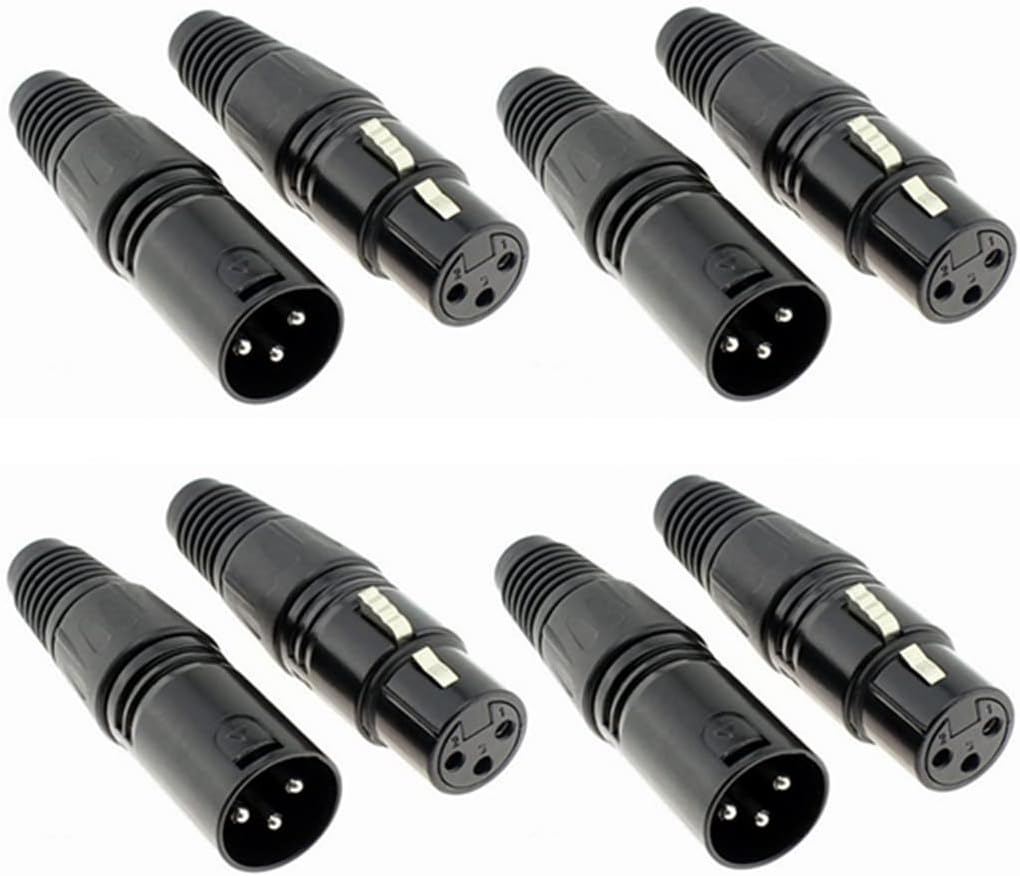
This ten-pack contains five three-pin male XLR connectors and five female counterparts, making it the broadest gender mix in the guide. Its supplied rating is 4.6 out of 5. The connectors are described as professional-series cable ends with zinc alloy die-cast shells, fiberglass-reinforced inserts, and a screw-free assembly method, all of which appeal to builders working across microphones, DMX, and general audio applications.
We may earn a commission when you buy through this link, at no additional cost to you.
The largest pack quantity offers obvious utility for workshops, schools, rental inventories, stage builders, and anyone producing several cables. Matching male and female ends can produce complete standard XLR leads without buying separate multipacks. The die-cast housing should provide a durable exterior, while the reinforced insert is intended to support secure cable clamping. A female-side rubber grommet helps the connector seat without a loose fit.
Screw-free assembly may speed up the workflow, but users still need to prepare the cable, establish the correct pin mapping, and confirm a secure internal connection. The supplied data does not identify contact plating, conductor size limits, or a detailed dimensional drawing. It also uses the broad phrase “relevant mechanical and electrical standards,” so specific system compatibility should be verified rather than assumed.
This mixed ten-pack is best for high-volume custom cable work where both genders and multiple applications are priorities. It may be excessive for a one-cable repair, and the generic brand identity offers less recognition than the Switchcraft and Neutrik selections. Confirm the cable diameter, terminal design, and pin layout for every project before assembly.
Ten connectors split evenly between male and female ends allow a builder to complete several standard XLR cables and keep useful extras on hand. The format is particularly suitable for mixed audio, lighting-control, and communication inventories.
The zinc alloy die-cast shell is designed for strength, while the fiberglass-reinforced insert helps clamp the cable securely. The female locking end and rubber grommet support a more stable connection during use.
We may earn a commission when you buy through this link, at no additional cost to you.
The Four-Pair Mixed XLR set includes four male and four female three-pin connectors. Its supplied rating is 4.3 out of 5, the lowest among the products reviewed, although that figure still reflects a substantial level of customer satisfaction. The set's main appeal is its balanced configuration, which supports several complete cable builds or replacement work without purchasing two separate products.
We may earn a commission when you buy through this link, at no additional cost to you.
Each connector uses a compact die-cast shell, a fiberglass-reinforced hard-plastic insert, and a chuck-type strain-relief design. The metal housing provides a robust exterior, while the strain relief is intended to clamp the cable securely at the connector entry. The product is positioned for making new microphone cables or upgrading older terminated cables, which gives it a clear DIY audio purpose.
The lowest rating in the roundup may encourage a more cautious comparison, especially for buyers who value a named pro-audio manufacturer. The supplied details do not specify contact plating, exact conductor capacity, or assembly details, so a buyer cannot assume it matches the contact performance or finish of the Switchcraft and Neutrik options. Correct cable sizing, pin mapping, and soldering technique remain essential.
This set is a good fit for a home studio, rehearsal room, or educational cable-building project that needs several male-and-female pairs at once. It is less compelling for a professional inventory where premium contact specifications or long-term field reliability are the main criteria. Inspect the terminals, compare the shell dimensions, and test each completed cable before using it with valuable equipment.
Four male and four female ends allow several matched cable runs to be assembled. That balance is useful for small studios, rehearsal spaces, and service kits where both cable-end genders are routinely needed.
The chuck-type strain relief is intended to grip the cable securely and reduce movement at the connection point. It should be matched carefully to the cable diameter to achieve the intended hold.
We may earn a commission when you buy through this link, at no additional cost to you.
The Amazon Basics XLR Male to Female Microphone Cable is a complete six-foot cable rather than a loose connector. It has a supplied rating of 4.7 out of 5 and offers a ready-made solution for connecting XLR-compatible microphones, speakers, PA systems, and other sound equipment. For a user who needs a functional balanced lead without soldering, this is arguably the most immediately useful item in the list.
We may earn a commission when you buy through this link, at no additional cost to you.
All-copper conductors and inner copper spiral shielding form the core of the electrical design. The shielding is intended to reduce noise interference, while the flexible six-millimeter PVC jacket protects the cable and makes handling easier. Zinc alloy three-pin connectors with nickeling provide the physical terminations, creating a standard male-to-female XLR configuration.
Its main distinction from the other entries is that it cannot be installed directly on a custom cable or used as a replacement shell for another product. The six-foot length is fixed, so a user needing a shorter patch cable, a longer run, or a specific custom length must choose another option. It also provides no choice of connector gender because the male-to-female arrangement is already assembled.
This cable is best for quickly connecting a microphone to a mixer or PA system, or for replacing a worn standard lead in a familiar installation. It is not the right choice for constructing equipment-mounted cables, making unusual lengths, or stocking individual connector components. Confirm that both connected devices use compatible XLR interfaces and inspect the cable for damage before service.
A ready-made male-to-female cable removes the need to source separate connectors, strip conductors, and solder a termination. It is a practical option for PA rentals, rehearsals, and straightforward studio hookups.
The inner copper spiral shielding is designed to reduce noise interference, while all-copper conductors carry the balanced audio signal. A flexible PVC jacket adds everyday handling protection without requiring a separate connector boot.
We may earn a commission when you buy through this link, at no additional cost to you.
The Timecode Microphone Audio 3 Pin Connector is a specialized Mini 00B male plug designed for timecode and microphone-audio applications in wireless systems. Its supplied rating is 4.5 out of 5. Unlike the standard XLR entries, it is identified as part number FVB.00.303.NLAE24 and is associated with Lemo-compatible connections, so compatibility is the central buying consideration.
We may earn a commission when you buy through this link, at no additional cost to you.
The product is listed as compatible with Sennheiser SK50, SK250, Wisycom, Zaxcom, and Shure wireless systems, as well as the Zaxcom TRX900. Its straight-plug design includes a B key and a short shell intended for special cable crimping and the attachment of a bend-relief component. Those details make it relevant to technicians working with specific camera, transmitter, and location-sound setups.
This is not a conventional three-pin XLR connector and should not be treated as a universal microphone termination. The pin arrangement, shell dimensions, crimp specification, and bend-relief process must correspond to the target cable and device. Because specialized connectors are often installed permanently, confirming the exact transmitter model and the original connector marking is more important than relying on a broad brand compatibility list.
This plug is best for a technician or owner with a specifically identified Sennheiser, Zaxcom, Wisycom, or related wireless setup that calls for the listed FVB.00.303.NLAE24 connector. It is a poor substitute for a standard balanced XLR cable end. Check the equipment documentation, existing connector engraving, cable specification, and crimp tooling before purchasing or installing it.
The plug is intended for timecode and microphone-audio connections in professional wireless systems. Its specialized construction makes it valuable for equipment that cannot accept a standard XLR termination.
The short shell, B key, and dedicated bend-relief fitting indicate a crimp-based installation method. Correct tooling, conductor placement, and strain-relief assembly are essential to achieving a dependable connection.
We may earn a commission when you buy through this link, at no additional cost to you.
The right 3 Pin Mic Connector depends on the mating equipment, cable diameter, conductor layout, mounting method, and whether you need a loose component or a complete lead. Comparing these factors before buying helps prevent a gender mismatch, incompatibility, or a termination that cannot withstand normal cable handling.
Choose gender by matching the existing equipment and the opposite end of your cable.
Verify the exact shell and pinout, especially for specialized wireless equipment.
Match the cable diameter and relief method for a secure, stress-resistant termination.
Prioritize fit, contact alignment, and solid construction over finish alone.
Use plated contacts for frequent service, but always follow the correct wiring map.
Choose a ready-made cable for simplicity or a loose connector for custom work.
Match pack size to the number and gender of terminations your project requires.
Balance trusted construction, documented features, and exact application needs.
Begin by confirming that the replacement connector matches the cable diameter, equipment gender, shell dimensions, and conductor layout. Remove the old connector while noting which conductor connects to each pin. Strip the cable jacket to the appropriate length without cutting into the inner insulation, then arrange the new conductors so the boot or strain-relief can slide into position before the terminals are secured. This planning step helps prevent a new cable from being too short or poorly supported at the entry point.
Solder or crimp the conductors according to the connector manufacturer's instructions and the verified pinout. Keep each conductor clean, avoid bridging adjacent contacts, and confirm that the cable clamp grips the outer jacket rather than the individual insulated wires. After assembly, check continuity and verify that there are no unintended shorts. A visual inspection should also confirm that the boot is seated, the shell is properly tightened, and no exposed conductor is visible outside the connector.
For daily care, avoid pulling on the cable when unplugging equipment; grip the connector housing instead. Keep mating faces clean and dry, and do not force a connector into a socket if the genders, keying, or pin arrangement do not align. Periodically inspect the strain relief, solder joints, shell, and contacts for looseness, corrosion, or jacket damage. Replace a connector showing cracked insulation, exposed copper, heat discoloration, or intermittent contact rather than relying on a temporary repair.
A male connector has protruding pins, while a female connector has recessed contacts. They must match the gender of the equipment socket so the two parts can physically mate. Because XLR connectors are directional, the correct gender is also important for maintaining the intended cable path between a source and destination.
Most standard three-pin XLR connectors are used for balanced microphone and audio connections, but the physical shell and pinout still need to match. Some specialized three-pin plugs are designed for timecode, wireless, or other proprietary systems. Check the connector marking, part number, and equipment documentation before substituting one type for another.
A loose connector is a component used to terminate a cable, replace a damaged end, or build a custom-length lead. A complete XLR cable already includes both connectors, internal conductors, and shielding. A ready-made cable is convenient for immediate use, while loose connectors provide greater flexibility for installation and repair.
Gold-plated contacts are designed to resist corrosion and maintain smooth electrical contact over repeated mating cycles. They can be beneficial in mobile audio or humid environments, although plating does not compensate for incorrect wiring, poor soldering, dirty contacts, or damaged cable insulation. Contact quality and assembly workmanship still matter.
Examine the connector on the existing cable or equipment and identify whether it has protruding or recessed contacts. Also check the shell size, keying, cable diameter, and any specialized part number. Replacing a connector with the correct gender but incompatible dimensions or pin layout can prevent it from mating correctly.
Many standard three-pin XLR connectors are physically used for DMX, microphones, speakers, and balanced audio, but electrical compatibility depends on the wiring and equipment specifications. The mixed multipacks in this guide explicitly list DMX among their uses. Confirm the pinout and control requirements for the connected system before using a connector.
A connector should include a boot, clamp, or other mechanism that securely supports the cable at its entry point. Proper strain relief reduces bending and pulling forces on the internal solder joints or crimps. Match the relief component to the cable diameter and follow the assembly instructions to ensure the cable is gripped correctly.
Both Switchcraft and Neutrik are established names in professional audio, and the connectors in this guide are intended for standard microphone or cable work. Suitability for a particular installation still depends on the exact model, wiring, equipment, and environmental demands. Specialized timecode equipment requires especially careful part-number verification.
The Monoprice 3 Pin XLR Male offers a strong budget-oriented balance of gold-plated pins, a metal body, and rubber strain relief. The Switchcraft AAA3MZ stands out for focused professional-audio construction and a perfect supplied rating, while the Neutrik NC3MXX-B pair adds gold contacts and a recognized brand in a convenient two-pack. Each serves a different combination of price awareness, brand preference, and pack quantity.
Prioritize the connector's exact gender, pin layout, shell dimensions, cable-entry range, and intended equipment before any other feature. A broad multipack is useful for a busy workshop, a named pro-audio connector can be reassuring for stage or studio work, and a complete cable is best for a quick, tool-free installation. For proprietary wireless systems, the exact part number and crimp procedure are more important than generic XLR similarity.
Finally, check the current listing details, availability, included quantity, and compatibility information before purchasing. Product configurations and seller information can change, so the supplied comparison should be treated as a starting point rather than a substitute for inspecting the item. Confirm the connector dimensions and pinout against the equipment, especially before modifying valuable or safety-critical systems.

