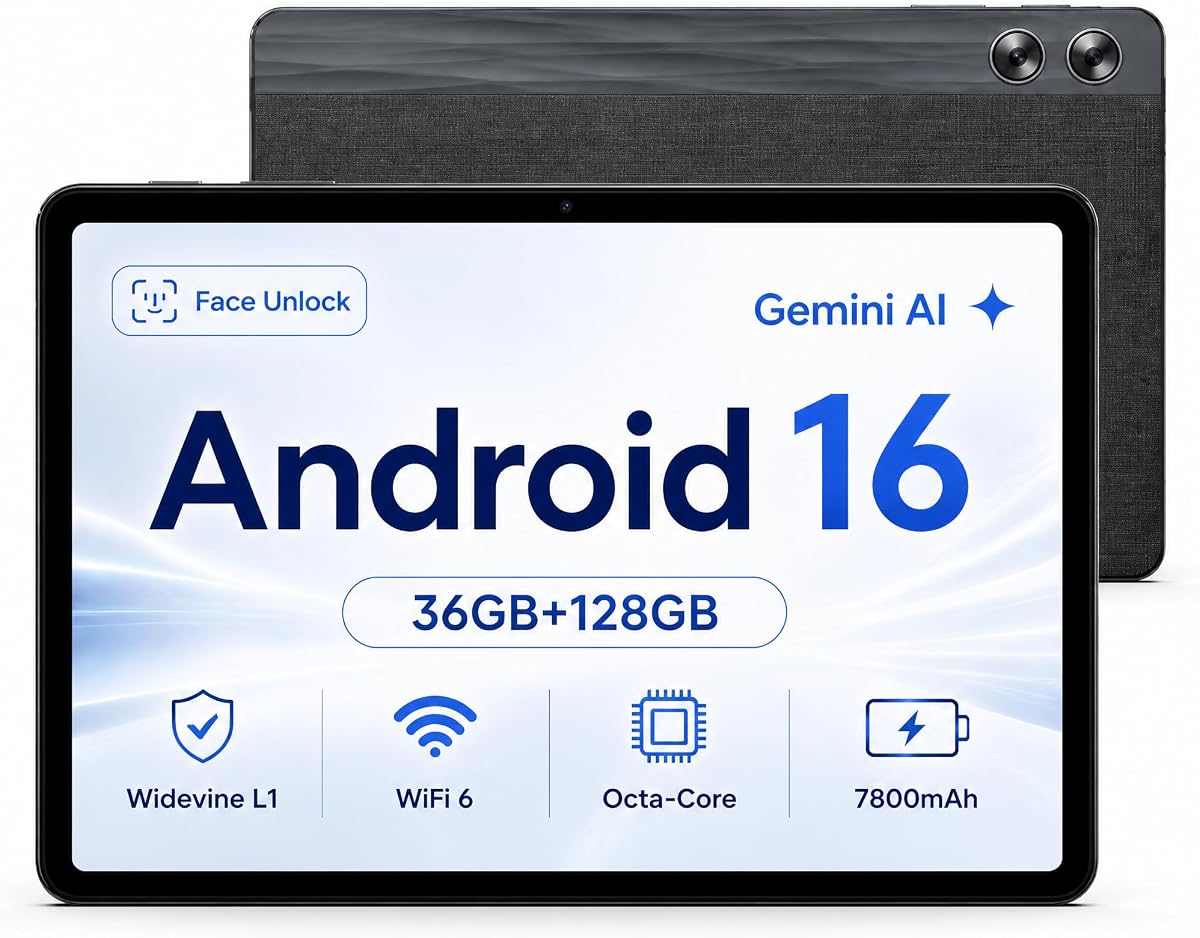
Jeazans X7 Android Tablet
4.8Editor score
36GB RAM for multitasking
128GB expandable internal storage
11-inch HD in-cell display
Discover the best Tablet for Video Editing in 2026 with a detailed comparison of performance, displays, memory, storage, battery, and creator features.
A tablet for video editing should combine a sharp, color-conscious display with enough processing power, memory, and storage to handle timelines, previews, and exports smoothly. It should also offer useful pen support, dependable battery life, and a form factor that remains manageable during long creative sessions.
This guide compares ten Android tablets across display quality, processor capability, RAM, internal storage, expansion options, audio, cameras, battery behavior, and productivity features. The list covers budget-oriented models, performance-focused tablets, premium creator devices, and accessories that can transform a tablet into a more practical editing workstation.
Each pick demonstrates a different approach to mobile video production, from high-capacity models designed for large projects to slimmer tablets emphasizing portability and entertainment. Ratings and specifications reflect the supplied product information, while availability and pricing can change, so readers should confirm current details before purchasing.
4.8Editor score

4.6Editor score

4.7Editor score
The comparison below highlights the major differences among these tablets, including display size, performance memory, storage, battery capacity, and pen or accessory support. It is designed to help editors identify the model that best balances screen quality, multitasking ability, portability, and project storage.




The Jeazans X7 is an Android 16 tablet built around an octa-core processor, 36GB of combined memory, and 128GB of internal storage. Its 4.8 rating is the highest in this guide, and its most compelling editing advantage is the unusually generous memory configuration for a budget-focused model. That combination should help when several applications, browser tabs, and editing timelines need to remain open together.
We may earn a commission when you buy through this link, at no additional cost to you.
The 11-inch HD in-cell display provides a convenient editing canvas, while the Mali-G57 MC1 GPU and Gemini AI support handle routine multimedia work. Storage can be expanded by as much as 1TB through microSD, which is valuable for source footage, rendered clips, and project files. A 7,800mAh battery, Type-C 2.0 connectivity, dual speakers, and front and rear cameras also make the tablet useful beyond the edit itself.
The main limitation is display resolution. A 1280-by-800 panel is less detailed than the 2.5K, 3K, FHD, or AMOLED alternatives here, so fine timeline controls, small text, and detailed color work may require greater attention. The listed camera setup is adequate for calls and supplementary capture, but this is not positioned as a premium mobile filmmaking kit, and no pen is included.
This is a practical recommendation for students, social media editors, and beginners who need substantial memory and storage without moving to a premium tablet. It is especially attractive for Android users who already rely on the Google Play Store and want flexible file handling. For serious color-critical work, choose a sharper display, but for general mobile editing the Jeazans X7 delivers the strongest budget specification mix in this list.
The 36GB RAM configuration gives the X7 room for more simultaneous apps than many entry-level tablets. It is well suited to keeping messaging, cloud storage, reference clips, and a video editor open while working away from a desk.
Internal 128GB storage can be supplemented through microSD expansion of up to 1TB. Editors can therefore keep project media, cached footage, and exported videos in a more flexible arrangement than they could with a fixed-capacity device.
We may earn a commission when you buy through this link, at no additional cost to you.
The Samsung Galaxy Tab A11+ combines an 11-inch display with a refresh rate of up to 90Hz, making it a comfortable general-purpose tablet for editing, reviewing footage, and consuming finished videos. Its 4.6 rating reflects a broadly capable package, while 8GB of RAM and 256GB of storage give users a solid amount of room for Android applications and media.
We may earn a commission when you buy through this link, at no additional cost to you.
Quad speakers powered by Dolby Atmos make the A11+ particularly pleasant for reviewing exports and reference material. The large screen and smooth motion benefit timeline navigation, web-based workflows, and playback. Fast charging and long-lasting battery support are also relevant to editors who work through long commutes, classes, or travel sessions.
Its specifications do not emphasize the advanced pen tools, high-resolution color-oriented displays, or creator software found on the premium Samsung models. The absence of a listed pen means stylus-dependent tasks such as precise masking, frame-by-frame adjustment, and handwritten shot lists require additional equipment. It is also less clearly oriented toward intensive desktop-style editing than a bundled keyboard or folio setup.
Choose the A11+ when you want a capable everyday tablet that handles basic edits, uploads, playback, and multitasking while remaining slim and light. It is a strong match for students and casual editors who value storage, smooth scrolling, and excellent built-in audio. For professional color work or advanced annotation, a Galaxy Tab S-series model is the more focused choice.
The 90Hz refresh rate makes menus, playback, and timeline navigation feel more fluid than a standard 60Hz panel. This is especially noticeable during scrubbing, where smoother visual updates can make shot selection feel more precise.
With 256GB of internal storage, the tablet can hold a meaningful media library without immediate expansion. Quad Dolby Atmos speakers add value for creators who regularly review videos, although external headphones or a monitor may still be preferable for final grading.
We may earn a commission when you buy through this link, at no additional cost to you.
The TABWEE T90 is a complete Android 16 tablet package with a keyboard, mouse, and stylus, making it one of the most approachable options for mobile editing. It carries a 4.2 rating and pairs a Unisoc T615 octa-core processor with 24GB of combined memory, where 8GB is physical and 16GB is virtual expansion.
We may earn a commission when you buy through this link, at no additional cost to you.
Its 11-inch FHD IPS display has a 1920-by-1200 resolution, an 84.9% screen-to-body ratio, and Widevine L1 support. These characteristics provide a clear workspace for video previews, browser-based tools, and document work. The supplied accessories improve precision editing and text entry, while TF card expansion of up to 2TB creates ample room for source files.
The 8,000mAh battery is claimed to support up to 11 hours of video playback, which should suit travel and long editing blocks. However, the octa-core T615 is described primarily for reliable everyday performance, and the product's 4.2 rating is the lowest among the tablets here. Virtual memory also should not be confused with equivalent physical RAM, so demanding 4K workflows may still benefit from a stronger premium processor.
This tablet is best for beginners who want a complete mobile workstation without sourcing a stylus, keyboard, and mouse separately. The bundle makes it especially convenient for students, travelers, and users who alternate between editing, email, notes, and online classes. Creators working consistently with intensive timelines may prefer the stronger hardware and advanced display of a higher-tier device.
The included keyboard, mouse, and stylus immediately make the T90 more practical for timeline work, text entry, and precise adjustments. This complete package reduces the friction of setting up a first mobile editing station.
A 128GB base capacity plus TF expansion of up to 2TB gives the T90 considerable flexibility for footage and project files. Its large battery and stated 11-hour video playback target also align well with mobile editing away from an outlet.
We may earn a commission when you buy through this link, at no additional cost to you.
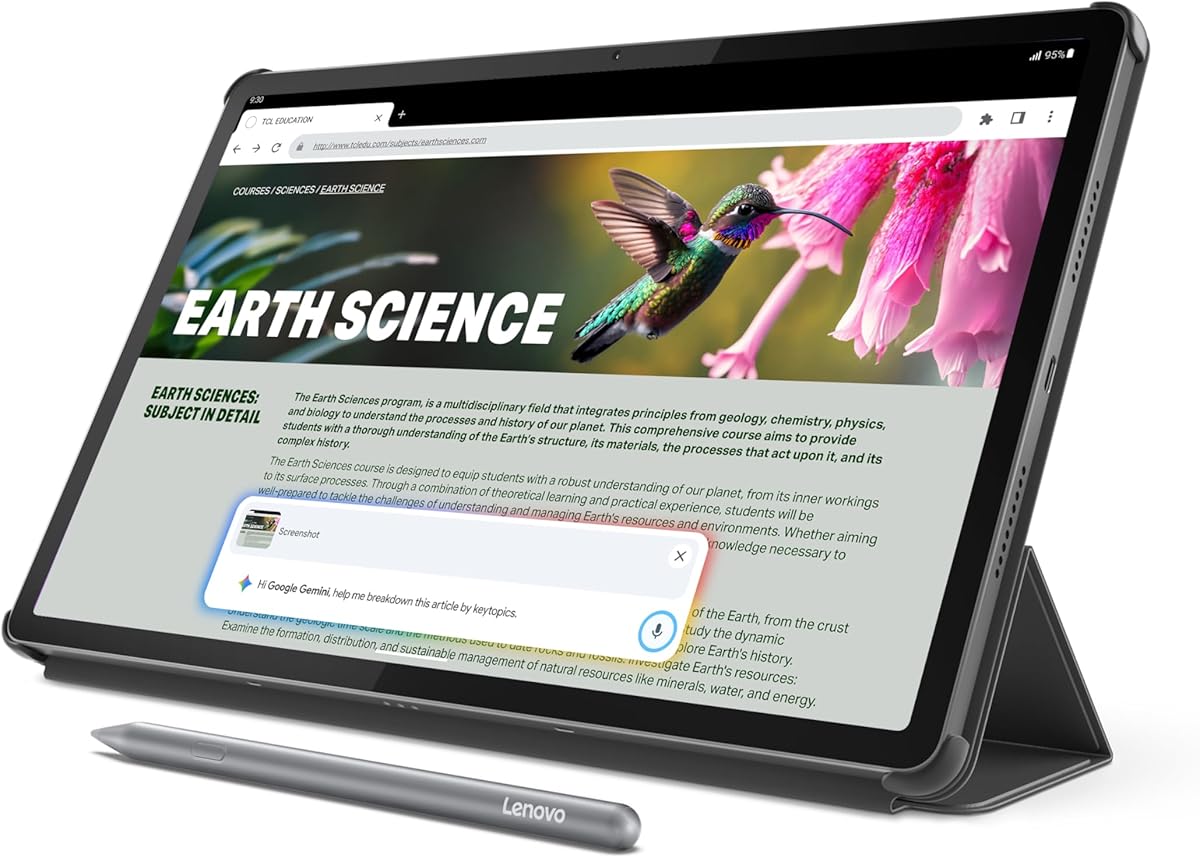
The Lenovo Idea Tab stands out through its 11-inch 2.5K IPS touchscreen, 90Hz refresh rate, and included Tab Pen. Its 4.3 rating places it in the middle of the group, yet the combination of a detailed display and precise input is highly relevant to video editing, especially for masking, trimming, drawing, and navigating timelines.
We may earn a commission when you buy through this link, at no additional cost to you.
The MediaTek Dimensity 6300 processor and Arm Mali-G57 MC2 graphics support multitasking and general media work. AI-enhanced features, Circle to Search, Smart Connect, and four learning applications make it particularly student-oriented. Quad Dolby Atmos-tuned speakers support reference playback, while low-blue-light hardware is designed for longer study and editing sessions.
Only 4GB of memory is the most significant constraint for intensive editing. A larger amount would help when keeping a timeline, messaging apps, browser references, and cloud storage open simultaneously. The 128GB internal storage is also modest, and no microSD expansion is listed in the supplied information, so project management becomes important as footage accumulates.
Choose this Lenovo when you value screen resolution, smooth interaction, and an included pen more than maximum memory. It is a convincing option for students learning editing or creators working on short-form projects that do not require constant desktop-level multitasking. For large libraries or complex timelines, prioritize a model with more RAM and storage or verify expansion support before purchase.
The 2.5K panel offers more visible detail than standard HD tablets, while 90Hz refresh helps scrolling and timeline interaction feel fluid. The result is a productive balance for editing and reviewing content.
The included Tab Pen and folio case create a ready-to-use creative setup. Circle to Search can also turn visible content into a quick research action without manually switching applications.
We may earn a commission when you buy through this link, at no additional cost to you.
The Samsung Galaxy Tab S10+ is the premium selection here, pairing a 12.4-inch display, 512GB of storage, and Galaxy AI creative features. Its 4.7 rating is among the strongest in the guide, and the large screen gives editors more room to arrange timelines, inspector controls, media bins, and reference clips simultaneously.
We may earn a commission when you buy through this link, at no additional cost to you.
Galaxy AI adds practical creative utilities rather than serving only as a productivity slogan. Sketch to Image can turn simple drawings into visual assets, Circle to Search provides quick contextual lookup, and Note Assist can organize and summarize recorded lectures or meeting notes. These tools can support pre-production, shot planning, client feedback, and supplemental graphics without requiring a separate workflow for every task.
The supplied information confirms a powerful tablet processor but does not provide a specific chipset name, RAM capacity, battery figure, charging rate, or exact display resolution. That makes a detailed performance comparison impossible, and buyers should verify those details for demanding 4K, multicam, or complex effects work. The 512GB storage, however, minimizes the need to keep large project folders on external media.
This is the recommendation for a creator who wants a large, polished mobile editing environment and can justify a premium purchase. It is better suited than budget models to professional color work, high-resolution media, and clients who need immediate access to a broad creative toolkit. For a smaller premium option, the Galaxy Tab S11 offers a more compact 11-inch AMOLED format with 12GB of RAM.
The 12.4-inch display provides a generous canvas for timeline playback, visual references, and AI-assisted concept work. Its size is especially helpful when an editor needs to move between footage, notes, and generated visual ideas without constantly hiding panels.
With 512GB of built-in storage, the Tab S10+ can hold substantial libraries of source clips, proxies, audio, and exports. That capacity reduces the pressure to delete intermediate media while a larger project is active.
We may earn a commission when you buy through this link, at no additional cost to you.
The Lenovo Idea Tab Pro combines a 12.7-inch 3K LCD with the MediaTek Dimensity 8300, creating a compelling specification combination for mobile creators. Its 4.6 rating reflects a strong overall balance, while 8GB of memory and 128GB of storage provide a more serious multitasking baseline than the 4GB Lenovo Idea Tab.
We may earn a commission when you buy through this link, at no additional cost to you.
A 360Hz touch sampling rate and support for up to 90fps make the tablet responsive in interactive applications, while Wi-Fi 6E supports fast transfers when the editor needs to move project files across a network. The included Tab Pen Plus and folio add precision and protection. Quad JBL Dolby Atmos speakers also make it useful for reviewing media and collaborating with clients.
The 45W charging system and stated 11 hours of unplugged video streaming are useful for mobile work, although a 3K display on a 12.7-inch panel can consume more power than a lower-resolution screen. Storage remains the main limitation at 128GB, and no card expansion is confirmed in the supplied details. The large proportions may also be awkward for users editing while standing or traveling in confined spaces.
Choose the Idea Tab Pro for users who prioritize a very sharp display, capable processor, and strong wireless standard without moving directly to a premium flagship tablet. It is particularly good for students, educators, and mobile editors who need precise pen input and a large reference display. Color-critical professionals should also verify color performance because resolution alone does not determine calibration quality.
The Dimensity 8300 gives the Idea Tab Pro a stronger foundation for multitasking and editing applications than many similarly positioned tablets. Wi-Fi 6E further supports the transfer of large media files when suitable network infrastructure is available.
The 3K LCD offers fine detail for timelines, menus, and reference images. Combined with the Tab Pen Plus and a 360Hz touch sampling rate, it creates a responsive environment for precision adjustments and markup.
We may earn a commission when you buy through this link, at no additional cost to you.
The URAO 14-inch Tablet prioritizes workspace size, storage, and an included accessory bundle. Its 4.1 rating is the lowest among the ten products, but the hardware configuration is interesting for editors who want a large canvas: 30GB of combined memory, 256GB of internal storage, and expansion through a TF card.
We may earn a commission when you buy through this link, at no additional cost to you.
The 1920-by-1200 IPS display and 14-inch proportions create ample room for timeline navigation, scripting, note review, and media organization. A keyboard, stylus, foldable case, and headphones are included, while Gemini AI adds voice control, translation, and summarization features. Compatibility with a mouse and USB accessories further supports a laptop-like working arrangement.
A 10,000mAh battery and 30W fast charging provide strong capacity for extended sessions, with the supplied information claiming up to 12 hours of mixed use. Nevertheless, the 2.0GHz octa-core processor is not described with the same advanced positioning as the Dimensity 8300 option, and memory includes 24GB of virtual expansion beyond 6GB of physical RAM. The tablet also lacks GPS and cannot directly share accounts with iOS.
This model makes sense for users who want a large, self-contained mobile workstation and value included accessories more than premium processing power. It may be especially useful for students, scriptwriters, and editors building a keyboard-driven setup around a large display. For intensive color grading or performance-heavy 4K editing, the more powerful premium models are a safer recommendation.
The 14-inch panel leaves space for footage previews, notes, and editing controls at the same time. It can function as a larger desktop-style display when a keyboard and mouse are connected.
The 10,000mAh battery and 30W charging system are designed for extended mobile use. Fast recharging is particularly useful for editors who need to move quickly between commutes, meetings, and location shoots.
We may earn a commission when you buy through this link, at no additional cost to you.
The Samsung Galaxy Tab S11 delivers one of the most balanced creator-oriented packages in the guide. It pairs an 11-inch Dynamic AMOLED 2X display with 12GB of RAM, 512GB of storage, an included Galaxy Tab S Pen, and Galaxy AI tools. Its 4.6 rating supports its position as a strong all-around recommendation for professional mobile editing.
We may earn a commission when you buy through this link, at no additional cost to you.
The Dynamic AMOLED 2X panel is designed to provide clear text and rich colors during long sessions, making it well suited to timeline work, visual references, and final playback. Twelve gigabytes of RAM helps the tablet open and switch among editing, communication, and reference applications more smoothly, while 512GB provides ample room for high-volume media libraries.
Note Assist can tidy ideas captured with pen-on-paper precision, and Drawing Assist can transform rough sketches into shareable mock-ups or storyboards. These features extend the tablet beyond timeline editing into pre-production and client presentation. IP68 protection also adds confidence when the device travels between a home, office, and outdoor shooting location.
Choose the S11 for creators who want a balanced 11-inch screen, strong multitasking memory, plentiful storage, and an included pen. It is especially suitable for a mobile workflow involving scripting, storyboarding, rough cuts, feedback, and exports rather than one narrow task. Buyers should confirm current battery and processor details if their editing software has unusually demanding requirements.
Drawing Assist and Note Assist give editors useful ways to transform handwritten concepts and sketches. These features can shorten the path from a rough idea to a visual reference that a client or collaborator can review.
The 12GB of RAM is well suited to keeping several Android applications responsive at once. Combined with 512GB of storage and microSD support, it offers both processing headroom and flexible capacity for footage, music, and exports.
We may earn a commission when you buy through this link, at no additional cost to you.
The Galaxy Tab S10 FE+ 128GB combines a large 13.1-inch display with S Pen tools, water resistance, and a powerful processor. Its 4.7 rating is tied for the highest featured rating, making it an attractive option for editors who want a generous visual workspace and Samsung's pen-oriented features.
We may earn a commission when you buy through this link, at no additional cost to you.
Handwriting Assist can straighten, align, and adjust handwritten notes, while Math Solver converts written equations into text. Circle to Search provides a quick way to research visible content, and the S Pen supports natural markup and drawing. These tools are useful for shot lists, client notes, rough storyboards, and annotating footage during review.
The 128GB capacity is the main difference from the 256GB version in this guide. While it should hold a reasonable working library, large source-footage collections may require more deliberate file management. The product information also mentions microSD expansion, giving buyers a way to add flexible offline storage. Exact display resolution and battery figures are not provided, so demanding users should verify them.
This version is a sensible choice for users who prefer the 13.1-inch form factor and pen workflow but do not need the maximum internal capacity. It works well for students, educators, social media creators, and reviewers who annotate material and work across several applications. Choose the 256GB model instead when project files, caches, and exports need more room.
Handwriting Assist and Math Solver make the S Pen useful beyond doodling. Editors can capture organized notes, equations, and markup without abandoning the tablet for separate stationery.
Water resistance reduces concern when the tablet is used around a pool, in a workshop, or during a busy shoot. Super Fast Charging and a large screen also complement a portable production setup.
We may earn a commission when you buy through this link, at no additional cost to you.
The 256GB Galaxy Tab S10 FE+ is the high-capacity version of the 13.1-inch tablet and is well aligned with demanding editing workflows. Its 4.7 rating, larger storage allowance, water-resistant design, and S Pen features make it a natural choice for editors who want a capable media library without immediately moving into the flagship Galaxy Tab S range.
We may earn a commission when you buy through this link, at no additional cost to you.
A 13.1-inch display provides a generous timeline, preview, and inspector workspace, while the included pen ecosystem supports handwritten feedback, shot planning, and visual markup. Handwriting Assist can clean up notes, Math Solver can turn written equations into text, and Circle to Search can identify visible content for quick research.
The main advantage over the 128GB version is 256GB of internal storage. That additional room can hold larger collections of source footage, project files, audio, and completed edits while reducing the need to offload media between sessions. MicroSD support adds further flexibility, although the exact expansion behavior should be confirmed for individual file formats and workflows.
Choose this model for users who routinely carry more media than a typical compact tablet can comfortably hold. It is a strong option for mobile filmmakers, educators, and students who annotate and review content while traveling. Those wanting the very highest-level processing and display specifications may still prefer the Galaxy Tab S10+ or Galaxy Tab S11.
The 256GB capacity is valuable when an editor wants source clips, proxies, audio, and exports available at the same time. It is especially practical for mobile crews that may not always have immediate access to external storage.
The 13.1-inch screen provides ample room for playback and timeline navigation, while the S Pen adds capabilities that a touch-only tablet cannot match as naturally. Together, they support both fast editing and deliberate review.
We may earn a commission when you buy through this link, at no additional cost to you.
Choosing a tablet for video editing means balancing screen quality, processing resources, memory, storage, input methods, and battery life. The most suitable model depends on whether you edit short social posts, long-form 4K projects, or primarily use a tablet for review and collaboration.
Display resolution determines how much timeline detail, menu text, and footage you can inspect at once. The 1920-by-1200 FHD panel of the TABWEE T90 offers a conventional editing canvas, while the Lenovo Idea Tab's 2.5K screen and Idea Tab Pro's 3K LCD provide finer detail. The Galaxy Tab S11 uses an 11-inch Dynamic AMOLED 2X display, and the Galaxy Tab S10+ has a larger 12.4-inch panel. Larger screens are helpful for separating media bins, previews, and controls, but they are generally less convenient to hold during travel.
The processor and GPU affect application launching, playback, effects rendering, and export times. The Lenovo Idea Tab Pro's MediaTek Dimensity 8300 is the most specifically positioned high-performance chipset among the listed products, while the Idea Tab uses a Dimensity 6300. The Jeazans X7, TABWEE T90, and URAO tablet use octa-core processors, and the Samsung Galaxy Tab S10+ is described only as having a powerful tablet processor. For complex 4K, multicamera, or effects-heavy work, verify the software requirements of your preferred editor before choosing based on marketing language alone.
RAM helps keep a timeline, file browser, messaging app, reference browser, and cloud storage responsive at the same time. The Jeazans X7 leads the supplied configurations with 36GB of combined memory, while the URAO tablet has 30GB and the TABWEE T90 has 24GB. Some of these totals include virtual memory, so physical RAM remains an important distinction. The Galaxy Tab S11 provides 12GB, a strong amount for creator multitasking, while the 4GB Lenovo Idea Tab is better suited to lighter editing workloads.
Video files consume considerably more space than ordinary documents, so storage should be chosen according to the length and resolution of your projects. The Galaxy Tab S10+, Galaxy Tab S11, and 256GB Galaxy Tab S10 FE+ offer the largest supplied internal capacities. The Jeazans X7, TABWEE T90, and URAO tablet also support memory-card expansion, with stated limits ranging from 1TB to 2TB. The Galaxy Tab S11 supports microSD, and the Tab S10 FE+ model also mentions card expansion. Always confirm card format, maximum capacity, and whether the editing application can directly access expanded storage.
Touch controls are essential, but a pen can improve frame selection, masking, title placement, and feedback annotation. The Galaxy Tab S11 includes the Galaxy Tab S Pen, the Lenovo Idea Tab and Idea Tab Pro include Tab Pen accessories, and the Tab S10 FE+ supports S Pen workflows. The TABWEE T90 and URAO tablet include a stylus, and the latter also includes a keyboard, mouse, case, and headphones. A physical keyboard becomes valuable for clip naming, metadata entry, shortcuts, and long-form writing, although Android tablet software and keyboard support can vary.
Long editing sessions place a major demand on battery capacity, while high-resolution displays and heavy processor use can increase consumption. The URAO tablet has the largest listed battery at 10,000mAh with 30W charging, while the Jeazans X7 offers 7,800mAh and the TABWEE T90 uses 8,000mAh. The Lenovo Idea Tab Pro lists 45W quick charging and up to 11 hours of video streaming, while the Galaxy Tab S10 FE+ supports Super Fast Charging. Runtime claims are useful for comparison, but real editing demands vary with brightness, wireless activity, codecs, and battery condition.
Video editors need a panel that makes framing, skin tones, contrast, and exposure visible, but specifications cannot reveal calibration quality. AMOLED and high-resolution LCD screens can look excellent, yet hands-on assessment or reliable professional documentation is still valuable. For playback and client review, the Galaxy Tab A11+, Lenovo Idea Tab, Idea Tab Pro, and URAO tablet offer quad-speaker configurations, several with Dolby Atmos. External headphones or a calibrated monitor remain useful when judging the final color and sound mix.
A tablet used on location must be easier to carry than a laptop while still being robust enough for commuting and frequent handling. The 11-inch models offer a more compact balance, whereas the 12.7-inch Idea Tab Pro, 12.4-inch Galaxy Tab S10+, and 14-inch URAO tablet emphasize workspace size. The Galaxy Tab S11 and Galaxy Tab S10 FE+ offer IP68 or water-resistant protection according to their supplied descriptions, which is reassuring in environments where spills or dust are likely. Accessories, weight, and supported working orientations also influence practical portability.
Begin by installing the editing application and version that best matches your project format, then copy or import only the media needed for the current task. Creating separate project, cache, audio, and export folders makes organization easier. If a memory card is used, verify that the application can access its files directly, and avoid removing the card while a project still references its media.
Set display brightness and color mode consistently before judging footage, and use trusted headphones or a calibrated reference display for final color and audio decisions. Save projects frequently, keep multiple backup copies, and avoid editing directly from the only copy of original footage. For stylus workflows, use a compatible tip and avoid pressing hard enough to cause unintended marks or screen damage.
Care for the tablet by keeping the charging port clean, using a compatible power adapter, and avoiding prolonged exposure to heat, moisture, or extreme cold. Update the operating system and editing software regularly, but complete an active project backup before major system changes. Protective cases, screen covers, and water-resistant models are useful for travel, while cleaning the display with a soft lint-free cloth helps maintain a clear editing view.
The best 4K tablet depends on your editing software, codec, effects, and export resolution. A powerful chipset, at least 8GB of physical RAM, a high-resolution display, and ample storage are sensible starting points, while premium models such as the Galaxy Tab S10+ and Galaxy Tab S11 provide stronger creator-oriented specifications. Reviewers should also check whether a device supports the specific 4K format and frame rates used in their footage.
A tablet is often better for quick reviews, social media edits, location work, and lightweight mobile production. A laptop is generally stronger for long timelines, complex effects, extensive plugin use, keyboard-driven shortcuts, and final exports. Some editors use both, treating the tablet as a portable review and capture device while keeping the primary edit on a workstation.
At least 8GB of physical RAM is a practical starting point for moderate Android editing, especially when several apps remain open. More memory helps with 4K footage, layered timelines, large preview caches, and multitasking. Be cautious with listings that combine physical and virtual memory, because virtual expansion is not equivalent to additional physical RAM.
A stylus is not essential for basic timeline edits, but it can make precision tasks more comfortable. It helps with detailed masking, object selection, title placement, trimming, frame comparison, and handwritten feedback. The Galaxy Tab S11, Lenovo Idea Tab, Lenovo Idea Tab Pro, and Galaxy Tab S10 FE+ family are especially relevant because their listed accessories or workflows provide pen support.
Required storage depends on source resolution, codec, duration, proxy use, and how many project versions you retain. A 128GB tablet can work for shorter projects, while 256GB or 512GB provides more room for large footage libraries and multiple exports. Memory-card expansion is useful, but not every editing application accesses expanded storage as seamlessly as internal files.
They can be used for editing and monitoring, but the most accurate grading requires a display with dependable color performance and suitable calibration. Resolution alone does not guarantee accuracy, and ambient lighting can change how footage appears. For final delivery, compare the tablet view with a trusted reference monitor and avoid making critical decisions solely from a highly saturated or dim screen.
A larger screen provides more room for the preview, timeline, inspector, and media bin, which can reduce panel switching. However, it also makes the device heavier and less convenient for travel. An 11-inch tablet is a common compromise, while the 12.4-inch Galaxy Tab S10+, 12.7-inch Lenovo Idea Tab Pro, and 14-inch URAO tablet are better suited to stationary or desk-based use.
A keyboard is helpful for entering filenames, editing metadata, using shortcuts, and managing longer project structures. It also encourages a more desktop-like workflow, although some Android editing apps rely on gestures and may not expose identical shortcut support to desktop software. The TABWEE T90 and URAO tablet include keyboards, while other buyers should verify Android keyboard support with their preferred editor before purchasing one.
The Jeazans X7 is the strongest budget-oriented choice, combining 36GB of combined memory, 128GB expandable storage, and a long-useful battery configuration. The Samsung Galaxy Tab S11 takes the editor's choice for a balanced creator package with an AMOLED 2X display, 12GB of RAM, 512GB of storage, pen support, and Galaxy AI. For a premium large-screen experience, the Galaxy Tab S10+ pairs a 12.4-inch display with 512GB of storage and advanced creative features.
The rest of the guide covers important alternatives. The Lenovo Idea Tab and Idea Tab Pro suit buyers who prioritize high-resolution screens and pen input, while the Galaxy Tab A11+ balances a smooth 90Hz display, generous storage, and strong audio. The TABWEE T90 and URAO tablet appeal to users who want complete accessory bundles, and the two Galaxy Tab S10 FE+ configurations provide large-screen S Pen workflows at different storage levels.
Before purchasing, verify the processor, physical RAM, supported editing formats, stylus compatibility, memory-card behavior, and current display specifications for the software and footage you use. Current prices and availability can change, and accessories or bundles may also vary. Checking those details at the time of purchase will help ensure the chosen tablet remains practical for your specific editing workflow.