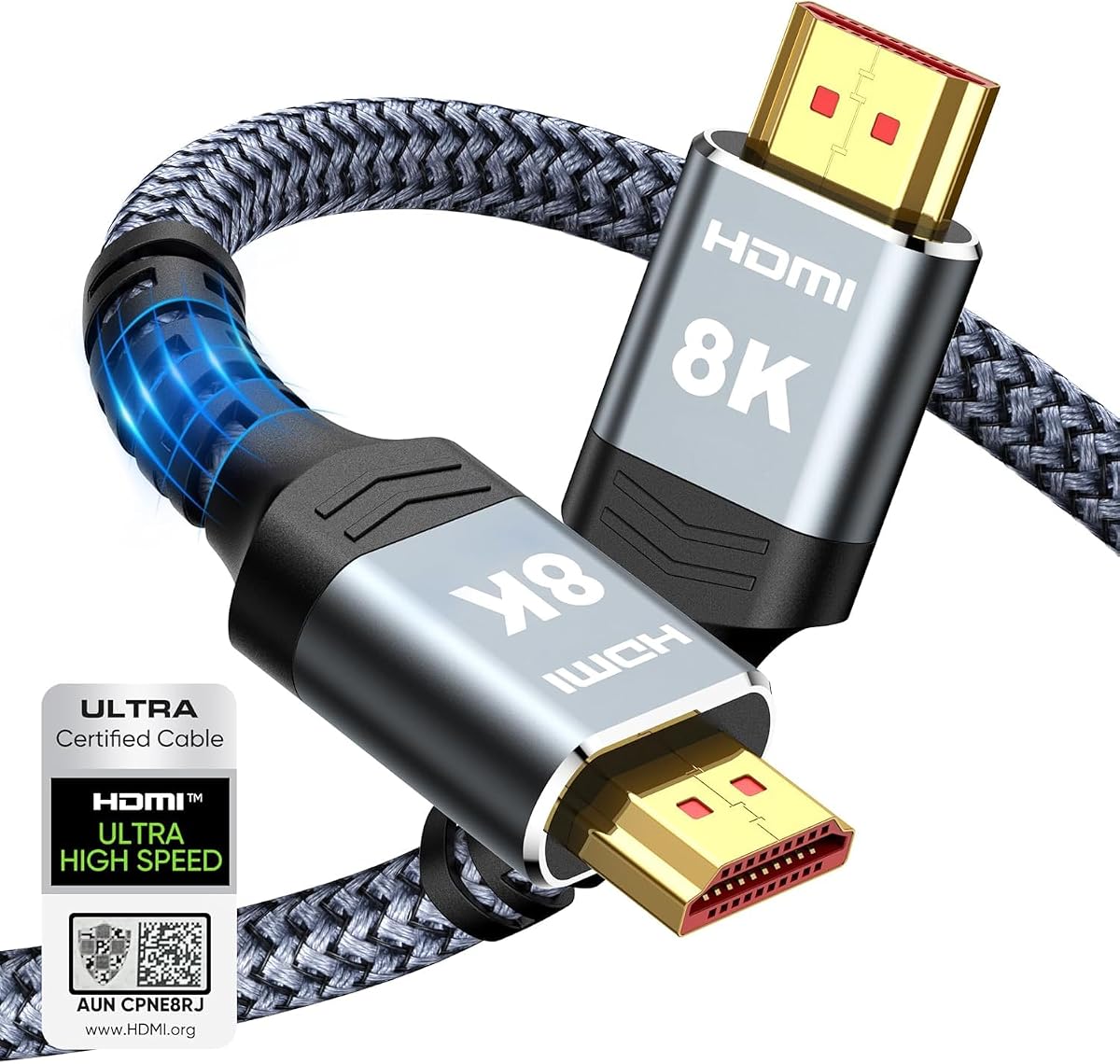
Highwings 10FT 8K HDMI 2.1 Cable
4.7Editor score
48Gbps Ultra High Speed
8K at 60Hz support
Reinforced nylon construction
Our HDMI Cable for Oculus Rift guide compares ten high-speed options for length, bandwidth, durability, compatibility, and everyday VR setups.
Choosing an HDMI cable for an Oculus Rift setup requires more than matching a connector size. Cable length, signal bandwidth, build quality, connector reinforcement, and the way the headset is actually connected all influence the result, especially when an adapter or converter is involved.
We compared ten HDMI 2.1 and 2.2 cables using the specifications and product information available for each model. The list covers short desk-length options, reinforced 6.6-foot cables, longer 10- and 15-foot choices, and models emphasizing gaming features, certification, or enhanced durability.
Each pick highlights a different balance of practical characteristics, from bandwidth and refresh-rate support to braiding and strain relief. Product availability and prices change over time, so readers should verify the current listing, exact dimensions, and connection requirements before purchasing.
4.7Editor score
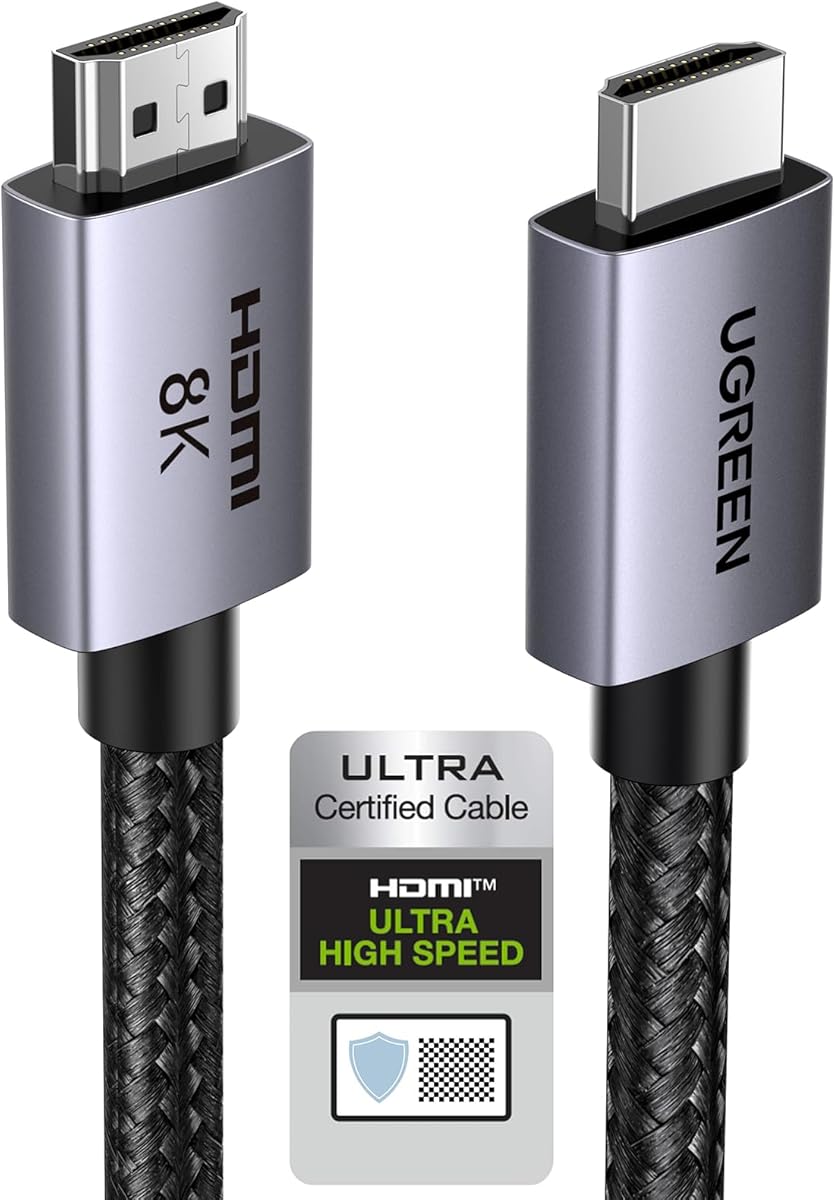
4.8Editor score

4.9Editor score
This side-by-side comparison organizes the ten cables by length, headline bandwidth, supported display modes, construction, and the practical benefits that matter when planning an Oculus VR connection or a broader high-resolution home-theater setup.


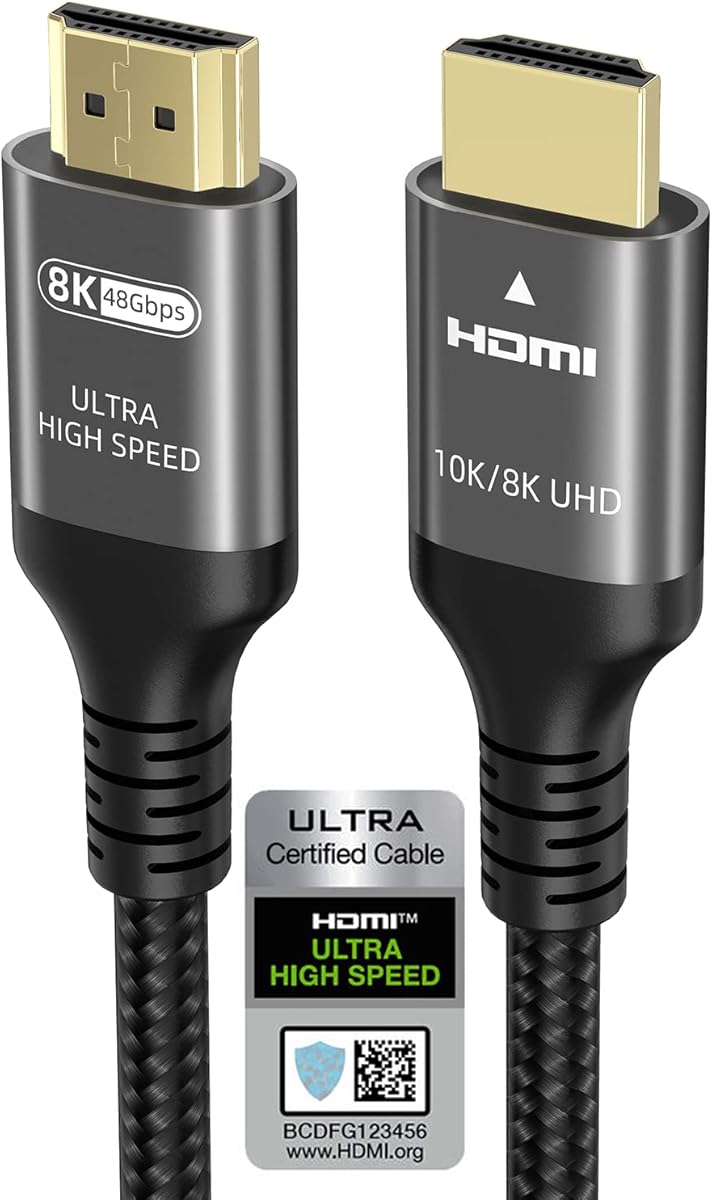


The Highwings 8K@60 HDMI Cable 10FT/3M combines a 48Gbps Ultra High Speed design with a useful 10-foot length. Its 4.7 rating reflects a well-liked balance of high-bandwidth specifications and physical construction, making it a practical option for VR desks where a little routing flexibility can make cable management less awkward.
We may earn a commission when you buy through this link, at no additional cost to you.
The cable supports 8K at 60Hz and 4K at 120Hz, with variable refresh rate listed among its gaming-oriented capabilities. Backward compatibility extends to HDMI 2.0b, 2.0a, 1.4, 1.3, 1.2, and 1.1. The stated military-grade tensile nylon construction and upgraded anti-bending tail are especially relevant for a frequently connected headset or a permanently installed home-theater connection.
Its main compromise is size. A 10-foot cable is useful when the headset, computer, converter, or display is not immediately beside the desk, but it can create excess slack in a compact setup. The single-cable package also offers less redundancy than a two-pack. Neither issue reduces the cable's stated bandwidth, yet both matter when the goal is an organized installation.
This is a sensible pick for readers who prioritize a certified high-speed cable, useful reach, and durable strain relief at a modest price. It may also complement other equipment in the same room, such as a television, projector, or gaming monitor. Confirm that the Oculus Rift connection path accepts HDMI before ordering, because the cable itself does not solve every headset-to-signal conversion issue.
Ten feet provides enough distance to route around a desk edge, monitor stand, or wall-mounted accessory without immediately resorting to an extension. That makes the cable less likely to be pulled sharply at either connector during daily headset use.
Variable refresh rate, 4K at 120Hz, and 8K at 60Hz make this more than a basic video cable. Broad backward compatibility also helps when the cable will serve older displays alongside newer high-resolution equipment.
We may earn a commission when you buy through this link, at no additional cost to you.
Silkland's certified HDMI 2.1 cable delivers 48Gbps bandwidth in a 6.6-foot braided format and holds a 4.7 rating. It is designed for users who want a compact, desktop-friendly cable with an extensive specification set rather than a basic model limited to conventional 4K output.
We may earn a commission when you buy through this link, at no additional cost to you.
The product information lists 4K at 120Hz and 144Hz, 5K at 90Hz and 120Hz, 8K at 60Hz, and 10K output. Dynamic HDR, eARC, HDCP 2.2 and 2.3, and audio support including DTS:X and Dolby Atmos round out its entertainment credentials. A QR-code scanner can be used to check the cable's HDMI 2.1 certification, adding a useful verification step for buyers concerned about marketplace claims.
Silkland describes its E-Braid construction as a combination of double-layer fishnet winding and nylon braiding. Copper cores, ferrite magnetic beads, and the reinforced exterior are intended to support stable transmission and reduce interference. The potentially less obvious trade-off is that some listed advanced modes depend on the source, display, adapter, application, or game rather than the cable alone.
The 6.6-foot length is especially suitable for an Oculus-related desk arrangement when the computer and converter are nearby. It can also handle a television, projector, soundbar, or gaming monitor in a second setup. This cable is a strong all-rounder for buyers who prioritize certification, construction, and broad format support in a manageable length.
The supplied QR-code verification method is a meaningful advantage in a category where terminology can be confusing. Checking certification after delivery can provide greater confidence that the cable matches its advertised Ultra High Speed specification.
High refresh-rate modes, variable refresh rate, Dynamic HDR, HDCP support, and enhanced audio return functions allow the cable to serve a mixed gaming and entertainment installation instead of specializing in only one display category.
We may earn a commission when you buy through this link, at no additional cost to you.
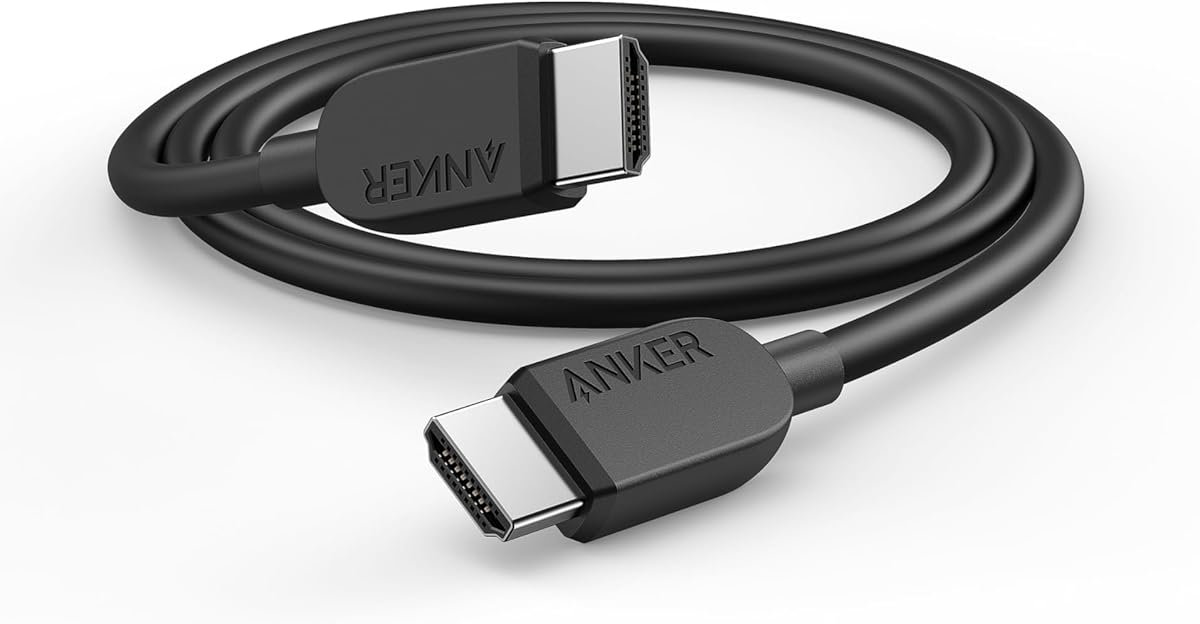
The Anker HDMI 2.1 Cable combines a six-foot length, 48Gbps bandwidth, and a stated 4K at 240Hz capability. Its 4.7 rating places it among the strongest-reviewed options in this guide, while the included 18-month warranty and welcome guide make it a straightforward choice for buyers who value a supported purchase.
We may earn a commission when you buy through this link, at no additional cost to you.
The specification sheet supports 8K at 60Hz, 4K at 120Hz, and 4K at 60Hz. Its up-to-48Gbps transfer capability is designed for stable, high-resolution video and audio. Anker also states that the cable can withstand up to 1,000 bends, which addresses a practical concern for a lead that may be handled, routed, or plugged in frequently.
The principal limitation is its six-foot length. That is ample for a neatly arranged computer-and-headset station, but it may be tight when the computer sits under a desk, the display is mounted, or the cable must pass along a wall. As with every cable in this roundup, supported display modes still depend on the connected source, destination, and conversion hardware.
Anker is a strong recommendation for a compact, frequently used installation. It offers a concise feature set, broad compatibility with tablets, laptops, projectors, and desktop screens, and a durability figure that makes sense for daily handling. Buyers should confirm that the headset and computer setup can use an HDMI intermediary before completing the order.
Six feet is long enough for many desk layouts without creating a large coil of unused cable. The shorter lead may also be easier to route behind a monitor, making strain at the connectors less likely.
A stated 1,000-bend capability focuses on realistic longevity rather than headline resolution alone. That balance can matter more in a daily headset setup than support for a display mode the computer or monitor cannot actually produce.
We may earn a commission when you buy through this link, at no additional cost to you.
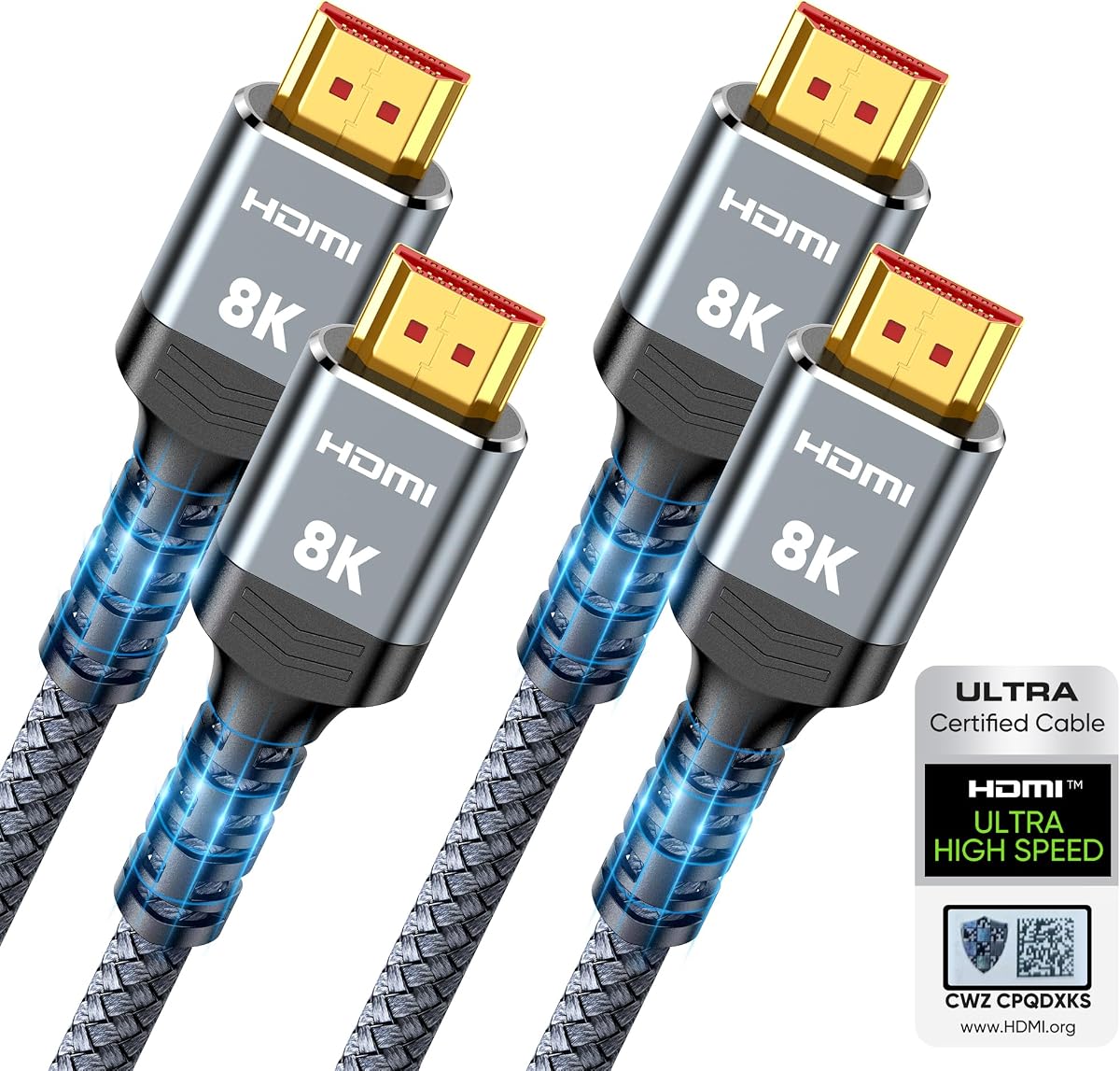
The Highwings 8K HDMI 2.1 Cable 2-Pack provides two 6.6-foot cables, each with a 48Gbps Ultra High Speed specification. Its 4.7 rating and two-cable format make it particularly useful for buyers who want one connection for an Oculus-related setup and another for a television, monitor, or projector.
We may earn a commission when you buy through this link, at no additional cost to you.
Both cables are described as certified HDMI 2.1 products supporting 8K at 60Hz, 4K at 120Hz and 240Hz, and 10K output. Variable refresh rate is included among the gaming features. The product information specifically notes a bandwidth increase from 18Gbps to 48Gbps, presenting the cable as a higher-bandwidth option for compatible modern devices.
Physical design is another strength. Upgraded aluminum alloy shells, anti-bending connector tails, and military-grade tensile nylon materials are intended to withstand regular handling. The trade-off is simply redundancy: a shopper with only one connection point may not need two cables, while the 6.6-foot length may be restrictive for a more spread-out installation.
This two-pack is best for practical buyers who value flexibility between locations or want a spare ready to deploy. It can support a mixed desktop and living-room arrangement without purchasing unrelated cables of different lengths. It remains important to check the headset's connection requirements because the cable does not independently determine which video standards a VR setup can use.
Keeping a second matching cable is helpful when a connector is being used frequently or when the headset and a separate display require simultaneous connections. It also provides an immediate replacement if a cable is damaged or routed incorrectly.
Support for variable refresh rate, 4K at 120Hz and 240Hz, and 8K at 60Hz makes each cable versatile across modern display equipment, provided the source and screen support the selected mode.
We may earn a commission when you buy through this link, at no additional cost to you.
UGREEN's 8K HDMI 2.1 Cable stands out with a 4.8 rating, a certified 48Gbps specification, and a broad list of supported functions. At 6.6 feet, it is long enough for most compact setups without becoming cumbersome, and its stated compatibility covers common gaming devices, computers, displays, projectors, and streaming hardware.
We may earn a commission when you buy through this link, at no additional cost to you.
The cable supports 10K and 8K at 60Hz, plus 4K at 240Hz. Variable refresh rate, Quick Frame Transport, auto low-latency mode, and quick media switching are listed as gaming and source-switching benefits. Dynamic HDR, eARC, HDCP 2.2 and 2.3, Ethernet, and 3D support extend its relevance beyond a single device category.
Construction combines an aluminum alloy case, nickel-plated connectors, and a nylon braided jacket. Those materials are intended to withstand repeated bending without sacrificing flexibility. As with every cable here, the 4K at 240Hz headline should be understood as a maximum cable capability rather than an automatic mode; every device in the signal chain must support it.
UGREEN is an excellent general recommendation for a desk setup because it balances certification, advanced gaming features, audio support, and broad compatibility. It can also be used with a TV, monitor, projector, soundbar, or AV receiver. Buyers seeking an Oculus Rift connection should still verify that an HDMI adapter or conversion route is compatible with the specific headset and computer.
The extensive device list makes this a useful shared cable for a desktop, living room, or media cabinet. It reduces the need to maintain several incompatible lead types when equipment changes over time.
Variable refresh rate, Quick Frame Transport, and auto low-latency mode target modern gaming use. Their actual effect depends on the graphics source, display, game, and any conversion hardware connected through the cable.
We may earn a commission when you buy through this link, at no additional cost to you.
The Acer HDMI 2.1 Cable 6.6FT offers 48Gbps bandwidth, 8K at 60Hz, and support across multiple 4K refresh rates. Its 4.7 rating reflects a balanced specification sheet that covers high-resolution displays, gaming, and home-theater functions without moving to an extreme cable length.
We may earn a commission when you buy through this link, at no additional cost to you.
The stated resolution support includes 4K at 120Hz, 144Hz, and 240Hz, plus 8K at 60Hz. Variable refresh rate is included for compatible gaming equipment. eARC, ARC, Dolby Vision, and Dolby Atmos support broaden the cable's appeal for soundbars, televisions, projectors, and home-theater receivers.
A high-purity copper core, aluminum alloy shells, and braided exterior are intended to resist electromagnetic interference, bending, and everyday wear. The cable is also listed as backward compatible with HDMI 2.0, 1.4, 1.3, and 1.2 equipment. The main caveat is that no cable can independently activate a feature the source or destination does not support.
Acer is a good choice for a clean, mixed-use installation where the cable must handle both gaming and television equipment. Its moderate length suits desk placement, and the combination of reinforced materials and broad compatibility is reassuring for regular use. Confirm the headset and computer's supported conversion method before treating it as a direct VR link.
High refresh rates and variable refresh rate address modern gaming, while eARC, ARC, Dolby Vision, and Dolby Atmos make the same cable practical for television and soundbar connections.
The copper core, aluminum shells, and braided jacket address three common cable concerns: signal integrity, connector wear, and repeated bending. A modest strain-free route remains important regardless of the materials used.
We may earn a commission when you buy through this link, at no additional cost to you.
Ubluker's 10K 8K 4K HDMI Cable 6.6FT is built around 48Gbps bandwidth, official HDMI certification, and an extensive gaming and display feature set. Its 4.7 rating makes it a strong candidate for buyers who want a single cable capable of covering many modern video standards.
We may earn a commission when you buy through this link, at no additional cost to you.
The listed resolution modes extend from 1080p at 360Hz through 2K at 360Hz, 4K at 120Hz, 144Hz, and 240Hz, 5K at 90Hz, 120Hz, and 144Hz, 8K at 60Hz, and 10K at 60Hz. Features include variable refresh rate, Quick Frame Transport, Quick Media Switching, all-mode low-latency, Dynamic HDR, HDR10+, and VESA DSC 1.2a support.
Audio and content-protection specifications are equally broad, including eARC, ARC, DTS Master, DTS:X, Dolby TrueHD, Dolby Atmos, Dolby Vision, and HDCP 2.2 and 2.3. Low electromagnetic interference is another stated characteristic. These features are useful when the cable serves more than one display device, although readers should not assume that every source can trigger every advertised mode.
This Ubluker option is well suited to a modern entertainment setup, gaming PC, television, projector, or console arrangement. Its 6.6-foot length is appropriate for many desks and stands. The trade-off is information density: buyers need to distinguish the cable's maximum capabilities from the modes their own equipment can actually use.
Official certification and a stated 48Gbps bandwidth provide a clear baseline for buyers comparing cables in a crowded market. It is still wise to match the cable to the highest resolution and refresh rate of the connected devices.
The cable supports unusually high refresh-rate combinations and several latency-related functions. That range creates flexibility for future equipment, even if an existing computer or display supports a smaller subset.
We may earn a commission when you buy through this link, at no additional cost to you.
The 16K HDMI 2.2 Cable is the most advanced specification in the roundup, offering 96Gbps bandwidth, 16K at 60Hz, and 8K at 240Hz. Its 4.9 rating is the highest in the group, reflecting a product positioned for buyers who prioritize maximum bandwidth and a broad set of future-facing modes.
We may earn a commission when you buy through this link, at no additional cost to you.
The cable supports numerous high-resolution and high-refresh combinations, including 2K and 4K at up to 480Hz and 8K at 240Hz. Dynamic HDR, HDR10+, 3D, eARC, and HDCP 2.2 and 2.3 are included. Variable refresh rate is presented as a tool for reducing tearing and picture freezes on compatible gaming equipment.
Its construction uses double-layer fishnet winding, nylon braiding, copper cores, and ferrite magnetic beads. The stated goals are minimal signal attenuation, better interference resistance, greater carrying capacity, and reduced black-screen or flickering problems. As with all ultra-high-bandwidth designs, actual performance still depends on the entire signal chain and the standards implemented by each device.
This is the premium choice for a high-end home theater, enthusiast gaming PC, or display upgrade path. It may be excessive for a basic VR arrangement, but its ample bandwidth offers reassurance when paired with demanding adapters and displays. Buyers should compare the required connector route and verify source compatibility before purchasing.
A 96Gbps specification offers substantial headroom for high-end displays and demanding source equipment. That headroom can be attractive in setups where the cable is expected to remain part of multiple hardware upgrades.
Copper cores, ferrite beads, fishnet winding, and nylon braiding create a multi-layer approach to signal delivery. The design is especially useful in installations surrounded by multiple powered electronics.
We may earn a commission when you buy through this link, at no additional cost to you.
The BlueRigger 8K HDMI Cable 15 FT is built for installations where the source and destination are farther apart than a desktop cable can comfortably reach. It combines 48Gbps bandwidth with 8K at 60Hz, 4K at 120Hz, and a stated lifespan of more than 25,000 bends.
We may earn a commission when you buy through this link, at no additional cost to you.
Solid copper wires and 24K gold-plated connectors form the core of its construction. The product information lists HDR10+, HDCP 2.3, eARC, 3D, Ethernet, Dolby TrueHD 7.1, and hot-plugging support. Its compatibility list includes Apple TV, Roku, Xbox One, Xbox Series X, PS5, Nintendo Switch, PCs, laptops, monitors, projectors, and Blu-ray players.
Fifteen feet is the defining benefit and the main practical challenge. It can connect equipment placed across a room, behind furniture, or along a wall, but it is rarely the shortest option for a compact Oculus workstation. A longer lead also deserves a deliberate route so that it does not become a trip hazard or sit sharply bent around furniture.
BlueRigger is a strong recommendation for long home-theater or room-spanning connections and includes a lifetime warranty with US-based customer support. Its high bandwidth makes it suitable for current high-resolution equipment, while the length provides room to organize the installation more neatly.
The 15-foot length gives installation planners more freedom to position a computer, display, or soundbar. It can also reduce visible cable clutter when the route is planned along a wall or behind furniture.
Solid copper wiring, gold-plated contacts, and the stated bend lifespan make this a reassuring option for a permanently installed link. Routine connector care and strain-free routing remain necessary.
We may earn a commission when you buy through this link, at no additional cost to you.
The Highwings Long HDMI Cable 15 FT is distinguished by its in-wall CL3 rating, a feature aimed at permanent installations where a visible 15-foot cable would be inconvenient. It supports 48Gbps, 8K at 60Hz, 4K at 120Hz, Dynamic HDR, and HDCP 2.2 and 2.3.
We may earn a commission when you buy through this link, at no additional cost to you.
The product information also lists variable refresh rate, eARC, 3D, and support for high-bitrate audio formats. It is compatible with HDMI 2.1 through HDMI 1.1 and is designed for bidirectional transmission. Stated compatibility includes laptops, Blu-ray players, televisions, monitors, Xbox Series X/S, AMD and Nvidia systems, and A/V receivers.
Compared with most competitors, this cable has the lowest listed rating in the group at 4.5, although it still reflects a generally positive customer reception. Its installation-oriented CL3 rating, rather than a more decorative cable design, is the defining feature. Buyers should verify local building rules and use appropriate installation practices before routing a cable through a wall.
This is a sensible pick for a dedicated VR room, media wall, or long home-theater run where permanence and reach matter. It is less compelling for a temporary desktop arrangement because its main advantage does not apply. Its combination of 48Gbps bandwidth, backward compatibility, and bidirectional transmission makes it a solid long-run foundation.
CL3 in-wall rating makes this cable more relevant to a permanent installation than a standard desktop lead. The routing path should still be planned carefully to protect the cable and comply with applicable local requirements.
Support for HDMI versions from 2.1 back to 1.1 allows the cable to serve a changing mix of equipment. Bidirectional transmission further broadens its usefulness across source, display, and audio configurations.
We may earn a commission when you buy through this link, at no additional cost to you.
The most important starting point is the actual signal path. A headset may require a display-port-oriented connection, while an HDMI cable may serve a converter, adapter, streaming device, or display; after resolving that point, bandwidth, length, construction, and supported features become the decisive factors.
An HDMI cable cannot be selected solely because the headset and computer appear close together. The cable must fit the required connection chain, whether that means a direct HDMI-equipped device, a compatible adapter, a converter, or another intermediary. The adapter and the connected devices must support the same video standard and resolution for the setup to work as intended. This is especially relevant because some VR headsets are designed around a display connection rather than HDMI.
Most modern high-end options in this guide provide 48Gbps, while the leading premium cable offers 96Gbps. Bandwidth should be selected based on the highest mode the source, display, and converter can all support. A 48Gbps cable is already a high-bandwidth choice, so a larger figure is not automatically necessary for a VR setup. Certification and clearly stated bandwidth are more useful than an unexplained marketing label.
Six to 6.6 feet suits many compact desk arrangements, while 10 and 15 feet provide additional placement flexibility. Longer cables make it easier to move a computer, place a television on a wall, or connect equipment across a room, but they can leave excess slack. Measure the planned route rather than relying only on straight-line distance, and avoid sharp bends at either connector.
Headline specifications can include 8K at 60Hz, 4K at 120Hz, 4K at 144Hz, and 4K at 240Hz. These represent maximum capabilities rather than guaranteed output for every source. When comparing cables for Oculus-related use, focus on the mode required by the headset, graphics source, conversion device, and any external display together. Support for variable refresh rate and automatic low-latency functions can also be useful in a broader gaming setup.
A headset cable is handled more frequently than a permanent television link, so connector strain relief deserves attention. Braided jackets, aluminum alloy shells, nickel-plated or gold-plated contacts, and anti-bending tails are all positive indicators. These features do not eliminate the need for careful handling, but they can help a cable tolerate repeated plugging, unplugging, and movement around a desk.
HDMI 2.1 certification provides a clearer baseline than a cable described only as high speed or ultra high speed. Some products in this list offer certification labels or QR-code verification. Features such as Dynamic HDR, eARC, HDCP 2.2 or 2.3, and variable refresh rate can add value when the connected equipment supports them. Ensure that advertised capabilities are independently documented rather than inferred from a model name.
Variable refresh rate, Quick Frame Transport, all-mode low-latency, and auto low-latency mode are relevant to compatible gaming displays. Enhanced Audio Return Channel and formats such as Dolby Atmos or DTS:X can be useful when the same cable connects to a television, soundbar, or receiver. These functions require compatible hardware, so they should be considered useful potential rather than a reason to ignore basic connection requirements.
Permanent installations may benefit from an in-wall-rated cable, while portable VR arrangements should prioritize flexible routing and reinforced ends. Review the supplied warranty, certification information, and included accessories. A cable should be installed without pinched sections, tight coils, or repeated stress at the connector, and both ends should remain fully seated during use.
Begin by identifying the required connection path and confirming that every adapter, converter, headset component, and display supports the intended video standard. Connect the cable to the powered source first when the manufacturer's instructions call for that sequence, then attach the display or headset-side connection. Once the image appears, confirm the resolution, refresh rate, and any variable-refresh-rate or low-latency settings in the host device.
Route the cable in a smooth path with no sharp folds, stretched sections, or tight loops. Keep the connector strain-relief sections straight rather than using them to pull the plug free. For a portable Oculus setup, leave a modest amount of service loop so the headset can be lifted and repositioned without pulling against the computer. If the cable passes through furniture or a wall, follow local installation requirements and avoid creating a tight service bend.
Clean the connectors gently with a dry, lint-free cloth and keep the ports free from dust, oil, and debris. Do not use sharp objects to remove a plug from a socket. Inspect the jacket and connector tails for cracks or exposed conductors, and replace a damaged cable rather than attempting to conceal damage with tape. When the setup is not in use, coil the cable loosely or release enough slack to avoid a permanent sharp bend.
That depends on the connection ports available on the specific headset, computer, and any required accessory. Some VR headsets use a display-port-oriented connection, so an HDMI cable may need a compatible adapter or converter. Confirm that the full signal path supports the intended resolution and refresh rate before purchasing.
A 48Gbps cable provides ample bandwidth for many modern display and adapter configurations. The important issue is whether the headset-side hardware, adapter, graphics source, and display can all support the selected mode. The highest cable specification cannot compensate for an incompatible or lower-bandwidth device in the chain.
Choose six or 6.6 feet for a compact desk where the equipment sits close together. A 15-foot cable is more useful when the computer and display are separated by furniture, mounted on a wall, or placed across a room. Longer is not automatically better because excess cable can be harder to manage.
A braided jacket primarily supports physical durability and can help the cable tolerate everyday bending. Image quality still depends on the supported bandwidth, device capabilities, and integrity of the complete connection. A properly made certified cable with good connectors and routing is more important than braid appearance alone.
Not necessarily. The required resolution and refresh rate depend on the headset and its connection path, and many VR setups do not use the cable's highest advertised mode. Choose from the specifications of your actual equipment rather than assuming that a larger resolution headline improves the VR image.
It indicates that a cable has been evaluated against the stated HDMI 2.1 Ultra High Speed requirements. Certification does not mean every connected device will automatically operate at the maximum resolution or refresh rate. The source, destination, adapter, and content must all support the selected mode.
A single cable cannot create two independent display connections by itself. However, a multi-pack can provide one cable for the headset path and another for the television, reducing the need for unrelated lead types. Exact display and adapter requirements should still be confirmed for each connection.
Avoid sharp bends, pulling at the plug, and tight coils near the connectors. Route the cable with a service loop that allows headset movement without tension, and inspect the reinforced ends periodically. Keeping the connectors clean and dry also helps maintain a reliable connection.
The UGREEN 6.6FT cable is the strongest all-around choice, combining certification, 48Gbps bandwidth, 4K at 240Hz support, Dynamic HDR, and broad device compatibility. The Highwings 10-foot model is a compelling budget-oriented option for flexible routing, while the 16K HDMI 2.2 cable stands apart for buyers who want maximum bandwidth and future-facing specifications.
Prioritize the complete connection path before any cable feature. Once compatibility is established, choose a length that fits the actual route, favor 48Gbps for a high-speed modern setup, and look for reinforced connectors where the cable will be handled daily. A 6.6-foot cable works well for compact desks, whereas 10- and 15-foot models suit room-spanning or concealed installations.
Prices, availability, warranty terms, and product details can change, so check the current listing before ordering. Also verify the exact cable length, certification, and supported modes shown by the seller. The most suitable HDMI Cable for Oculus Rift is not simply the one with the largest headline number, but the one that integrates cleanly with the headset, adapter, computer, and display you actually own.