
Deeper PRO+ 2 Sonar Fish Finder
4.2Editor score
Wide, mid, narrow beam modes
Built-in GPS bathymetric mapping
Accuracy up to 330 feet
Compact app-connected design
Discover the best castable wireless fish and depth finder options, comparing sonar range, depth accuracy, displays, apps, portability, and battery life.
A castable wireless fish and depth finder gives anglers a portable way to explore structure, identify fish, and monitor changing water conditions without permanently mounting a transducer. The best unit combines dependable wireless connectivity, readable sonar information, useful depth capability, and a sensor that is easy to cast from a kayak, shore, boat, or ice hole.
We compared all ten products by examining their stated sonar beams, depth ranges, wireless distances, displays, power systems, alerts, app compatibility, and intended fishing scenarios. The comparison covers both handheld units and phone-based systems, helping readers distinguish simple all-in-one displays from more advanced tools with GPS, mapping, or multi-frequency beam options.
Each review explains the strongest reasons to consider a particular model, along with its meaningful limitations. Our top selections favor practical range, clear information, portability, and useful special features, while pricing and availability can change at any time, so readers should verify current product details before purchasing.
4.2Editor score

4.4Editor score

4.5Editor score
This side-by-side comparison highlights each castable sonar's display, stated depth capability, wireless range, and primary strengths, helping you match a fish finder to your fishing location and preferred level of data.

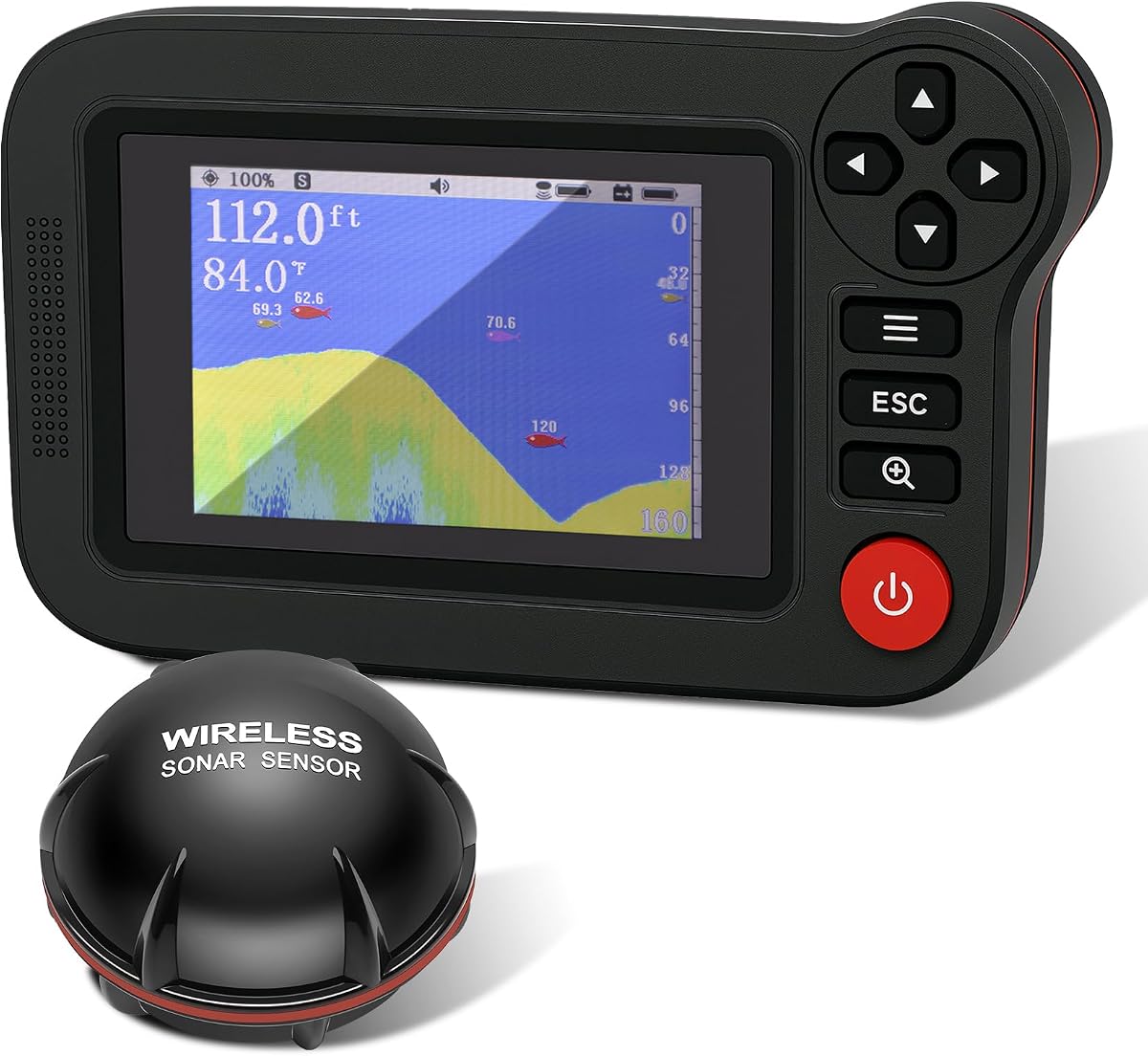


The Venterior Portable Fish Finder is a self-contained wireless sonar system rated 4.3 out of 5 among the products reviewed. It combines a color LCD handheld unit with a castable sensor, giving anglers a clear alternative to phone-only fish finders. The screen can display water depth, temperature, fish size, fish depth, and bottom contour, making it particularly useful when you want core information without depending on an app.
We may earn a commission when you buy through this link, at no additional cost to you.
Its strongest qualities are versatility and accessible operation. The stated depth capability reaches 164 feet, the sonar beam covers 105 degrees, and the sensor can communicate with the handheld from up to 262 feet away. Two small tether holes let you attach the sensor to fishing line, while work and simulation modes provide a way to learn the controls before heading onto the water. Switchable black and white backgrounds are a particularly thoughtful feature for anglers fishing in bright sunlight or after dark.
The main compromise is wireless range. Several competing products offer a longer stated distance between sensor and display, which may matter when casting toward distant structure from shore. The supplied guidance also explains that the sensor's battery indicator on the display is unreliable while the sensor is dry and should be checked after placing the sensor in water. These are important operating details, although they do not undermine the broader usefulness of the unit.
Choose this model if you want a dedicated handheld fish finder, a generous beam angle, and detailed environmental data without managing a phone application. It is suited to lakes, rivers, seas, kayaks, boats, shorelines, and ice fishing. Among the simpler standalone products, its combination of fish classification, temperature, bottom contour, simulation mode, and adjustable screen backgrounds makes it a particularly complete choice.
Keeping the sonar display on the included handheld unit reduces setup friction and makes the information easier to view at a glance. That is valuable for beginners and for anglers who do not want their phone exposed to water while fishing.
The two selectable screen backgrounds help maintain visibility in direct sunlight and at night. Combined with depth, temperature, fish-size, and contour readouts, this gives the unit useful flexibility across different environments.
We may earn a commission when you buy through this link, at no additional cost to you.
The Garmin Striker Cast earns the Editor's Choice position with a 4.4 rating, the highest among the ten featured products. It is a compact castable sonar designed to pair with the free STRIKER Cast app on compatible Apple or Android devices. That approach keeps the physical equipment minimal while giving anglers access to wireless sonar streams, fish information, and mapping features on a larger phone or tablet screen.
We may earn a commission when you buy through this link, at no additional cost to you.
The strongest feature is the combination of accessible operation and advanced map support. Setup follows a straightforward path: download the app, pair the mobile device, and begin fishing. Traditional two-dimensional and ice-fishing flasher modes stream from up to 200 feet away, and maps with one-foot contours can be downloaded through the Garmin Quickdraw Community. The sonar is stated to perform well in both shallow and deep water, making it relevant across multiple fishing styles.
Battery management is another advantage. The internal USB-rechargeable battery is rated for more than ten hours, although actual life varies with use. The sonar powers on when it floats in water and turns off when removed, reducing the need for manual control during casting and retrieval. Its limitations are primarily ecosystem-related: a compatible phone or tablet is necessary, and its 200-foot streaming distance is shorter than the stated wireless reach of several standalone competitors.
This is a strong recommendation for anglers who want an established mobile application, community-based mapping, and effortless wireless operation in a small package. It is less suited to someone who insists on a dedicated handheld screen, but for phone-based users it offers one of the most balanced feature sets in this roundup. Its strong rating, useful mapping, long stated battery life, and automatic activation justify its place as the leading overall pick.
Access to Quickdraw Community maps with one-foot contours adds location context that basic handheld units often lack. This makes the Striker Cast useful for revisiting productive areas and understanding changes beneath familiar water.
Automatic activation when the sensor enters water simplifies repeated casts. The USB-rechargeable design and stated ten-plus-hour battery life also suit full outings without the cable clutter of a permanently mounted system.
We may earn a commission when you buy through this link, at no additional cost to you.
The Deeper PRO+ 2 is the premium selection in this guide, carrying a 4.2 rating and a feature set aimed at anglers who want more than a basic handheld readout. It connects to the Fish Deeper app and supports wide, middle, and narrow sonar beams, allowing users to balance broad coverage against more focused target separation. Built-in GPS adds another layer of utility by enabling bathymetric map creation from shore, dock, or bank.
We may earn a commission when you buy through this link, at no additional cost to you.
The standout feature is the combination of mapping and selectable beam coverage. The device is stated to maintain accuracy at up to 330 feet, with target separation of 0.4 inches in narrow beam and one inch in wide and middle beams. Those narrow target measurements can help users track smaller lures or distinguish closely positioned returns. The lightweight wireless form also avoids the installation burden of a permanently mounted transducer.
Its trade-offs are the same ones associated with many premium phone-based units. You need a compatible mobile device, and the mapping-oriented feature set may be more than a casual angler needs. The product also does not include a dedicated handheld display, so phone battery management and screen visibility become part of the outing. Those compromises are reasonable for users who value detailed sonar modes and location records, but less attractive for beginners seeking a simple screen.
The PRO+ 2 is best suited to kayak, boat, bank, and ice anglers who want portable sonar with multi-beam control and built-in GPS. It is especially compelling for repeatable trips because saved bathymetric maps can document previously scanned water. For those priorities, its compact construction, specialized beam choices, and mapping functions set it apart from more basic castable units.
Wide beams support faster scanning, while middle and narrow modes help anglers examine a smaller target area. The stated 0.4-inch narrow-beam target separation adds precision when focusing on specific structure or vertically jigging.
Bathymetric maps can be created and saved through the app. That location history helps anglers compare changing conditions and return to areas that previously produced useful results.
We may earn a commission when you buy through this link, at no additional cost to you.
The LUCKY Kayak Portable Fish Finder MT-202 has a 4.5 rating, making it the highest-rated model in this comparison. It pairs a rechargeable floating sensor with a handheld horizontal LCD and presents fish icons, depth values, water depth, and bottom information in a format designed for quick interpretation. The screen scrolls from right to left, preserving a continuous history of what passes beneath the sensor.
We may earn a commission when you buy through this link, at no additional cost to you.
Its standout specification is the stated 853-foot wireless operating distance, far beyond the listed reach of every other product here. The sonar uses a 90-degree beam and scans a 3-to-147-foot depth area. Fish icons and adjacent depth numbers make it possible to understand both the presence and approximate position of fish as the sensor travels. The compact handheld and sensor are also stated to weigh less than a one-liter water bottle.
As a standalone product, it avoids the need for a phone and removes installation concerns. The sensor can be tied directly to fishing line or an included safety tether, while the body suits shore, kayak, canoe, boat, pontoon, and ice fishing. The shorter 147-foot depth range and 90-degree beam are less generous than some alternatives, and real-world wireless performance can depend on conditions. Even so, the long stated operating distance offers useful flexibility for casting from shore or between widely separated structures.
This is a compelling pick for anglers who want a dedicated screen, highly visible fish data, and substantial wireless reach without paying for a GPS mapping ecosystem. It also works well for beginners because the icons and numeric depth markings make the screen more approachable. Its rating, portable construction, scrolling history, and broad scenario support make it one of the most balanced units in the roundup.
An 853-foot stated operating distance provides flexibility when working water far from shore or monitoring a cast from another position on a boat. It is the leading range specification among the products compared.
The continuously scrolling display preserves recent sonar information as the sensor moves. That visual history makes it easier to follow a return, locate structure already covered, and judge changes in depth.
We may earn a commission when you buy through this link, at no additional cost to you.
This Portable Castable Fish Finder for Kayak combines a dedicated 3.5-inch TFT display with a wireless probe and a 4.2 rating. It is designed for anglers who want more carrying range than a short-cabled unit without adding a permanently mounted transducer. The display provides depth, temperature, fish size, fish depth, bottom contour, fish alarms, depth alarms, and sonar background switching.
We may earn a commission when you buy through this link, at no additional cost to you.
Its main strengths are balanced specifications and kayak-friendly ergonomics. The stated wireless distance is 656 feet, the sonar beam spans 105 degrees, and the depth range extends to 164 feet. Three backlight modes—black, blue, and white—give users options for bright sunlight and low-light conditions. A mounting bracket and lanyard allow the host unit to sit on a kayak or remain accessible around the angler's neck.
The product also provides adjustable sensitivity, depth range, and noise filtering, allowing the display to be adapted to different fishing conditions. Both the host and wireless probe are rechargeable, with a stated two-hour charging time and up to eight hours of operation. The supplied information specifically calls for use of the correct power adapter. It lacks the automatic mapping features found in premium phone-based systems, but that keeps the operation centered on straightforward sonar information.
This model is an excellent fit for kayak and shore anglers who prioritize a large readable screen, long range, and broad depth coverage. It also supports boat, sea, and ice fishing. The included mounting hardware and lanyard make it versatile on the water, while the three backlight modes and adjustable sonar settings help balance detail with readability. It is a strong all-around alternative for those who prefer a standalone unit.
The included bracket and lanyard make the host practical for a compact craft. Its wireless probe removes the need for heavy cables across the deck, which is especially valuable when space and weight are priorities.
Black, blue, and white options allow you to select a display style suited to sunlight, shade, or changing weather. The 3.5-inch TFT screen provides a larger viewing area than the smaller handheld models in the list.
We may earn a commission when you buy through this link, at no additional cost to you.
The Deeper Start Fish Finder is a streamlined app-connected sonar with a 4.1 rating. It pairs with the free Fish Deeper app on iOS or Android devices, providing fish location and size, depth, bottom contour, and vegetation information without a dedicated handheld screen. Its intended audience is recreational anglers fishing from a dock, shore, bank, or kayak who want useful information without a complex permanent installation.
We may earn a commission when you buy through this link, at no additional cost to you.
A useful distinction is that the device creates its own Wi-Fi connection, so it does not consume mobile data. The app automatically saves scans with time and location, making it easier to revisit productive water. The lightweight, wireless design has no external batteries, and a night-fishing mode expands its usefulness after sunset. Setup is designed to be quick: install the app, pair the sonar, and view the data.
The trade-off is physical range. Its casting capability and stated depth range both reach 165 feet, while its sonar beam is 40 degrees. That narrower cone is more focused than the 90- to 105-degree alternatives, and it may take more deliberate casting to scan broad water. The stated six-hour battery life is also more modest than the Garmin Striker Cast and Reelsonar iBobber figures. Despite these limitations, the product keeps the core feature set focused and approachable.
Choose the Deeper Start if you already use your phone for navigation or want saved scans without carrying a separate display. It is well suited to family outings and casual fishing trips where simplicity matters. Its automatically recorded locations, data-free Wi-Fi, and dedicated app experience deliver more organization than a basic handheld readout without reaching the complexity of a GPS mapping system.
Every scan is automatically saved with its time and location. This makes the app a practical log of where you have fished and helps support deliberate comparisons between trips.
The sonar creates its own Wi-Fi connection and operates without external batteries. That combination keeps the system simple for casual outings and avoids data charges during a fishing trip.
We may earn a commission when you buy through this link, at no additional cost to you.
The DANOPLUS Portable Fish Finder has a 4.3 rating and combines a compact 2.4-inch color LCD with a rechargeable wireless sonar sensor. It shows water temperature, water depth, bottom contour, water surface information, and fish-size icons with depth. The lack of a specified wireless distance makes it difficult to compare directly with models that publish a maximum range, but its local operation remains oriented toward portable casting.
We may earn a commission when you buy through this link, at no additional cost to you.
Two standout features are the fish alarm and the attractive lamp. When a fish enters the sensor's coverage, the unit displays and sounds an alert while showing the fish's estimated size and depth. The sensor's lamp turns on automatically when it touches the water, making the unit easier to see in low-light conditions and adding an attraction feature that may be useful during night fishing.
The 147-foot depth capability and 90-degree beam place it in the middle of this roundup's performance range. Its rechargeable sensor supports repeated use, and the compact color screen provides core sonar information without requiring a phone. The trade-offs are modest screen size, no published wireless range, and no mapping or phone-based analysis. These limitations make it more appropriate for immediate readings than for detailed review of past scans.
This model suits anglers who prioritize simplicity, audible fish alerts, and a compact standalone unit. It can be used for kayak, ice, river, lake, and sea fishing, and the automatic lamp is especially attractive for night use. Its strong rating and useful information set make it a practical choice for someone who wants an uncomplicated fish finder rather than a broader digital ecosystem.
The fish alarm can display and sound when a fish enters the sensor's coverage. Because the display also shows estimated size and depth, the alert provides more context than a simple sound.
The sensor's built-in lamp activates when it touches water. This makes the unit easier to locate and introduces an attractive light for nighttime fishing.
We may earn a commission when you buy through this link, at no additional cost to you.
The Garmin Striker Cast is a rugged, highly rated castable sonar with a 4.4 rating. It links to the free STRIKER Cast app on compatible Apple or Android devices, streaming sonar information to a phone or tablet. The product supports traditional two-dimensional and ice-fishing flasher modes and is stated to work in both shallow and deep water.
We may earn a commission when you buy through this link, at no additional cost to you.
Its standout feature is access to maps with one-foot contours through the Garmin Quickdraw Community. Rather than presenting isolated depth readings, this capability helps place sonar information in a broader geographic context. Setup remains straightforward: download the app, pair the device, and begin using the sonar. That combination of mapping and quick setup distinguishes it from basic handheld fish finders.
Its portability is aided by an internal USB-rechargeable battery with a stated life of more than ten hours. The sensor activates when floating in water and powers down when removed, reducing manual battery management. The main limitation is dependence on a compatible mobile device, which can expose the phone to splashes, consume its battery, and reduce the size of the active viewing area in some conditions. The 200-foot streaming range is also shorter than the published reach of several standalone competitors.
This Garmin is best for mobile anglers who value a polished application, community maps, and automatic power management. It is particularly useful for ice fishing and for anglers who want to save and revisit mapped areas. Its strong rating and combination of wireless simplicity, contour maps, and long stated battery life make it a compelling choice for a broad range of users.
Quickdraw Community maps with one-foot contours let users view water structure in relation to familiar landmarks. This is more useful than depth alone when planning repeated casts or returning to a known area.
Traditional two-dimensional and ice-fishing flasher modes give users different ways to interpret the sonar stream. This versatility supports both open-water and winter use without changing the core hardware.
We may earn a commission when you buy through this link, at no additional cost to you.
The LUCKY Portable Fish Finder with a 147-foot depth range combines a 2.4-inch TFT color display with a wireless sonar transducer and holds a 4.1 rating. It shows underwater contour, depth, temperature, and fish size with depth. Wireless and simulation modes provide a way to familiarize yourself with the controls before fishing and a dedicated night-oriented sensor lamp adds visibility after dark.
We may earn a commission when you buy through this link, at no additional cost to you.
Its standout feature is the range of settings. Users can adjust sensitivity, screen brightness, depth range, zoom, depth alarm, fish alarm, fish icons, measurement units, and language. The sensor includes a transparent replacement cover, allowing you to see where it is even in darkness. Its stated 492-foot wireless operating distance is generous and the 147-foot depth capability covers many common freshwater and inshore fishing situations.
Both the handheld and sonar are rechargeable. The stated battery life is four hours for the handheld and ten hours for the sensor, which is a meaningful difference if the display is kept on continuously. The product does not include a dedicated mapping system or a modern app-based review workflow, and its 4.1 rating is lower than several alternatives. Nevertheless, its broad settings set gives experienced anglers more control over how the sonar appears and behaves.
Choose this model for ice, shore, kayak, river, sea, and night fishing when you want an all-in-one display with a long stated wireless range. It is particularly well suited to anglers who value alerts, zoom, sensitivity controls, and a visible lamp. The rechargeable sensor runtime helps sustain repeated casts, while simulation mode provides a low-risk way to learn the controls before reaching productive water.
Sensitivity, zoom, depth range, alarms, units, brightness, and display options can be adjusted to suit the outing. Those controls provide more flexibility than units with a fixed display.
The attractive lamp and transparent replacement cover make the sensor easier to identify in darkness. This is a practical addition for anglers who move between locations after sunset.
We may earn a commission when you buy through this link, at no additional cost to you.
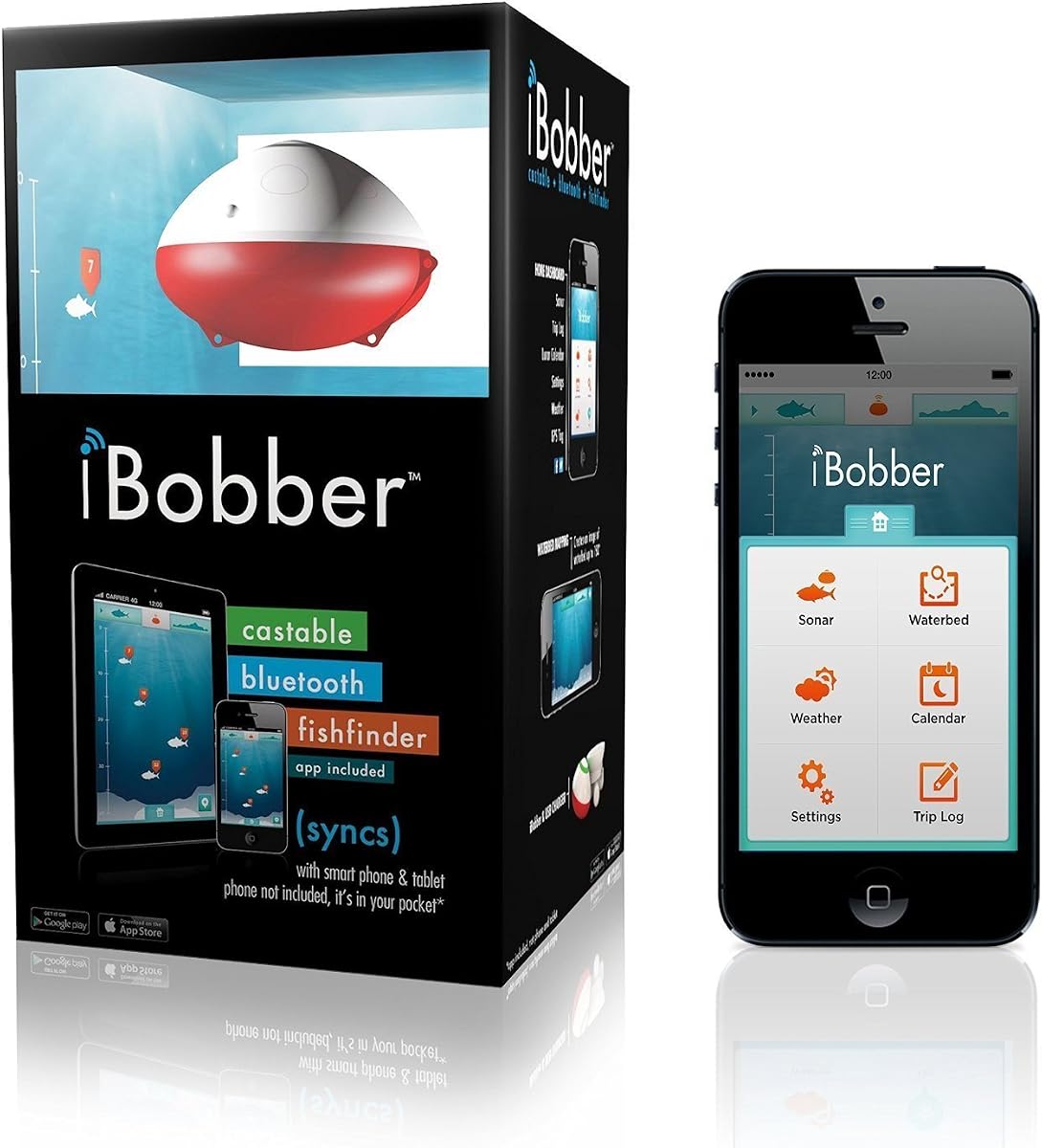
The Reelsonar iBobber is a portable Bluetooth fish finder with a 4 rating. It works with iOS and Android applications and can also display information through a watch app. Its sonar creates visual representations of static and moving objects below the surface, while depth-tagged fish icons are color coded by estimated size. That combination gives it useful appeal for anglers already invested in mobile or wearable devices.
We may earn a commission when you buy through this link, at no additional cost to you.
Its most notable specifications are the 135-foot depth range and more than ten hours of rechargeable battery life. The long stated runtime is especially useful for full-day outings, and the compact wireless design avoids permanently mounted equipment. Fish alarms can notify anglers when fish gather under docks and piers, while the strike-alert function is designed to indicate when a fish is biting.
As the least advanced product in this roundup, its limitations are noticeable. Its 135-foot depth range is the shortest listed, and the supplied information provides less detail about beam angle, wireless distance, and sonar sensitivity than most competing descriptions. Bluetooth also requires maintaining a connection between the sensor and a compatible device. Users should therefore consider their phone or watch compatibility before choosing it over a system with a larger standalone display.
This model is best for mobile anglers who want straightforward Bluetooth connectivity, fish-size icons, alerts, and long battery life. It can be used in freshwater or saltwater, from shore, or on the ice. While it does not offer the mapping depth of the Deeper PRO+ 2 or the dedicated screens of several LUCKY models, its app-based simplicity and stated endurance make it a practical option for casual users and wearable-device enthusiasts.
The fish alarm is intended to draw attention when fish gather beneath structures. A separate strike alert can also notify the user when a fish is biting, making the system useful during active fishing.
Compatibility with iOS, Android, and a watch app broadens the possible display options. This is convenient for users who prefer checking sonar information from a wearable device.
We may earn a commission when you buy through this link, at no additional cost to you.
The right castable fish finder depends on where you fish, how much information you need, and whether you prefer a dedicated screen or smartphone integration. Compare range, depth, beam coverage, alerts, app features, and battery life before choosing.
Wireless range determines how far the sonar sensor can be cast or positioned away from the display. The products reviewed span a wide range, from 165 feet for the Deeper Start to 853 feet for the LUCKY MT-202. Longer distance is useful when fishing from shore, positioning a sensor near a distant target, or separating the display from the casting position. Standalone units often publish maximum operating distance explicitly, while some phone-based products emphasize streaming or casting distance instead. Consider terrain, vegetation, boat structure, and interference when judging what a published figure means in real conditions.
Depth capability should reflect the depth of the water you expect to scan. Listed limits range from 135 feet for the Reelsonar iBobber to 164 feet for the Venterior and two portable kayak units. A suitable maximum depth does not guarantee equal clarity throughout that range, so it is best to treat the figure as an upper boundary. Depth readings are most useful for matching fish locations to bottom contours, drop-offs, channels, and other submerged features.
Beam angle determines the general area covered around the sensor. The 105-degree beams in the Venterior and portable kayak units offer broad coverage, while the 90-degree models cover a somewhat narrower area. The Deeper Start uses a 40-degree beam, which can support focused accuracy but requires more deliberate placement. Some premium products address this tradeoff with selectable wide, middle, and narrow beams rather than one fixed angle.
Dedicated handheld displays eliminate dependence on a phone and can be easier to read at a glance. Screen size varies from 2.4 inches to 3.5 inches, while TFT or color LCD technology provides a clear base for fish icons, depth numbers, contours, and temperature. Backlight choices matter outdoors: several products offer black, blue, or white backgrounds, and the Venterior provides selectable black and white options. Phone-based models can benefit from a large display, but you should consider sunlight readability, splash exposure, and battery use.
App-connected fish finders add capabilities such as saved scans, bathymetric mapping, GPS, community contours, and multi-beam control. The Deeper PRO+ 2 includes built-in GPS for creating maps, the Deeper Start saves scans with time and location, and the Garmin Striker Cast connects with Quickdraw Community maps. These tools can improve repeatability, but they also introduce device compatibility and phone-battery considerations. Decide whether mapping and record keeping are central to your fishing strategy.
Stated battery life ranges from four hours for the LUCKY handheld to more than ten hours for the Garmin Striker Cast and Reelsonar iBobber. Other units claim operating times around six to eight hours, while charging times vary by model. Because real usage, brightness, and connection conditions can affect results, it is wise to treat the published figure as guidance. Carry a charging plan for long outings, and note whether both the display and sensor are rechargeable or only one component uses replaceable power.
Useful alerts reduce the need to stare at the screen. Fish alarms, depth alarms, and strike notifications appear across several models, while the DANOPLUS and LUCKY units include illuminated or lamp-equipped sensors for night visibility. Adjustable sensitivity, noise filtering, zoom, screen brightness, units, and language can improve the interpretation of sonar in different conditions. Extra controls are valuable for experienced users, but beginners should favor clear icons, simple menus, and a simulation mode if available.
Every product in this guide avoids a permanently mounted transducer, but size, mounting options, and weight still matter. Several units include a lanyard or mounting bracket for kayak use, while the Deeper PRO+ 2 and Garmin Striker Cast keep the hardware compact and rely on a phone or tablet. Check whether your planned environment includes shore casting, open water, a small kayak, or an ice hole, and confirm that the sensor can float and be tethered securely in that setting.
Before the first outing, charge the display and sensor fully using the appropriate supplied power method. Pair a phone-based model with its compatible application, install any required updates, and learn the menus while the unit is safely on land. Standalone models should also be powered on and explored before use. If simulation mode is available, it offers a convenient way to understand icons, alarms, sensitivity, units, and depth readouts without casting.
Tether the floating sensor securely, check the attachment point, and begin with a short cast in familiar water. Watch the display for the first returns, then use depth and bottom-contour information to identify promising structure. Move the sensor slowly across a consistent path rather than casting randomly. Keep the sensor underwater during retrieval when possible, and maintain enough line tension to avoid losing it around rocks, vegetation, or submerged branches.
After the trip, remove the sensor, rinse it with fresh water, and let it dry before storage. Clean the display gently, protect charging ports from moisture, and inspect the tether holes and cable for damage. Store the components away from extreme heat and prolonged direct sunlight. Recharge them before the next outing, especially if the low-battery warning appeared, and verify wireless pairing or sensor status as part of a pre-fishing routine.
A castable fish finder uses a floating sensor that you tether and cast into the water. A permanently mounted unit stays attached to a boat or kayak and usually receives power through a cable. Castable systems are easier to transport and can be used from shore or ice, while mounted systems may provide a steadier installation for repeated boating.
Yes, provided the sensor can be cast safely and the wireless connection remains dependable. Long-range models are especially helpful from shore because they allow the sensor to reach distant structure. Watch for submerged obstacles, fishing line restrictions, changing water conditions, and local rules while casting.
No. A wider beam covers more surrounding water and is useful for quickly locating structure, but it can divide the available display area into less focused coverage. A narrower beam supports more concentrated target work. Products with multiple beam modes are especially flexible because you can change the emphasis as conditions change.
That depends on the product's supported devices and companion apps. The Reelsonar iBobber specifically supports iOS and Android apps plus a watch app. Other models may display information only on a phone or tablet, so verify compatibility before purchasing if you want wearable notifications or readings.
Begin with the water-depth and bottom-contour information because they establish the shape of the area beneath you. Fish symbols or arches indicate sonar returns, while depth numbers show their position. Alarms, scrolling history, and vertical jigging behavior can help distinguish moving targets from fixed structure. Practice in simulation mode or familiar water if possible.
Check the model instructions because charging arrangements differ. Several products use rechargeable displays and probes, with the charging indicator turning off when a full charge is reached. Other components may use a host power supply at 5V or 12V. Using the specified adapter helps prevent charging problems, and a complete pre-trip charge is safest.
Several products are explicitly suitable for sea or saltwater fishing, while others are described for lakes, rivers, and general fishing environments. Check the product specifications, intended environments, and local operating guidance before taking any unit into salt water. Rinse the sensor with fresh water afterward regardless of the fishing location.
Not necessarily. A higher maximum rating is useful only when you fish water deep enough to require it. Depth resolution, beam coverage, display clarity, and reliable connection also affect usefulness. For most anglers, selecting a unit that comfortably covers familiar water and provides readable information is more valuable than choosing solely by the largest stated depth number.
The Garmin Striker Cast stands out as the most balanced overall recommendation because it combines a strong customer rating, quick wireless pairing, useful one-foot contour maps, and more than ten hours of stated battery life. The Deeper PRO+ 2 is the premium option for anglers who want built-in GPS, bathymetric mapping, and selectable beam modes, while the LUCKY MT-202 is an attractive standalone choice with the highest rating and an unusually long stated wireless range.
Your priorities should determine the rest of the shortlist. Choose a dedicated handheld for independence from a phone, long wireless reach for shore casting, a wide beam for rapid area coverage, or app mapping for recorded and repeatable surveys. For a simpler mobile experience, the Deeper Start offers saved scans without mobile data, while the Reelsonar iBobber provides Bluetooth connectivity and watch-app support.
Before buying, verify the product's current specifications, app compatibility, charging requirements, and suitability for your fishing environment. Prices and availability can change, and promotional terms may also vary, so check the current listing for the latest information. With those checks in place, the right castable wireless fish and depth finder can make structure easier to locate and help turn each outing into a more deliberate search.
