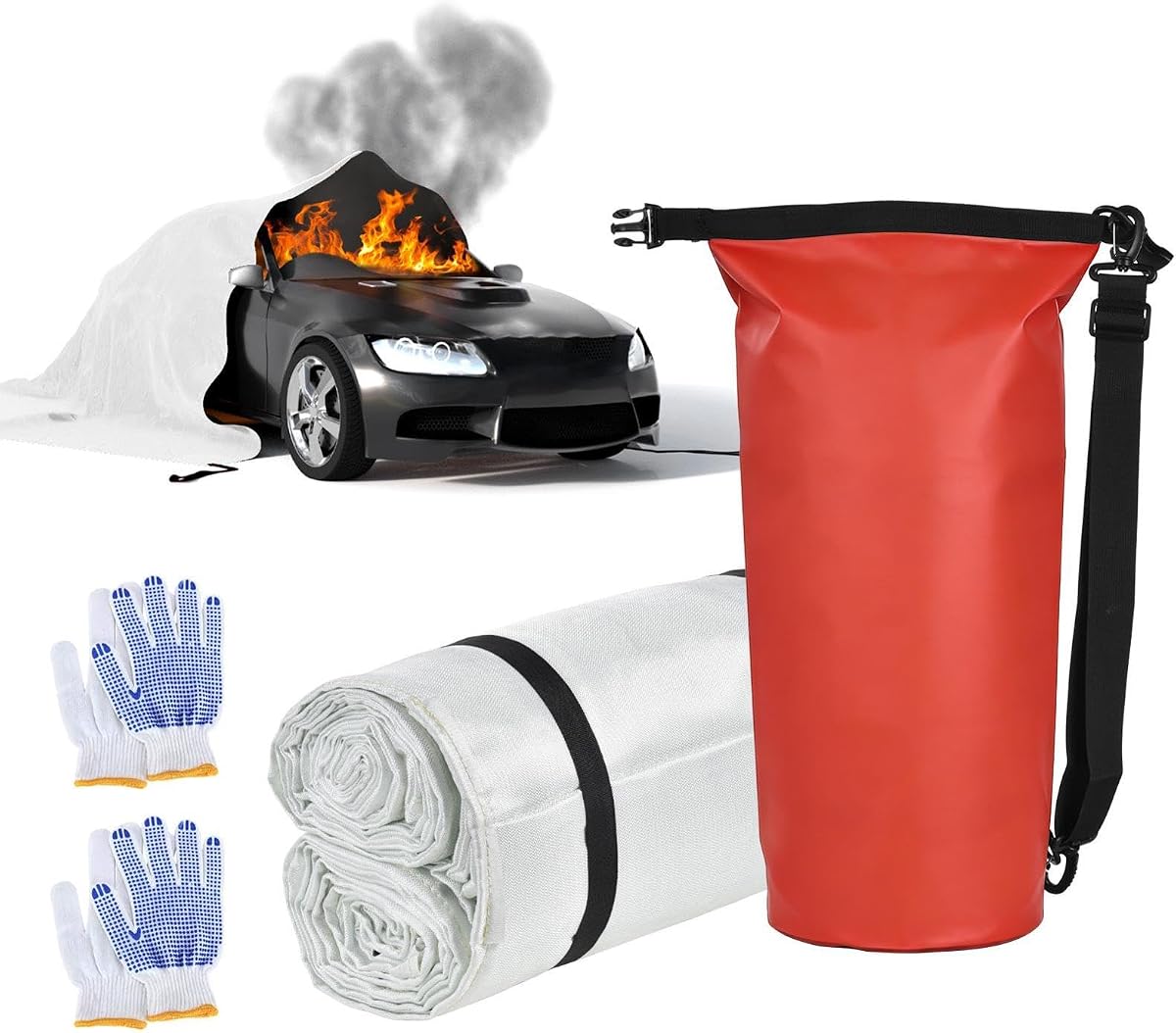
Emergency Fire Blanket for Car
5.0Editor score
Thirteen-by-nineteen-foot fiberglass coverage
Includes heat-resistant non-slip gloves
Portable carry bag for trunk storage
Our Ev Car Fire Blanket guide compares coverage, heat resistance, materials, deployment, and ideal uses to help you choose safer vehicle fire protection.
An EV car fire blanket is a specialized emergency tool designed to suppress flames, limit radiant heat, and help isolate a burning vehicle from its surroundings. Unlike a conventional extinguisher, it works by covering the fire source and reducing oxygen exposure. Its usefulness depends on vehicle coverage, heat resistance, construction, weight, and safe handling.
This guide compares ten fiberglass, basalt-fiber, silicone-coated, and silica-fabric blankets selected for electric cars, gasoline vehicles, motorcycles, garages, charging sites, workshops, and other vehicle-heavy settings. We considered stated dimensions, operating-temperature claims, deployment methods, included accessories, storage provisions, coating characteristics, and the scenarios each product is designed to address.
Each review explains the strongest reasons to consider a particular model while also noting limitations, deployment requirements, or safety considerations. The three top picks highlight a practical large-area option, a highly accessible fiberglass kit, and a premium lithium-ion-focused system. Product availability, ratings, and prices can change, so confirm current details before purchasing.
5.0Editor score

5.0Editor score

The comparison below organizes all ten blankets by material, stated coverage, heat limits, and intended deployment environment, making it easier to identify the right balance of protection, handling, and portability.



This fiberglass vehicle fire blanket offers a straightforward approach to containing an early-stage vehicle fire. Its 13.12-by-19.69-foot dimensions provide enough material to cover a small passenger car and extend beyond portions of the vehicle. The stated insulation rating reaches 1,022°F, while its bag-based format is intended to make deployment quick for drivers, workshops, and roadside preparedness kits.
We may earn a commission when you buy through this link, at no additional cost to you.
The product's strongest qualities are its simple deployment and broad application. The manufacturer states that the blanket can isolate air and reduce flames in seconds, while its rectangular size can cover an entire vehicle or larger affected area. Because it is not restricted to EVs, it can also be used around motorcycles, camping fires, kitchens, warehouses, and other sources of flame where a flexible thermal barrier is useful.
There are important trade-offs. No customer rating is available, and the fiberglass surface may require careful handling because the related product information for uncoated fiberglass constructions warns that fibers can irritate skin. The stated temperature figure describes heat resistance, not a guarantee that one person can safely approach a fully developed vehicle fire or hold the blanket indefinitely. Actual results depend on the fire's stage, correct placement, and safe operating distance.
This is a practical choice for a driver who wants a large, uncomplicated blanket without a silicone-coated surface. It is especially relevant to EV owners, motorcyclists, households, and small businesses seeking one emergency tool for several fire scenarios. For professional facilities or situations involving a developed battery fire, a more specialized system and formal emergency procedures would be a stronger fit.
The four-by-six-meter area is large enough to cover a compact car and leave additional material around the edges. That extra overlap can help create a more complete barrier around the affected vehicle.
Its usefulness extends beyond EVs to motorcycles, kitchens, campsites, and warehouses, making it a flexible addition to general emergency preparedness rather than a single-purpose accessory.
We may earn a commission when you buy through this link, at no additional cost to you.
This 20-by-24-foot vehicle fire blanket is designed for large containment areas rather than compact personal kits. It is made from basalt fiber fabric and is intended to isolate flames, radiant heat, and smoke around electric, hybrid, and gasoline-powered vehicles. The product has no listed customer rating, so its value should be judged primarily from its stated construction, coverage, and professional-use positioning.
We may earn a commission when you buy through this link, at no additional cost to you.
Basalt fiber gives the blanket a different material profile from the fiberglass models in this guide. The dense woven fabric is presented as a substantial thermal barrier for demanding vehicle-fire environments. Its oversized dimensions can create a broader protected zone around passenger cars, SUVs, pickup trucks, and other common vehicles, potentially reducing exposure for nearby property, equipment, and vehicles.
The product description explicitly says deployment should be coordinated by trained personnel. That limitation is appropriate: covering a burning vehicle requires more than unfolding fabric. The responder must assess flames, smoke, thermal radiation, vehicle movement, and the risk of ignition before approaching. The blanket is intended to support emergency response, not replace evacuation, a conventional extinguishing system, or professional firefighter instructions.
This option makes the most sense for EV charging stations, parking garages, dealerships, towing yards, fleet facilities, repair shops, and warehouses. An individual driver may find the coverage and coordinated deployment needs excessive, but an organization managing several vehicles can benefit from the broad containment area and professional application focus.
Twenty by twenty-four feet offers a generous working area around larger vehicle classes, making the blanket easier to incorporate into a facility-level response plan for parking or service environments.
The woven basalt construction is intended to provide a dense barrier against radiant heat and flame exposure. It is a meaningful alternative to the fiberglass and silicone-coated options in this comparison.
We may earn a commission when you buy through this link, at no additional cost to you.
This EV-focused fiberglass blanket combines a compact stored size with a 13-by-19.7-foot deployment area. It is marketed for electric and gasoline vehicles, including engine fires and battery emergencies, and carries a stated resistance up to 2,012°F. Unlike the product's name may initially suggest, that figure describes material heat performance rather than a guarantee of safe proximity to every battery fire.
We may earn a commission when you buy through this link, at no additional cost to you.
The uncoated construction is a notable feature. It is described as lighter and less costly than a silicone-coated alternative while retaining heat resistance and tear strength. A sturdy storage bag is included, and the blanket can be folded for a trunk, workshop, or roadside emergency kit. It can also cover engines and valuable equipment in industrial environments where a thermal barrier is appropriate.
The principal limitation is service life. The manufacturer states that the blanket is designed for one or two uses and that high-temperature exposure may cause darkening, stiffening, or burn holes. Any damaged area should prompt replacement. Fiberglass fibers may also irritate skin, making gloves advisable during handling. The absence of a customer rating means buyers must accept less direct feedback than they would with a more heavily reviewed product.
This blanket is a good match for EV drivers, roadside responders, and small workshops that want high stated heat tolerance without a silicone coating. It is less appealing for facilities expecting repeated deployments, because another model with a more durable coated construction may better fit frequent-response requirements.
A resistance figure of up to 2,012°F distinguishes this uncoated fiberglass model from several conventional blankets in the guide, although proper distance and cautious deployment remain essential.
Because heat exposure can damage the material, owners should inspect the blanket after deployment and replace it if it shows holes, significant stiffening, or other deterioration.
We may earn a commission when you buy through this link, at no additional cost to you.
The AMSXNOO Car Fire Blanket is a large, heavy-duty option with a 19.7-by-29.5-foot deployment area. It uses fiberglass with a double-sided silicone coating, combining fire resistance, thermal insulation, flame retardancy, and waterproofing. The listed operating temperature reaches 1,562°F, and the product carries a 4.6 customer rating, giving it one of the stronger feedback signals in this group.
We may earn a commission when you buy through this link, at no additional cost to you.
Its double-sided coating is a meaningful handling advantage over bare fiberglass. The manufacturer says the surface feels soft and can be deployed without gloves, while the oversized dimensions offer extensive coverage around a vehicle. The blanket is designed to reduce flame spread, toxic smoke movement, and the risk of igniting nearby combustibles, which can create better conditions for subsequent firefighting work.
Weight is the most obvious drawback. At approximately 90 pounds, this is a substantial deployment burden, and the claim that non-professionals can operate it should not be confused with permission to approach an unsafe fire. A blanket of this size is best handled by a prepared team with a clear plan. Its extreme dimensions may also be more than a private driver needs for a small passenger vehicle.
This is a strong option for garages, tunnels, parking lots, fleet operations, warehouses, and other locations where broad coverage and a durable coated surface are priorities. The rating and coating support confidence in its practical design, but buyers should confirm that their team can transport and deploy the full blanket safely.
Unlike rough uncoated fiberglass, the double-sided silicone layer is intended to provide a softer, more approachable surface during an already stressful emergency.
At roughly 90 pounds, this model belongs in a vehicle, garage, or facility with coordinated storage and deployment rather than a lightweight personal trunk kit.
We may earn a commission when you buy through this link, at no additional cost to you.
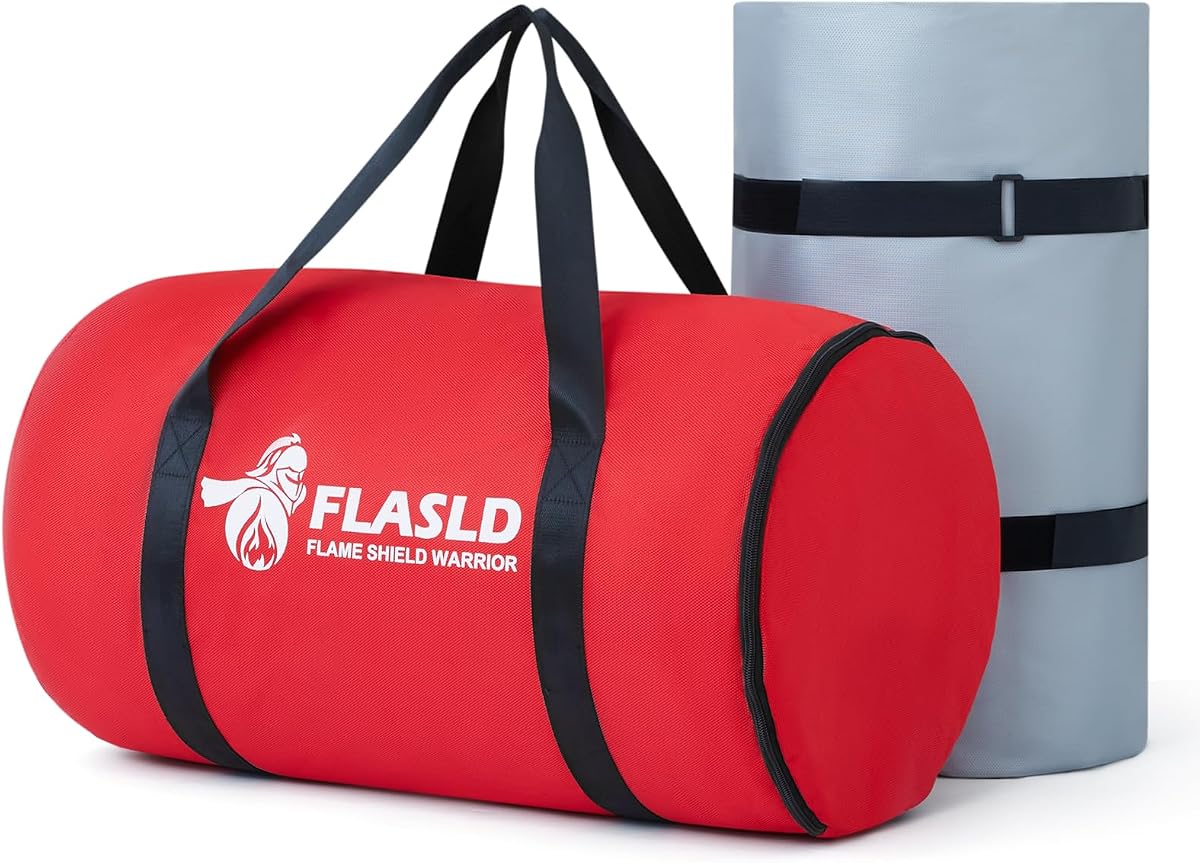
The FLASLD Car Fire Blanket is one of the most spacious options in the guide, measuring 20 by 30 feet. Its silicone-coated fiberglass construction is intended to cover a vehicle quickly, reduce oxygen exposure, and limit the spread of an initial fire. With a 5.0 customer rating, it also stands out for having a visible, favorable rating compared with several products that have no listed rating.
We may earn a commission when you buy through this link, at no additional cost to you.
The product's appeal lies in the combination of broad coverage and relatively direct deployment. The description says two adults can perform the job, which is more realistic than suggesting that a single person should unfold an enormous blanket beside a burning vehicle. Its claimed uses include parking garages, road tunnels, car ferries, repair shops, and other locations where multiple vehicles can be exposed to the same incident.
The manufacturer clearly limits use to the initial stage of a fire, before flames have spread widely. That qualification is critical for EV safety. A thermal runaway event can evolve rapidly, produce hazardous smoke, and reignite even after visible flames are reduced. The blanket should therefore be seen as a supplementary containment tool used within a broader emergency-response plan, not as a substitute for emergency services or evacuation.
This model suits organizations that want a large electric- and fuel-vehicle blanket and can arrange a two-person deployment procedure. Its 5.0 rating is encouraging, although ratings do not remove the need for training. For a private owner with a small vehicle, a more compact blanket may be easier to store and use.
The 20-by-30-foot dimensions can extend well beyond a sedan or SUV, providing extra material for surrounding coverage and helping protect nearby property.
Having a designated second responder, a rehearsed retrieval path, and a safe approach route is more important than assuming one person can manage a 20-by-30-foot sheet.
We may earn a commission when you buy through this link, at no additional cost to you.
This 13.12-by-19.68-foot fiberglass blanket is a practical personal emergency kit for passenger cars, trucks, and EVs. It has a 5.0 customer rating, a stated heat resistance of 550°C, and a foldable design that can be stored in a trunk, garage, or toolbox. The included heat-resistant, non-slip gloves are a thoughtful addition for a product whose uncoated surface may otherwise irritate or slip during handling.
We may earn a commission when you buy through this link, at no additional cost to you.
Its stated functions are to isolate open flames, wrap around an affected engine area, and reduce the need for water or dry powder during the initial response. Those functions make it useful for roadside emergencies, workshops, and vehicles carrying emergency equipment. The dedicated carry bag also helps keep the blanket organized and makes it easier to locate when seconds matter.
The blanket's size is adequate for a small car but offers less surrounding overlap than the 20-by-24-, 19.7-by-29.5-, and 20-by-30-foot models. It also does not provide the wheeled storage or industrial silica construction of the DENIOS options. Users should not treat the stated temperature resistance as permission to approach a severe battery event, and the blanket remains a supplementary tool rather than a complete vehicle firefighting system.
This is the most approachable top pick for individual EV and gasoline-vehicle owners who want a rated customer review, a manageable stored size, and included gloves. It is particularly suitable for compact cars and emergency kits stored close to home. Facilities with larger fleets will find the broader and more specialized alternatives easier to integrate into a response plan.
The included non-slip, heat-resistant gloves help reduce direct contact with the fiberglass and make the blanket easier to control when quick, careful handling matters.
A foldable construction and dedicated bag make this one of the more convenient options for keeping emergency coverage close to a passenger vehicle.
We may earn a commission when you buy through this link, at no additional cost to you.
The Demiwise Vehicle Fire Blanket uses two layers of fiberglass and is rated at up to 1,022°F. It is designed to cut off oxygen, help prevent secondary combustion, and offer an emergency alternative for automobiles, motorcycles, warehouses, kitchens, homes, and campsites. Its 4.8 customer rating provides a strong feedback signal, while the coating-free design distinguishes it from many silicone-treated alternatives.
We may earn a commission when you buy through this link, at no additional cost to you.
Deployment is designed to be intuitive: open the bag, untie the straps, and cover the source. Its 13.1-by-19.6-foot size is close to the compact models in the guide, making it more manageable than the very large 20-by-30-foot blankets. The manufacturer also states that it releases no toxic substances, an important consideration when smoke, runoff, and exposure are already concerns.
The two-layer construction should not be confused with coating. As with other fiberglass blankets, direct handling may still cause irritation, and the absence of a coating may make the material less comfortable under severe heat. The product's multi-purpose positioning also means it is not designed exclusively for EV battery emergencies. Users need appropriate training and should prioritize evacuation and emergency services when a fire is advanced.
This blanket is a strong all-around choice for households, motorcyclists, campers, and small businesses seeking a high-rated, coating-free emergency tool. The balance of compact storage, simple access, and multiple applications makes it more versatile than a vehicle-only model, although buyers with large SUVs or institutional needs may want a larger covered area.
The coating-free design may appeal to buyers who want fewer added surface materials while still retaining a substantial two-layer fiberglass barrier.
Its vehicle, motorcycle, household, kitchen, warehouse, and camping applications make it a broad preparedness item rather than a single-purpose EV accessory.
We may earn a commission when you buy through this link, at no additional cost to you.
This 20-by-30-foot vehicle fire blanket combines two silicone-coated outer layers with a reinforced fiberglass core. It has a 5.0 customer rating, operates at temperatures up to 1,562°F, and has a stated melting point of 2,012°F. The three-layer design makes it one of the most comprehensively engineered options in this guide, particularly for organizations seeking broad coverage and a long-term storage strategy.
We may earn a commission when you buy through this link, at no additional cost to you.
Its dimensions can accommodate sedans, SUVs, pickup trucks, vans, and many commercial vehicles. The coating provides fire resistance, flame retardancy, waterproofing, and thermal insulation, while the central layer adds structural support. A heavy-duty waterproof bag with a drawstring closure is included, and the manufacturer states an expected storage life of eight to ten years when stored under normal conditions and away from direct sunlight.
The blanket's size creates the same trade-off seen with other 20-by-30-foot models: deployment is realistically a team task. A 5.0 rating cannot establish that one untrained person should approach a serious vehicle fire. Material ratings describe the textile under defined heat exposure, while actual safety also depends on smoke, radiant heat, structural integrity, and the stage of the incident. Owners should treat a visibly damaged blanket as a replacement item.
This is the editor's choice because it balances an advanced layered construction, exceptionally broad coverage, a top customer rating, and organized long-term storage. It is a strong match for charging stations, garages, workshops, parking facilities, fleet operators, and prepared households with a suitable storage location and deployment team.
Dual coated outer layers and a fiberglass core combine flexibility with structural support, giving the blanket a more substantial design than basic single-layer alternatives.
The stated eight-to-ten-year storage life makes the blanket a long-term equipment investment, provided it remains dry, protected from sunlight, and regularly inspected.
We may earn a commission when you buy through this link, at no additional cost to you.
The DENIOS by Jutec 9-by-13-foot blanket is a premium, lithium-ion-focused option. Its fabric is 96% silica, with steel-thread seams, mineral coating, and reinforced lifting loops. The stated melting point is 2,912°F, making it the highest-temperature material specification among the listed products. A durable polypropylene wheeled case with a telescopic handle is included for organized storage and faster deployment.
We may earn a commission when you buy through this link, at no additional cost to you.
The product is specifically designed to help contain lithium-ion battery fires, limit flame spread, and reduce collateral damage. It is positioned for electric and hybrid vehicles in workshops, parking garages, fleets, warehouses, and charging stations. Reinforced lifting loops and the wheeled case reflect a professional workflow in which equipment must be moved quickly and deployed by a coordinated team.
The most obvious limitation is coverage. Nine by thirteen feet is smaller than the 20-by-24-, 19.7-by-29.5-, and 20-by-30-foot blankets, so it may be better suited to a defined suppression area than complete coverage of a large SUV or truck. No customer rating is listed, and buyers should not treat the extreme melting-point figure as a guarantee of safe human proximity. A developed thermal-runaway event can produce hazards beyond what textile performance alone can address.
This premium model makes the most sense for professional charging infrastructure, fleet operations, repair facilities, and industrial response teams that prioritize extreme heat tolerance, reinforced construction, and rapid access. For a private driver seeking broad vehicle coverage, the larger options may offer more practical geometric coverage.
A 96% silica fabric, mineral coating, and stated 2,912°F melting point provide a materially different thermal profile from the fiberglass products in the guide.
The wheeled case and telescopic handle make the system easier to move from storage to deployment, an important benefit for facilities that maintain emergency equipment.
We may earn a commission when you buy through this link, at no additional cost to you.
The larger DENIOS by Jutec option is a 16-by-19-foot lithium-ion fire blanket built around a 96% silica fabric. It is rated for 2,372°F short-term heat exposure and has a 2,912°F melting point. The stated coverage accommodates most passenger vehicles, including sedans, coupes, hatchbacks, and station wagons, while the storage case supports transport and organization.
We may earn a commission when you buy through this link, at no additional cost to you.
Its most important differentiator is the combination of premium material construction and vehicle-scale dimensions. Steel-yarn stitched seams, reinforced corner lifting loops, and flexible fabric support quick positioning around an affected vehicle. The product is intended to help contain battery emergencies, limit flame spread, and reduce collateral damage in charging stations, repair shops, parking garages, warehouses, and fleet facilities.
Its premium positioning is accompanied by practical compromises. The smaller 9-by-13-foot DENIOS model may be more manageable to transport, while still fitting the same industrial use case. This larger blanket is not rated for full-size commercial trucks, and its 16-by-19-foot area may not provide the extensive overlap of a 20-by-30-foot model. No customer rating is listed, so direct user feedback is limited.
This is the better DENIOS choice when full passenger-vehicle coverage is the priority. It suits professional operators who value extreme heat performance, robust seams, lifting loops, and a dedicated case over a lower-cost fiberglass blanket. A private owner with limited storage and deployment help may find a smaller or lighter model more realistic.
Sixteen by nineteen feet gives enough area for most common passenger vehicles while maintaining a more manageable footprint than the largest blankets in the comparison.
Steel-yarn seams and corner lifting loops support controlled placement, helping teams organize the blanket around the vehicle during a coordinated response.
We may earn a commission when you buy through this link, at no additional cost to you.
Choosing an EV car fire blanket requires balancing thermal performance, deployment area, portability, and the environment where it will be used. The most important factor is not simply the highest printed temperature number, but whether the product can be safely stored, retrieved, and positioned around the type of vehicle present.
A blanket should be large enough to cover the affected vehicle and ideally extend beyond key areas that could otherwise ignite. Compact 13-by-19.7-foot and 13-by-19.6-foot products may suit passenger cars, while 16-by-19-foot, 20-by-24-foot, 19.7-by-29.5-foot, and 20-by-30-foot options provide more overlap around larger vehicles. The useful comparison is not just length and width; it is whether the material can be repositioned without leaving a major exposed edge.
The guide includes fiberglass, double-coated fiberglass, basalt fiber, and silica-fabric options. Fiberglass products commonly state resistance around 1,022°F or 1,562°F, while one uncoated model claims up to 2,012°F. The DENIOS products use 96% silica fabric with stated melting points of 2,912°F and short-term exposure ratings up to 2,372°F. These figures are not interchangeable, so buyers should compare the same type of performance claim and avoid treating a material limit as permission to approach an unsafe fire.
EV fires may involve flames, intense heat, smoke, and repeated ignition from a damaged battery. A vehicle blanket that can isolate the source and reduce oxygen exposure is useful, but it should be considered a containment aid rather than a complete battery-fire solution. Products specifically describing lithium-ion or EV battery applications may provide clearer deployment guidance than general-purpose blankets. The response plan should also include evacuation, emergency services, and procedures for a possible re-ignition.
Large blankets can be difficult to unfold and control, especially near heat, smoke, and moving vehicles. One listing explicitly recommends two adults, and the heaviest product is approximately 90 pounds before considering its storage case. A personal owner should assess whether the blanket can be removed from storage, carried safely, and placed without excessive delay. A facility should establish a trained team, a retrieval route, and a clear command structure before relying on the equipment.
Silicone-coated blankets offer a softer surface and can reduce direct contact with rough fiberglass. Uncoated fiberglass may be lighter, less expensive, and easier to fold, but the manufacturer of one such product warns that fibers can cause skin irritation. Gloves are therefore worth considering, and one compact model includes heat-resistant, non-slip gloves. A coated surface does not make an emergency safe by itself, but it can improve control when the material is still being handled correctly.
A blanket is useful only if it can be located and deployed quickly. Options include simple carry bags, foldable structures, waterproof drawstring bags, and wheeled cases with telescopic handles. Compact bags suit trunks and toolboxes, while wheeled cases suit charging stations, fleet facilities, and industrial response teams. Store the product dry, away from direct sunlight, and where it will not be crushed. Regular inspections should confirm that the fabric, seams, straps, loops, and container remain intact.
Not all blankets are intended for repeated use. One product is explicitly designed for only one or two deployments, with visible darkening, stiffening, or burn holes signaling the need for replacement. Even higher-capacity coated products should be inspected after every significant thermal exposure. Label the storage bag with service dates, keep a replacement protocol, and do not return a heat-exposed blanket to service without checking the manufacturer's guidance.
The best blanket is the one that can be used correctly under the conditions where it is stored. Drivers may need a simple sequence for calling emergency services, moving away from traffic, approaching from a safe direction, and covering only an appropriate early-stage fire. Professional sites should add protocols for isolation, battery hazards, smoke control, rescue, and coordination with firefighters. A blanket never replaces evacuation, appropriate extinguishing equipment, or professional emergency response.
Begin before a fire by learning the blanket's deployment method, locating its pull tabs or lifting loops, and deciding who will retrieve it. Store it where it can be accessed without passing through a dangerous area. If a vehicle catches fire, call emergency services, alert others, and move to a safe distance before considering deployment. Smoke, battery venting, exploding components, and spreading flames can make a vehicle fire more dangerous than it appears.
For an appropriate early-stage incident, approach only from a safe direction and position the blanket over the fire source without placing yourself between the vehicle and the escaping heat or smoke. Where practical, two trained adults should unfold a large blanket, pull opposite corners, and lower it over the vehicle or affected area. Avoid abrupt movements that could trap air or cause the material to contact flames unevenly. Once deployed, do not enter the vehicle or remove the blanket while the incident remains unsafe.
After use, allow the blanket to cool and handle it only with suitable protective equipment. Follow the manufacturer's cleaning, disposal, and replacement instructions. A fiberglass blanket may develop darkening, stiffening, fraying, or holes, while silica, basalt, and coated products may show their own forms of heat damage. Store a replacement separately, and never use visible damage as evidence that the blanket still provides reliable protection.
A fire blanket can help suppress flames by covering the fire source and reducing oxygen exposure, but it should not be treated as a guaranteed solution for every battery thermal runaway. A damaged EV battery may continue producing heat, smoke, and ignition even after visible flames are reduced. The blanket works best as part of a professional emergency-response plan that includes evacuation, emergency services, and monitoring for re-ignition.
A compact 13-by-19.7-foot blanket may cover a small passenger car, while larger vehicles benefit from 16-by-19-foot or 20-by-24-foot coverage. Very large 20-by-30-foot blankets provide more surrounding overlap but require coordinated handling. Choose dimensions that cover the vehicle and allow the edges to be positioned securely, then consider whether your team can safely unfold the blanket.
Uncoated fiberglass can irritate skin, and a blanket can become extremely hot during a vehicle fire. Use gloves when handling it, avoid contact with hot or burning sections, and never reach through smoke or radiant heat. Silicone-coated options may feel softer and easier to grip, but they still require cautious handling and do not make approaching a developed fire safe.
Reuse depends on the model and the severity of heat exposure. One fiberglass blanket is designed for only one or two uses, while other products may tolerate more deployments under suitable conditions. Inspect the fabric, seams, coating, loops, and straps after every incident, and follow the manufacturer's replacement guidance. Darkening, stiffening, holes, fraying, or damaged hardware are reasons to remove the blanket from service.
No. A vehicle fire blanket is mainly a containment and heat-barrier tool, not a complete substitute for firefighting equipment, emergency services, or evacuation. A professional site may need conventional extinguishing systems, smoke control, rescue procedures, and battery-fire protocols. A personal kit should include the blanket alongside other appropriate emergency equipment and clear instructions for calling responders.
Store it in a dry, accessible location where it will not be crushed, exposed to direct sunlight, or separated from emergency equipment. A trunk or garage works for many personal kits, while a charging station or fleet facility may need a wheeled case. Keep the bag sealed and inspect the blanket periodically so damaged or missing equipment is discovered before an emergency.
An operating temperature describes the environment in which the manufacturer states the material can perform, while a melting point describes the temperature at which the material itself begins to fail. Comparing one product's operating temperature with another product's melting point can produce a misleading result. Use each figure according to the manufacturer's description and do not infer a safe human approach distance from either number.
Silicone coating can make fiberglass softer, easier to grip, and more resistant to water, which are useful handling benefits. However, coverage, team deployment, storage, construction, and local emergency procedures may matter more than coating alone. The DENIOS silica models prioritize extreme heat resistance, while large coated fiberglass models prioritize broad coverage and handling convenience.
The 20×30ft Car Fire Blanket is the editor's choice because its three-layer coated fiberglass construction, broad 20-by-30-foot area, 5.0 rating, and long-term storage design form the strongest general-purpose package. The Emergency Fiberglass Suppression Blanket is the best budget pick for individual owners who want a manageable four-by-six-meter blanket, included gloves, and a 5.0 rating, while the DENIOS 9×13 Fire Blanket is the premium choice for lithium-ion response where extreme heat tolerance and wheeled deployment storage matter most.
Prioritize realistic deployment before choosing a size. A compact blanket that your household can retrieve and place may serve you better than an enormous sheet that cannot be moved safely. Professional users should also consider reinforced seams, lifting loops, containers, training, and whether a silica or coated construction is appropriate for their facility. Regardless of model, treat every vehicle fire as an evacuation and emergency-services event first.
Finally, verify current product specifications, customer feedback, seller information, shipping details, and prices before purchasing. Listings and ratings can change, and availability may vary over time. A carefully chosen EV car fire blanket is one component of preparedness, not a substitute for a complete vehicle safety plan.