
HP 17 inch Business Laptop
4.5Editor score
Spacious 17.3-inch FHD screen
Comfortable numeric keypad
16GB RAM and 512GB SSD
A laptop for novel writing should make long sessions feel comfortable rather than distracting. The most useful model combines a spacious screen, a keyboard you can type on for hours, dependable battery life, and enough memory to keep research, drafting tools, and reference documents open without constant interruption.
This guide compares ten laptops using the supplied specifications, including processor class, memory, storage, display size and resolution, portability, connectivity, operating system, and writing-related features. It covers traditional clamshell computers, flexible touchscreen designs, and more portable options for writing at home, in a café, or while traveling.
Each review explains who each model is best suited to, while the comparison table and buying guide make the differences easier to scan. The three leading picks highlight budget, overall, and premium options. Specifications and availability can change, so readers should confirm current details and compare current offers before purchasing.
4.5Editor score

4.7Editor score
4.8Editor score
As an Amazon Associate we earn from qualifying purchases.
The table below compares all ten laptops by the factors that most directly affect long-form writing: processor capability, memory, storage, display, portability, and practical connectivity.



The HP 17 inch Business Laptop combines an expansive 17.3-inch Full HD anti-glare display with a full-size keyboard and numeric keypad, making it a compelling dedicated writing station. Its 4.5 rating reflects a broadly capable configuration, while 16GB of RAM and a 512GB SSD provide a comfortable foundation for drafting, web research, and keeping several writing applications open.
We may earn a commission when you buy through this link, at no additional cost to you.
The Ryzen 5 processor is paired with Windows 11 and Office 365 for the Web, giving writers access to familiar document creation and editing tools. The large screen makes it easier to keep a manuscript, plot outline, style sheet, and reference browser visible at once. HP Fast Charge and the stated long battery life also support sessions away from an outlet, while the anti-glare finish can reduce reflections during extended work.
The central trade-off is size. A 17.3-inch display and full-size keyboard are excellent for a permanent desk, but this is not the most natural choice for someone who writes primarily on trains, in libraries, or at shared café tables. There is also no touchscreen in the stated specifications, so readers who prefer handwriting, sketching, or tablet-style annotation will need an external compatible device.
It is best for writers who want a large, stable, distraction-free workspace and value memory and storage over maximum portability. The numeric keypad may be unnecessary for prose, but it is useful for research, page numbering, and occasional data entry. For most fiction writers working from a desk, the screen size and practical specifications make this a strong overall recommendation.
The 17.3-inch Full HD anti-glare display provides room for a manuscript beside research notes or a virtual writing group call. That extra workspace can reduce constant window switching, helping the writer preserve context and concentrate on the current scene.
The brushed full-size keyboard, 16GB of memory, and 512GB SSD support long drafting sessions without making basic multitasking feel overpowered. HP Fast Charge and long battery life add flexibility when the writing desk is not your only workspace.
We may earn a commission when you buy through this link, at no additional cost to you.
The Dell 16 DC16251 is built around a 16-inch FHD+ display with a 16:10 aspect ratio, offering more vertical space than a traditional widescreen panel. That distinction is valuable for novel writing because manuscripts, outlines, and editing tools benefit from roomier pages. Its 4.4 rating and Intel Core 7 150U configuration place it among the more capable general-purpose options in this guide.
We may earn a commission when you buy through this link, at no additional cost to you.
Dell ComfortView Plus is designed to reduce harmful blue light emissions while preserving realistic color, which can be useful during long sessions. The up-to-FHD camera with wide dynamic range and temporal noise reduction also makes the laptop suitable for online writing workshops, interviews, or collaborative critique sessions. Windows 11 Home provides a familiar platform for web research and document work.
The main limitation is that the supplied specifications do not identify the storage capacity or type. Storage matters to novel writers because manuscripts, backups, reference images, recordings, and multiple drafts can add up quickly. Buyers should verify the configuration before choosing, particularly if they expect to keep several projects and backup archives on the internal drive.
Dell’s adaptive thermal technology and one-year onsite service make this an attractive option for someone who wants a capable writing laptop without a convertible design. It is especially well suited to writers who spend several hours a day working at a desk, switch between a manuscript and research pages, and value a roomy 16:10 display more than maximum portability.
The 16:10 aspect ratio adds useful vertical space for scrolling through prose, outlines, and revisions. Writers who divide the display between a manuscript and supporting material can work more comfortably without shrinking text excessively.
ComfortView Plus, adaptive thermals, and an 720p-class camera with noise reduction support long writing days and remote collaboration. The included onsite service also provides a practical route to hardware support.
We may earn a commission when you buy through this link, at no additional cost to you.
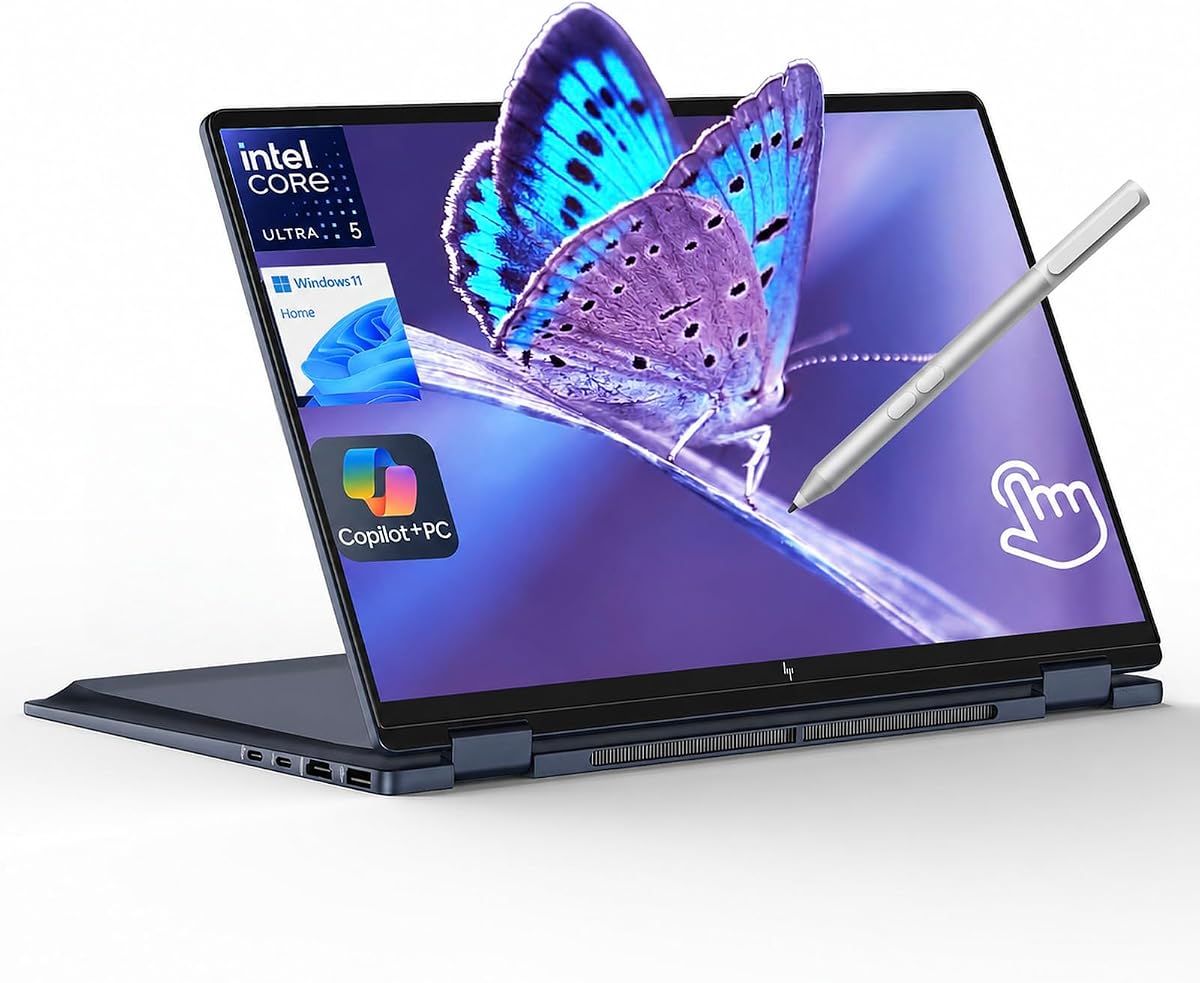
The HP OmniBook X Flip 14 is a 4.6-rated 2-in-1 that combines a 1920 x 1200 touchscreen with a 14-inch IPS panel, a backlit keyboard, and a bundled stylus. For a novelist, the convertible format creates multiple ways to work: upright for conventional typing, flat for reading references, or folded for a more compact setup.
We may earn a commission when you buy through this link, at no additional cost to you.
Its Intel Core Ultra 5 226V processor includes a 40 TOPS NPU and works with LPDDR5X memory, PCIe 5.0, and Thunderbolt 4. The 16GB configuration should handle a writing application, browser research, character notes, and communication tools comfortably. A 400-nit display improves visibility, while the stated battery life of up to 22 hours and 45 minutes makes it a strong candidate for travel writing.
The primary storage is a 512GB SSD, which is reasonable for a manuscript and active project but less generous than the 1TB and 2TB options elsewhere in this list. Its second main consideration is the convertible form factor. Writers who value a traditional laptop experience may prefer a conventional clamshell, while those who annotate outlines or sketch scenes may find the stylus especially useful.
This model is ideal for a writer who wants one device for typing, reading, outlining, and visual planning. The security features, including walk-away lock and auto screen dimming, are also useful in shared spaces. Overall, it is a flexible and polished choice for creative workflows that extend beyond the keyboard.
The touchscreen and included stylus make it possible to mark up a plot timeline, annotate references, or sketch scenes in tablet mode. The convertible design also provides useful viewing angles for reading long passages during revision.
The Core Ultra 5 226V, LPDDR5X memory, and up to 22 hours and 45 minutes of stated battery life suit mobile drafting. Thunderbolt 4 and USB connectivity provide room for external storage and accessories.
We may earn a commission when you buy through this link, at no additional cost to you.
The Lenovo 16 IPS FHD+ i7 is a 4.7-rated writing workstation that balances a large 16-inch screen with a relatively portable 3.70-pound design. Its 16:10 display provides extra vertical space, while 16GB of DDR5 memory and a 1TB PCIe 4.0 NVMe SSD give a novelist plenty of room for manuscripts, research, and active writing software.
We may earn a commission when you buy through this link, at no additional cost to you.
The Intel Core i7-13620H has 10 cores, 16 threads, speeds up to 4.9GHz, and 24MB of cache. That processing headroom is useful when running a browser with many tabs alongside a writing program, cloud storage, reference documents, and communication tools. The 300-nit anti-glare IPS panel is designed for comfortable extended viewing, and the full-size English keyboard provides a practical typing surface.
Its color coverage of 45% NTSC is less impressive for photo editing or color-sensitive work, but it is not a major limitation for text-based fiction. The specification also describes a nonbacklit keyboard, which could be inconvenient during low-light writing sessions. Otherwise, the broad selection of USB-A, USB-C, HDMI, SD, and audio connections is unusually useful for a portable writing setup.
This Lenovo is the strongest recommendation for writers who need productive screen space, fast performance, and ample storage without moving to a workstation-sized chassis. It works well for research-heavy projects, multiple manuscript versions, and remote critique sessions. At the same time, its light weight makes it realistic to carry between home, office, and writing events.
The 1TB PCIe 4.0 NVMe SSD provides a generous working volume for drafts, revisions, reference files, and backups. Fast boot and application loading also help writers move quickly between planning and drafting sessions.
The hybrid i7 processor and 16GB of DDR5 memory support multiple writing applications, browser tabs, and reference documents at once. Its 16:10 display reduces the need to shrink the manuscript when notes are open beside it.
We may earn a commission when you buy through this link, at no additional cost to you.
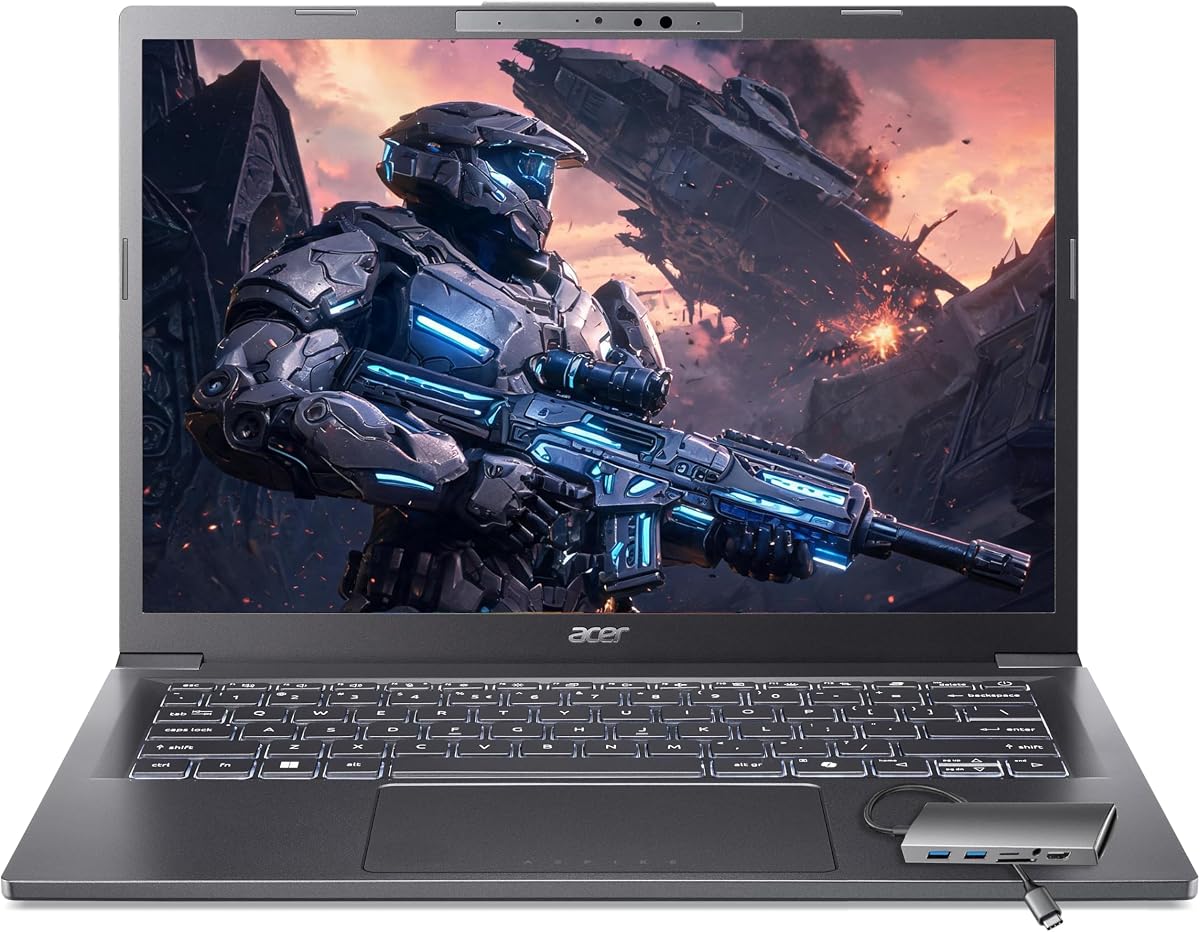
The Acer Aspire Touchscreen is the highest-rated product in this guide at 4.8 and offers the most generous specification set for intensive writing work. Its Intel Core Ultra 7 258V processor, 32GB of LPDDR5X memory, and 2TB PCIe SSD leave considerable headroom for complex research, writing applications, reference libraries, and multiple active projects.
We may earn a commission when you buy through this link, at no additional cost to you.
The 14-inch touchscreen supports stylus input and can serve as a creative companion for plotting, character sketches, and visual research. Intel Arc 140V graphics with eight Xe cores also make the system more versatile when the writing process includes image editing, 1080p video work, or graphics-heavy applications. Windows 11 Home includes AI Copilot features for drafting and summarizing, although writers should remain attentive to the quality and privacy implications of AI-assisted work.
Despite its performance, the laptop weighs just 3.09 pounds and is 0.7 inches thick. That balance makes it more travel-friendly than many large writing laptops. The included hub adds HDMI, USB-A, USB-C, SD card, and Ethernet connectivity, which is especially useful for hotel rooms and shared workspaces where the writer may need a wired network or external drive.
The Aspire is best for a professional novelist who works across many files, keeps extensive research, and wants premium responsiveness without a large workstation. It is also attractive to writers who combine prose with visual planning or other creative media. For the average user, the extra memory and storage may be more than necessary, but for a high-output writing setup they create considerable headroom.
Thirty-two gigabytes of memory and a 2TB SSD allow writers to keep extensive reference material and active drafts on hand. The result is a system that can grow with a complex series, research archive, or collection of revisions.
The 3.09-pound, 0.7-inch-thick design is easier to carry than its powerful specifications might suggest. The touchscreen and stylus broaden its role from word processor to visual planning and creative workspace.
We may earn a commission when you buy through this link, at no additional cost to you.
The HP New Everyday Slim is a lightweight Windows 11 laptop aimed at routine computing, study, and travel. Its Intel N150 processor, 4GB of memory, 128GB SSD, and 1TB of cloud storage create a simple platform for web-based drafting, document editing, and communication. The 3.3 rating suggests more variability than the leading models in this roundup.
We may earn a commission when you buy through this link, at no additional cost to you.
For a novelist, the strongest elements are portability and practical connectivity. The chassis weighs 3.24 pounds, and the stated battery supports up to 11 hours of video playback or 7.5 hours of wireless streaming. USB-C, USB-A, HDMI, and a combined headphone and microphone jack cover common writer needs, while the 720p camera with temporal noise reduction helps with virtual meetings.
The 4GB of memory is the key constraint. It may handle a writing application and several browser tabs, but it is less comfortable for heavy multitasking, large reference libraries, or simultaneous video calls and drafting. The 128GB local drive also calls for careful file management and regular backups, with cloud storage helping where appropriate. Microsoft 365 inclusion makes document work immediately accessible.
This model is most suitable for a new or occasional writer who mainly drafts in the cloud and values a lightweight, uncomplicated machine. It is less suitable for a full-time author who routinely works offline, maintains many large files, or expects demanding software to remain responsive. Its practical connectivity helps offset the modest core specifications.
At 3.24 pounds, the HP is designed to move between locations more easily than a large business laptop. Its battery claims and useful port selection make it a practical companion for writing away from a permanent desk.
Microsoft 365 and 1TB of cloud storage support browser-based and document-centric workflows. Writers should still keep local backups of important manuscripts, since cloud access is not a substitute for maintaining separate copies.
We may earn a commission when you buy through this link, at no additional cost to you.
The ASUS Vivobook 14 FHD is the lightest conventional option listed here, weighing 2.87 pounds and measuring 0.71 inches thick. Its 14-inch 1920 x 1080 LED display offers a crisp writing canvas, while the stated battery life of up to 10 hours makes it appealing for commuters and travel writers. No customer rating is listed for this product.
We may earn a commission when you buy through this link, at no additional cost to you.
The Intel Celeron N4500 processor can reach 2.8GHz and works with 4GB of DDR4 RAM. That is adequate for word processing, email, web research, and light multitasking, which represents the basic requirements of most novel drafts. The Full HD resolution is also a meaningful advantage for text, giving a more detailed page than the HD panels used by some alternatives in the guide.
Local storage is the defining limitation. The 64GB eMMC leaves relatively little room for a large manuscript collection, reference PDFs, backups, and applications, although 1TB of cloud storage is included. The 4GB of RAM also places firm limits on heavy multitasking. A writer who works primarily in one cloud document and travels frequently may find these compromises acceptable; an author with a large local archive may not.
USB-C, USB-A, HDMI, an audio jack, Wi-Fi, Bluetooth, and a 720p camera provide a well-rounded set of essentials. Overall, this Vivobook is best for mobile, lightweight drafting rather than a demanding permanent workstation. Its portability and Full HD screen make it a compelling simple choice for short trips and first-time writers.
The 2.87-pound chassis is easy to carry, while the Full HD panel provides enough resolution for comfortable reading and editing. It suits writers who draft away from home more often than they work at a fixed desk.
The included cloud storage aligns well with a lightweight workflow centered on web documents. Local files should remain modest, and important manuscript versions should always be downloaded to another backup location.
We may earn a commission when you buy through this link, at no additional cost to you.
The HP New Everyday Slim N150 has a perfect 5.0 rating and a focused set of specifications for everyday writing. It combines an Intel N150 processor, 4GB of DDR5 memory, a 128GB SSD, and 1TB of OneDrive storage in a 3.24-pound Windows 11 machine. That makes it a simple option for cloud-based drafting and general home-office use.
We may earn a commission when you buy through this link, at no additional cost to you.
The strongest feature for prolonged use is its stated battery life of up to 11.5 hours. The full-size keyboard provides familiar letter spacing, and a 720p camera with temporal noise reduction supports virtual writing meetings. One year of Microsoft 365 is included, allowing a new user to begin creating and editing documents without immediately adding another subscription.
Its 14-inch HD display has a 1366 x 768 resolution and 220-nit brightness, which is less spacious and detailed than the Full HD and FHD+ alternatives. The nonbacklit keyboard may also be a drawback in dim rooms. Most importantly, 4GB of RAM can feel restrictive once a writer keeps research tabs, a manuscript, cloud sync, and communications tools open together.
The SD card reader, HDMI, USB-C, two USB-A connections, and audio jack are useful additions for a compact writing computer. This is best for a beginner, occasional writer, or anyone who wants a straightforward machine for drafting in familiar office applications. It is less appropriate for a serious author who needs demanding performance, a larger display, and extensive local storage.
Windows 11 and one year of Microsoft 365 create a straightforward starting point for new writers. The familiar interface also makes the laptop approachable for users who do not want to manage more advanced software initially.
A 3.24-pound body, long stated battery life, and USB, HDMI, and SD connectivity make this a practical choice for writing in different rooms or locations. The 720p camera adds useful support for remote critique sessions.
We may earn a commission when you buy through this link, at no additional cost to you.
The 15.6-inch AI Laptop pairs a large Full HD IPS display with 12GB of DDR4 memory, making it an interesting combination of screen size and memory for a writer who drafts in a browser or office application. Its 4.3 rating indicates a generally positive reception, although the Intel Celeron J4105 processor is the less impressive component.
We may earn a commission when you buy through this link, at no additional cost to you.
The 1920 x 1080 IPS panel provides enough resolution and viewing angle for reading a manuscript beside research windows. A 7000mAh battery is stated to support long classes or meetings, and the 180-degree hinge allows the screen to lay flat for sharing or different working positions. That flexibility can be useful during collaborative writing or when reading long chapters.
The 12GB of RAM is more generous than the 4GB offered by several entry-level alternatives and should support moderate multitasking. Storage starts at 256GB on an M.2 SSD, with support for expansion up to 2TB and TF card expansion up to 1TB. The processor may become a bottleneck with many demanding applications, so it is better viewed as a writing-focused system than a creative workstation.
Office 365 is included, and built-in AI features are described as helping with writing, summaries, and task management. Writers should review those tools critically and verify generated suggestions rather than treating them as a substitute for editorial judgment. Overall, this laptop is a good fit for a student or budget-conscious author who values a large FHD screen and 12GB of memory.
The 15.6-inch FHD IPS display creates a comfortable manuscript-viewing area, while 12GB of memory provides more room for browser-based research than basic 4GB configurations. This balance suits moderate daily multitasking.
The M.2 drive supports expansion up to 2TB, and a TF card can add further capacity. That flexibility makes it easier for a writer to retain local manuscript versions instead of relying exclusively on cloud storage.
We may earn a commission when you buy through this link, at no additional cost to you.
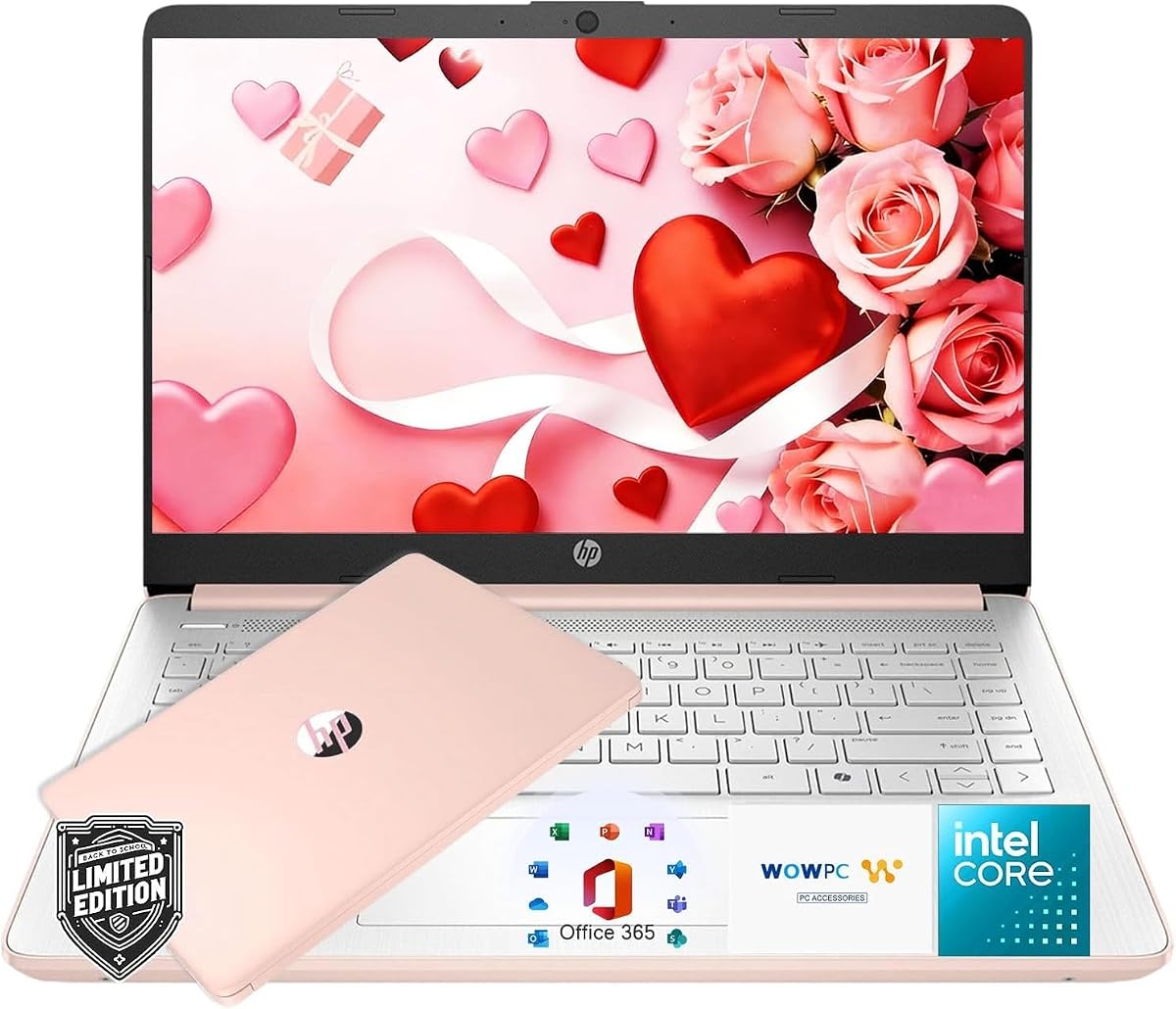
The HP 14-inch Productivity Laptop combines a 4.6 rating with an unusually complete accessory bundle. It includes wireless earbuds, a 500GB portable external drive, a USB extension cord, an HDMI cable, a mouse pad, and a wireless mouse, making it convenient for a new home-office setup where a writer needs more than the laptop itself.
We may earn a commission when you buy through this link, at no additional cost to you.
Its Intel N150 processor has four cores and four threads, while 4GB of LPDDR5 memory provides power-efficient operation. A built-in 128GB drive handles the operating system and active files, with the bundled external drive supplying additional manuscript and backup space. Wi-Fi 6, an anti-glare 14-inch HD display, and a 720p camera cover the essentials for a private writing space.
The 4GB memory remains the principal limitation. It is adequate for one writing application and ordinary research, but intensive multitasking may feel constrained. The 1280-by-720-class HD screen is also less detailed and less expansive than Full HD alternatives. Those compromises make more sense for a first computer or a writer whose focus is plain text rather than image-heavy work.
Windows 11 Pro adds features associated with business productivity, security, encryption, and malware protection, while lifetime Microsoft Office support in the bundle adds value for document creation. This is a practical option for a student or beginner who wants useful accessories and storage included. Experienced authors with heavier workflow needs may prefer investing in more memory and a higher-resolution display.
The included external drive, mouse, HDMI cable, extension cord, and earbuds cover several common setup needs. A new writer can organize a desk and maintain a separate copy of a manuscript without buying every accessory separately.
Windows 11 Pro provides hardware-based isolation, encryption, and malware protection. For a writer storing unpublished manuscripts and personal research, those account protections add useful reassurance alongside disciplined backups.
We may earn a commission when you buy through this link, at no additional cost to you.
The right writing laptop balances comfortable input, a readable display, enough memory for research, dependable storage, and the portability required by the writer’s routine. Prioritize the features that affect your daily drafting rather than paying for capabilities you are unlikely to use.
A novel can involve typing thousands of words in a single day, making the keyboard one of the most important physical components. Look for a full-size layout with familiar spacing, a stable palm rest, and keys that remain comfortable through extended sessions. Some models add a numeric keypad, which can be useful for research or editing page references but takes space that may otherwise create a more relaxed layout. Writers who travel frequently should also consider key travel and how well the machine remains stable on a lap or table.
A larger screen allows a writer to keep a manuscript open beside a plot outline, reference book, or browser without constantly switching windows. A 16:10 aspect ratio is especially useful because it adds vertical space compared with a standard widescreen display. Full HD resolution provides sharper text, while HD panels are adequate for simple documents but less comfortable for extended reading. Writers who annotate, sketch, or use visual storyboards may prefer a touchscreen, although a conventional display remains simpler and usually more budget-friendly.
A faster processor improves responsiveness when a writer keeps many browser tabs, cloud applications, reference files, and communication tools open. Core Ultra and Core i7 processors offer greater headroom for demanding multitasking, while Core Ultra 7 configurations are better suited to users who also edit images or video. Intel N-series and Celeron processors can handle basic drafting but may feel less fluid as the number of open applications grows. Processor choice should be matched to the writer’s workload rather than to a specification number alone.
Memory determines how comfortably the laptop handles simultaneous applications. Sixteen gigabytes is a versatile amount for serious writing because it can support a manuscript, multiple browser tabs, and a backup utility with room to spare. Thirty-two gigabytes gives even more flexibility and is useful for extensive reference libraries, media editing, and other demanding tasks. Four gigabytes is best reserved for light use, especially when the writer expects to keep many tabs or cloud services running.
A full-length manuscript may not consume much space, but multiple drafts, research files, images, recordings, and backups add up quickly. A 512GB drive is a practical starting point for many writers, while 1TB provides more freedom and 2TB is appropriate for extensive archives. Solid-state storage also improves startup and application response compared with a basic hard drive. Writers should maintain at least one separate copy of important work, whether on an external drive or a trusted cloud service.
The best writing laptop is the one the writer will use consistently. A 3-pound model can disappear into a bag and support a complete work session at a café, while a large 16-inch or 17-inch laptop generally belongs on a desk. Battery claims are useful for comparison but vary with screen brightness, wireless activity, and workload. Check the stated battery figure, charger requirements, and weight together. A model that feels cumbersome may be ignored in favor of a phone or tablet, regardless of how capable it is.
USB-A and USB-C connections allow writers to attach external storage, a comfortable mouse, a microphone, or a backup drive. HDMI is useful for connecting to a larger monitor, while an SD card reader can simplify the transfer of photographs, audio recordings, and reference material. USB-C charging is convenient, but writers should confirm whether the port supports display output and power delivery when working away from home. A bundled hub can make a compact machine more versatile, although external accessories still need separate charging.
Windows 11 is standard across this guide and supports the broad range of writing, research, and organization software available to most users. Microsoft 365 inclusion can make document work immediately accessible, while Windows 11 Pro adds business-oriented security and management features. Touchscreens, styluses, and convertible designs can improve outlining and creative planning, but they are not necessary for straightforward prose. AI-assisted features may help organize or summarize material, though writers should verify outputs and retain responsibility for the final text.
Set up the laptop before beginning a long project. Sign into Windows, update the operating system and applications, configure your preferred writing software, and adjust text size, screen brightness, and keyboard backlighting where available. Create folders for the current manuscript, research, character notes, outlines, and backups. Writing in a consistent structure makes it easier to find an earlier draft or confirm that every important file has been copied.
Maintain at least two copies of important work, with one stored away from the laptop. A practical arrangement is an active manuscript on the computer, a synchronized cloud copy, and a separate local backup on an external drive. Save versions in a predictable format and avoid overwriting the only copy of a major revision. Closing and reopening the manuscript periodically can also reveal whether the software is autosaving correctly.
Treat the keyboard and display carefully during long sessions. Use the laptop on a stable, ventilated surface rather than soft bedding, and avoid eating over the keyboard. Clean the screen with a soft microfiber cloth and avoid placing drinks beside the device. When carrying the computer, use a padded sleeve or case and keep accessories organized so connectors are not bent. Periodic restarts, system updates, and backup checks help preserve both performance and confidence throughout a writing project.
Sixteen gigabytes is a comfortable target for writers who keep a manuscript, browser research, cloud storage, and communication tools open. Eight gigabytes may be sufficient for simpler projects, while 32GB provides extra headroom for extensive research, many applications, or media editing. Memory is particularly important when a writer works with long manuscripts and numerous browser tabs at the same time.
A 14-inch display is a good portability compromise, while 15- or 16-inch screens are easier for keeping research beside a manuscript. The 16:10 models in this guide offer extra vertical room. Resolution also matters: Full HD provides clearer text than a standard HD panel, especially during long reading and editing sessions.
A touchscreen can be useful for annotating outlines, sketching scenes, reviewing storyboards, or reading long passages in different positions. It is not essential for standard prose drafting. Convertible models also allow the writer to change between laptop and tablet-style use, but a conventional clamshell is usually simpler and often more affordable.
Most novel writing, web research, and document editing do not require a dedicated graphics processor. Integrated graphics are sufficient for text-focused work. A more capable system is worthwhile if the writer also edits photographs or video, creates visual storyboards, or wants a laptop that can handle a wider range of creative software.
A manuscript itself is relatively small, but research images, recordings, drafts, backups, and application files add up. A 512GB SSD is a reasonable starting point for many writers, while 1TB or 2TB provides more freedom for long-running projects. Regardless of capacity, keep at least one backup away from the laptop.
Choose a larger screen if you write at one desk, regularly compare a manuscript with notes, and value a roomier workspace. Choose a smaller, lighter model if you write in cafés, libraries, hotels, or on the move. The best choice is the device you are comfortable carrying and willing to use for extended periods, not simply the one with the largest display.
Microsoft 365 is not necessary because many writers use browser-based or dedicated word-processing applications. It is, however, convenient for creating and sharing standard documents, and several models in this guide include it. Check the duration and terms of any included subscription before purchase so you know what access you receive and when it ends.
Keep at least three copies of important work on separate storage or locations. A practical setup includes the working file on the laptop, a synchronized cloud copy, and a separate local backup on an external drive. Verify that backups can be opened, and keep versions with clear names so an accidental deletion does not remove every copy.
The HP 17 inch Business Laptop is a practical budget-minded choice for writers who want a large anti-glare screen, 16GB of memory, and a full-size keyboard at a permanent desk. The Lenovo 16 IPS FHD+ i7 stands out as the strongest all-around productivity option, combining a 4.7 rating, a productive 16:10 screen, 1TB storage, and strong multitasking specifications. The Acer Aspire Touchscreen is the premium selection, with 32GB of memory, 2TB of storage, and a lightweight design.
Choose according to your working pattern rather than simply seeking the largest specification. A traveler may value the ASUS Vivobook’s low weight or the HP OmniBook X Flip’s convertible flexibility, while a research-heavy author may appreciate the Lenovo’s memory, storage, and roomy display. Entry-level N-series and Celeron laptops can work for simple drafting, but 16GB of memory and a higher-resolution screen provide more comfort as a writing project grows.
Before buying, verify the current configuration, storage options, included software, keyboard layout, and connectivity. Product specifications and availability can change, and current offers may vary between sellers. Whichever laptop you choose, maintain separate manuscript backups and choose a device that supports the places and routines in which you will do your best writing.